Best Vermont Counties for Grouse
For many upland hunters in Vermont, finding consistent ruffed grouse action can feel like chasing ghosts in the woods. You might stumble into a flush now and then, but truly knowing where to focus your efforts for a productive day afield – that's a different challenge entirely. This guide is here to unravel the mystery, showing you not just which Vermont counties consistently hold the best grouse populations, but also why they do, and how you can approach hunting them effectively.
Understanding Vermont's Ruffed Grouse Habitat Needs
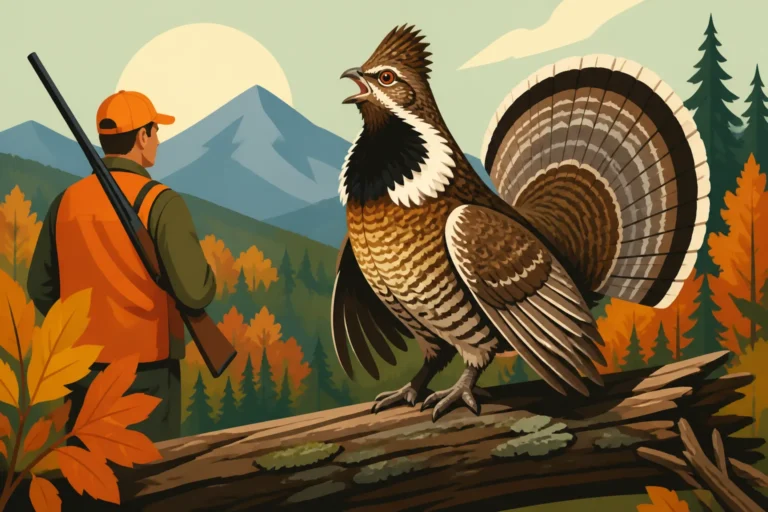
Ruffed grouse aren't just found anywhere there are trees. These intelligent birds have very specific habitat requirements that, when met, can lead to incredible hunting opportunities. Vermont's diverse landscape offers pockets of prime grouse country, but understanding what makes these areas special is crucial for consistent success. It's not just about dense woods; it's about the right kind of dense woods, mixed with particular food sources and escape cover.
The Importance of Young Forest and Early Successional Growth
If you're looking for grouse, you need to be looking for "ugly" woods – at least, what some might consider ugly. This means areas that have been recently disturbed, creating a patchwork of young, regenerating forest. Think clear-cuts that are 5-20 years old, old logging roads that are growing in with saplings and briars, abandoned farm fields that have reverted to brush, or even areas impacted by severe weather events. These early successional habitats provide the dense, almost impenetrable cover that grouse rely on for protection from predators like hawks and coyotes. Without this thick overhead and understory cover, grouse are simply too vulnerable to thrive. They prefer walking through these tangles rather than flying, making them challenging to spot until they burst into flight.
For example, a recently logged parcel might look like a mess to a casual observer, but to a grouse hunter, it's a goldmine. The rapidly growing saplings, brush, and briars form a protective canopy and dense ground cover that predators struggle to penetrate. These areas also tend to concentrate various food sources that emerge in the disturbed soil and increased sunlight. When scouting these regions, you can use mapping tools like GoHunt to pinpoint these clear-cuts or past timber operations, saving you valuable time on the ground.
Food Sources and Cover for Vermont Grouse
Beyond just dense cover, grouse also need a reliable food source, especially as the seasons change. In the early fall, they'll forage on a variety of berries, seeds, and insects. As the leaves begin to drop and the first frosts hit, their diet often shifts to more readily available woody browse. This includes the buds of aspen, birch, and apple trees, as well as the catkins of hazelnut and birch. Knowing which trees are prevalent in an area can give you a huge advantage. If you find a dense stand of young aspen near a conifer thicket, you're likely in a prime spot.
Thermal and escape cover are also paramount. While young forest provides excellent escape cover, conifer stands – particularly hemlock, spruce, and fir – offer crucial thermal protection during colder weather and heavy snow. Grouse will often roost or loaf in these thick evergreens, especially on windy or very cold days. They also provide visual obstruction from aerial predators. Look for areas where these conifer groves are interspersed with the younger hardwood growth and abandoned apple orchards. Finding a mix of these elements is key; grouse rarely spend all their time in one type of habitat.
Top Vermont Counties for Ruffed Grouse Hunting
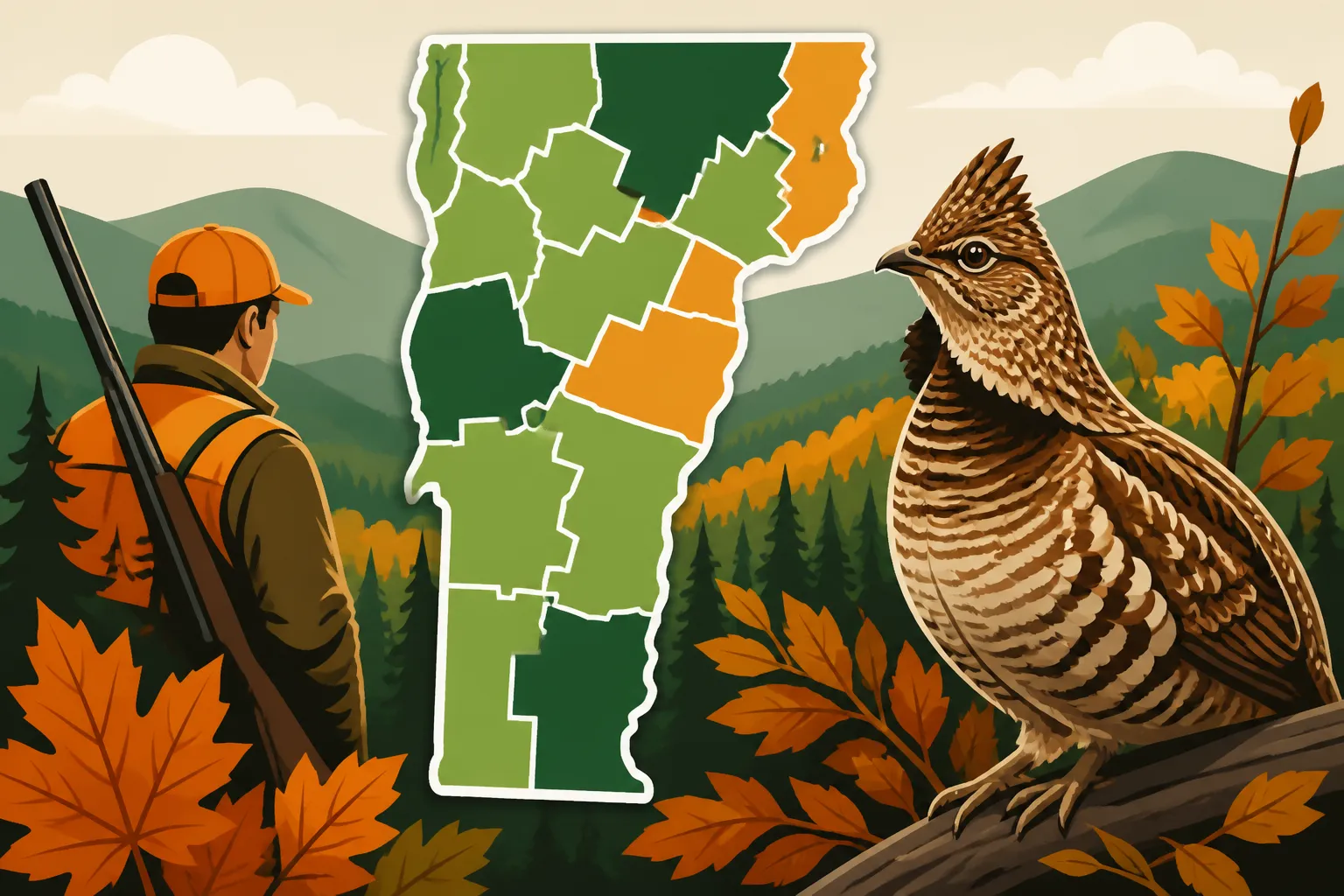
While grouse can be found in every county in Vermont, some consistently offer better habitat and higher populations due to their vast undeveloped lands, forestry practices, and general remoteness. Focusing your efforts in these areas will dramatically increase your chances of a successful hunt. These aren't necessarily the counties with the most deer, but rather those with the most ideal grouse habitat.
Northeast Kingdom: Essex and Orleans Counties
When you think of the Northeast Kingdom, you often think of moose and vast timberlands, and rightly so. This remote region, particularly Essex and Orleans counties, is arguably Vermont's best bet for ruffed grouse. The sheer amount of undeveloped land, extensive logging operations, and the prevalence of diverse forest types create perfect conditions.
Essex County, in particular, boasts significant state forests and working timberlands. These areas are constantly undergoing management, which means there's a continuous supply of young forest regeneration. Hunters willing to hike deep into these areas, away from easily accessible roads, often find the most undisturbed grouse populations. The mix of spruce-fir forests, interspersed with regenerating hardwoods like aspen and birch, provides both food and cover. Orleans County, while perhaps slightly more populated in its western reaches, still offers plenty of remote, grouse-rich coverts, especially towards its eastern and northern borders. You'll find extensive opportunities within the Victory Basin Wildlife Management Area and the Steam Mill Brook Wildlife Management Area. Using a mapping platform like GoHunt can help you navigate these vast and often confusing landscapes, identifying recent timber cuts and public access points. This allows you to pinpoint those specific features that grouse favor, even in areas you've never stepped foot in before. Victory Basin Deer and Grouse Access is a great example of this.
Central Vermont's Green Mountain Foothills: Washington and Orange Counties
Moving south into central Vermont, Washington and Orange counties offer a fantastic blend of public and private land with excellent grouse potential. These areas are characterized by rolling hills, mixed hardwoods, and a history of agricultural and logging activity. You'll find a higher density of old farmsteads and abandoned apple orchards here, which are magnets for grouse, especially later in the season when the apples drop.
Washington County, home to parts of the Worcester Range, offers extensive state forest land and opportunities to hunt within the Green Mountain National Forest. These areas often have a patchwork of mature timber, recent logging, and thick underbrush that provides ideal grouse habitat. Orange County, with its less mountainous but still rugged terrain, is rich in varied forest types and old fields. It's often easier to gain access to private land in these counties with a bit of polite door-knocking, as there's a strong tradition of land access for hunting. These counties might require a bit more legwork to find those honey holes, but the rewards can be significant. Look for the edges of mature timber where it transitions into dense brush or younger growth. Still-Hunting Green Mountain National Forest Timber can apply here to quietly move through these transitions.
Southern Vermont's Wooded Expanses: Windham and Windsor Counties
The southern tier of Vermont, particularly Windham and Windsor counties, also holds strong grouse populations, though often in different types of cover than the Northeast Kingdom. These counties feature extensive private timberlands and state forests, often characterized by more mature hardwood stands, but still with plenty of crucial cuts and regenerating areas.
Windham County, with its blend of rugged uplands and river valleys, provides diverse habitats. Look for areas that have undergone recent selective logging or clear-cuts, often near steeper terrain. Windsor County, stretching across the heart of the state, has a long history of active forest management. This means you'll consistently find areas of young growth interspersed with mature timber. While these areas might not feel as "wild" as the Northeast Kingdom, they can be incredibly productive for grouse hunters who know how to read the landscape. Focus on old logging roads, powerline cuts, and areas around beaver flows where dense regrowth occurs. The access can sometimes be a bit easier here, with more well-maintained forest roads leading into good habitat.
To give you a quick overview, here's a table comparing some of the top grouse counties:
| County Name | Primary Habitat Characteristics | Typical Hunting Challenges | Key Opportunities |
|---|---|---|---|
| Essex County | Vast, remote public lands, active logging, spruce-fir/hardwood mix | Rugged terrain, difficult access, long walks | High bird densities, less pressure, large contiguous habitat |
| Orleans County | Extensive timberlands, state forests, mixed hardwoods, some agriculture | Remote access in eastern parts, varied terrain | Good public land access, strong populations |
| Washington County | Rolling hills, mixed hardwoods, old farmsteads, Green Mtn NF | Private land access can be key, moderate pressure | Abundant food sources, diverse coverts, good accessibility |
| Orange County | Varied forest, old fields, private woodlots, less mountainous | Less contiguous public land, scattered cover | Excellent private land potential, productive edges |
| Windham County | Rugged uplands, river valleys, mixed timber, some state forests | Can be more developed in spots, higher hunter traffic | Active timber management, good pockets of young growth |
| Windsor County | Managed timberlands, mature hardwoods, clear-cuts, state forests | Variable habitat density, scouting is critical | Consistent regeneration, old apple orchards |
Strategies for Locating Grouse in These Productive Counties
Knowing which counties hold grouse is one thing; consistently putting birds in your vest is another. It requires a blend of pre-season scouting, understanding bird behavior, and employing effective hunting tactics tailored to Vermont's terrain.
Scouting and Using Mapping Tools
Your scouting efforts, whether conducted months before the season or the week prior, are paramount. Don't just drive around; get out of your truck and walk the woods. Look for those tell-tale signs: old logging roads growing in with thick brush, clusters of aspen or birch saplings, stands of evergreen for cover, and abandoned apple trees. Pay attention to the ground for droppings and dusting bowls, especially near travel corridors like old stone walls or faint deer trails.
Modern mapping tools are an absolute game-changer for grouse hunting in Vermont. Apps like GoHunt allow you to overlay public and private land boundaries, topography, and satellite imagery. You can identify potential clear-cuts, forest stand changes, and dense coverts from your couch, saving hours of unproductive walking. Look for areas marked as "young growth" or "regenerating forest" on timber maps, or simply scan satellite imagery for lighter green patches indicative of recent disturbance. Mark these spots as waypoints and create a game plan. When you're dealing with extensive public land tracts like those in Essex County, this digital scouting becomes even more critical. It can help you find Finding Ground Others Walk Past by identifying less obvious access points or habitat features away from main trails. Also, consider Scouting With the Vermont Fish and Wildlife App for regulatory information and public land boundaries directly from the source.
Hunting Tactics: Walking, Flushing, and Dog Work
Once you're in promising habitat, how you hunt makes all the difference. Many grouse hunters employ a "walk-and-flush" technique, slowly working through coverts, hoping to kick birds into flight. This is effective but requires patience. Don't rush. Pause often, listen for subtle sounds, and be ready to shoulder your shotgun quickly. Grouse often hold tight, only flushing when you're almost on top of them. Walk in a zigzag pattern, thoroughly covering promising thickets and edges.
For those with a well-trained bird dog, grouse hunting becomes a team effort. A good pointing dog can pinpoint birds, allowing you to move into position for a clean shot when the grouse flushes. Flushers like springer spaniels can also be highly effective at pushing birds out of heavy cover. Regardless of whether you use a dog, focus on working the edges where different habitat types meet – like where a young clear-cut abuts a mature hardwood stand or a conifer thicket. These transition zones are often where grouse spend their time moving between food and cover. Understanding Ruffed Grouse and Woodcock behavior, including their preference for specific cover types, is key to success.
Understanding Population Cycles and Local Conditions
Ruffed grouse populations are cyclical, typically peaking and declining over roughly 8-10 year periods. This means that a county that was fantastic a few years ago might be slower this year, and vice versa. While you can't control these cycles, being aware of them helps manage expectations. However, local conditions play a huge role too. A strong mast crop year (acorns, beech nuts) can concentrate birds in different areas, while a poor one might spread them out in search of other food.
Pay attention to weather patterns. Grouse tend to be more active and can be found in more open cover on calm, overcast days. On windy or extremely cold days, they'll often hunker down in dense conifers or protected ravines. Recent logging activity is also a critical factor; new clear-cuts create fresh habitat, while areas that have grown too mature might see a decline in grouse numbers. Connecting with local foresters or fish and wildlife personnel can sometimes provide insights into recent timber sales or habitat projects that will influence grouse distribution.
Essential Gear for Vermont Grouse Hunting
The right gear won't guarantee a grouse in the bag, but it will certainly make your time in the Vermont woods more comfortable, safer, and ultimately more productive. Upland hunting here means tackling diverse terrain, from thick briar patches to rocky hillsides, often in unpredictable fall weather.
Footwear and Clothing for Upland Terrain
Your feet are your most important tool in the grouse woods, so investing in good quality, comfortable, and waterproof boots is paramount. You'll be walking miles over uneven ground, through wet leaves, and across muddy logging roads. Look for boots with good ankle support to prevent twists and turns on hidden roots and rocks. Leather or durable synthetic uppers, paired with a grippy outsole, will serve you well. Boots for Green Mountain Ridge Terrain are a great starting point, even if you're not strictly on a ridge, the principles of rugged durability apply.
Layering is key for clothing. Vermont fall weather can change rapidly, from crisp cool mornings to surprisingly warm afternoons, or sudden downpours. Start with a moisture-wicking base layer, add an insulating mid-layer (fleece or wool works great), and top it off with a durable, briar-resistant outer shell. Blaze orange is not always legally required for upland birds, but it's always a good idea for safety, especially if you're hunting in areas with deer hunters. A good blaze orange vest or hat will ensure you're visible to others. Make sure your outer layers can stand up to constant abuse from thorns and thick brush. You'll be pushing through a lot of tough stuff. For specific advice, consider Layering for Vermont's Long Hunting Season.
Shotguns and Ammunition Choices
For ruffed grouse, a lightweight, fast-swinging shotgun is generally preferred. Side-by-sides, over-and-unders, or semi-automatics in 12, 16, 20, or even 28 gauge are all popular choices. Open chokes, like improved cylinder or skeet, are ideal because most grouse flushes happen at close range in thick cover. You'll want a wide shot pattern to increase your chances of connecting with a fast-flushing bird in tight quarters.
As for ammunition, lead shot in sizes 7.5 or 8 is the standard for grouse. These smaller shot sizes provide a dense pattern without over-penetrating, making them effective for these relatively small birds. Carrying a few different loads, perhaps some 7.5s for denser cover and 6s for slightly more open shots, isn't a bad idea. Remember, the goal is to humanely harvest the bird without excessive damage to the meat.
Navigation and Safety
Even in areas you think you know well, it's easy to get disoriented in Vermont's thick woods. A reliable GPS unit or a smartphone with a robust mapping app like GoHunt is essential. Download offline maps before you head out, as cell service can be spotty or non-existent in many prime grouse areas. A traditional compass and a paper map are excellent backups. Let someone know where you're going and when you expect to return.
Safety should always be your top priority. Carry a basic first aid kit for minor cuts, scrapes, or sprains – Best First Aid Kit for a Remote Hunt can guide your packing. A whistle can be invaluable if you get separated from hunting partners or your dog. Always treat every firearm as if it's loaded, know your target and what's beyond it, and unload your gun when crossing fences or encountering obstacles. As mentioned before, wearing sufficient blaze orange is also critical, especially during the overlap periods with other hunting seasons. Review How Much Blaze Orange Vermont Requires to ensure you meet all regulations and stay safe.
Disclaimer
This article is for general informational purposes only and does not constitute professional advice. Laws, prices and regulations vary by location and change over time. Consult a qualified professional for guidance on your specific situation.