Vermont Ruffed Grouse and Woodcock
For many hunters, the crisp air of a Vermont autumn brings with it a unique yearning: the pursuit of upland birds. Forget the deer stand for a moment; we're talking about busting through thick cover, listening for the thunderous flush of a grouse, or the quirky zigzag flight of a woodcock. This kind of hunting is an exhilarating, physically demanding, and deeply rewarding experience, but finding these elusive birds in Vermont's diverse and often dense terrain can be a real challenge if you don't know where to start. This guide is designed to equip you with the knowledge to successfully hunt ruffed grouse and American woodcock across the Green Mountain State.
The Allure of Upland Birds: Why Vermont is a Hunter's Paradise
There's something profoundly romantic about upland bird hunting in Vermont. It’s not just about the shot, it’s about the entire experience: the crunch of fallen leaves underfoot, the scent of damp earth and pine, the camaraderie with a good bird dog, and the sheer unpredictability of a flush. Vermont, with its sprawling forests, reverting farmlands, and intricate wetlands, offers an incredibly rich tapestry of habitats that these special birds call home, making it a true paradise for the dedicated upland enthusiast.
The Ruffed Grouse: King of the Coverts
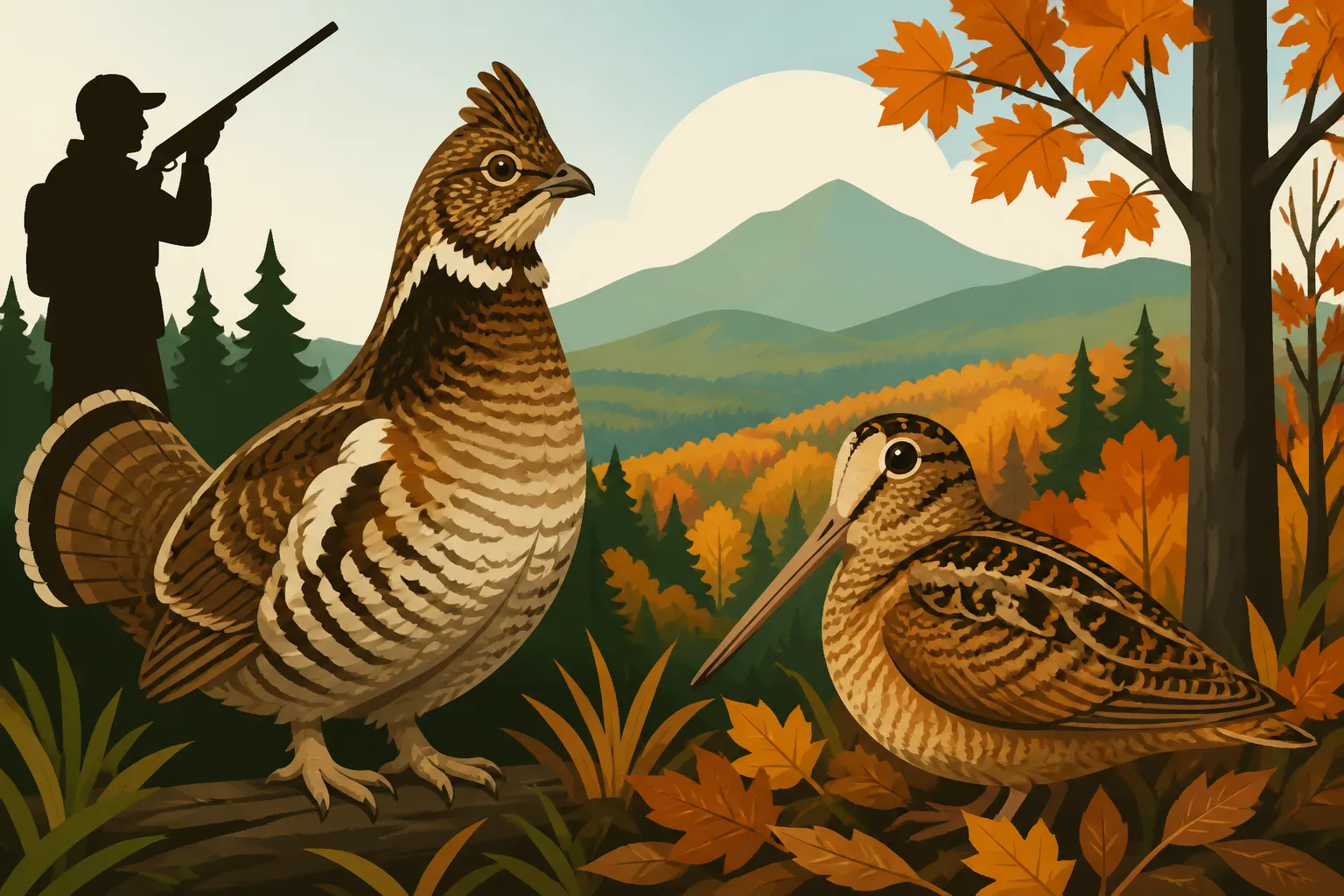
The ruffed grouse, often affectionately called the "thunder chicken," holds a special place in the hearts of Vermont hunters. Its explosive flush, often sounding like a small, feathered jet engine taking off right under your nose, is guaranteed to get your heart pounding. These birds are masters of camouflage and cover, preferring dense thickets, alder runs, and young aspen stands where they can quickly disappear. They are a resident species, meaning they don't migrate, but their populations can fluctuate dramatically due to cyclical patterns that impact their food sources and predator evasion. Hunting grouse is a test of reflexes, patience, and a deep understanding of their preferred habitats, making each successful flush and shot a hard-earned victory. You might find them dusting in sunny spots along old logging roads or drumming to attract mates from atop a downed log in spring.
The American Woodcock: Timberdoodle Mystique
The American woodcock, affectionately known as the "timberdoodle," is perhaps even more enigmatic than the grouse. This migratory bird, with its long bill, large eyes, and short legs, is a true spectacle to behold in flight. They prefer moist, young woodlands, alder swamps, and riparian zones, often tucked away in pockets that most hunters overlook. Woodcock migrate through Vermont in waves, making timing your hunt critical. Their flight pattern, a corkscrew ascent after the flush, offers a unique shooting challenge that few other birds present. While their numbers might not be as high as in some southern states, Vermont still offers fantastic opportunities, especially during peak migration. The charm of the woodcock lies in its quirky nature and the specific, often overlooked, habitats it chooses to inhabit, drawing a dedicated following of hunters who appreciate its distinct character.
The Unique Challenges and Rewards of Upland Hunting
Hunting ruffed grouse and woodcock isn't a passive sport. It demands active engagement with the landscape. You’ll be walking, often through demanding terrain, for miles. The cover is frequently thick, thorny, and wet, making every step a deliberate effort. Unlike deer hunting, where you might sit for hours, upland hunting keeps you constantly moving, searching, and reacting. The "reward" isn't just a bird for the table, though wild grouse and woodcock are delicious; it's the experience of immersion in nature, the thrill of the chase, the bond with a well-trained dog, and the satisfaction of understanding the subtle nuances of the forest. It’s a hunt that engages all your senses and connects you directly to the wild rhythms of Vermont. Many hunters find that the challenges inherent in chasing these birds are precisely what make it so incredibly rewarding, fostering a deep respect for the birds and their environment. This pursuit often goes hand-in-hand with Small Game and Predator Hunting in Vermont, as the same habitats can often hold multiple species.
Understanding Vermont's Ruffed Grouse Population and Habitat
Vermont's ruffed grouse populations are a dynamic part of our ecosystem, influenced by everything from weather patterns to forest management practices. Understanding these factors is key to finding consistent success in the field and appreciating the broader ecological picture. It’s not just about pulling the trigger; it’s about understanding the very pulse of the forest.
Grouse Population Cycles and Management Efforts
Ruffed grouse populations are famous for their cyclical nature, often peaking and then declining roughly every 8-10 years. These Vermont Ruffed Grouse Population Cycles are largely driven by a complex interplay of factors, including predator populations (like goshawks, owls, and foxes), disease, and mast crop availability (such as acorns and beech nuts). When mast crops are abundant, grouse typically fare better, leading to stronger overwinter survival and healthier broods. Vermont Fish and Wildlife Department actively monitors these trends through drumming counts and harvest data, using this information to inform management strategies. These strategies often focus on habitat enhancement, which is the most impactful way to support healthy grouse populations. Unlike deer, where hunting pressure can significantly affect numbers, grouse populations are more intrinsically tied to the quality and quantity of available habitat.
Ideal Grouse Habitat: What to Look For
To find grouse, you need to think like a grouse. These birds require a mosaic of habitats: dense cover for protection from predators and the elements, open areas for dusting and foraging, and water sources. Key habitat components include:
- Young Forest Stands: Aspen, birch, and alder thickets, particularly those that have been clear-cut or managed within the last 5-20 years, are prime grouse territory. The dense saplings provide excellent escape cover and abundant buds for winter food.
- Edge Cover: Where young forest meets mature hardwoods, old apple orchards, or even agricultural fields, you'll often find grouse. These transition zones provide diverse food sources and varying cover levels.
- Conifer Cover: Dense hemlock or spruce stands offer crucial thermal cover in winter, protecting grouse from harsh winds and heavy snow.
- Old Logging Roads and Trails: These offer travel corridors, dusting spots, and places where sun can hit the ground, attracting insects and warmth.
When scouting, look for evidence of feeding, like clipped buds or droppings, and listen for drumming in the spring, which indicates male territories. Remember, good grouse cover is often dense and challenging to walk through, which is exactly why the birds choose it.
Best Vermont Regions and Counties for Grouse
While grouse can be found statewide, some regions and counties consistently offer better opportunities due to prevalent habitat types and less hunting pressure. Generally, the more rural, forested areas with active timber management tend to hold better numbers.
- Northeast Kingdom (Essex, Orleans, Caledonia counties): This vast, heavily forested region is often considered a grouse stronghold. With extensive logging activity and plenty of remote public land, it offers excellent habitat. The sheer amount of undeveloped land here means less competition from other hunters.
- Central Vermont (Washington, Orange, Lamoille counties): Areas within the Green Mountains and foothills, particularly where there's a mix of reverting farmland and active timber cuts, can be very productive.
- Southern Vermont (Windham, Bennington, Windsor counties): The more rugged, mountainous terrain here, especially in the Green Mountain National Forest, provides pockets of excellent grouse habitat, though it can be more challenging to access.
Using mapping tools like GoHunt can be incredibly helpful for identifying potential grouse habitat. You can look for timber cuts, dense conifer stands, and old logging roads that might not be visible on traditional maps. Remember that productive spots can change year to year as forest succession progresses, so scouting is always important.
The Enigmatic American Woodcock: Migration and Habitat Needs
The American woodcock is a fascinating bird whose presence in Vermont is often fleeting, tied closely to its migratory journey. To successfully hunt these "timberdoodles," understanding their unique biology and migratory patterns is just as crucial as knowing their preferred habitat. They truly are creatures of specific environmental conditions, and being in the right place at the right time is paramount.
Woodcock Migration Timing Through Vermont
Woodcock are primarily ground-dwelling migratory birds, and their movements through Vermont are largely dictated by weather and food availability. They breed in Vermont during the spring and summer, performing their elaborate courtship flights, which are surveyed through Vermont Woodcock Singing Ground Surveys. However, hunting opportunities arise primarily during their southward migration in the fall.
- Early Season (Late September – Early October): You might find resident birds that haven't yet begun their migration, often in familiar breeding grounds. These birds are typically scattered.
- Peak Migration (Mid-October – Early November): This is the sweet spot. As cold fronts push south from Canada, waves of woodcock move through Vermont, stopping to feed and rest in suitable cover. This period often coincides with the peak of fall foliage, creating breathtaking hunting conditions.
- Late Season (Mid-November – Early December): Pockets of birds can linger until the ground freezes solid, preventing them from probing for earthworms. A hard freeze will send the last birds south.
Monitoring weather patterns, especially strong northerly winds and dropping temperatures, can give you a clue about when new flights of woodcock might arrive. A sudden influx of birds in a known habitat after a cold front is often a good indicator.
Preferred Woodcock Cover: Moist Lowlands and Young Forests
Woodcock have a very specific taste in real estate. They are insectivores, with a diet heavily reliant on earthworms, which means they need soft, moist soil. This dictates their habitat preferences:
- Alder Swamps and Bottomlands: These boggy, low-lying areas are perhaps the most classic woodcock haunts. The dense alder thickets provide both cover and the damp, worm-rich soil they need.
- Young, Regenerating Woodlands: Similar to grouse, woodcock also utilize young aspen or birch stands, particularly those near a water source or in areas with consistent soil moisture. These thickets provide excellent escape cover and roosting areas.
- Willow and Dogwood Thickets: These shrubby areas, often found along stream banks or the edges of wet fields, are also highly favored.
- Reverting Agricultural Fields: Old fields that are growing back into shrubs and young trees, especially if they have damp depressions, can hold good numbers of birds.
Look for areas with dense overhead cover but relatively open ground beneath, allowing the woodcock to move and forage. They often leave small, distinct white droppings, known as "splashes," and probing holes in the soft earth, which are tell-tale signs of their presence.
Vermont's Role as a Woodcock Migration Corridor
Vermont plays a crucial role as a migratory corridor for American woodcock traveling along the Atlantic Flyway. As birds move south from their northern breeding grounds in Canada and northern New England, they funnel through the Green Mountain State, utilizing its network of suitable habitats to refuel and rest. This makes Vermont a critical stopover point, especially during peak migration. Why Vermont Is a Woodcock Migration Corridor is directly tied to its geography and diverse forest types, offering a consistent and reliable series of habitats that meet the woodcock's needs. Understanding this larger migratory picture helps hunters appreciate the transient nature of these birds and why certain areas might only hold woodcock for a few days before a new flight moves in. This also highlights the importance of habitat conservation efforts across the bird's entire range, as what happens north or south of Vermont can directly impact the birds we see here.
Key Strategies for Hunting Ruffed Grouse in Vermont
Successfully hunting ruffed grouse in Vermont's dense cover is a rewarding challenge that combines knowledge of habitat, keen observation, and quick reflexes. It's a game of chess with a feathered opponent, and the hunter who understands the moves stands a better chance. Patience and persistence are your greatest allies when chasing these elusive birds.
Reading the Cover: Where to Find Grouse
The number one rule for grouse hunting is: hunt the cover, not the birds. Grouse are creatures of habit and predictability when it comes to their preferred hideouts. They aren't going to be loafing in open hardwoods; they'll be in the thickest, nastiest stuff you can imagine.
- Dense Thickets: Focus on young growth, especially aspen, birch, or alder thickets that are less than 20 years old. These provide crucial overhead protection from raptors and ground cover from foxes and coyotes. Look for areas where sunlight penetrates to the forest floor, promoting undergrowth.
- Edges and Transitions: Pay close attention to where different habitat types meet. The edge of a dense conifer stand bordering a deciduous forest, an old field transitioning into young saplings, or the border of an old apple orchard are all prime locations. These edges offer diverse food sources and multiple escape routes.
- Water Sources: Grouse need water, so focus your efforts around small streams, springs, or beaver flows, especially during dry spells. The cover near these areas is often lusher.
- Food Sources: Grouse feed on a variety of foods depending on the season, including buds (aspen, birch), berries (partridgeberry, thornapple), catkins, and mast crops (acorns, beechnuts). After a poor acorn year, for instance, grouse might concentrate more heavily in areas with other reliable food sources.
- Old Roads and Trails: While not necessarily holding grouse directly, these serve as excellent travel corridors for hunters and dogs, allowing you to access prime cover. Grouse will often use the edges of these paths for dusting or feeding on roadside vegetation.
Think about how a grouse uses the terrain for both protection and sustenance. Where would you go if you were a small bird trying to avoid a hawk from above or a fox on the ground? That's where you'll find them.
Working with a Dog: The Ultimate Grouse Hunting Partner
For many, grouse hunting truly comes alive with a good bird dog. A well-trained setter, pointer, or even a flushing breed like a springer spaniel or Brittany can dramatically increase your success and enjoyment.
- The Pointing Dog Advantage: A pointing dog will range out, find scent, and "lock up" on a bird, indicating its location. This gives the hunter time to move into position for a shot. Breeds like English Setters or German Shorthaired Pointers excel at this. The key is to trust your dog and move quickly to where they're pointing, ready for the flush.
- The Flushing Dog Advantage: Flushing breeds work closer to the hunter, busting birds out of cover. This can be less graceful but equally effective, especially in incredibly thick habitat where a pointing dog might get "stuck." Springers and Brittanys are popular choices. The dog's job is to keep working, putting pressure on the bird to fly.
- Dog Training and Etiquette: Regardless of breed, a grouse dog needs extensive training in obedience, quartering (systematically working cover), and retrieving. They also need to be staunch on point or reliably flush on command. Be mindful of other hunters and land ethics; keep your dog under control and pick up after them. A strong bond and clear communication between hunter and dog are paramount for a safe and successful hunt. If you're serious about your dog's performance, investing in professional training or joining a local bird dog club can make a world of difference.
Still-Hunting and Pushing Cover Without a Dog
If you don't have a bird dog, don't despair! Still-hunting and systematically pushing cover can be very effective, though it requires a different approach and even more patience.
- Slow and Steady: The essence of still-hunting for grouse is moving very slowly, pausing frequently, and scanning the cover ahead and around you. Take a few steps, then stop for 30-60 seconds, listening intently. Grouse are often reluctant to flush and might run or simply hold tight. Your pause might make them nervous enough to flush, or reveal their location as they move.
- Systematic Coverage: Don't just wander aimlessly. Mentally (or with GoHunt) break down the cover into manageable sections. Walk in a zigzag pattern through dense thickets, ensuring you cover ground thoroughly. Always be ready; the flush will almost always come when you least expect it.
- Hunting with a Partner: Hunting with one or two partners can be very effective without dogs. Have one person "walk up" through the densest cover, while the other walks parallel along the edge, ready for birds that flush out. This tactic can significantly increase your chances of getting a shot.
- Listen for Sounds: Pay attention to every sound. The rustle of leaves, a twig snapping, or the faint whir of wings could indicate a grouse. Their flush is unmistakable, but sometimes you'll hear them move on the ground first.
This method often means walking more miles and getting fewer shots, but the satisfaction of successfully flushing and bagging a grouse purely through your own woodsmanship is immense. Remember to carry a good compass or GPS, like the features found in GoHunt, as it's easy to get disoriented in thick Vermont cover. Consider taking a moment to review tips on Scouting Vermont Public Land Before Season to maximize your time.
Effective Tactics for Pursuing American Woodcock
Hunting American woodcock, while sharing some similarities with grouse hunting, demands its own unique set of strategies. Their preference for specific, often wet, habitats and their distinctive flight pattern require hunters to adapt their approach. It’s a pursuit that often takes you off the beaten path and into terrain that might seem unlikely for bird hunting.
Pinpointing Woodcock in Thick, Wet Cover
The key to finding woodcock is knowing their preferred habitat and understanding their behavior within it. They are specialists, and being in the right type of cover is far more important than covering vast amounts of ground.
- Focus on Moist Areas: Always gravitate towards low-lying, damp areas. Alders, willows, dogwood thickets, and young aspen stands that are close to streams, beaver flows, or even swampy depressions are prime. Use mapping tools to identify these low-lying, green areas within larger forested tracts.
- Look for Sign: Woodcock leave very distinctive "splashes"—small, white, chalky droppings—on the forest floor. They also leave characteristic probing holes, about 1-2 inches deep and pencil-thin, where they've searched for earthworms. Finding fresh sign is a strong indicator that birds are (or were very recently) in the area.
- Density is Key: Woodcock love dense, overhead cover. They don't want to be exposed to aerial predators. Look for areas where the canopy is thick but the understory allows them some ground movement. Regenerating clear-cuts that are 5-15 years old, especially in damp spots, can be gold mines.
- Sunlight Matters: On cool, cloudy days, woodcock might sit in slightly more open areas where the sun can reach the ground, providing warmth. On bright, sunny days, they'll often be found in denser, shadier spots. Adjust your approach based on the weather.
- Edge Cover is Still Important: Just like grouse, woodcock will utilize the edges of these moist thickets where they meet slightly drier woods or old fields. These transitional zones can sometimes hold a mix of both grouse and woodcock.
Remember that woodcock tend to hold tight, often flushing at your feet or just a few yards away. Be ready at all times, especially when working through prime cover.
Timing Your Hunts with Migration Waves
Because woodcock are migratory, timing is everything. Hunting resident birds can be fun, but the real action often happens during the fall migration.
- Early Fall (Late September – Early October): This is when you'll find primarily local, breeding birds. These birds can be scattered, and finding good numbers might be hit-or-miss. However, they're often less pressured, offering good opportunities.
- Mid-Fall (Mid-October – Early November): This is typically the peak of the woodcock migration through Vermont. Cold fronts pushing south will bring fresh waves of birds. These "flight birds" can sometimes be found in large concentrations in prime coverts. Pay attention to regional weather reports; a significant temperature drop and northerly winds are often followed by an influx of birds.
- Late Fall (Mid-November – Early December): As temperatures consistently drop and the ground begins to freeze, woodcock numbers will dwindle. The last birds will depart when their primary food source (earthworms) becomes inaccessible. You might find a few stragglers, but consistent hunting becomes much harder.
- The "Hatch Match" Theory: Some hunters believe that woodcock migration can coincide with the peak of deer rifle season, offering a unique opportunity to switch gears. While the deer hunters are focused on their quarry, the woodcock might be moving through unpressured coverts.
Consider a multi-day trip during peak migration to maximize your chances, scouting different areas as the birds move through. Don't be afraid to try a new covert if your usual spots aren't producing, as flight birds might prefer different resting areas.
Shotgun and Shot Selection for Close-Quarters Timberdoodles
Woodcock hunting is a fast, close-range affair, demanding a specific approach to firearms and ammunition. Their erratic, corkscrewing flight pattern requires quick target acquisition and a wide shot pattern.
- Fast-Handling Shotguns: A lightweight, fast-handling shotgun is paramount. Most woodcock hunters prefer 20-gauge, 28-gauge, or even .410 bore shotguns, often in an over/under or side-by-side configuration. These lighter gauges are easier to carry through thick cover all day and swing quickly. A shorter barrel (24-26 inches) also helps maneuverability in tight quarters.
- Open Chokes: Forget your tight chokes for long-range pheasant or goose hunting. For woodcock, you want the most open pattern possible. Cylinder or Improved Cylinder chokes are ideal. Some hunters even remove one choke entirely for an even wider spread. The goal is to maximize your chances of hitting a bird that often flushes less than 15 yards away.
- Light Loads and Small Shot Sizes: Use light target loads or upland game loads with small shot sizes. #7.5 or #8 lead shot is perfect for woodcock. These smaller pellets provide a dense pattern that is effective at close range without over-damaging the bird for the table. Since you're shooting at close range, heavy magnum loads are unnecessary and only increase recoil. For those interested in more details about hunting equipment, articles like Vermont Legal Firearms for Deer Hunting often touch upon general firearm safety and suitability, though specific upland bird recommendations may vary.
- Ammunition Capacity: You won't typically need a semi-automatic or pump shotgun with a large magazine capacity. Woodcock usually flush one or two at a time, so two quick shots are generally all you'll get. Focus on accuracy with your first shot rather than rapid-fire.
Practice swinging on fast, close targets (like clay pigeons thrown vertically) to prepare for the unique challenge of a woodcock flush. It's a different kind of shooting than most other bird hunting, and it's incredibly satisfying when you connect.
Essential Gear and Planning for Vermont Upland Hunts
Upland hunting in Vermont is a physically demanding pursuit that requires the right gear to ensure comfort, safety, and success. The varying terrain and unpredictable weather mean you need to be prepared for anything Mother Nature throws your way. Investing in quality gear is investing in a more enjoyable and effective hunt.
Footwear and Clothing for Vermont's Varied Terrain
Your comfort in the field directly impacts your endurance and ability to stay focused. Vermont's diverse terrain—from rocky hillsides to boggy lowlands—demands specific considerations for what you wear.
- Boots: This is arguably the most critical piece of gear. You need comfortable, waterproof, and supportive boots that can handle miles of walking over uneven ground. Look for boots with good ankle support to prevent twists and turns, and a sturdy, aggressive sole for traction. Many upland hunters prefer leather or synthetic boots with a Gore-Tex lining. For particularly wet areas or when specifically targeting woodcock in swamps, rubber boots (like those from Muck Boot Company or LaCrosse) are invaluable for keeping your feet dry. Reading up on Boots for Vermont's Steep Terrain can provide even more specialized insights.
- Layering System: Vermont weather can change rapidly. A good layering system is essential.
- Base Layer: Moisture-wicking material (merino wool or synthetic) to pull sweat away from your skin.
- Mid Layer: Insulating layer (fleece or down vest) for warmth.
- Outer Layer: A durable, briar-resistant jacket or vest. This should be tough enough to withstand thorns and brush, and ideally, water-resistant. Many upland vests have large game bags on the back and shell loops, making them highly practical.
- Briar Pants/Chaps: Essential for protecting your legs from thorns, briars, and thick brush. These are often made of heavy canvas, Cordura, or other tough materials. They'll save your legs a lot of scrapes and make pushing through cover much more comfortable.
- Blaze Orange: Safety is paramount. Vermont regulations require hunters to wear a minimum amount of blaze orange (or pink) during certain seasons. Even when not legally required (e.g., during archery-only grouse season), wearing a blaze orange vest or hat is highly recommended for visibility, especially if hunting with partners or dogs.
- Headwear and Gloves: A comfortable hat (blaze orange) provides warmth and sun protection. Lightweight, durable gloves protect your hands from brush and offer a better grip on your shotgun.
Don't underestimate the physical demands of upland hunting. Quality gear minimizes discomfort and allows you to focus on the hunt. Think about Camo Patterns for Vermont Hardwood Cover for stealth, but prioritize safety with blaze orange.
Shotguns and Ammunition: Fast Handling and Open Patterns
As discussed, the right shotgun and ammunition are crucial for success with fast-flushing upland birds.
- Shotgun Type: While any safe shotgun can work, most serious upland hunters gravitate towards double-barreled shotguns (side-by-side or over/under) in lighter gauges (20, 28, .410). Their balance and quick-swinging characteristics are ideal. Pump-action or semi-automatic shotguns can also be effective, especially lighter models, but ensure they are comfortable for long carries. The key is a gun that mounts smoothly and quickly to your shoulder.
- Choke Selection: For grouse and woodcock, open chokes are your best friend. Improved Cylinder (IC) and Skeet (SK) are the most popular choices, providing a wide pattern at close range. If your shotgun has interchangeable chokes, experiment to find what works best for you and your hunting conditions.
- Ammunition: Stick to lighter game loads with small shot sizes (#7.5 or #8 lead). These loads produce a dense pattern with enough energy to humanely dispatch birds at typical upland ranges (10-30 yards) without excessive recoil or meat damage. For non-toxic shot zones (e.g., some federal lands or specific wetlands), switch to steel or bismuth shot in equivalent sizes. Always carry enough shells for your hunt, but don't overpack; weight adds up quickly.
Always check your shotgun's fit and practice mounting it quickly before the season. A well-fitting shotgun is critical for consistent hits on these fast, erratic flyers.
Mapping and Navigation Tools for Dense Cover
Vermont's woods can be disorienting, especially in thick cover. Reliable navigation tools are non-negotiable for safety and efficiency.
- GPS and Mapping Apps: A handheld GPS unit or a smartphone with a robust hunting app like GoHunt is essential. These tools allow you to pinpoint your location, track your path, mark bird flushes, and identify property boundaries. Features like satellite imagery, topographic maps, and public/private land overlays are incredibly useful for identifying promising habitat. GPS and Mapping Apps for Vermont Public Land are indispensable. Make sure to download maps for offline use, as cell service is often spotty in remote areas.
- Compass and Map: Always carry a traditional compass and a physical map as a backup, even if you rely on electronics. Batteries die, and electronics can fail. Knowing how to use these old-school tools can literally save your life.
- Headlamp: For early morning starts or late evening retrieves, a reliable headlamp is crucial. Choose one with a red light setting to preserve night vision.
- Whistle: If hunting with a dog, a whistle is an effective tool for communicating commands over distance. It's also a vital safety tool for signaling to partners or in case of an emergency.
- Game Bag/Vest: A vest with a large, easily accessible game bag on the back is ideal for carrying harvested birds, shells, water, and snacks. Look for durable material that can handle briars and heavy loads.
- First Aid Kit: A small, personal first aid kit with essentials for cuts, scrapes, blisters, and any personal medications is a must-have for any backcountry hunt. If hunting with a dog, consider a separate dog-specific first-aid kit.
Pre-season planning using these tools, marking potential hot spots, and understanding entry and exit points will make your hunt much more productive and enjoyable. It's also a good idea to let someone know your hunting plan, including where you'll be and when you expect to return. This is crucial for safety, especially if you're exploring How Many Acres of Public Land Vermont Has.
Public Land Opportunities for Upland Birds in Vermont
Vermont boasts a significant amount of public land, offering fantastic opportunities for upland bird hunting. However, not all public land is created equal when it comes to grouse and woodcock habitat. Knowing where to focus your efforts can make a huge difference in your success. A bit of research and strategic planning can unlock some incredible hunting experiences.
Discovering Vermont Wildlife Management Areas for Grouse and Woodcock
Vermont's Wildlife Management Areas (WMAs) are specifically managed by the Vermont Fish and Wildlife Department to enhance wildlife habitat, and many offer excellent upland bird opportunities. These areas are designed with hunters and wildlife in mind, often featuring diverse habitats.
- Habitat Diversity: Many WMAs include a mosaic of young forest, old fields, riparian zones, and conifer stands—precisely the types of habitat preferred by grouse and woodcock. Look for WMAs that have undergone recent timber harvests or habitat improvement projects, as these create the dense, regenerating cover that birds thrive in.
- Targeted Management: Vermont Fish and Wildlife staff often implement specific management techniques within WMAs to benefit grouse and woodcock, such as aspen regeneration, alder cutting, or planting shrubby cover. This focused effort means these areas often hold higher bird densities than unmanaged land.
- Accessible Information: The Vermont Fish and Wildlife Department provides maps and information about its WMAs online, often detailing habitat types and access points. Utilize these resources to scout potential hunting locations from home. You can find detailed descriptions and even directions for many WMAs by searching "Finding a Vermont WMA Near You" through the Vermont F&W website or using mapping applications like GoHunt.
- Examples: Consider areas like Victory Basin WMA in the Northeast Kingdom, known for its extensive wetlands and young forests which can be excellent for woodcock, or other WMAs in central and southern Vermont that have significant tracts of regenerating timber.
Always check specific WMA regulations before you hunt, as some areas may have unique rules regarding vehicle access, dog training, or other activities.
Utilizing Green Mountain National Forest for Upland Hunting
The Green Mountain National Forest (GMNF) offers vast tracts of public land, particularly in central and southern Vermont, providing extensive opportunities for upland hunters willing to explore. The GMNF is divided into two main districts, the Manchester and Rochester Ranger Districts, which manage different parts of the forest. Understanding these Green Mountain National Forest's Two Districts can help you narrow down your scouting.
- Scale of Opportunity: The GMNF encompasses hundreds of thousands of acres, meaning there's plenty of room to roam and escape hunting pressure. This scale provides a wilderness-like experience that many upland hunters cherish.
- Habitat Variety: While much of the GMNF is mature hardwood forest, you'll also find pockets of regenerating timber from past harvests, stream bottoms with alder runs, and areas with dense conifer cover. These specific habitats are where you should focus your efforts for grouse and woodcock. Look for areas adjacent to private land that may have seen past logging.
- Access Challenges: Access can be more challenging in the GMNF. Many areas are remote, requiring long walks on logging roads or through dense woods. However, this also means less hunting pressure. Use topographic maps and aerial imagery (available on GoHunt) to identify old logging roads, clear-cuts, and stream drainages that could hold birds.
- Trail Systems: The GMNF has an extensive network of hiking trails. While you can't typically hunt directly on the trails, they can provide access to adjacent cover. Be mindful of hikers and other recreational users, and always adhere to blaze orange requirements.
- Consider "Still-Hunting": Due to the vastness and often mature nature of the GMNF, still-hunting (moving slowly and deliberately) can be a very effective strategy, especially if you're without a dog.
Always be prepared for rugged terrain and remote conditions when hunting the GMNF. Carry a reliable map and GPS, and let someone know your plans.
Exploring State Forests and Town Lands for Access
Beyond WMAs and the GMNF, Vermont offers additional public hunting opportunities in State Forests and some Town Forests. These areas can sometimes be overlooked, providing excellent chances for unpressured birds.
- Vermont State Forests: The Department of Forests, Parks and Recreation manages numerous State Forests across Vermont. While not primarily managed for wildlife habitat like WMAs, many still offer excellent grouse and woodcock cover, particularly where timber management has occurred. Look for recent timber sales or areas with diverse age classes of trees. Like WMAs, check their websites for maps and specific regulations.
- Town Forests: Many towns in Vermont own forested parcels of land, often referred to as Town Forests. Hunting regulations on these lands can vary widely by town, so it's crucial to check with the local town clerk or town forester before hunting. Some town forests are actively managed, creating good cover, while others may be left wild. These smaller, often overlooked parcels can be fantastic for a quick hunt, especially if you're seeking to avoid larger crowds.
- Conservation Easements: Some private lands are protected by conservation easements that allow public access for hunting. These are typically managed by land trusts and can offer unique opportunities. Check with organizations like the Vermont Land Trust for details on public access easements.
- Proximity to Population Centers: These smaller, more localized public lands can be a boon for hunters living near more populated areas, offering closer-to-home options without the drive to more remote regions.
Remember that thorough scouting, whether online with GoHunt or on foot, is key to finding success on any public land. Look for the distinct habitat characteristics that grouse and woodcock prefer, and don't be afraid to put in the miles to find those hidden gems. When it comes to planning your trip, consider brushing up on Scouting Vermont Public Land Before Season to make the most of your time.
Conservation and Responsible Hunting Practices
Hunting in Vermont is not just a pastime; it's a privilege deeply intertwined with a commitment to conservation. As upland bird hunters, we have a vital role to play in ensuring the health of grouse and woodcock populations and the integrity of their habitats for generations to come. Responsible practices are the cornerstone of this tradition.
Understanding Vermont's Ruffed Grouse and Woodcock Regulations
Adhering to Vermont's hunting regulations is the most fundamental aspect of responsible hunting. These rules are put in place by the Vermont Fish and Wildlife Department based on scientific data to manage wildlife populations sustainably.
- Season Dates and Bag Limits: Always be aware of the specific season dates for ruffed grouse and woodcock. These can vary slightly year to year and are published annually by the Vermont Fish and Wildlife Department. Pay close attention to daily bag limits and possession limits. Overharvesting can negatively impact local populations, especially for species like woodcock that migrate.
- License and Permits: Ensure you have the proper Vermont hunting license and any necessary permits (such as the Vermont Migratory Bird Harvest Information Program – HIP certification for woodcock). Vermont Hunter Education Requirements are mandatory for new hunters, ensuring a foundational understanding of safety and ethics.
- Blaze Orange Requirements: Understand when and where blaze orange (or pink) is required. During certain big game seasons that overlap with upland bird seasons, blaze orange is mandatory for all hunters. Even when not legally required, wearing some visible orange is a smart safety practice.
- Method of Take: Be familiar with legal firearms and ammunition for upland birds. Generally, shotguns firing shot are used, but always confirm specific rules.
- Ethical Shooting: Only take clear, ethical shots at birds in flight. Ground-swatting grouse or woodcock is generally considered unethical and unsportsmanlike. The challenge and reward come from shooting a bird on the wing.
- Carcass Tags and Reporting: While not typically required for small game like grouse or woodcock, always check if any new reporting requirements are in place.
Ignorance of the law is no excuse. It's your responsibility as a hunter to know and follow all regulations. A great way to stay informed is by checking the Vermont Fish and Wildlife Department's official website or picking up a current hunting guide.
Habitat Preservation and Hunter's Role
The health of grouse and woodcock populations is directly tied to the availability of quality habitat. Hunters play a crucial role in advocating for and supporting habitat preservation efforts.
- Supporting Conservation Organizations: Organizations like the Ruffed Grouse Society (RGS) and the American Woodcock Society (AWS) are dedicated to habitat conservation for these specific species. Joining and supporting these groups provides funding and advocacy for sound forest management practices.
- Advocating for Active Forest Management: Unlike mature, old-growth forests, grouse and woodcock thrive in young, regenerating forests. This often means advocating for sustainable timber harvesting practices that create the brushy, dense cover these birds need. "Forest succession," the natural process of change in forest composition, means that without active management, prime upland bird habitat will eventually grow into less suitable mature forests.
- Participating in Habitat Projects: Get involved in local habitat improvement projects on public or private lands. This could include planting native shrubs, cutting alder, or creating brush piles. Every small effort contributes to the larger picture.
- Respecting the Land: Always practice Leave No Trace principles. Pack out everything you pack in, avoid damaging natural features, and minimize your impact on the environment. Leave the covert better than you found it.
- Understanding the Ecosystem: Appreciating the complex ecological relationships—how predator populations, weather, and food sources all interact—helps foster a deeper conservation ethic. Our hunts are just one small piece of a much larger, intricate puzzle.
By being informed, involved, and respectful, hunters become indispensable partners in the long-term conservation of Vermont's upland birds and their vital habitats.
Respecting Landowners and Ethical Hunting
Much of Vermont's landscape is privately owned. Building and maintaining positive relationships with landowners is paramount to preserving access for hunting. Even on public land, treating fellow recreationists with respect is essential.
- Always Ask Permission: If hunting on private land, always ask for permission, even if you see no "Posted" signs. A simple knock on the door, a polite introduction, and a clear explanation of your intentions can go a long way. Offering to share some game or help with a small chore can also build goodwill.
- Respect Posted Land: If land is posted, respect the landowner's wishes. Hunting on posted land without permission is trespassing and gives all hunters a bad name.
- Leave Gates As You Find Them: If you open a gate, close it behind you. If it was closed, leave it closed. This is crucial for livestock management.
- No Damage to Property: Do not damage fences, crops, or other property. Be mindful of where you walk, especially near agricultural fields.
- Clean Up After Yourself: Take out all trash, including spent shotgun shells. Leave no trace of your presence.
- Be a Good Neighbor: If hunting near homes or farms, be discreet and respectful. Avoid unnecessary noise and always know your backstop when shooting.
- Retrieve Game Promptly: Make every effort to quickly and humanely retrieve any bird you shoot. Wounded game suffering is unethical, and lost game is wasted.
- Educate Others: Be an ambassador for ethical hunting. Share your knowledge and passion for conservation with new hunters and non-hunters alike, helping to foster understanding and appreciation for hunting's role in wildlife management.
Upland hunting in Vermont is a gift. By embracing responsibility, advocating for conservation, and acting ethically, we can ensure that future generations will also know the thrill of a grouse flush and the unique charm of a timberdoodle in the Green Mountains.
Disclaimer
Please note that hunting regulations, season dates, and license requirements can change. Always consult the official Vermont Fish and Wildlife Department website or printed regulations booklet for the most current and accurate information before planning any hunting activity. This guide is for informational purposes only and should not be considered a substitute for official regulations.