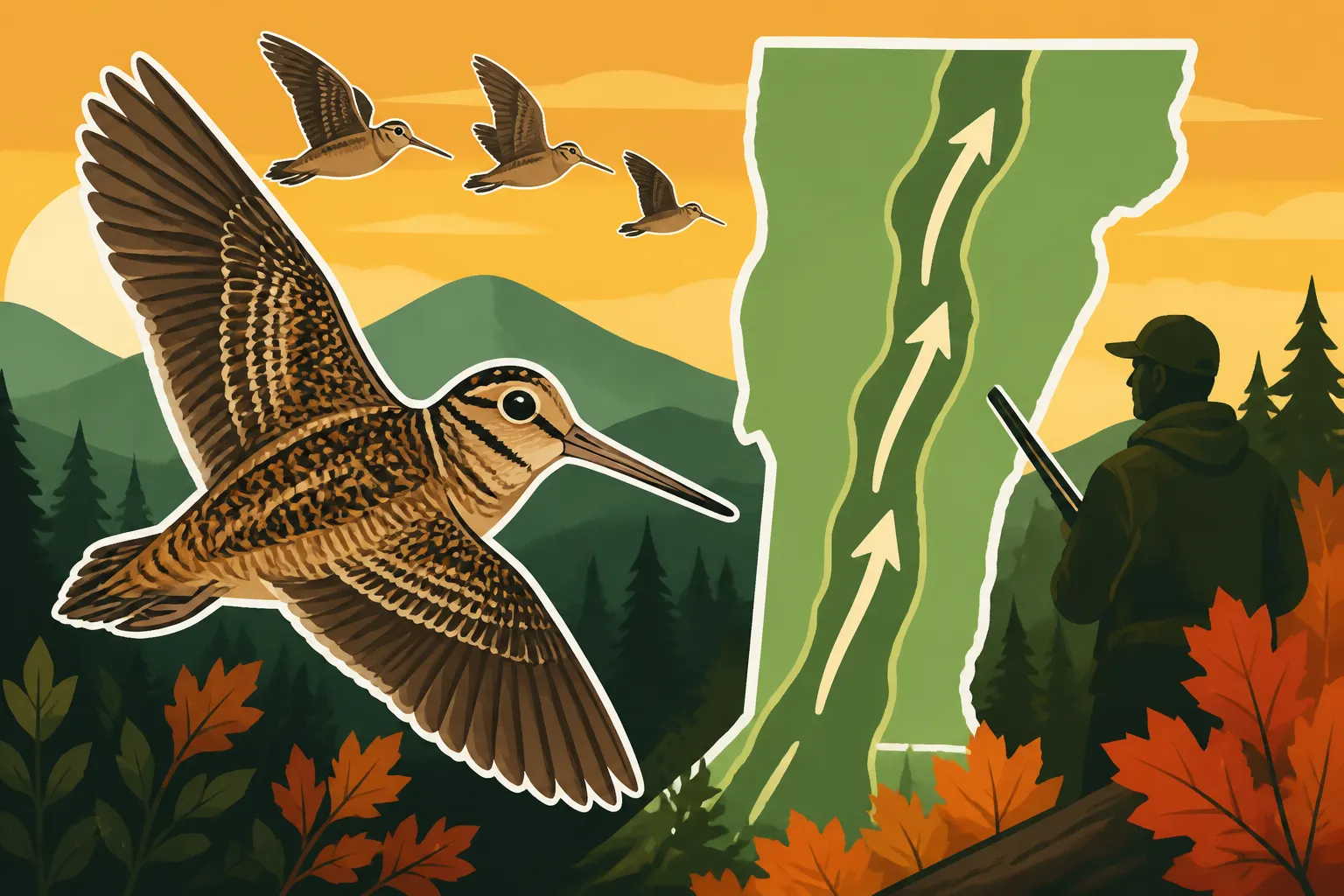
Why Vermont Is a Woodcock Migration Corridor
Many of us who love chasing migratory birds know the frustration of scouting a perfect patch of cover one day, only for the birds to be gone the next. Woodcock, in particular, can feel like phantoms – here today, miles away tomorrow. But for those of us in the Green Mountain State, there's a unique reason for their fleeting presence: Vermont plays a crucial role as a major thoroughfare for these fascinating timberdoodles. This guide will delve into exactly why Vermont serves as such a vital woodcock migration corridor, offering insights into their journey and what makes our state so appealing to them.
The Enigmatic Migration of the American Woodcock
The American woodcock, often lovingly called a timberdoodle, bog sucker, or bogsnipe, is one of the most unique and beloved migratory game birds we have in Vermont. Their long bills, large eyes, and distinctive flight patterns make them instantly recognizable to anyone who’s spent time in their preferred coverts. But it’s their annual journey, driven by instinct and the changing seasons, that truly defines their life cycle and our interaction with them.
Understanding the Annual Journey
Woodcock are primarily insectivores, with earthworms making up the bulk of their diet. This dietary preference is the key driver of their migration. As the ground freezes in their northern breeding grounds, earthworms become inaccessible, forcing these birds to seek warmer climes where the soil remains soft and productive. Their migration typically involves a southward movement from their breeding grounds across the northern U.S. and Canada to wintering areas, predominantly in the southeastern United States. It's a journey that can span hundreds, if not thousands, of miles, undertaken mostly at night.
For many hunters, understanding this annual journey is crucial. It’s not just about knowing when they move, but how and why. They aren't like ducks or geese, often flying in large, visible flocks along major rivers or coastlines. Woodcock tend to be more solitary, flying low and under the cover of darkness, making their movements harder to predict without a deeper understanding of their biology and behavior. They might be in your favorite covert one morning and entirely absent the next, pushed by a sudden cold snap or favorable winds. The window for prime woodcock hunting in Vermont is often fleeting, dictated by these migratory pulses.
Typical Migration Routes and Timing
The main migration corridor for woodcock in eastern North America is often referred to as the Atlantic Flyway, though their movements are less strictly defined than those of waterfowl. They typically funnel down through the Appalachians and along the eastern seaboard. Vermont, nestled within this broader flyway, experiences a significant influx of birds as they depart their Canadian breeding grounds and those further north in New England.
The timing of this migration is heavily dependent on weather. Early cold fronts in late September or early October can trigger the first major push of birds. This initial wave often consists of resident birds joining the southbound stream, followed by more birds from Canada. Peak migration through Vermont usually occurs in mid to late October, tapering off as November brings harder frosts and more consistent freezing. This is why many hunters planning a hunt for Fall Turkey Hunting Vermont's Statewide Archery Window or even preparing for Vermont's November Rifle Season might still encounter woodcock in suitable cover. Understanding these general timeframes allows hunters to better plan their outings, knowing when to expect the highest densities of transient birds. However, a sudden warm spell can hold birds longer, while an unexpected cold snap can clear them out overnight.
Vermont's Geographical Advantage as a Flyway
Vermont might be a small state, but its unique geography, characterized by distinct mountain ranges, river valleys, and a large lake, creates natural funnels and abundant stopover points that make it an irresistible corridor for migrating woodcock. These geographical features essentially guide the birds, offering both protection and sustenance during their arduous journey.
The Green Mountains as a Natural Funnel
The spine of the Green Mountains runs north to south through the heart of Vermont. While woodcock aren't typically high-mountain birds, the mountain ranges themselves act as a subtle funnel, directing birds into the valleys and foothills that flank them. Birds moving south tend to drift down into the lower elevations where habitat is more suitable and flight is less energetically demanding. This creates concentrated areas in the valleys and along the lower slopes of the Green Mountains.
Hunters often find pockets of woodcock in the draws and smaller stream bottoms that feed into the larger river systems within and alongside the mountains. These areas offer the perfect combination of soft soil, dense cover, and protection from strong winds. Imagine a broad-winged hawk riding thermals high above the peaks, but a woodcock is skirting the tree line in the sheltered valley below, avoiding predation and searching for soft ground. This funneling effect, though not as dramatic as a coastal migration, is a key reason why we see consistent numbers of woodcock moving through our state.
Influence of Lake Champlain and River Valleys
Beyond the Green Mountains, Lake Champlain and the major river valleys – like the Winooski, Lamoille, Missisquoi, and Connecticut River valleys – serve as crucial waypoints for migratory woodcock. Lake Champlain, being a significant geographic barrier, naturally forces birds to concentrate along its eastern shore as they navigate southward. The low-lying areas, wetlands, and associated river deltas along the lake provide extensive foraging and resting opportunities.
Similarly, the river valleys, with their floodplains and moist, alluvial soils, are prime woodcock real estate. The fertile banks of these rivers support rich, young forest growth – exactly what timberdoodles crave. The Connecticut River Valley, for instance, acts as another major north-south corridor, drawing birds through its extensive bottomlands. These linear features provide easily navigable pathways and continuous habitat, making them magnets for hungry, tired woodcock. When you're Decoying Ducks on Lake Champlain or Pass-Shooting Geese on the Connecticut River, don't be surprised if you flush a woodcock from the dense cover along the banks. These same hydrological features that attract waterfowl also create prime real estate for woodcock.
Ideal Habitat: What Attracts Woodcock to Vermont
Woodcock aren't just passing through Vermont; they're stopping here because our landscape offers some of the finest habitat available during their migration. Their needs are very specific: soft, moist soils for probing, and dense, young cover for roosting and protection. Vermont, with its unique blend of agricultural history, natural wetlands, and active forest management, provides this in spades.
Young, Successional Forests and Alder Thickets
Walk through a mature Vermont forest and you're unlikely to flush many woodcock. These birds thrive in what we call early successional habitat – young, regenerating forests, shrubby fields, and especially alder thickets. This type of habitat often results from logging, old farm clearings, or beaver activity. Vermont, with its ongoing forestry practices and abundant beaver populations creating new flowages, constantly renews these vital areas.
Alder swamps and thickets, particularly, are woodcock magnets. The dense, vertical stems offer perfect camouflage from aerial predators, while the shade keeps the ground moist and rich in earthworms. These areas also provide cover from the wind and colder temperatures, allowing birds to conserve energy during their migration. Hunters seeking to increase their chances often focus on these specific cover types, knowing that if woodcock are in the area, they'll likely be found hiding in the densest, wettest parts. It’s also important to consider the ongoing efforts in managing Vermont's Ruffed Grouse and Woodcock populations, which often involve maintaining these very habitats.
Moist Soils and Abundant Earthworms
The true key to woodcock habitat is the soil itself. Their long, sensitive bills are perfectly adapted for probing soft, moist earth to extract their primary food source: earthworms. Vermont’s geology and climate contribute significantly to creating these ideal foraging conditions. Our abundant rainfall, numerous small streams, and many wetlands mean that vast tracts of land retain sufficient moisture, even into the dryer parts of fall.
Areas with rich, organic soil – like those found in old pastures, abandoned agricultural fields that are reverting to forest, and the aforementioned river bottoms – are particularly attractive. Even seemingly dry upland areas can hold woodcock if there's a spring seeping or a pocket of deeper, richer soil. This continuous availability of soft ground and a high density of earthworms makes Vermont an ideal refueling station for migrating birds. Without this critical food source, woodcock wouldn't linger; they'd push through quickly. When you use tools like GoHunt to scout, look for those low-lying areas, creek bottoms, and regenerating clear-cuts that scream "worms!"
Weather Patterns and Their Influence on Migration
While habitat is what holds woodcock, weather is what pushes them. Understanding the role of atmospheric conditions is paramount for any hunter hoping to intercept these migratory marvels in Vermont. It's a constant dance between cold fronts, wind direction, and temperature drops that dictates when and where the birds will show up.
Cold Fronts as a Catalyst
The most significant trigger for woodcock migration is often the passage of a strong cold front. As a high-pressure system moves in behind a cold front, it typically brings clear skies, colder temperatures, and often a northerly wind. For woodcock, this signals that freezing temperatures and hard ground are on their way to their northern breeding grounds, making earthworms inaccessible. They'll sense this change, and often, the day after a strong cold front moves through is when you'll see a significant push of new birds into Vermont.
These fronts act like a starting gun, telling the birds it's time to go. They'll often move overnight, covering considerable distances. What might have been an empty covert yesterday could be teeming with fresh birds this morning. Keeping a close eye on the long-range weather forecast is essential. If you see a dip in temperatures coupled with northerly winds predicted, it's time to wax your boots and get ready for some serious walking. This is true not just for woodcock, but often for deer movement as well, as many hunters observing Hunting Deer After a Cold Front will attest.
Wind Direction and Temperature Swings
Beyond major cold fronts, subtle shifts in wind direction and daily temperature swings also play a critical role. Consistent northerly winds, even without a dramatic temperature drop, can aid southbound migration, allowing birds to expend less energy during their nocturnal flights. Conversely, strong southerly winds can slow or even temporarily halt migration, sometimes holding birds in an area for a few extra days until conditions are more favorable.
Daily temperature fluctuations also matter for foraging. Even if the ground is soft during the day, a hard overnight freeze can render many areas unusable by morning. Woodcock will seek out those sheltered, south-facing slopes or thick coverts that warm up quicker and hold moisture longer, keeping the soil workable for their sensitive bills. Hunters need to consider not just the forecast for their hunt day, but the overnight lows and previous day's winds to predict where birds might be concentrated. This nuanced understanding of weather impacts on game movement is vital, especially when dealing with such a weather-sensitive species.
Scouting and Hunting Woodcock in Vermont
While woodcock hunting can sometimes feel like a game of chance, there are definite strategies you can employ to increase your odds of finding these birds in Vermont. It all comes down to knowing their habits, understanding their habitat preferences, and employing effective scouting and hunting techniques.
Key Signs of Woodcock Presence
Before you even shoulder your shotgun, knowing how to read the landscape for woodcock sign is crucial. The most obvious sign is their characteristic "borings" – small, pencil-sized holes in the soft ground where they've probed for worms. Look for these in moist areas, especially under the dense cover of alder or young hardwoods. Often, you'll see several borings in a concentrated area.
Another key sign is their droppings, which are distinctly whitish, splattered affairs, often found on leaves or moss in their foraging areas. In the spring, you’d also look for Vermont Woodcock Singing Ground Surveys, but in the fall migration, borings and droppings are your best bet. Beyond physical signs, listen. Woodcock have a unique "peent" call they make, particularly around dusk and dawn, though less frequently during migration than during breeding season. If you're walking through good cover and you hear that distinct call, you know you're in the right neighborhood. Tools like GoHunt can help you identify public and private land, allowing you to focus your scouting efforts on areas with high potential.
Effective Hunting Strategies in Vermont Coverts
Hunting woodcock in Vermont is primarily a dog-and-gun sport, but even without a dog, focused effort can yield success. The key is to walk slowly and deliberately through promising cover. These birds hold incredibly tight, often letting you walk right by them if you’re moving too fast. Zigzag through alder thickets, young birch stands, and regenerating clear-cuts, paying close attention to moist depressions.
When a bird flushes, be ready. Their flight is erratic, often rocketing straight up through the cover before leveling off and darting away. Shotguns with open chokes (like Improved Cylinder or Skeet) and smaller shot sizes (like 7.5 or 8) are ideal for these close-quarters, quick-shot opportunities. Remember, woodcock aren't large birds, so light loads are perfectly adequate. If you do flush a bird, mark where it goes, as they often don't fly far and may offer a second opportunity. Focusing on areas with diverse cover, like the edge of a Beaver Flowage Edge at Dusk or a regenerating timber cut, can also prove fruitful.
Conservation Efforts for Woodcock and Their Habitat
While woodcock are a renewable resource, their populations face challenges, largely due to habitat loss and degradation. Because Vermont is such a vital migration corridor, conservation efforts here play an outsized role in the health of the overall Atlantic Flyway population. Hunters, land managers, and conservation organizations all contribute to ensuring these unique birds continue to grace our coverts.
Habitat Management and Regeneration
The biggest challenge for woodcock, and many other early successional species like ruffed grouse, is the decline of suitable young forest habitat. As forests mature, the dense understory that woodcock require for cover and foraging diminishes. This makes active habitat management crucial. In Vermont, efforts by the Vermont Fish & Wildlife Department, along with private landowners and organizations like the Ruffed Grouse Society, focus on creating and maintaining these vital habitats.
Techniques include carefully planned timber harvests that create young, regenerating stands, controlled burns in appropriate areas, and encouraging beaver activity where it's beneficial. Many Vermont Wildlife Management Areas are actively managed with these species in mind, providing public hunting opportunities while simultaneously benefiting the birds. Understanding this need for specific, managed habitat underscores the importance of supporting conservation initiatives that prioritize early successional forest types, especially in a state so important to the woodcock's migratory success.
Monitoring and Research for Population Health
Beyond direct habitat work, ongoing monitoring and research are essential for understanding woodcock population trends and adapting management strategies. Vermont participates in various surveys, including the crucial singing-ground survey in the spring, which helps estimate breeding populations. Data collected from hunter harvests also provides valuable insights into population dynamics.
This research helps scientists understand migration patterns, identify key stopover sites, and assess the impact of environmental changes. For example, if data indicates a decline in specific areas, land managers can investigate habitat changes or other contributing factors. By supporting these scientific endeavors, we help ensure that decisions about hunting seasons and habitat projects are based on the best available information. Utilizing platforms like GoHunt for scouting can also indirectly aid conservation by encouraging hunters to explore new areas, diversifying hunting pressure and increasing awareness of different habitats.
The Hunter's Role in Conservation
Hunters, by purchasing licenses and stamps, are often the primary funders of wildlife conservation efforts. Our passion for pursuing game birds like the woodcock directly translates into financial support for the habitat work and research that benefits not just woodcock, but countless other species. Additionally, ethical hunting practices, such as accurate bird identification (especially ensuring you're not shooting protected non-game birds), responsible shooting, and accurate harvest reporting, all contribute to the sustainable management of the resource.
Being a good steward of the land also means respecting private property, gaining permission when necessary, and understanding the nuances of how different land types are managed. Whether you're hunting in Green Mountain National Forest's Two Districts or on a small private woodlot, your actions contribute to the perception and reality of responsible hunting. Our collective efforts ensure that future generations will also have the opportunity to experience the thrill of a timberdoodle flushing from a Vermont covert.
Disclaimer
This article is for general informational purposes only and does not constitute professional advice. Laws, prices and regulations vary by location and change over time. Consult a qualified professional for guidance on your specific situation.