Vermont Snowshoe Hare Population Trends
There's nothing quite like the thrill of chasing a snowshoe hare through a thick Vermont spruce stand, especially with a fresh blanket of snow on the ground. But if you've been out in recent years, you might have noticed that some of those once-reliable rabbitat patches aren't producing like they used to, leaving you wondering if the hare have simply moved on, or if something bigger is at play. This guide dives deep into the intricate world of Vermont snowshoe hare population trends, helping you understand the forces at work and how they might affect your next hunt.
The Elusive Nature of Vermont's Snowshoe Hare and Why They're So Challenging
Snowshoe hares are iconic residents of Vermont's coniferous forests and dense thickets, known for their incredible camouflage shifts and a remarkable ability to vanish in a blink. Their pursuit is a time-honored tradition for many, often involving beagles and crisp winter mornings. However, these little dynamos present a unique set of challenges for anyone trying to understand their numbers and predict their whereabouts. Their elusive nature makes them tough to count, and their populations are anything but static, leaving many hunters scratching their heads.
Understanding Their Habitat Preferences and Seasonal Shifts
Snowshoe hares thrive in specific environments, preferring dense softwood cover like spruce, fir, and cedar swamps, or young, regenerating forest stands that offer plenty of overhead and horizontal cover. Think about those impenetrable areas where you almost need to crawl – that's often prime hare territory. This thick cover provides essential protection from aerial predators like owls and ground predators such as coyotes and bobcats. They're not keen on wide-open hardwood forests unless there's a dense understory of young saplings and brush. During the summer, they rely on their brown coat to blend in with the forest floor, moving through dense ferns and underbrush. Come winter, their famous white coat perfectly matches the snow, and they often stay within the densest parts of their preferred habitat, rarely venturing far into open areas. This seasonal habitat fidelity, or lack thereof if conditions change, can make it tricky to predict where to find them year after year, especially if their preferred cover starts to thin or grow out.
The Cyclical Rollercoaster: Natural Population Swings
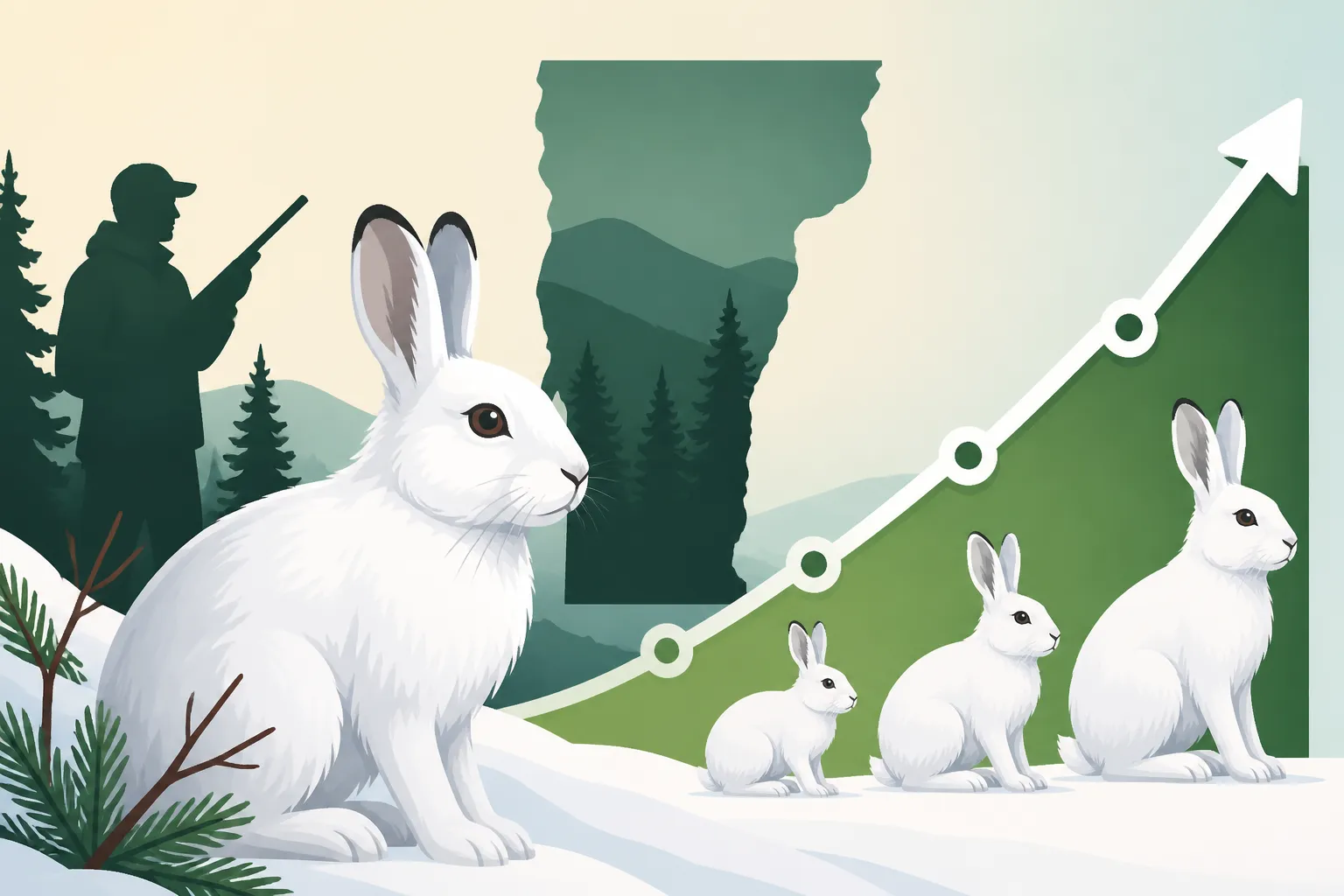
One of the most fascinating, and sometimes frustrating, aspects of snowshoe hare populations is their well-documented cyclical nature. These aren't just minor fluctuations; we're talking about significant booms and busts that can occur over roughly an 8-11 year period. For a few years, you might feel like every patch of thick timber is crawling with hare, only to find them seemingly vanish for the next few years, leaving you to wonder if you've lost your touch. This cycle is often driven by a complex predator-prey relationship, primarily with species like lynx and bobcats, whose populations rise and fall in response to hare abundance. When hare numbers are high, predators thrive, which in turn puts more pressure on the hare, causing their numbers to crash. As the hare population dwindles, the predator population eventually follows suit, allowing the hare to rebound, and the cycle begins anew. It’s a natural dance, but it certainly keeps hunters on their toes, forcing us to constantly re-evaluate where the best hunting might be. Understanding this inherent variability is key to managing expectations and adapting your hunting strategy.
Key Environmental Factors Shaping Vermont's Hare Numbers
Beyond the natural predator-prey cycles, several significant environmental factors play a massive role in shaping whether Vermont's snowshoe hare populations are flourishing or struggling. These aren't always immediately obvious when you're tramping through the woods, but they have profound, long-term effects that every hunter should consider.
The Crucial Role of Habitat Degradation and Successional Forests
Perhaps the most critical factor influencing snowshoe hare populations in Vermont is habitat. Hares are specialists when it comes to cover – they need dense, young forest growth. Think about areas that have been recently logged, or clear-cuts that are now regenerating, thick with young conifers and deciduous saplings. This type of "early successional" habitat is absolutely vital. The challenge we face in many parts of Vermont is a trend toward mature forests, a consequence of past land use changes. As agricultural lands were abandoned in the 19th and early 20th centuries, they naturally reverted to forest. Now, many of those forests are reaching maturity, with older, taller trees and a much less dense understory. While this is great for some species, it spells trouble for the snowshoe hare. Without consistent disturbances like logging, wildfires (less common in Vermont), or even major wind events, the prime hare habitat gradually diminishes. Scouting for these patches of new, thick growth is paramount, and sometimes that means looking for areas that have seen timber management. For more on finding good spots, check out guides like Scouting Vermont Public Land Before Season or Reading Aerial Photos for Green Mountain Deer which offer principles applicable to hare hunting too.
Predation Pressure and Its Impact on Hare Survival
While the cyclical nature of hare populations often involves predators, the sheer amount and type of predation can also be a standalone factor impacting overall numbers. Vermont is home to a healthy population of predators that regularly include snowshoe hares in their diet. Coyotes, bobcats, foxes, and even certain raptors like great horned owls are all skilled hare hunters. When generalist predators like coyotes are abundant, or when harsh winters make hares more vulnerable, the cumulative predation pressure can be intense, especially on local populations. A dense stand of young conifers might protect a few hares, but if the surrounding landscape is too open, they become easy targets moving between cover patches. This is why having contiguous blocks of suitable habitat is so important. If you’re seeing a lot of coyote sign in an area that used to hold hares, it might be a clue that the hare population is struggling there. Understanding these predator dynamics can help you choose better hunting locations, or even consider pursuing some of those predators yourself to help balance the ecosystem, as discussed in Coyote Calling Vermont Farm Country.
Winter Weather and Snow Depth: A Double-Edged Sword
You might think deep snow is always good for snowshoe hares, given their oversized feet are perfectly adapted for it. And yes, adequate snow cover allows them to access higher browse and better escape predators by staying on top of the snow. However, winter weather can also be a double-edged sword. Too little snow, especially during periods when their coat has already turned white, leaves them dangerously exposed against brown earth or sparse ground cover. They stand out like a beacon to predators. Conversely, unusually deep, persistent snows, especially if coupled with extreme cold and ice crusts, can also be detrimental. While their snowshoes help, navigating through feet of heavy, crusted snow is exhausting and limits their access to food sources, leading to malnutrition and increased vulnerability. Furthermore, a late-season thaw followed by a sudden freeze can create icy conditions that are difficult for hares to move through, making them easy prey. The timing and consistency of Vermont's winter weather, therefore, play a significant role in both their survival rates and their ability to thrive.
Tracing the Historical Arc of Snowshoe Hare Populations
Understanding where snowshoe hare populations stand today often means looking back at where they've been. Vermont's landscape has undergone immense changes over the centuries, and these historical shifts have left an indelible mark on everything from deer to turkeys, and certainly on our small game species like the snowshoe hare.
Learning from Past Booms and Busts
Historical records and long-term wildlife studies paint a picture of snowshoe hare populations that have always been dynamic, characterized by those natural 8-11 year cycles we discussed. Old-timers will tell stories of years where hare seemed to be everywhere, often coinciding with peaks in predator populations like lynx in the northern reaches of New England. These booms were often followed by equally dramatic crashes. What's important to recognize is that while these cycles are natural, the baseline population levels around which they fluctuate can change. If a "boom" year now yields significantly fewer hares than a boom year fifty years ago, it suggests a broader, underlying issue beyond just the cycle itself. This historical perspective helps us differentiate between a temporary dip in a natural cycle and a more concerning long-term decline that might signal habitat loss or increased environmental pressures. Hunters who keep detailed logs of their outings might even notice these cycles playing out in their own observations over the years.
The Influence of Past Land Use Changes on Hare Distribution
Vermont's history is largely a story of transformation from dense forest to widespread agriculture and back again. In the 19th century, much of the state was cleared for farming and pastureland. This vast deforestation would have severely fragmented and reduced prime snowshoe hare habitat. As farms were abandoned in the early to mid-20th century, the landscape began a slow process of reforestation, providing a temporary explosion of the early successional habitat that hares adore. This period likely saw a rebound in hare numbers. However, as these forests have matured, the pendulum has swung back. The modern landscape, with its patchwork of mature timber, residential development, and fewer active logging operations in some areas, means that suitable hare habitat is now often more isolated and less abundant than it once was. Hunters trying to find Where Vermont Hare Populations Hold Up Best will often be seeking out these specific, often localized, pockets of ideal, younger forest growth, a direct consequence of historical and ongoing land use patterns. This means your scouting efforts are more critical than ever.
Current Status and Regional Variations of Vermont's Snowshoe Hare
So, what does all this mean for the snowshoe hare hunter today? The reality is that while hares are still a viable game species in Vermont, their presence can vary significantly depending on where you are and what the local conditions have been like. It's not a one-size-fits-all situation across the Green Mountain State.
Spotting Trends in the Green Mountains Versus Other Regions
Vermont's diverse geography means that snowshoe hare populations aren't uniformly distributed. The Green Mountain National Forest, particularly its higher elevations and areas with extensive softwood stands, often holds good numbers of hares. These areas tend to have more consistent, suitable habitat and can be less impacted by certain forms of human development. Hunters who are willing to put in the effort to explore these rugged areas, perhaps hunting in similar terrain as those seeking Still-Hunting Green Mountain National Forest Timber, might find better success. In contrast, more developed areas or agricultural regions like parts of the Champlain Valley might have much more fragmented and limited hare habitat, leading to lower and more isolated populations. The Northeast Kingdom, with its vast tracts of undeveloped forest and active timber management, can also be a stronghold for hares, offering extensive stretches of prime cover. It’s important to research specific regions and look for the habitat that hare prefer, rather than assuming they’ll be present everywhere. Utilizing resources like the Vermont Fish and Wildlife Department's reports or mapping tools available through platforms like GoHunt can help you identify these regional differences and focus your efforts.
Deciphering Harvest Data for Insights into Local Populations
While challenging to conduct comprehensive population surveys for elusive species like snowshoe hare, harvest data collected from hunters can offer valuable insights. The Vermont Fish and Wildlife Department compiles information on Vermont Snowshoe Hare Harvest Numbers, and looking at these reports over time can reveal trends. For instance, if harvest numbers are consistently low in a particular Wildlife Management Unit (WMU) compared to historical averages, it could indicate a struggling population or a decline in suitable habitat in that area. Conversely, stable or increasing harvest numbers in other WMUs might point to healthier populations or successful habitat management efforts. It's crucial to remember that harvest data is an indicator, not a direct census. It reflects hunter effort, weather conditions, and accessibility, in addition to actual hare numbers. However, when combined with your personal observations and scouting efforts, it can be a powerful tool for understanding where to focus your attention for Small Game and Predator Hunting in Vermont. Tools like GoHunt can also often layer harvest data over maps, giving you a visual representation of successful areas over the years.
Management and Conservation Strategies for a Sustainable Future
Given the complexities of hare populations, it's clear that thoughtful management and conservation are essential to ensure these charismatic little creatures continue to thrive in Vermont for generations to come. Both wildlife agencies and individual hunters have a role to play in this ongoing effort.
How Vermont Fish & Wildlife Aims to Support Hare Populations
The Vermont Fish and Wildlife Department actively works to maintain healthy wildlife populations across the state, and snowshoe hare are no exception. Their strategies often revolve around habitat management, recognizing that a stable supply of dense, young forest cover is the cornerstone of hare survival. This might include promoting responsible timber harvesting practices on public and private lands that create early successional habitats. They also monitor harvest data and conduct scientific research to better understand population dynamics, predator-prey relationships, and the impacts of climate change on hare. While there isn't typically a specific "hare management plan" in the same way there might be for deer or moose, hare benefit greatly from broader forest management initiatives aimed at creating diverse age classes of forest. By supporting these efforts, either through advocacy or by participating in programs on your own land, you contribute directly to the health of Vermont Small Game and Furbearers.
The Role of Hunters in Hare Conservation and Data Collection
As hunters, we are often the boots on the ground, witnessing changes in wildlife populations firsthand. Our role in hare conservation is incredibly important. One of the most direct ways to contribute is by accurately reporting your harvests. This data, as mentioned earlier, is vital for the Fish and Wildlife Department to track trends. Beyond reporting, responsible hunting practices, such as respecting bag limits and hunting ethically, help ensure a sustainable harvest. Furthermore, becoming keen observers of habitat is a huge contribution. If you notice a particular area that once held many hares is now barren, or conversely, a new area suddenly has an abundance, sharing that information with the department can be incredibly valuable. Advocating for habitat management practices that create and maintain early successional forests on both public and private lands is another powerful way hunters can make a difference. We are not just consumers of the resource; we are its stewards.
Adapting Your Hunting Strategy to Current Hare Dynamics
Understanding snowshoe hare population trends is only half the battle; the other half is knowing how to adapt your hunting strategy to make the most of the current conditions. You can’t just rely on yesterday’s hotspots, especially with the ebb and flow of hare numbers.
Scouting for Prime Habitat in a Changing Landscape
With hare populations fluctuating and habitat continually evolving, thorough scouting has become more critical than ever. Don't just revisit last year's successful spot and expect the same results, especially if it was an older clear-cut that's now grown too tall. Instead, focus on finding those specific habitat types: young regenerating forests, dense softwood thickets, and areas with plenty of downed timber and brush piles. Look for areas where logging has occurred in the last 5-15 years, or where natural disturbances have created dense regrowth. Using topographical maps and aerial imagery, perhaps with a tool like GoHunt, can help you identify these potential areas from home before you even step foot in the woods. Pay attention to transitions between different forest types, as hares often utilize the edges where dense cover meets slightly more open foraging areas. Always be on the lookout for fresh droppings, chewed twigs, and hare tracks, especially after a fresh snowfall. These are your best indicators that hares are currently using an area. For those hitting public lands, this meticulous scouting can really pay off in finding ground others might overlook.
Techniques for Successfully Running Beagles on a Vermont Snowshoe Hare
For many, the quintessential way to hunt snowshoe hare in Vermont is with a pack of beagles. Their melodious baying as they chase a hare through the thick brush is a sound that defines winter hunting for so many. When populations are strong, a good pack of dogs can make quick work of finding and pushing hare. However, when numbers are down, even the best dogs will struggle if there simply aren't enough hares to scent.
Here’s where adapting your strategy becomes vital:
- Patience and Persistence: If populations are low, you might need to cover more ground and spend more time in each promising thicket. Don't give up after one or two unproductive drives.
- Focus on the Densest Cover: Hares will always gravitate towards the thickest cover available, especially when they're under pressure. Direct your dogs and your efforts to these nearly impenetrable areas. This is where you might find a hare trying to hide out from predators, or where they'll make their circles when pushed by dogs.
- Strategic Posting: If you're hunting with a group, knowing where to post shooters is key. Hares tend to run in circles or predictable patterns within their home range. Learn these routes and position yourself accordingly. This often means standing quietly along known hare trails or breaks in the cover where a hare might cross.
- Wind and Snow Conditions: Pay attention to the weather. Fresh, light snow is ideal for tracking and for dogs to pick up scent. Very cold, dry conditions can make scenting difficult, while heavy wet snow can quickly tire dogs.
- Listening for the Dogs: A good beagle pack will tell you a lot. Listen to the changes in their baying – a faster, more excited pace usually means they’re hot on a hare. A more hesitant baying might indicate a cold trail or that the hare has temporarily outsmarted them.
For a deeper dive into this classic method, check out Running Beagles on a Vermont Snowshoe Hare. While dogs do much of the work, understanding how hares move and react in different conditions will still significantly improve your chances, especially when numbers aren't what they used to be.
Still-Hunting and Tracking Strategies in Lean Years
Even without dogs, a successful hare hunt is absolutely possible, and sometimes, it’s even more rewarding because it demands a different kind of skill and patience. This becomes especially true when hare numbers are a bit lower, making dog-driven pushes less efficient.
When still-hunting or tracking, you're essentially becoming the silent hunter, relying on your eyes and ears rather than a pack's nose. The key here is to move very slowly through prime hare habitat. Every few steps, pause, scan the cover ahead, and listen intently. Hares are masters of camouflage, and they will often sit incredibly tight, hoping you'll walk right past them. Look for their dark eyes, the outline of an ear, or a slight unnatural shape against the background of snow or brush.
After a fresh snowfall, tracking becomes your best friend. Look for distinct snowshoe hare tracks – their large hind feet leave impressions well ahead of their smaller front feet. Follow these tracks into dense cover, moving cautiously. Sometimes, the tracks will lead you right to a hare bedded down in a thicket. In other cases, they might jump and run, offering a quick shot. This method requires intense focus and a deep understanding of hare behavior, but it can be incredibly effective and offers a truly immersive hunting experience in the quiet winter woods. Being proficient in reading winter sign, similar to techniques used in Tracking a Deer in Fresh Green Mountain Snow, will serve you well.
Disclaimer
This article is for general informational purposes only and does not constitute professional advice. Laws, prices and regulations vary by location and change over time. Consult a qualified professional for guidance on your specific situation.