Vermont Red Squirrel Range
There’s nothing quite like the sound of a red squirrel absolutely letting you have it from a pine bough, is there? You’re trying to slip silently through the woods, maybe on your way to a deer stand or just enjoying a quiet hike, and suddenly, this little dynamo unleashes a torrent of chirps and barks. It’s enough to make you chuckle, or sometimes, if you're stalking game, quietly grit your teeth. These feisty, fiery little creatures are an indelible part of the Vermont landscape, but understanding their range and habits is key to appreciating their role in our wild spaces, whether you're a hunter, a hiker, or just a curious observer. This guide will dive deep into where you can expect to find Vermont's red squirrels, what makes their chosen habitats so special, and how they interact with the broader ecosystem here in the Green Mountain State.
Understanding Vermont's Red Squirrels: A Familiar Forest Resident
The Eastern Red Squirrel, or Tamiasciurus hudsonicus, is a staple of our Vermont forests, a tiny powerhouse of energy and noise. If you've spent any time in our woods, you've undoubtedly encountered them, even if you didn't always realize who was making all that racket. They're much more than just a noisy neighbor; they play a significant role in the intricate web of life that thrives here in Vermont.
Identifying the Eastern Red Squirrel
When we talk about red squirrels in Vermont, we're almost always referring to the Eastern Red Squirrel. They're pretty easy to pick out once you know what to look for, especially when compared to their larger, grayer cousins. Red squirrels are noticeably smaller than gray squirrels, sporting a lean body typically measuring about eight to twelve inches long, including their tail. Their most distinctive feature, as their name suggests, is their rusty red or orange fur on their back, often transitioning to a lighter, almost white, belly. Many also have a clear white ring around their eyes, which gives them a rather alert, almost wide-eyed look. Their tail is bushy, but not quite as magnificent or long as a gray squirrel's, and often has a reddish hue.
These little guys are perpetual motion machines, always busy, always foraging, and almost always vocal. Their high-pitched, chattering alarm calls are legendary among hunters and hikers alike. They're quick, agile climbers, perfectly adapted to scamper up the trunk of a tall pine or dart along the thinnest branches. Knowing these distinct characteristics helps you not only identify them but also understand their specific behaviors within our diverse Vermont forests.
Their Role in the Vermont Ecosystem
It might seem like such a small creature couldn't have a huge impact, but the red squirrel is an important cog in the ecological machinery of Vermont. For starters, they are significant consumers and dispersers of tree seeds, especially those from conifers. While they stash away enormous amounts of seeds for their winter sustenance, they inevitably forget some, or some caches are never fully utilized. These forgotten seeds often sprout, contributing to forest regeneration. Think of them as tiny, albeit rather grumpy, forest planters. This seed dispersal is crucial for the health and diversity of our woodlands.
Beyond their planting habits, red squirrels are also a vital food source for a variety of predators. Everything from bobcats and fishers to hawks and owls will readily pursue a red squirrel. Vermont Bobcat Population Trends and Vermont's Recovering Fisher Population highlight how these predators rely on small mammals like red squirrels to survive. Even larger predators, like coyotes, won't turn down an easy meal, and the red squirrel, for all its vigilance, can sometimes become just that. Their constant activity and vocalizations also serve as an early warning system for other forest dwellers. If a red squirrel is chattering furiously, it might be alerting other animals (and you!) to the presence of a hawk overhead or a fox slinking through the underbrush.
Where to Find Them: The Red Squirrel's Vermont Habitat
When you're thinking about where red squirrels call home in Vermont, you're generally looking at our vast tracts of forest, but with a specific preference for certain tree types. Unlike the more adaptable gray squirrel that often thrives in urban parks and deciduous woodlands, red squirrels have a more particular palate when it comes to habitat.
Preferred Forest Types Across the State
Red squirrels are truly creatures of the coniferous and mixed forests. Their diet relies heavily on the seeds of pine, spruce, and fir trees, which is why you'll find them most abundantly in areas dominated by these evergreens. While they will venture into hardwood stands, especially if there's a strong mast crop of acorns or beech nuts, their true strongholds are our softwood forests. This includes the dense spruce-fir stands of the Northeast Kingdom, the mixed forests found throughout the Green Mountains, and even smaller pockets of conifers in the Champlain Valley. When you're scouting new ground, perhaps with a tool like GoHunt, look for those dark green swaths on a satellite map – that's a good place to start for red squirrels.
They particularly love mature forests where cone production is high. Here, they'll establish elaborate underground caches, known as middens, where they store thousands of cones. These middens are often built near the base of a tree, under a log, or even in an old stump, providing protection from the elements and predators. So, if you're walking through a patch of woods and notice a massive pile of chewed-up cone scales, you've found a red squirrel's pantry! This preference for specific forest types is a key indicator when you are trying to understand where to look for them, whether for small game hunting or just observation.
Regional Differences in Red Squirrel Abundance
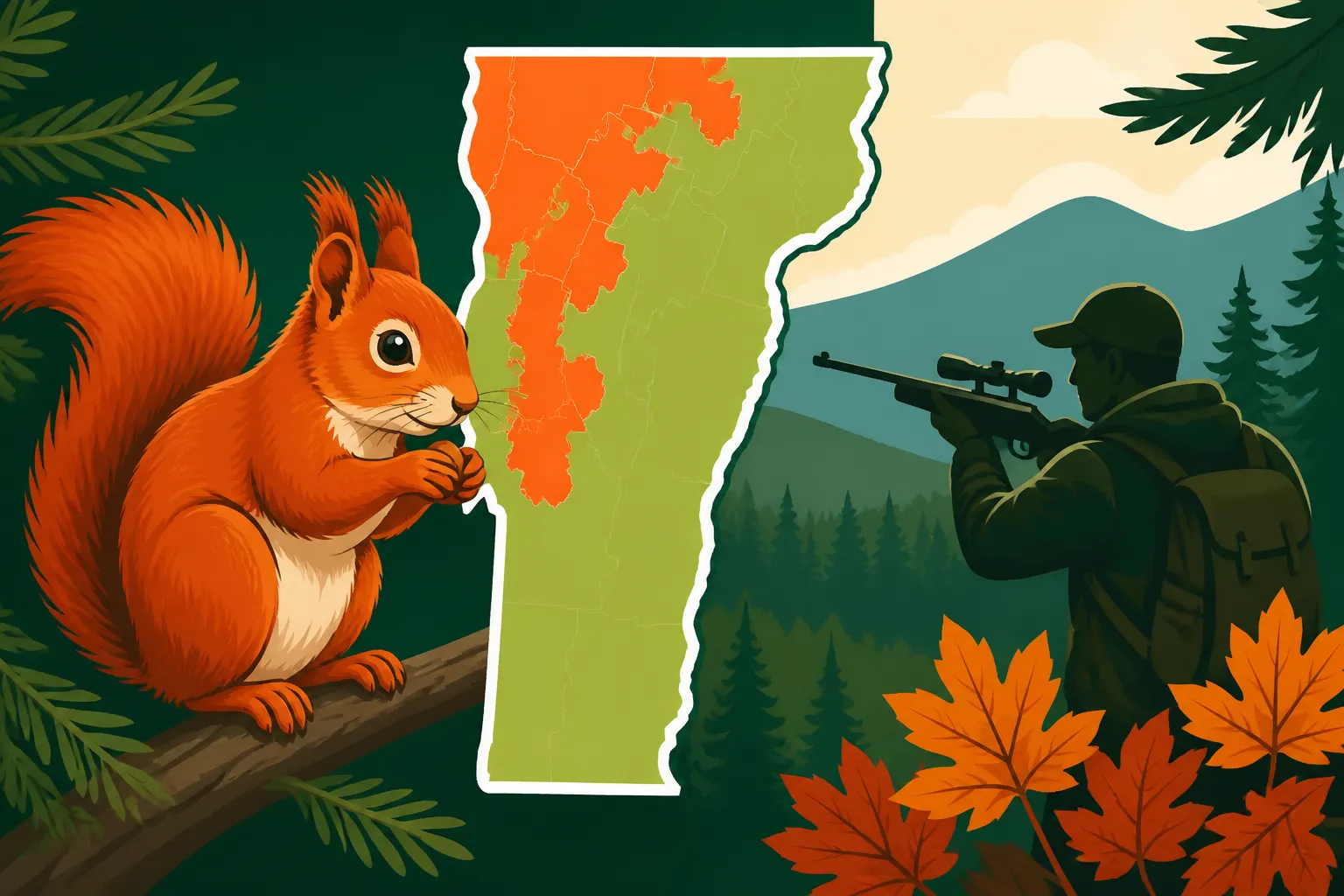
While red squirrels are widespread across Vermont, their density can vary significantly by region, largely mirroring the prevalence of their preferred coniferous habitat. You'll likely find the highest concentrations in areas like the Northeast Kingdom, which boasts extensive stretches of spruce and fir forests. Places like Victory Basin Wildlife Management Area or sections of the Green Mountain National Forest within the Northeast Kingdom are prime red squirrel territory. Hunting the Northeast Kingdom or Hunting Vermont's Green Mountain National Forest will often put you right in their wheelhouse.
In contrast, the Champlain Valley, with its more agricultural landscape and prevalent deciduous forests, tends to have lower densities of red squirrels, although you'll still find them wherever there are significant conifer plantings or mixed woodlots. The Green Mountains themselves, with their higher elevations and often dense mixed forests that transition to pure conifers at higher altitudes, also support robust populations. Understanding these regional habitat preferences can help you narrow down your search if you're specifically looking to observe or hunt these busy rodents. It's all about matching their needs with the available environment, and Vermont offers plenty of that.
Signs of Their Presence: Nests, Middens, and Chatter
Even if you don't spot a red squirrel, you'll almost certainly find evidence of their presence. Their vocalizations are perhaps the most obvious sign. That rapid-fire chatter, often accompanied by a foot-stamping display, is unmistakable. They use these calls to warn off intruders, communicate with other squirrels, or simply express their general displeasure at your presence in their territory. It's a sound that's as characteristic of the Vermont woods as a crow's caw or a barred owl's hoot.
Beyond their vocal protests, look for their "middens" – those tell-tale piles of cone scales. These can range from small accumulations to mounds several feet high and wide, representing years of diligent caching and feeding. You'll find them at the base of trees, often under the protective canopy of a conifer, or tucked away beneath a fallen log. Another sign is their nests. Red squirrels typically build two types of nests: a drey, which is a messy ball of leaves, twigs, and bark high in a tree, or a den within a tree cavity, an old woodpecker hole, or even an underground burrow. These dens are particularly important for winter survival. Fresh tracks in the snow leading to a midden or tree are also a dead giveaway during the colder months. When using a scouting app, such as GoHunt, you can often identify dense conifer stands that are likely to hold these tell-tale signs, helping you predict where you'll encounter them.
The Red Squirrel's Impact on Vermont's Outdoors
Red squirrels aren't just cute and noisy; their activities have real consequences for the forest and its inhabitants, including us. From their unique caching habits to their interactions with other animals, understanding their impact helps us appreciate their complex role in Vermont's wild tapestry.
Food Sources and Cache Behavior
The red squirrel's diet is surprisingly diverse, though conifer seeds are undeniably their staple. They skillfully strip the scales off cones to get at the nutritious seeds within, leaving behind those characteristic piles in their middens. But they're not solely vegetarian. Red squirrels are opportunistic omnivores. They'll readily munch on mushrooms – sometimes even those toxic to humans – which they often dry on tree branches before stashing. They also consume nuts, berries, tree buds, and sap. More surprisingly, they've been observed preying on bird eggs and nestlings, and even small rodents, making them a more formidable presence than their size might suggest.
Their caching behavior is quite elaborate. They create massive middens, sometimes accumulating thousands of cones over seasons, which serve as their primary food pantry through the winter. This meticulous storage ensures their survival when other food sources are scarce. It’s an incredible feat of foresight and industry for such a small animal. Vermont Squirrel Nest Counts and Mast Crops are directly related to this, as heavy mast years can lead to increased caching and potentially higher squirrel populations. This constant activity of foraging and caching shapes the forest floor, redistributing organic matter and ensuring a steady supply of food for the squirrels themselves, which then fuels the next level of the food chain.
Interactions with Other Wildlife and Hunters
Red squirrels, for all their small stature, are fiercely territorial. They will vigorously defend their middens and preferred foraging grounds from other squirrels, and sometimes even from much larger animals, including humans. This aggressive streak is part of their charm, but it also means they can be a bit of a nuisance if they decide your bird feeder or attic is prime real estate. For hunters, they serve multiple roles. They are a legitimate small game species, offering a challenging hunt and a delicious meal. Squirrel Hunting Vermont Hardwoods and How Early Season Squirrels Give Themselves Away are excellent resources if you're interested in pursuing them. Many seasoned deer hunters can tell you tales of a red squirrel blowing their meticulously planned stalk with an ill-timed outburst. While frustrating, it's just part of their nature.
Beyond being a food source or a noisy alarm, red squirrels interact with other wildlife in more subtle ways. Their middens provide shelter for other small creatures, and their scattered food caches can benefit other foragers. They are a visible, active component of the ecosystem, constantly stirring things up and ensuring that the forest is never truly silent. Looking at maps on platforms like GoHunt and finding those dense patches of pine and spruce will often reveal excellent locations for observing these interactions.
Managing Red Squirrels Around Human Habitation
While most of us cherish the sight and sounds of red squirrels in the wild, their bold and inquisitive nature can sometimes lead to conflicts when they decide to move a little too close to home. Bird feeders are a perennial favorite, and these clever critters can often outwit even the most "squirrel-proof" designs. They are persistent, agile, and always looking for an easy meal. If you've ever had a red squirrel raid your bird feeder, you know exactly what I mean.
Beyond feeders, they can become a real problem if they gain access to attics, garages, or sheds. They can cause damage by chewing on electrical wires, insulation, and wooden structures, creating fire hazards and expensive repairs. Their middens can also accumulate in inconvenient places. The best defense is prevention: seal up any potential entry points into your home, trim tree branches away from your roof, and consider squirrel-resistant feeder designs. For those looking to manage populations in specific areas, Vermont Small Game and Furbearers provides context on regulations. Understanding their range and habits helps in both appreciating their wildness and managing their presence near our homes, ensuring a harmonious coexistence in our beautiful Vermont landscape.
Disclaimer
This article is for general informational purposes only and does not constitute professional advice. Laws, prices and regulations vary by location and change over time. Consult a qualified professional for guidance on your specific situation.