Vermont Rabbit Habitat Restoration Efforts
Finding a good patch of rabbit habitat in Vermont can sometimes feel like chasing a ghost, especially with so much of our landscape either maturing into dense, old-growth forest or being converted for development. This guide is all about shedding light on the dedicated efforts underway to restore and enhance vital rabbit habitats across the Green Mountain State, helping you understand both the challenges and the opportunities for these popular small game animals.
Understanding the Decline: Why Rabbit Habitat Needs a Helping Hand
It’s easy to lament the “good old days” when seemingly every farm field edge held a bustling population of cottontails, or when a quick walk through a softwood thicket meant bumping a snowshoe hare. But the truth is, the landscape has changed, and with it, the habitats that rabbits thrive in. This isn't just about development; it's about the natural progression of forests and changing agricultural practices, all of which impact the dense, brushy cover these animals absolutely need to survive and flourish.
The Vanishing Thickets and Young Forests
Think about what a rabbit needs: dense cover to hide from predators, abundant food sources within that cover, and safe places to raise their young. These needs are met perfectly by thickets, briar patches, and young, regenerating forests. Unfortunately, these types of habitats are increasingly hard to come by.
As Vermont's forests mature, they often grow into towering stands of hardwoods or conifers with an open understory. While beautiful and vital for many species, this mature forest structure simply doesn't offer the low-lying, impenetrable cover that rabbits, particularly Eastern cottontails, require. They can’t hide from hawks, owls, foxes, or coyotes when there’s no place to duck and weave. This shift away from early successional habitats—the brushy, young growth that pops up after disturbances like logging, fires, or abandoned fields—is one of the biggest challenges for rabbit populations. Timber management practices, while often designed for forest health or economic benefit, can sometimes inadvertently reduce optimal rabbit habitat if not specifically planned with small game in mind. When a mature forest is harvested, for example, if the subsequent regrowth isn't managed to encourage dense, shrubby patches, it can take years for suitable rabbit cover to return naturally.
For snowshoe hares, the story is similar, but they rely more heavily on dense young conifer stands, especially spruce and fir. These areas provide the intricate network of tunnels and escape routes that hares use to evade predators, particularly in winter when they blend in with the snow. As these conifer stands mature, they too can lose their dense undergrowth, leaving hares more exposed. It’s a classic ecological challenge: what's good for one species (say, a mature timber-loving deer) might not be ideal for another.
The Importance of Edge Habitat and Early Successional Growth
If you've spent any time hunting or simply observing wildlife, you know the magic of "edge habitat." This is where different habitat types meet—where a field borders a woodlot, where a clear-cut meets an older forest, or where a wetland transitions to upland. These edges are ecological hotspots, offering a smorgasbord of food and cover that attracts a wide variety of animals, including rabbits.
For rabbits, these edges are like a fortified grocery store. They can quickly dart into the dense cover of the woods or a briar patch if danger appears, but still access the succulent grasses, clover, and young shoots found in adjacent fields or regenerating areas. Early successional growth, in particular, is an absolute goldmine. This includes everything from young saplings and shrubs to dense patches of briars, sumac, and dogwood. It’s a stage of forest development that provides both abundant food in the form of buds, twigs, and bark, and incredibly effective concealment.
The issue is that in many parts of Vermont, especially on private lands that aren't actively managed for wildlife, the natural disturbances that create this early successional growth are less common. Forests are maturing without significant logging, and old fields are either being developed or naturally reverting to mature forest without intermediate stages of brushy growth. This lack of dynamic change means less new, dense habitat being created. The result is fewer places for rabbits to find both sustenance and safety, leading to declining numbers in areas that once held them in abundance. Hunters often find themselves scratching their heads, wondering why their favorite rabbit patches have gone quiet over the years. It’s often a direct result of this habitat maturation. Hunting a Clear-Cut Regrowth Edge is a great example of where this type of habitat can be found and hunted.
State-Led and Collaborative Restoration Efforts in Vermont
Recognizing the decline in critical habitats for many species, including our beloved rabbits and snowshoe hares, the Vermont Fish and Wildlife Department (VFWD) and various conservation partners have been working diligently on habitat restoration efforts. These aren't always grand, sweeping changes visible from the roadside; often, they are nuanced, targeted projects designed to breathe new life into specific areas. These initiatives are a testament to the dedication of wildlife biologists and land managers who understand that healthy wildlife populations start with healthy homes.
Vermont Fish and Wildlife Department Initiatives
The VFWD plays a crucial role in managing and enhancing habitat on public lands, especially within its extensive network of Wildlife Management Areas (WMAs). These WMAs are often specifically managed to create a mosaic of habitats, recognizing that different species thrive in different environments. For rabbits, this means active management practices aimed at creating and maintaining early successional forests and dense shrublands.
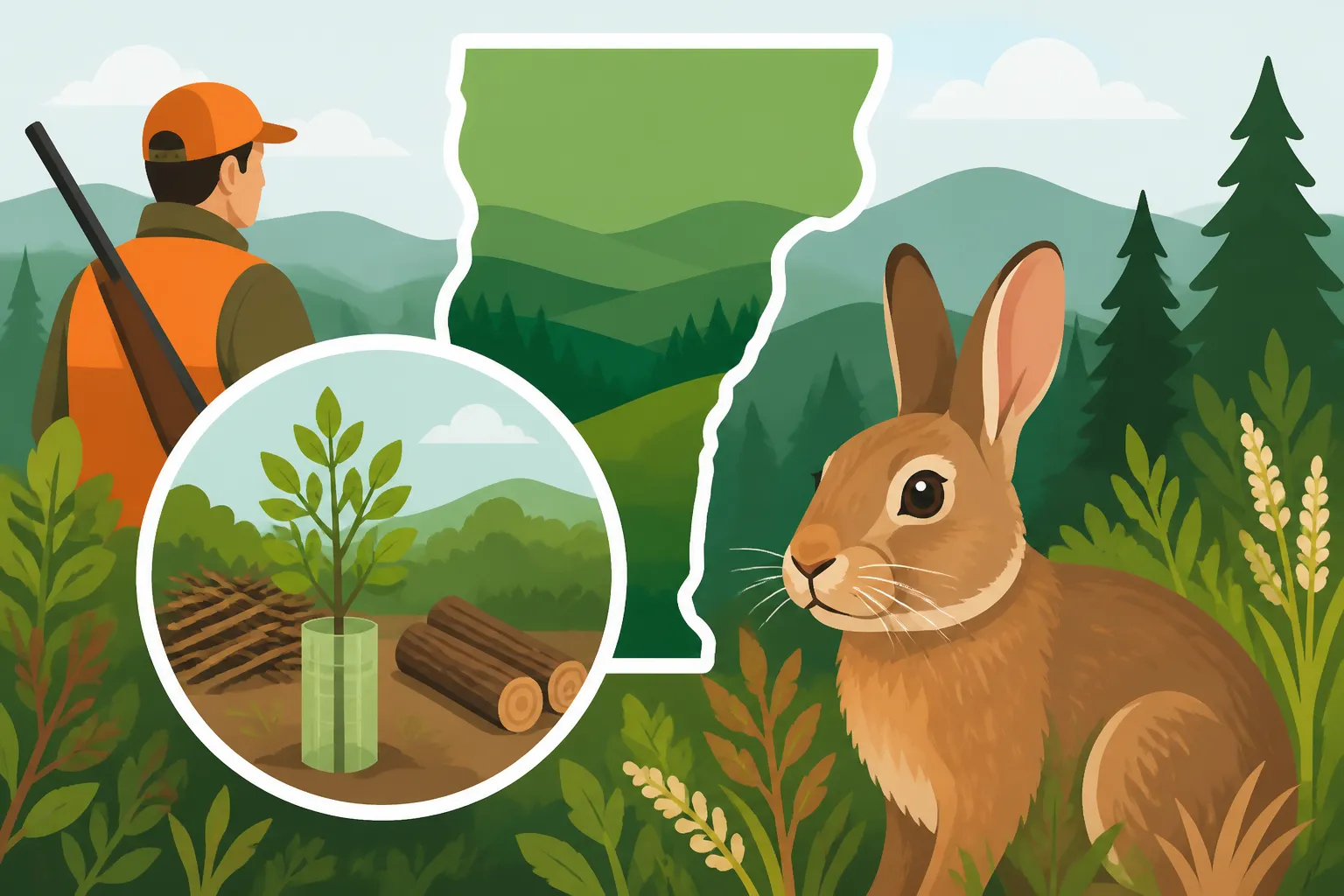
On WMAs, you might see evidence of targeted timber harvests designed not just for wood products, but specifically to regenerate young forest growth. This could involve clear-cuts of small, irregular patches, or even what’s known as “shelterwood” cuts that leave some trees standing to provide partial shade and allow for new growth to establish underneath. Following these cuts, areas might be left to regenerate naturally, or specific shrubs and trees known to benefit wildlife might be planted. The VFWD also creates brush piles and hinge-cuts trees (partially cutting a tree so it falls but remains alive, providing low cover and browse) to create immediate, dense cover that rabbits love. These projects are often funded through a combination of state funds, federal grants derived from excise taxes on hunting and fishing equipment (thanks, Pittman-Robertson Act!), and partnerships with non-profit organizations. The beauty of these efforts is that they often benefit a wide array of wildlife, from ruffed grouse and woodcock to deer and various songbirds, all of which also rely on these shrubby, young forest environments. When you're using tools like GoHunt to scout public land, pay attention to WMA descriptions, as they often highlight habitat work. This can point you toward areas where you're more likely to find robust rabbit populations. These areas are excellent for Hunting Vermont's Green Mountain National Forest or Vermont Wildlife Management Areas.
Working with Landowners and Private Organizations
While public lands are vital, it's impossible to talk about habitat restoration in Vermont without acknowledging the immense importance of private land. A significant portion of Vermont's landscape is privately owned, meaning that successful large-scale habitat efforts often require engaging with landowners.
Conservation groups like the Vermont Land Trust, Audubon Vermont, and the National Wild Turkey Federation often partner with the VFWD to provide technical advice and sometimes even financial incentives to private landowners interested in improving habitat on their property. These partnerships help bridge the gap between conservation goals and private property rights, ensuring that habitat work isn't confined solely to public acreage. For a private landowner, even small-scale efforts can yield big results for rabbits. Creating brush piles from downed trees or logging slash provides instant cover and thermal protection. Planting native fruit-bearing shrubs like elderberry, dogwood, or viburnum not only offers food for rabbits but also for many other species. Controlled burns, where appropriate and legally permitted, can rejuvenate old fields and create mosaics of different age classes of vegetation. Hinge-cutting trees along field edges or within woodlots creates a low, dense canopy that offers escape cover and browse. These efforts on private lands are crucial because they create corridors and patches of habitat that connect larger public land areas, allowing wildlife to move more freely and boosting overall population resilience. Hunters using tools like GoHunt can sometimes identify private parcels enrolled in conservation programs, though direct access always requires landowner permission. Understanding Do You Need Written Permission in Vermont? is essential when approaching private landowners.
Practical Steps for Hunters and Landowners to Contribute
It's one thing to understand the problem and the efforts being made, but it's another to actively participate in the solution. For those of us who love hunting rabbits, or simply cherish the idea of a healthy, diverse ecosystem, there are tangible steps we can take, whether we own land or not. Every little bit truly helps to ensure that future generations can enjoy Snowshoe Hare in Vermont and our native cottontails.
Creating and Enhancing Rabbit Habitat on Your Property
If you're fortunate enough to own a piece of land in Vermont, big or small, you have a unique opportunity to directly contribute to rabbit habitat restoration. You don't need to be a wildlife biologist to make a difference; often, simple, cost-effective actions can have a profound impact.
One of the easiest and most effective things you can do is create brush piles. Instead of burning or chipping all your downed limbs and trees, stack them up in dense, tangled piles. These provide immediate, impenetrable cover for rabbits, protecting them from aerial and ground predators, and offering vital thermal protection during harsh Vermont winters. Think of it as a rabbit apartment complex and fort all in one! Aim for piles that are at least 6-8 feet in diameter and 4-5 feet high. You can even layer in some larger logs at the bottom to create internal runways. Over time, these piles decompose, but they provide critical cover for years.
Another excellent technique is hinge cutting. This involves partially cutting a small tree (usually 3-6 inches in diameter) so that it falls over but remains connected to its stump, keeping it alive. The fallen top provides immediate low-level cover and browse, while the still-living stump often sprouts new growth, creating even more dense habitat. This is particularly effective along field edges or within transitioning woodlots to create dense linear cover or small, scattered thickets.
Planting native shrubs and trees is also a fantastic long-term strategy. Species like gray dogwood, sumac, wild rose, hawthorn, and various viburnums provide both dense cover and valuable food sources (berries, buds, twigs) for rabbits and many other wildlife species. Consider planting these in clumps or thickets rather than in straight rows to create more natural-looking and effective cover. These plantings are especially beneficial along existing field edges, hedgerows, or disturbed areas. Even letting a small corner of your yard grow wild, with some blackberry or raspberry brambles, can provide surprising habitat. The key is to think "dense, low, and thorny" – anything that makes it hard for a predator to get through quickly. It's about giving those rabbits a fighting chance.
Supporting Conservation Through Hunting and Advocacy
Even if you don't own land, you can still be a powerful advocate and supporter of rabbit habitat restoration. The most direct way is by purchasing your Vermont Hunting Licenses and What They Cost. A significant portion of the revenue generated from hunting licenses and permits directly funds wildlife management, habitat acquisition, and restoration projects across the state, including those benefiting small game like rabbits. Every license, every permit, contributes to the scientific management of our wildlife resources.
Beyond financial contributions, consider getting involved with local conservation groups. Many organizations offer volunteer opportunities for habitat work, such as planting trees, building brush piles on public lands, or cleaning up natural areas. This hands-on involvement is incredibly rewarding and allows you to directly impact the landscape.
Finally, be an informed advocate. Stay up-to-date on wildlife management issues in Vermont. Understand the challenges facing rabbit populations and speak up in support of land-use policies and conservation funding that prioritize habitat diversity, especially early successional growth. Attend public meetings, communicate with your elected officials, and share accurate information with your community. Hunters have historically been, and continue to be, the strongest conservationists. Tools like GoHunt can sometimes highlight specific WMAs or public lands where ongoing habitat projects are taking place, helping you to both hunt and appreciate the work being done. When you're out Running Beagles on a Vermont Snowshoe Hare or Hunting a Funnel Between Two Woodlots, you're not just enjoying a recreational pursuit; you're often engaging with a landscape that has benefited from these very conservation efforts. By supporting these initiatives, whether with your wallet, your time, or your voice, you’re helping to ensure a future where the thump of a rabbit and the thrill of the chase remain a vibrant part of Vermont's outdoor heritage.
Here’s a quick overview of the habitat needs for two of Vermont's common rabbit species:
| Feature | Eastern Cottontail | Snowshoe Hare |
|---|---|---|
| Primary Habitat | Brushy fields, thickets, forest edges, suburban areas | Dense conifer forests, swamps, bogs, young softwood |
| Key Cover | Dense briar patches, brush piles, thick hedgerows | Thick evergreen understory, fallen logs, deep snow |
| Food Sources | Grasses, clover, forbs, young shoots, bark (winter) | Conifer needles, bark, twigs, woody browse |
| Restoration Methods | Brush pile creation, hinge cutting, native shrub planting, field edge management | Early successional conifer regeneration, selective thinning for dense understory |
| Winter Adaptations | Thick fur, often uses abandoned burrows/dense cover | White coat camouflage, large feet for snow, dense cover |
Disclaimer
This article is for general informational purposes only and does not constitute professional advice. Laws, prices and regulations vary by location and change over time. Consult a qualified professional for guidance on your specific situation.