Hunting a Class 4 Town Road
One of the biggest frustrations for Vermont hunters is finding accessible yet unpressured ground, especially as seasons progress and prime spots get hit hard. This guide will take a deep dive into hunting Vermont's often-overlooked Class 4 town roads, revealing how these unique public byways can unlock fantastic opportunities for deer, turkey, and small game, and how you can approach them effectively and responsibly.
Understanding Vermont's Class 4 Town Roads
When you look at a map of Vermont, you'll see a spiderweb of roads. We've got our paved state routes (Class 1), our well-maintained gravel town roads (Class 2 and 3), and then there are the Class 4 roads. These are the forgotten pathways, the trails less traveled, and for a hunter, they can be absolute goldmines.
What Defines a Class 4 Road?
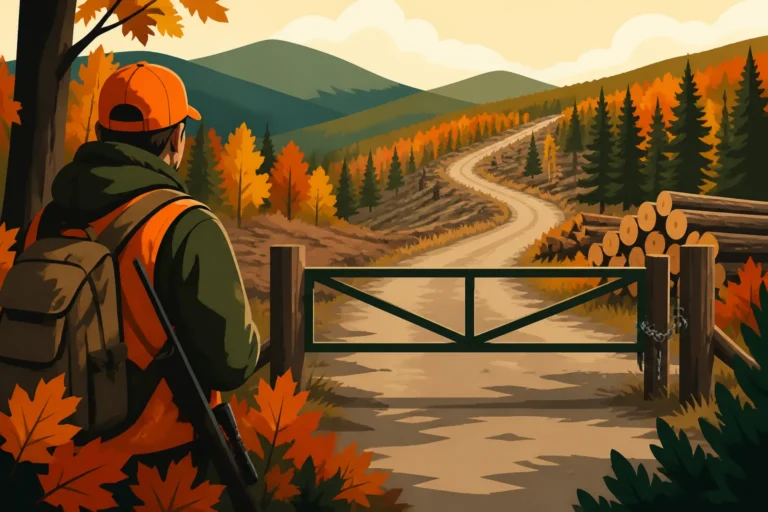
Legally, a Class 4 town road in Vermont is still a public right-of-way. That's key. It means you generally have a right to travel it, and often, hunt along it, just as you would any other public land, provided you're following all other hunting laws and regulations. However, here's the kicker: the town has no obligation to maintain it. This means they can be anything from a rough, passable dirt track to a completely overgrown, washed-out path that only a determined hiker or ATV (where permitted) could navigate. They might have culverts missing, bridges washed out, or trees across them. They are, in essence, wild public access.
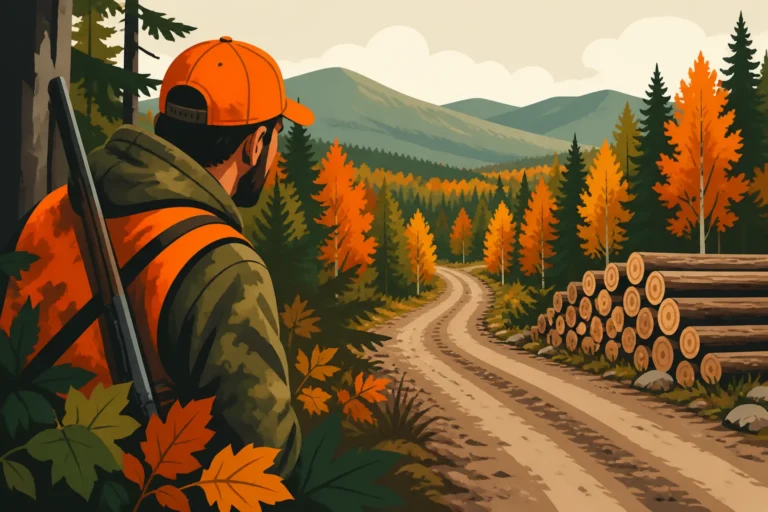
Think of it this way: a Class 3 road is where you might drive your pickup truck carefully. A Class 4 road is where you park your pickup truck at the end of the driveable section and start walking, or perhaps biking. They often lead to old homesteads, remote logging parcels, or simply fade into deeper woodlands. This lack of maintenance and traffic is precisely what makes them so appealing to deer and other wildlife, providing natural corridors and safe havens away from human disturbance. They're essentially linear pieces of public access that delve into otherwise hard-to-reach areas.
| Road Class | Maintenance Level | Driveability | Hunter Access Potential | Typical Appearance |
|---|---|---|---|---|
| Class 2 | Paved or well-maintained gravel | Easily passable by all vehicles | Low hunting potential (high traffic) | Smooth, clear, often residential |
| Class 3 | Maintained gravel | Passable by most vehicles, can be rough | Moderate hunting potential (some traffic) | Gravel, might have potholes, leads to rural homes |
| Class 4 | Not maintained by town | Foot, ATV (if permitted), sometimes 4×4 | High hunting potential (low traffic) | Overgrown, rutted, muddy, potentially blocked |
| Legal Trail | Not a public road, may be private | Foot traffic only | Varies (often private, needs permission) | Narrow, unpaved, specific purpose (hiking, snowmobile) |
Why Class 4 Roads are a Hunter's Ally
The beauty of Class 4 roads lies in their dual nature: they provide public access, but their ruggedness naturally limits that access. This means less hunting pressure. While everyone else is pulling off busy state routes or hiking established trails, you can often find stretches of Class 4 roads that see minimal human activity once you get a half-mile or so in. Deer, bear, and turkeys use these old roadbeds as travel corridors, bedding areas, and feeding zones. The edges of these roads, where sunlight penetrates the canopy, can be prime spots for browse, soft mast like berries, and even old apple trees from long-gone farms.
They can connect various parcels of land – perhaps a small state forest block to a larger tract of private timberland, or serve as a boundary between properties. This makes them excellent places for intercepting deer moving between different habitat types. Furthermore, for those looking to get away from the crowds, these roads often lead into more remote, deep-woods territory where Finding Ground Others Walk Past becomes a real possibility. They’re not always easy to navigate, but the reward of finding undisturbed game sign can be well worth the effort.
Scouting and Accessing Class 4 Roads for Hunting
Finding and effectively using Class 4 roads for hunting isn't about blind luck; it's about smart scouting, both digitally and on the ground. You need to identify them, understand their characteristics, and plan your approach carefully.
Digital Scouting: Mapping Out Your Adventure
Modern mapping applications are an absolute game-changer when it comes to identifying Class 4 roads. Platforms like onX Hunt are incredibly valuable because they not only show you public road networks but also overlay property boundaries and land ownership. You can easily spot a road that continues past the last house or turns into a dotted line on the map, indicating it's unmaintained. Look for areas where these roads intersect with larger tracts of public land, such as state forests or Wildlife Management Areas (WMAs). Or, conversely, identify where they might lead into a mosaic of small private parcels where you could potentially seek permission from landowners.
When you're looking at a map, pay attention to topography. A Class 4 road that follows a ridge line or a creek bottom can be a fantastic travel corridor for deer. Also, examine aerial photos closely for signs of old clear-cuts, mature timber, or even small clearings that might indicate an old homestead or food source. Reading Aerial Photos for Green Mountain Deer can give you a significant edge here, helping you pinpoint potential bedding areas or funnels near these unmaintained roads. Often, the brushier, thicker cover that springs up along these neglected roads provides excellent security for deer.
On-the-Ground Reconnaissance: Boots on the Ground
There's no substitute for getting out there and putting boots on the ground, especially when it comes to Class 4 roads. What looks like a promising path on a map might be completely impassable due to washouts, fallen trees, or heavy overgrowth. Conversely, a faint line on the map might be a surprisingly good, albeit rough, path. Walk the road, noting deer sign like tracks, droppings, rubs, and scrapes. Look for crossings, pinch points, and areas where the road itself creates a natural funnel.
Pay close attention to where the road transitions from one habitat type to another – for example, from an open hardwood stand to a dense softwood thicket. These transition zones are often hotspots for deer activity. Also, be mindful of surrounding private property. Even if the Class 4 road itself is public, the land immediately adjacent may be private, and you'll need to know where those lines are drawn. Finding Vermont Property Lines is crucial here to avoid accidental trespass. You might find that a portion of the road is completely within public land, offering unrestricted hunting, while other sections border private parcels. Always respect posted land and seek permission when necessary.
Hunting Strategies for Class 4 Roads
Once you've identified a promising Class 4 road, it's time to think about how to hunt it effectively. These aren't your typical well-trodden trails, and their unique characteristics lend themselves to specific hunting tactics.
Still-Hunting and Scouting Along the Road
Class 4 roads are ideal for still-hunting. Because they're often overgrown and less traveled, the edges can be brushy, providing excellent cover for you to move slowly and quietly. The roadbed itself, if relatively clear, can offer quiet footing, allowing you to focus on scanning the woods on either side. Move into the wind, taking a few steps, then stopping to observe and listen. Pay particular attention to natural turns, rises, and dips in the road, as these can create blind spots where deer might be feeding or bedding just out of sight. Remember, deer often use these old roads as their own travel routes, so you might intercept them on their way to or from bedding and feeding areas. This type of hunting can be very productive during the rut when bucks are cruising for does, and those old roadbeds act as convenient travel lanes. It's similar to Still-Hunting Green Mountain National Forest Timber, but with the added benefit of a distinct linear feature to follow.
Stand Placement Near Road Intersections and Edges
While hunting on the road can be productive, setting up a stand (either a treestand or a ground blind) strategically near a Class 4 road can be even better. Look for areas where the road crosses a natural funnel, such as a saddle between two ridges, a narrow strip of timber between fields, or a creek crossing. These are natural congregation points for deer. An old apple tree or a patch of wild grapes along the edge of the road, or a visible scrape line, also makes for an excellent stand location.
For treestand setups, ensure you're aware of Treestand Rules on Vermont Public Land if you're on a WMA or state forest. If you're using a ground blind, brush it in thoroughly with local vegetation so it blends seamlessly into the surroundings. Remember, deer are accustomed to these roads being quiet, so any unnatural structure will be easily spotted. Position yourself to watch both the road itself and the surrounding timber, especially downwind, as deer will often circle to scent-check an area before committing to crossing an open stretch.
Using Class 4 Roads for Entry, Exit, and Deer Drives
These unmaintained roads can also serve as fantastic access points to deeper woods that are otherwise difficult to reach. If you're looking to hike in a mile or two beyond where most hunters stop, a Class 4 road can be your highway. This allows you to get to less pressured areas before dawn or pack out a deer more easily after dark. For group hunting, Class 4 roads can be invaluable for organizing Deer Drives With Three or Four Hunters. Designate one or two hunters to walk quietly along the road as "drivers," pushing deer out to "posters" set up at strategic ambush points or cross-trails further down the road. The linear nature of the road helps contain the deer's movement, making them predictable. Always be sure to communicate clearly and loudly during a drive to ensure safety and identify other hunters in the area.
Important Considerations and Regulations for Hunting Class 4 Roads
While Class 4 roads offer great hunting opportunities, there are vital considerations, both legal and ethical, that every hunter must understand before heading out. Respect for the land, wildlife, and other users is paramount.
Navigating Access and Property Boundaries
Always remember that while the road is public, the land immediately adjacent to it might not be. This distinction is critical in Vermont, where a mix of public and private ownership is common. Using a reliable mapping tool like onX Hunt or even checking local town maps can help clarify these boundaries. If a Class 4 road passes through private property that is clearly posted, you generally have the right to travel the road, but you do not have the right to hunt, track, or retrieve game from the posted private land without explicit permission from the landowner. If a deer you've shot runs onto posted private land, you must obtain permission before entering to retrieve it. This is not just good etiquette; it's a legal requirement under Vermont Trespass and Permission Law. Always carry a copy of your license and be ready to explain your presence if questioned.
Safety and Other Users
Given the unmaintained nature of Class 4 roads, safety should be your top priority. Watch your footing for uneven terrain, downed trees, and hidden culverts. Be mindful that these roads are still open to other users: hikers, mountain bikers, dog walkers, and sometimes even ATVs (check local town ordinances for specific vehicle rules). Always wear sufficient blaze orange, especially during deer rifle season, even if you are bowhunting. How Much Blaze Orange Vermont Requires is a standard you should always meet, if not exceed, for maximum visibility. The unexpected encounter with another person in a remote area can be startling for both parties, so clear identification as a hunter is crucial. Carrying a basic first-aid kit and informing someone of your hunting location and expected return time is always a wise practice when venturing into remote areas.
Environmental Stewardship and "Leave No Trace"
Hunting Class 4 roads means embracing a "leave no trace" ethic. These areas are often wild and pristine precisely because they are not heavily trafficked. Pack out everything you pack in, and perhaps even pick up any trash you find. Avoid leaving flagging tape or other markers that detract from the natural environment. If you're Using a Ground Blind on Public Land, make sure it's removed cleanly at the end of the season. Also, be thoughtful about where you park. Don't block access for landowners or other potential users, even if the road appears deserted. Many Class 4 roads have small pull-offs or natural parking areas at their beginnings; utilize these. Your responsible actions reflect on all hunters and help maintain access to these unique hunting grounds. Respect the quiet nature of these wild pathways, and they will likely reward you with memorable hunting experiences.
Disclaimer
This article is for general informational purposes only and does not constitute professional advice. Laws, prices and regulations vary by location and change over time. Consult a qualified professional for guidance on your specific situation.