Hunting a State Forest Logging Road
Many Vermont hunters find themselves staring at dense timber on public land, wondering where to even begin. It’s a common frustration, feeling like you’re blindly pushing through endless woods. But what if I told you that the key to unlocking some prime deer and bear country often lies right under your boots, in the form of state forest logging roads? This guide will break down exactly how to approach hunting these vital arteries, transforming them from mere access points into strategic hunting grounds.
Why State Forest Logging Roads Are Deer and Bear Magnets
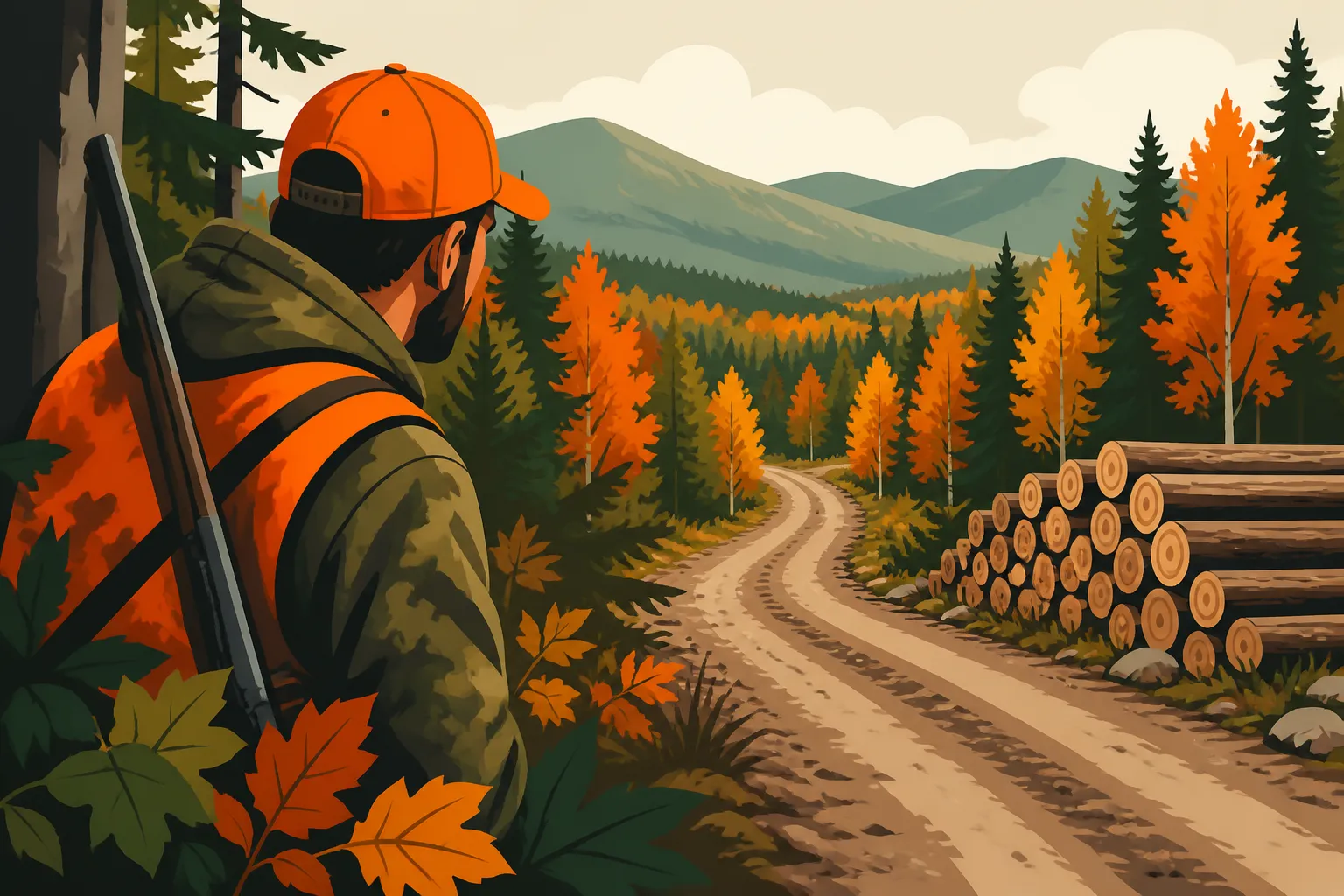
Logging roads aren't just for getting timber out; they're dynamic features that significantly influence how deer and bear move through a landscape. Think of them as open highways in a sea of thick cover, and like any good highway, they offer access, travel corridors, and even unique food sources. Ignoring them means missing a huge piece of the puzzle.
Openings and Edges Provide Browse and Security
When a logging road is cut, it creates an immediate edge habitat. This edge often means more sunlight hitting the forest floor, which in turn promotes the growth of new, tender browse for deer. Young saplings, brambles, and shrubs explode with growth, drawing deer in. While the road itself might be open, the dense regrowth just off its shoulders provides security cover, creating a perfect balance for whitetails.
Imagine a section of state forest that was logged a few years back. The new growth along the old skid trails and main roads is now chest-high, a thick tangle of regenerating hardwoods and softwoods. Bucks will often cruise these edges, scent-checking for does, while does bring their fawns to feed on the abundant forage. Bears also love these areas, especially in spring and summer, for the berries and tender plants that thrive in the sunlight. It's a natural buffet with built-in escape routes.
Travel Corridors for Cruising Bucks and Bears
Deer and bear are creatures of efficiency. Why push through dense, tangled undergrowth when a relatively clear logging road offers an easier path? These roads become natural travel corridors, especially during the rut when bucks are actively searching for does, or when bears are moving between bedding and feeding areas. A logging road might connect a clear-cut full of regenerating browse with a mature acorn flat, or lead from a dense softwood bedding area to a creek bottom.
Consider a mature buck working his way through the mountains during November. He's not going to expend unnecessary energy busting through thick briars if there's a logging road that provides a quieter, faster route. He'll often parallel the road just inside the cover, using it as a linear feature to navigate, occasionally stepping onto it to cross or check for fresh scent. Likewise, a bear might use these roads to cover miles between a beech ridge and a distant apple orchard. Knowing these patterns means you can intercept them.
Signposts for Deer and Bear Activity
Logging roads, especially those less traveled, are prime locations to find abundant deer and bear sign. The relatively soft surface of a dirt road holds tracks better than hard forest floor, and the open canopy makes visual sign more apparent. This makes them fantastic places for pre-season scouting.
You'll find everything from fresh tracks and droppings to rubs and scrapes right along the edges of these roads. Bucks will often rub saplings and small trees right on the edge of the road, marking their territory. Scrapes might appear where deer step out to cross, or in small openings along the road. Bear scat, claw marks on trees, and even disturbed ground where they've dug for roots are all indicators of their presence. These roads tell a story if you know how to read the signs. Finding Sign in Green Mountain Timber is crucial, and logging roads make it easier to spot.
Scouting Vermont State Forest Logging Roads
Effective scouting is the bedrock of any successful hunting trip, and logging roads are no exception. You can't just drive up, jump out, and expect to find game. It takes a combination of digital reconnaissance and boots-on-the-ground effort to really understand how these roads function within the local landscape.
Digital Reconnaissance: Mapping the Opportunities
Before you even step foot in the woods, your smartphone or computer can be an invaluable tool. Using mapping applications is the first step in understanding the logging road network in any given state forest. I rely heavily on tools like onX Hunt for this.
You can overlay different layers: topography, aerial imagery, and even public land boundaries. Look for areas where logging roads intersect, where they transition from dense timber to more open areas, or where they follow contours around ridges and saddles. These features often create natural funnels or pinch points that deer and bear will naturally use. For instance, a logging road that traverses a steep hillside might have flat benches or small ravines leading off it – these are often overlooked pockets that hold game. Pay attention to older aerial photos if available, as they might show past logging activity that has since grown in, but still offers residual edge habitat. Reading Aerial Photos for Green Mountain Deer can help you visualize these historical movements.
Boots on the Ground: Confirming the Digital Clues
Once you've identified some promising areas on your map, it's time to hit the woods. This is where you confirm your hypotheses and discover the nuances that only physical presence can reveal. Walk those logging roads, but don't just walk the road itself; constantly scan the edges and look 20-50 yards into the adjacent cover.
Look for fresh tracks crossing the road, especially larger deer tracks or distinct bear paw prints. Note the direction of travel. Are deer using the road to access specific food sources or bedding areas? Are there rub lines paralleling the road in the thicker cover? Are there scrapes where deer are communicating? Pay attention to any small game trails that intersect or run parallel to the logging road – these are often used by deer as well. If you find a particularly promising spot, like a natural funnel created by a turn in the road or an intersecting creek, make a mental note or drop a pin on your onX Hunt app. This is also a good time to check for Treestand Rules on Vermont Public Land if you plan to use one.
Understanding Logging Activity and Its Impact
The type and age of logging activity around a road dramatically impacts how animals use it. A freshly cut area will be thick and nearly impenetrable, but the edges will be hot with fresh browse. An older cut, say 5-10 years old, will have substantial regrowth, providing both food and excellent bedding cover. Roads that are actively being used for logging during the season will likely be disturbed and less productive for hunting, though animals might move more at night.
Consider the contrast: a new cut where the road is still muddy and equipment is present versus an old road where ferns and small hardwoods have started to reclaim the edges. The older, quieter road is much more appealing to wary animals. However, those new cuts, once quiet again, will be teeming with new forage. Scouting Vermont Public Land Before Season means looking for recent timber operations through satellite imagery and then verifying them on foot.
| Type of Logging Road Area | Key Features for Hunters | Deer/Bear Behavior | Scouting Tips |
|---|---|---|---|
| Active Logging Site | Recent cuts, heavy equipment, noise, disturbed ground. | Animals avoid during activity, may move at night. | Check for activity schedules; scout edges for when quiet. |
| Freshly Cut (1-3 yrs) | Abundant sunlight, rapid regeneration of young browse (berries, saplings), thick edges. | High food source, bedding nearby. Bucks rub saplings aggressively. | Look for fresh browse, bedding sign just off road; heavy tracking. |
| Regenerating (3-10 yrs) | Dense, medium-height cover, good security, continued browse, small timber. | Excellent bedding cover, travel corridors within thicker growth. | Focus on edges, intersecting game trails, funnels. |
| Older/Maintained Road | Clear path, mature trees on edges, less new browse right on road. | Primarily a travel corridor; less bedding immediately adjacent. | Look for crossing tracks, rubs, scrapes where it enters denser cover. |
Hunting Strategies for State Forest Logging Roads
Now that you've scouted and understand the potential of logging roads, how do you actually hunt them effectively? It's not about walking down the middle; it's about using the road and its surroundings to your advantage, anticipating animal movement, and adapting to conditions.
Still-Hunting the Edges and Intersections
Still-hunting is a highly effective tactic along logging roads. Instead of rushing, move slowly, taking a few steps, then pausing for several minutes to observe and listen. This allows you to pick apart the cover, detect subtle movements, and hear animals before they hear you. The goal isn't to walk the road, but to walk parallel to it, just inside the timber, using the road as a reference point.
Focus on the edges of the road, where animals often step out or parallel the main thoroughfare. Look ahead for horizontal lines (the back of a deer) or vertical lines (a tree trunk) that seem out of place. Logging road intersections are often prime spots. They act as crossroads where multiple travel routes converge, increasing the chances of intercepting a moving animal. Approach these intersections slowly, checking all angles before proceeding. Still-Hunting Green Mountain National Forest Timber techniques translate perfectly to state forest logging roads.
Strategic Stand Placement for Overlooks and Funnels
If still-hunting isn't your preference, or if you've identified a particularly hot spot during scouting, setting up a stand or ground blind can be incredibly effective. The key is to position yourself where you have a good view of the road but are also concealed and can cover adjacent cover.
Look for points overlooking the road where it dips into a saddle, rounds a bend, or crosses a low-lying area. These are natural funnels. An old logging road that traverses a ridge, creating a flat bench, can also be a killer spot for a stand. Deer love to travel these benches. Think about where a buck might scent-check a crossroads, or where a doe might step out to browse. Place your stand slightly off the road, perhaps 20-30 yards into the timber, giving you a wider view and keeping you out of direct sight. Using a ground blind brushed into the edge of a road can also be very effective, especially where the road makes a sharp bend or a subtle funnel exists. Remember to always consider Wind and Thermals in Steep Green Mountain Terrain when placing any stand or blind, as they can quickly give your position away.
Playing the Wind and Thermals
Wind and thermals are paramount when hunting logging roads, especially in Vermont's hilly or mountainous state forests. Logging roads often create their own micro-thermals, as cooler air might settle in the depressions of the road, while warmer air rises off the adjacent sunny slopes.
Always hunt with the wind in your favor, blowing your scent away from where you expect game to appear. In the mornings, thermals tend to rise, pulling scent uphill. In the evenings, they fall, carrying scent downhill. A logging road that runs along a ridgeline or crosses a saddle might have swirling winds, making it tricky. Use your onX Hunt app to check wind direction and consider how the topography will influence it. Sometimes, hunting a specific section of road during a particular time of day (morning vs. evening) can make all the difference, simply by playing the thermals correctly.
Rules, Regulations, and Etiquette on State Forest Roads
Hunting state forest logging roads comes with responsibilities and specific rules you need to be aware of. Vermont's public lands are for everyone, and ensuring you're compliant and courteous makes for a better experience for all.
Vehicle Access and Restrictions
One of the most critical aspects of hunting logging roads is understanding vehicle access. Many state forest logging roads are gated, closed to public vehicles, or have seasonal restrictions. Never assume you can drive on a logging road. Always check with the Vermont Department of Forests, Parks and Recreation or the Vermont Fish & Wildlife Department for specific regulations regarding vehicular access in the state forest you plan to hunt.
Even if a gate is open, it doesn't always mean public vehicles are allowed past a certain point. Look for signs indicating "No Motorized Vehicles Beyond This Point" or similar. Respecting these rules is paramount. Parking your vehicle in a way that blocks a gate or other access point is not only rude but can lead to fines and loss of hunting privileges. Be aware of Vehicle Rules on Vermont Public Land.
Public Land Etiquette and Safety
When hunting logging roads, remember you might encounter other users: hikers, mountain bikers, or even other hunters. Always practice good public land etiquette. That means being visible, especially during firearm seasons, and being aware of your surroundings. Vermont Blaze Orange Requirements are in effect for a reason – wear it proudly and visibly.
Safety is always first. Be sure of your target and what's beyond it, especially if you're hunting near a main road or a trail system. Avoid shooting down the length of a logging road, as it creates a clear line of fire that could endanger others. If you encounter another hunter, a polite nod or greeting is sufficient; respect their space. If you've chosen a spot, and someone else is already there, move on and find another area. There's plenty of public land in Vermont for everyone.
Treestand and Ground Blind Regulations
While treestands and ground blinds can be effective tools, there are rules regarding their use on Vermont public lands. Typically, you cannot leave stands or blinds up year-round. They must be removed at the end of the hunting season, and sometimes even within a shorter timeframe. Check specific regulations for the state forest or WMA you are hunting, as rules can vary slightly.
Often, you are not allowed to damage trees by screwing in steps or cutting limbs. Portable hang-on stands, climbers, or ground blinds that don't harm vegetation are generally acceptable. Always ensure your stand is marked with your name and address or Vermont hunting license number. Ignoring these rules can lead to your gear being confiscated and potential fines. Understanding Ground Blind Rules on Vermont WMAs is a good starting point, as similar principles often apply to state forests.
| Feature | Advantages of Hunting Logging Roads | Potential Challenges |
|---|---|---|
| Access | Easier entry to remote areas; can cover ground faster. | Vehicle restrictions, gates; may encounter other users (hikers). |
| Visibility | Open stretches allow for longer sight lines; easier to spot game sign. | Animals may be warier of open areas; need to stay concealed. |
| Travel Corridors | Natural movement routes for deer/bear; predictable patterns. | Can be unpredictable if heavily used by humans or equipment. |
| Food Sources | Edge growth from sunlight exposure; adjacent logging cuts provide browse. | Older roads may offer less immediate browse on the road itself. |
| Scouting | Tracks and sign easier to spot on soft ground; clear walking paths. | Can be misleading if only human traffic is present; need to differentiate. |
Hunting Vermont's state forest logging roads offers a fantastic opportunity to access game, but it requires strategy, patience, and a deep respect for the land and its rules. By combining diligent scouting, smart hunting tactics, and adherence to regulations, you can turn these sometimes-overlooked pathways into your next successful hunting ground. Remember, the journey into the woods is part of the experience, and these roads are just another chapter in your Vermont hunting story.
Disclaimer
This article is for general informational purposes only and does not constitute professional advice. Laws, prices and regulations vary by location and change over time. Consult a qualified professional for guidance on your specific situation.