Best Vermont Ground for Public Land Deer
For many of us, the dream of chasing a big Vermont whitetail on public land can feel daunting. With vast stretches of timber, rugged mountains, and the occasional feeling that all the good spots are already taken, it's easy to get discouraged. But trust me, incredible public land deer hunting opportunities absolutely exist if you know where and how to look. This guide is all about helping you unlock those secrets, showing you how to find and effectively hunt the best public ground for deer right here in Vermont.
Understanding Vermont's Diverse Public Land Landscape
Vermont might be small, but its public land is surprisingly diverse, ranging from sprawling national forest tracts to smaller state forests and meticulously managed wildlife management areas. Each type of land comes with its own quirks, challenges, and unique advantages for deer hunters. Understanding these differences is the first step to pinpointing your ideal hunting grounds.
The Green Mountain National Forest: Vastness and Opportunity
When most folks think of big public land in Vermont, the Green Mountain National Forest (GMNF) often comes to mind, and for good reason. Covering hundreds of thousands of acres across two main districts, it offers an immense playground. The sheer size means there's always a new ridge to explore, a new basin to scout, and a chance to truly get away from the crowds. However, this vastness also presents its own challenges. Deer densities can sometimes be lower than in agricultural areas, and the terrain is often rugged, demanding a hunter who's willing to put in the miles and climb some serious hills.
You'll find a mix of mature hardwoods, dense softwoods, and plenty of steep, unforgiving terrain within the GMNF. This means you need to be strategic. Instead of just wandering, focus on areas with varied habitat, like transitions between different forest types, benches on steep hillsides, and saddles that connect ridges. These are natural travel corridors for deer. Look for late-season food sources like beech nuts or browse in younger growth areas. The deer here are often accustomed to less human presence, meaning they might not be as skittish as those on smaller, more pressured parcels, but they're also very good at disappearing into the vast timber. Don't underestimate the physical challenge; this is where good boots and a solid pack pay off. Hunting Vermont's Green Mountain National Forest is an essential read for anyone considering this vast resource.
Wildlife Management Areas: Habitat Focused Hunting
Vermont's Wildlife Management Areas (WMAs) are truly gems for deer hunters. These are parcels of land specifically managed by the Vermont Fish and Wildlife Department with wildlife habitat in mind. This often translates to prime deer habitat, sometimes with active logging, food plot establishment, or other habitat improvement projects designed to benefit deer and other game. Because they are managed, they often have better food sources and cover pockets than unmanaged public forests.
WMAs can vary greatly in size, from small, easily accessible parcels to large, remote tracts. Some might be heavily pressured, especially during the rifle season opener, simply because hunters know these areas are designed for game. Others, particularly the larger ones or those with more challenging access, can offer fantastic secluded hunting. Vermont Wildlife Management Areas provides a great overview of these critical lands. It's crucial to scout WMAs thoroughly, perhaps using a mapping application like onX Hunt, to understand access points, habitat features, and potential pressure points. Look for thicker cover, natural funnels, and areas with diverse vegetation. Sometimes, a small, overlooked WMA tucked away could hold the biggest surprise.
State Forests and Reservations: Smaller, Sometimes Overlooked Opportunities
Beyond the GMNF and WMAs, Vermont also manages numerous State Forests and Reservations. These areas often don't receive the same level of hunting pressure as some of the better-known WMAs or the more accessible parts of the National Forest. They can be smaller, more fragmented, but often offer excellent hunting, especially if you're willing to do your homework.
These state-managed lands often feature a mix of timber types, and some might have active timber management, creating excellent browse and cover for deer. Access can sometimes be more limited, which can deter casual hunters and leave more ground undisturbed. Check the specific regulations for each State Forest, as rules can vary. Don't dismiss a smaller parcel on the map simply because it's not a famous hunting spot. These can be goldmines for hunters willing to put in the effort to Scouting Vermont Public Land Before Season and understand the deer patterns in that particular area. You might find a forgotten apple orchard or a dense stand of pines that holds deer year after year, largely unnoticed by others.
Key Factors for Locating Productive Deer Habitat on Public Land
Finding good public land isn't just about showing up; it's about understanding what makes certain spots more attractive to deer than others. Deer have fundamental needs: food, water, and cover. On public land, especially in Vermont's diverse terrain, how these elements combine and how human pressure affects them will dictate where you find success.
Food Sources: The Deer's Diner
Deer are always looking for their next meal, and understanding their primary food sources throughout the different seasons is paramount. In Vermont, this often means focusing on hard mast (acorns, beechnuts) in the fall, or looking for areas with persistent green browse, soft mast (apples, berries), or agricultural edges.
- Hard Mast: When acorn and beech nut crops are good, deer will key in on these areas. Find a ridge covered in mature oak or beech trees, and you're likely to find deer sign. These areas can be highly productive, but also transient. Once the nuts are gone, or if there's a poor mast year, deer will shift. Keep an eye on the yearly mast crop – a good crop means deer will be spread out, while a poor one concentrates them in areas with other reliable food. Hunting After a Poor Acorn Year can be a real challenge but focusing on alternative food sources like remaining green browse becomes key.
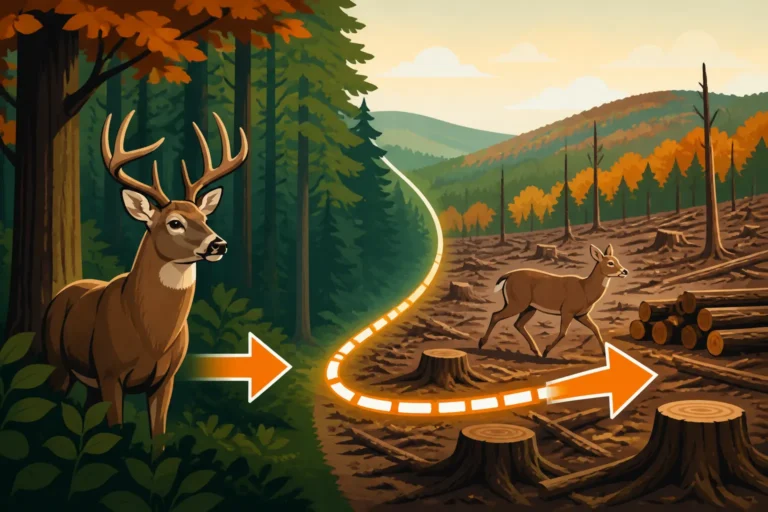
- Browse and Soft Mast: Younger clearcuts, logging operations, and areas with dense undergrowth provide abundant browse – the twigs, leaves, and buds that deer eat. These areas offer both food and thick cover. Old apple orchards, whether wild or managed, can be deer magnets, especially in the early archery season. Look for these often-overlooked spots, perhaps on old farmsteads within public land boundaries.
- Agricultural Edges: While much of Vermont's public land is heavily forested, some WMAs and state forests border private agricultural fields. These edges are incredibly important. Deer will often bed in the public timber during the day and slip out to feed in corn, alfalfa, or hay fields at night. Setting up on these transition zones can be highly effective. Just remember to respect private property boundaries! Hunting a Champlain Valley Dairy Farm Edge is a classic strategy that can pay off.
Cover: The Deer's Bedroom and Sanctuary
Deer need thick cover for bedding, escaping predators, and simply feeling safe. On public land, this often means the densest, nastiest patches of woods that most hunters avoid.
- Thick Conifers and Swamps: Areas of dense spruce, balsam fir, or cedar swamps offer excellent thermal cover in cold weather and visual cover year-round. Deer will often bed in these spots, especially if they are close to a food source. Don't shy away from wet feet or pushing through tangles of branches; often, the deer are in the thickest stuff.
- Steep, Rugged Terrain: In the Green Mountains, steep ravines, rock outcroppings, and high-elevation benches provide natural sanctuaries. Deer use topography to their advantage, bedding in spots where they can watch their backtrail and rely on wind and thermals to detect danger. These spots are physically demanding to reach, which means less hunting pressure. Where Vermont Bucks Bed in Thick Cover highlights the importance of these secluded bedding areas.
- Remote Areas: The farther you get from roads, trails, and obvious access points, the less human pressure there generally is. While not always true, pushing a mile or more into the backcountry, especially in the GMNF, significantly increases your chances of finding undisturbed deer. Many hunters stick close to the parking areas; going beyond them means you're often Finding Ground Others Walk Past.
Strategies for Hunting Vermont Public Land Deer Effectively
Even with the best ground identified, successful public land hunting in Vermont requires smart strategies. It's about combining intelligent scouting with effective hunting tactics that account for the terrain, the deer's behavior, and the inevitable presence of other hunters.
Mastering Your Mapping Tools and Scouting
Before you even step foot in the woods, your digital maps should be your best friend. Services like onX Hunt are absolutely invaluable for public land hunting in Vermont. You can identify public versus private land boundaries, pinpoint potential bedding areas, locate forgotten logging roads, find water sources, and mark potential stand sites all from your couch.
- Aerial Imagery and Topo Maps: Spend hours poring over aerial photos to find subtle changes in vegetation, identify potential clearcuts or thickets, and see how terrain features create natural funnels. Use topographical maps to identify saddles, benches, and steep drops that might influence deer movement. The combination of layers on
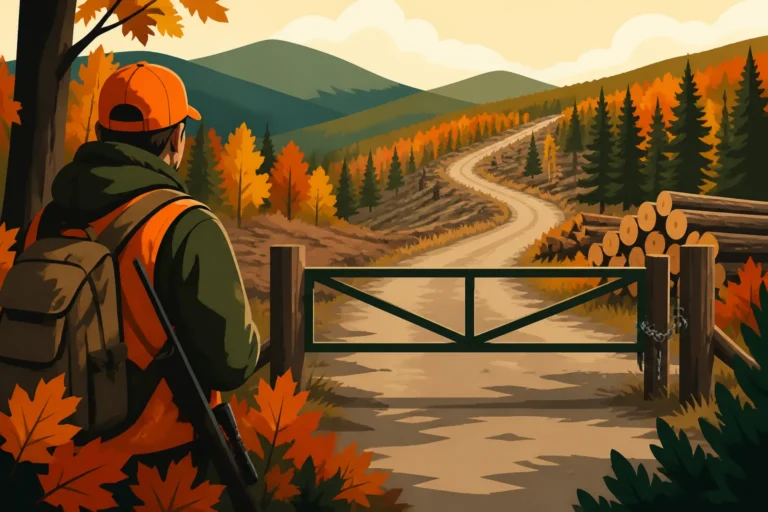
onX Huntcan help you visualize the landscape in incredible detail. - E-Scouting for Pressure: Look for areas that are difficult to access. Are there old, gated logging roads that require a long walk? Are there thick, impenetrable sections that discourage all but the most determined hunters? These are often the spots that hold deer during hunting season because they offer a refuge from Hunting Pressure on Vermont Public Land.
- Boots on the Ground: No amount of e-scouting replaces actual time in the woods. Visit potential areas in the off-season to verify what you saw on the map. Look for old rub lines, persistent trails, bedding areas, and droppings. Understand the lay of the land, how wind and thermals might behave, and where deer are likely to travel. Even in a small state, Vermont's terrain can throw you surprises, so don't skip the actual legwork. Consider resources like
GoHuntfor broader hunting intelligence and strategic planning, which can complement your hyper-local mapping efforts.
Adaptable Hunting Tactics for Public Land
Public land deer are often more attuned to human presence, so your tactics need to be smart and adaptable. Still-hunting, setting up on travel corridors, and even strategic deer drives can all be effective.
- Still-Hunting and Spot-and-Stalk: In the dense Green Mountain woods, slow, deliberate still-hunting can be incredibly effective. Move slowly, pause frequently, and use your binoculars to pick apart the cover. Deer often rely on their ears and nose; if you move quietly and into the wind, you can surprise them. On more open ridges or in areas with recent logging, spot-and-stalk can work, especially if you can get above the deer and use topography to your advantage. Still-Hunting Green Mountain National Forest Timber is a skill worth developing for Vermont.
- Stand Placement on Travel Corridors: Identify natural funnels: saddles between ridges, creek bottoms, edges of thick cover, or pinch points along old logging roads. Deer often use the path of least resistance. Place your stand or ground blind in a spot that intercepts these travel routes, keeping the wind in mind. Consider using a compact, easily portable stand that allows you to be mobile and adapt to changing deer patterns or hunting pressure. Hunting a Funnel Between Two Woodlots is a classic tactic that performs well.
- Utilizing Wind and Thermals: Vermont's mountainous terrain creates complex wind currents and thermals. Understanding how air moves up and down hillsides at different times of day is critical. In the mornings, air often sinks (down-drafts), while in the evenings, it rises (up-drafts). Always try to position yourself so your scent is carried away from where you expect deer to approach. This is particularly important when Wind and Thermals in Steep Green Mountain Terrain are at play.
Overlooked Public Land Opportunities
Sometimes the best public land isn't the biggest, but the most overlooked. Don't limit your search to just the largest blocks on the map.
- Town Forests: Many Vermont towns own small parcels of forest land that are open to public use, including hunting. These can be tiny — sometimes only a few hundred acres — but they are often adjacent to private land that holds deer, and they often see very little hunting pressure. They require a bit more research to find, as they aren't always prominently marked on statewide maps, but they can be incredibly productive.
- Utility Corridors and Power Lines: Rights-of-way for power lines or pipelines often cut through public and private land. These corridors create edges and areas of regenerating browse that deer love to frequent. They also offer excellent shooting lanes for rifle hunters. Always be mindful of safety and local regulations, but these linear features can be deer magnets, especially at dawn and dusk. Glassing a Powerline Cut at Last Light can sometimes reveal deer moving between different habitat types.
- Conservation Easement Properties: Some private lands are under conservation easements that allow public hunting access. These aren't always well-advertised but can offer excellent hunting on otherwise private ground. Research land trusts and conservation organizations in Vermont to see if they manage any properties with public hunting access. Always double-check specific rules and boundaries on these unique properties.
No matter where you choose to hunt, always be a responsible hunter. Know the local regulations, respect property boundaries, and leave no trace. Vermont's public lands are a shared resource, and it's up to all of us to ensure they remain viable hunting grounds for years to come.
Public Land Types for Deer Hunting in Vermont
To give you a clearer picture, here's a quick comparison of the main types of public land you'll find in Vermont and what to expect:
| Public Land Type | Typical Size | Terrain / Habitat | Common Access | Expected Pressure (Rifle Season) | Deer Density Potential |
|---|---|---|---|---|---|
| Green Mountain National Forest | Vast (10,000s+ ac) | Rugged mountains, mature hardwoods, mixed timber | Main roads, parking areas, extensive trail networks | Moderate to High near roads, Low in backcountry | Moderate to Low (but big bucks) |
| Wildlife Management Areas (WMAs) | Varied (100s-few 1000s ac) | Managed habitat, mixed timber, wetlands, some fields | Designated parking, old logging roads, foot access | High, especially prime areas | High |
| State Forests & Reservations | Varied (100s-few 1000s ac) | Mixed timber, some logging, less intensive management | Designated parking, woods roads, sometimes limited | Moderate to Low | Moderate |
| Town Forests | Small (dozens-100s ac) | Mixed timber, often near private land | Limited parking, informal access | Low to Very Low | Moderate to High |
| Conservation Easements | Varied (10s-1000s ac) | Diverse, often includes open land and timber | Varies by easement, check specific rules | Low to Moderate | Moderate to High |
Remember, this table provides a general guideline. Every piece of public land has its own unique characteristics. The best way to truly know a piece of ground is to scout it yourself and spend time learning its secrets. Good luck out there, and enjoy the incredible opportunities Vermont's public lands offer!
Disclaimer
This article is for general informational purposes only and does not constitute professional advice. Laws, prices and regulations vary by location and change over time. Consult a qualified professional for guidance on your specific situation.