Hunting a Ridge Above a Northeast Kingdom Bog
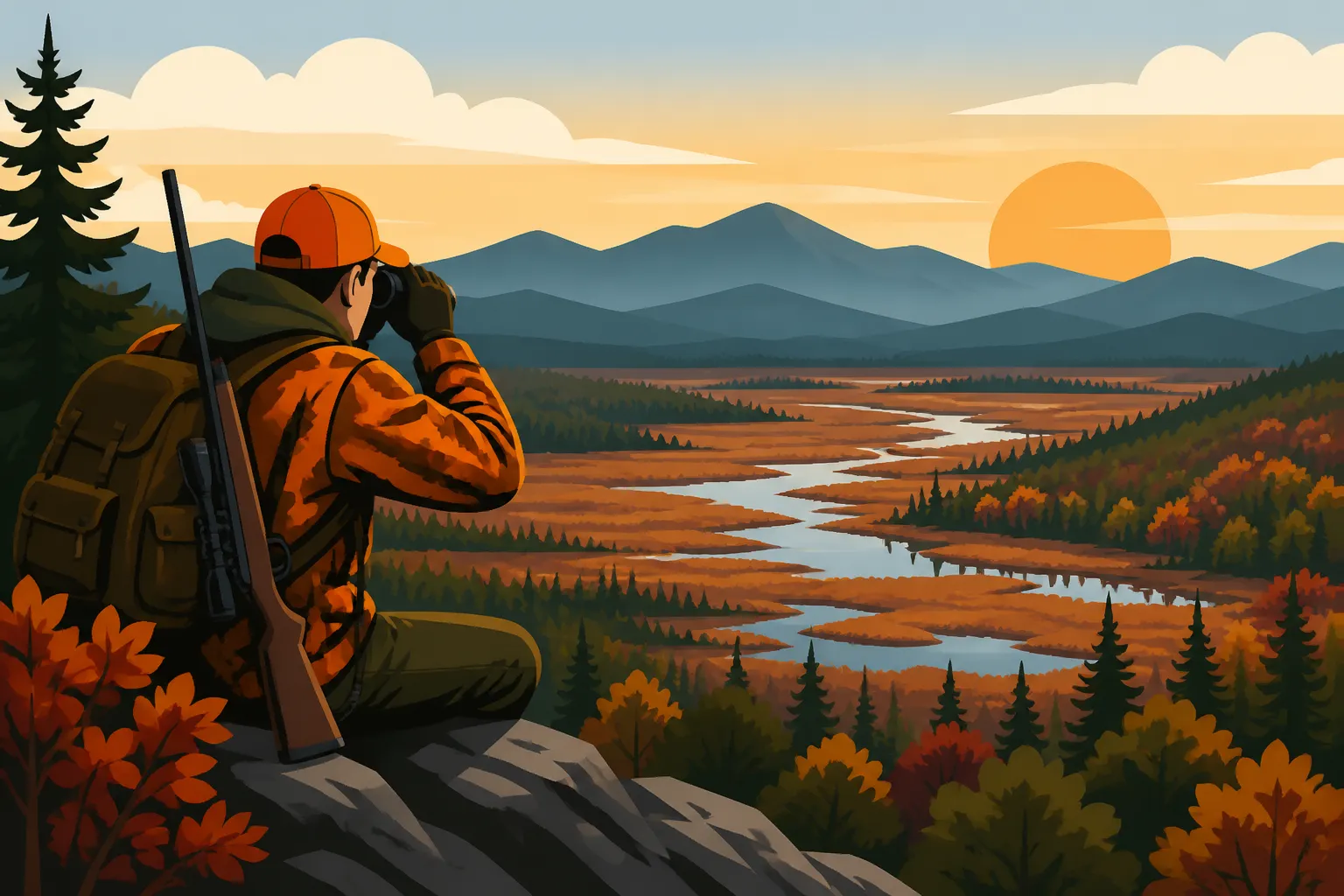
Hunting the dense, unforgiving terrain of Vermont's Northeast Kingdom can feel like you're constantly fighting the land, especially when you're trying to figure out where the deer and moose might be hiding. If you've ever found yourself staring at a sprawling, impenetrable bog on a map, wondering how on earth you're supposed to hunt it, you're not alone. This guide is all about turning that frustration into a strategic advantage by focusing on the hidden gems: the ridges that rise above those very bogs, offering crucial travel corridors and feeding areas for big game.
Understanding the Northeast Kingdom Bog Ecosystem and Adjacent Ridges
The Northeast Kingdom of Vermont is a unique and often challenging landscape for hunters. It's a region defined by its vast tracts of unbroken forest, its remote feel, and its distinct geological features, including numerous bogs. To successfully hunt the ridges that skirt these bogs, we first need to appreciate what makes this ecosystem tick.
What Makes a Northeast Kingdom Bog Unique?
A bog in the Northeast Kingdom isn't just a swamp; it's a specific type of wetland characterized by its acidic peat soil, often dominated by sphagnum moss, black spruce, tamarack, and various shrubs like Labrador tea and leatherleaf. These areas are typically waterlogged, low in nutrients, and often incredibly dense with vegetation, making them incredibly difficult, if not impossible, to traverse silently, or sometimes even at all. For a hunter, plunging into a true bog can quickly become a miserable, even dangerous, experience. Visibility is often next to nothing, and the ground can be unstable, sucking at your boots with every step. Best Boots for Northeast Kingdom Bog Hunting is a topic worth exploring if you plan to get anywhere near these soggy spots.
While the interior of a bog offers little in terms of browse or easy travel for deer and moose, its dense nature provides significant security cover. Animals know these areas are difficult for predators – including us hunters – to navigate, making them ideal sanctuaries. This creates a fascinating dynamic where the edge of the bog, particularly where it meets higher ground, becomes a crucial transition zone.
Why Deer and Moose Use Ridge-Bog Edges
So, if the bogs themselves are so tough, why are the adjacent ridges such hotspots? It comes down to a combination of resources and security. Ridges provide dry ground, often with more diverse vegetation like hardwoods (beech, maple, birch) that offer acorns and other mast crops, or areas with young, regenerating growth after a timber harvest that provide browse. They also offer elevation, which allows animals to use wind and thermals to their advantage, detecting threats from a distance.
But the real draw is the immediate proximity to the bog. This offers animals the best of both worlds: relatively easy travel and food sources on the ridge, with an instant escape route into the impenetrable security of the bog if danger arises. Imagine a mature buck feeding on beechnuts on a ridge, with the vast, thick cover of the bog just a few yards away. He can browse, feel secure, and if a threat appears, he simply melts into the dense bog edge. Similarly, moose, which are found in higher densities in the Northeast Kingdom, often use these transitions, particularly to access water or specific browse found along the bog's perimeter, while retreating into the dense timber and low areas for bedding. Northeast Kingdom Deer Density shows how important these specific microhabitats can be.
Scouting and Locating Promising Ridge-Bog Transitions
Successfully hunting these ridge-bog ecosystems isn't about luck; it's about meticulous preparation and understanding how animals interact with the landscape. You can't just stumble into success here.
Utilizing Topographical Maps and Satellite Imagery
Before you ever set foot in the woods, your scouting should start from home with good mapping software. Services like onX Hunt or GoHunt are absolutely invaluable for this type of terrain. Forget the old paper maps for a moment – these digital platforms offer detailed topographical lines, satellite imagery, and often property boundary overlays that are essential.
Start by identifying large bog features on the satellite imagery. Look for those dark, often uniform green patches of conifers that indicate wet, dense areas. Then, zoom in and look for contour lines that indicate a rise in elevation immediately adjacent to these bogs. You’re looking for those subtle transitions where the ground begins to gain elevation, even if it's just a few feet. These are your target ridges. Pay close attention to any fingers or points of higher ground that extend into or alongside the bog. These "noses" or "points" are natural funnels where deer and moose will travel, as they prefer to avoid the bog's interior. Look for old logging roads or faint trails that run parallel to these transitions – these can be fantastic travel corridors, as they offer easier walking and still provide quick access to the bog for security. Scouting Vermont Public Land Before Season delves deeper into these pre-season strategies.
Boots-on-the-Ground Reconnaissance for Sign
While digital maps get you in the ballpark, nothing beats putting boots on the ground. Once you've identified a few promising ridge-bog transition areas on your map, it's time to hike in. This is where you'll confirm your theories and find the real hotspots.
Focus your efforts on the actual interface between the higher, drier ground of the ridge and the beginning of the bog. Look for well-worn game trails running parallel to the edge, or cutting up onto the ridge from the bog. These trails are indicators of consistent animal movement. Scrapes, rubs, and fresh tracks are all obvious signs. In the Northeast Kingdom, you'll also want to look for moose sign – their distinct tracks, browsed saplings, and droppings are usually easy to spot. During the rut, Hunting a Ridge-Top Saddle for Rutting Bucks can be a productive strategy, and these ridge-bog edges often provide similar dynamics. Pay attention to the types of trees growing on the ridge. Are there signs of foraging on beech trees for nuts? Are there stands of young conifer offering bedding cover? You're essentially piecing together a puzzle, looking for where food, cover, and water (often found in the bog itself) all come together in close proximity, connected by easy travel routes.
Strategies for Hunting Ridge-Bog Edges Effectively
Now that you know where to look, let's talk about how to hunt these challenging yet rewarding areas. It's not a one-size-fits-all approach; you'll need to adapt your tactics to the specific conditions and your personal hunting style.
Choosing Your Approach: Still-Hunting vs. Stand Placement
Hunting ridge-bog edges offers opportunities for both active still-hunting and more passive stand hunting, and often, a combination of both is most effective.
Still-Hunting: This involves slowly and deliberately moving through the woods, stopping frequently to observe, listen, and scan for movement. In the dense cover often found at these transitions, still-hunting can be incredibly productive. You're covering ground, actively seeking out game that might be moving along the edge, or even bedded just off the ridge. The key here is stealth and patience. Take one or two steps, then stop for a minute, scanning every shadow and thicket. Use the wind to your advantage, moving into it or across it, but never with it blowing into the bog and alerting animals. Pay close attention to subtle shifts in terrain and vegetation; a slight depression or a change in tree species can funnel animal movement. Still-Hunting Green Mountain National Forest Timber provides excellent foundational advice that translates well to these areas.
Stand Placement: If you've done your scouting and found a consistent travel corridor, a rub line, or a feeding area along the ridge-bog transition, setting up a treestand or ground blind can be an excellent tactic. Look for natural funnels – a narrow pinch point where the ridge constricts, or where a logging road meets the bog edge. Consider prevailing winds and thermals, which can be tricky near water features. Position your stand downwind of expected travel routes, and be mindful of your approach and exit to avoid spooking game. A well-placed stand can offer a clear shooting lane into the denser cover where animals feel safe.
Here's a quick comparison of the two approaches:
| Feature | Still-Hunting a Ridge-Bog Edge | Stand Hunting a Ridge-Bog Edge |
|---|---|---|
| Visibility | Highly variable; constantly changing, requires constant scanning | Fixed; ideally offers clear views of known travel routes/feeding areas |
| Stealth | Paramount; slow, deliberate movement, quiet gear | Critical for approach/exit; silence on stand once set |
| Effort | High physical exertion; constant movement | Lower physical exertion once set; long periods of stillness |
| Wind Strategy | Constantly adapting to terrain and movement direction | Fixed stand location requires careful consideration of prevailing winds |
| Adaptability | High; can pursue game, adjust to fresh sign | Low once set; relies on game moving to your fixed position |
| Best For | Covering more ground, actively seeking game, uncertain patterns | Known travel routes, feeding/bedding areas, consistent patterns |
Playing the Wind and Thermals in Unique Terrain
Understanding wind and thermals is always critical for hunting, but it takes on an even greater importance in the ridge-bog environment. The presence of a large, wet bog can influence air currents in ways that open woodlands don't.
Wind: The general rule of keeping the wind in your face or quartering to you still applies, but you need to think about how the wind might swirl or eddy at the interface of different cover types. A consistent wind above the canopy might behave very differently at ground level along a bog edge, especially if there's a dense wall of spruce. Always be mindful of swirling winds at bottlenecks.
Thermals: These are air currents driven by temperature changes throughout the day. In the morning, as the sun rises, air on higher ground (the ridge) warms faster and begins to rise, pulling cooler, heavier air up from lower elevations (the bog). This means your scent will be carried up the ridge. In the evening, as the sun sets, the higher ground cools faster, and the cooler, heavier air starts to flow down the ridge into the low-lying bog, carrying your scent down.
This diurnal thermal shift is crucial. If you're planning a morning hunt, position yourself slightly below the main ridge crest, allowing your scent to rise above the path of any animals moving up from the bog. For an evening hunt, set up higher on the ridge, letting your scent drift down into the bog where animals are less likely to be, or are already moving up onto the ridge to feed. Always be aware of how these subtle air movements are carrying your scent, especially when you consider that animals might be coming from both the bog and deeper in the ridge country. Wind and Thermals in Steep Green Mountain Terrain offers more general advice that can be adapted.
Overcoming the Challenges of Bog-Adjacent Hunting
Hunting these unique Northeastern Vermont landscapes isn't without its hurdles. It requires a different kind of preparation and mindset than hunting an open hardwood ridge or an agricultural field.
Navigating Difficult Terrain and Understanding Safety
The primary challenge of hunting near bogs is, unsurprisingly, the terrain itself. These areas are notoriously wet, and even the "ridges" can be soft and prone to mud. Expect to encounter slick moss-covered rocks, downed timber, and thick brush that makes silent travel arduous. Your footwear needs to be robust and waterproof; this is not the place for flimsy boots.
Safety is paramount. Getting lost in the dense, often featureless bog environment can be disorienting. Always carry a reliable GPS device with pre-loaded maps (like your onX Hunt or GoHunt app, with maps downloaded for offline use, as cell service can be spotty). Let someone know where you're going and when you expect to return. Be aware of the possibility of deep mud or water hazards. If you find yourself approaching an area that looks too unstable, trust your gut and find an alternative route, even if it adds time. Always carry a first-aid kit, a whistle, and appropriate survival gear, as help can be a long way off in the more remote corners of the Northeast Kingdom.
Adapting to Variable Weather Conditions
Vermont weather, especially in the Northeast Kingdom, is famously fickle. A sunny morning can quickly turn into a cold, driving rain, or even an early-season snow flurry. These bog-adjacent areas, being lower and often protected from direct sun, can feel colder and hold moisture longer.
Layering is key: You'll want a versatile layering system that allows you to shed or add clothing as conditions change. Start with a moisture-wicking base layer, add insulating layers, and top it off with a waterproof and windproof outer shell. Even if the forecast looks clear, pack rain gear. Getting wet and cold far from your vehicle is not only uncomfortable but can also be dangerous. Layering for Vermont's Long Hunting Season covers this topic in depth.
Visibility and Scent: Rain can be your friend when still-hunting, as it dampens sound and washes away fresh scent, making you harder for game to detect. However, it also reduces visibility. Fog, common in low-lying, wet areas, can drastically cut down your sight lines, making ethical shot placement difficult. Always prioritize clear, responsible shooting. On the flip side, bright, sunny days can make shadows harsh and contrast difficult, especially when looking into the dense cover of a bog. Adapting your pace and awareness to the prevailing weather conditions will make you a more successful and safer hunter in this challenging but rewarding environment.
Disclaimer
This article is for general informational purposes only and does not constitute professional advice. Laws, prices and regulations vary by location and change over time. Consult a qualified professional for guidance on your specific situation.