Public Ground Near Middlebury
Hunting in Vermont offers an incredible experience, but finding those prime public hunting spots, especially around a specific area like Middlebury, can feel like you’re trying to decode an ancient map written in cryptic symbols. You’ve probably spent hours poring over online maps, trying to distinguish between a sliver of state land and someone’s backyard, or wondering if that patch of green on the map is actually accessible. This guide is here to cut through that confusion, giving you the lowdown on how to discover and effectively hunt the public grounds available near Middlebury, Vermont, so you can spend less time guessing and more time in the woods.
Unearthing Public Hunting Opportunities Near Middlebury
Middlebury, nestled perfectly between the fertile farmlands of the Champlain Valley and the rising foothills of the Green Mountains, offers a really unique blend of hunting environments. It’s not just one type of public land here; you’ve got a mix, each with its own character and opportunities. Understanding these different types is your first step to unlocking success.
The Green Mountain National Forest: Your Closest Big Wilderness
For many hunters near Middlebury, the Green Mountain National Forest (GMNF) is the big kahuna. It’s a vast, sprawling area, parts of which are quite accessible from the Middlebury region. Think big timber, steep climbs, and genuine wilderness feel. This isn't your grandfather's woodlot; this is where you can truly get away from the crowds if you're willing to put in the miles.
The sheer scale of the GMNF can be both its biggest draw and its most intimidating factor. You can walk for hours, sometimes days, without crossing a road or seeing another person. This creates incredible opportunities for deer, bear, and even turkeys that thrive in mature hardwoods and thick softwoods. However, that remoteness also means you need to be self-sufficient, confident in your navigation, and prepared for rugged conditions. Don't expect easy access roads into every corner; many of the best spots require a significant hike in. It's a place where you can genuinely practice Still-Hunting Green Mountain National Forest Timber.
One of the great things about the GMNF is its consistent habitat. While there are some active timber harvests, much of it is mature forest. This means finding food sources like mast crops (acorns, beech nuts) or areas with good cover becomes paramount. Deer, for instance, will often utilize dense softwood thickets for bedding, especially as temperatures drop. The GMNF is split into two major districts, and the southern half is very much within striking distance and offers vast tracts to explore.
Exploring Vermont's Wildlife Management Areas in Addison County
Beyond the expansive National Forest, Addison County, where Middlebury resides, is home to a number of smaller, yet incredibly valuable, Wildlife Management Areas (WMAs). These are state-owned parcels specifically managed for wildlife habitat and public recreation, including hunting. While they might not offer the vastness of the GMNF, they often have better access and targeted habitat work that can concentrate game.
WMAs can vary greatly in size and character. Some might be primarily wetlands, perfect for waterfowl, while others are a mix of fields and forest, ideal for deer and turkeys. The beauty of WMAs is that they are designed with wildlife in mind. You'll often find specific plantings, forest cuts, or water impoundments that create prime habitat. Because they are generally smaller and more accessible, WMAs tend to see more hunting pressure, especially on opening day or during peak seasons.
However, don't let the idea of pressure deter you. Smart hunters learn to navigate it. Often, simply walking a bit further than others, or seeking out the less obvious access points, can put you into undisturbed pockets. Understanding the specific management goals for each WMA can also give you an edge, helping you anticipate where game might be feeding or bedding. These areas are excellent for scouting, as sign can often be more concentrated.
State Forests and Town Forests: Smaller, But Often Overlooked Gems
In addition to the GMNF and WMAs, Vermont also boasts numerous State Forests and, perhaps surprisingly, many towns own their own "Town Forests." These parcels are often smaller than the National Forest or even some WMAs, but they can be absolute hidden gems for the diligent hunter. They often receive less attention than the big public land blocks, which can translate to less hunting pressure.
State Forests are managed by the Vermont Department of Forests, Parks and Recreation, and generally allow hunting. Their management can vary, sometimes focusing on sustainable timber harvesting, which creates diverse habitat with new growth for deer and small game. Town Forests are owned and managed by individual towns, and access rules can sometimes vary, so it's always wise to check with the specific town clerk or recreation department before heading out. Generally, hunting is allowed unless explicitly prohibited.
The key to finding success in these smaller parcels is thorough research and ground-truthing. They might not show up as prominently on national maps, but local resources, or even just driving around and looking for signage, can reveal them. They're often located closer to population centers, making them convenient for a quick morning or evening hunt. Don't underestimate these smaller pieces of the puzzle; deer, turkeys, and even bears will use them as travel corridors and feeding areas, especially if they offer good cover adjacent to private agricultural lands.
Navigating Access and Understanding the Terrain
Finding the green blocks on a map is only half the battle. You need to know how to get there, what to expect when you arrive, and how to stay on the right side of the law. The Middlebury area's unique topography, bridging valley and mountain, also dictates different hunting approaches.
Essential Tools for Identifying Public Land Boundaries
Gone are the days of relying solely on paper maps and hoping you don't accidentally step onto private land. Modern technology has revolutionized how we find and navigate public hunting grounds. This is where applications like onX Hunt truly shine. They layer property boundaries over satellite imagery and topographic maps, making it crystal clear where public land ends and private land begins. This is absolutely critical in Vermont, where land ownership can be fragmented and private parcels often abut public forests.
Imagine you're walking a beautiful deer trail in the GMNF, and suddenly you see a posted sign. With an app like onX Hunt, you can pull out your phone, see your exact location, and immediately know if you've mistakenly crossed onto private property or if the sign is within the public boundary. This saves you from potential trespass issues and helps you confidently navigate unfamiliar terrain. Finding Vermont Property Lines becomes much easier with these tools. Even if you don't have cell service in the deep woods, many of these apps allow you to download maps for offline use, ensuring you always know where you stand.
Another valuable tool for deeper research, though less for real-time navigation, could be GoHunt. While often more geared towards Western states and permit draws, its comprehensive data and mapping features can still provide useful scouting information, especially when you’re looking at larger-scale public lands and trying to understand habitat features from an aerial perspective. Combining these digital tools with a traditional compass and map as a backup is always the smartest approach when you're heading into the backcountry.
Typical Game and Habitat in the Middlebury Region
The Middlebury area's diverse landscape means a diverse array of game. You’ll find healthy populations of white-tailed deer, wild turkeys, black bears, and various small game like squirrels and snowshoe hare. The key is understanding how these species utilize the specific habitats available.
In the Champlain Valley sections closer to Middlebury, you're likely to encounter deer and turkeys that are accustomed to a mix of agricultural fields, woodlots, and swampy areas. Deer here often utilize the edges of cornfields, apple orchards, and thick fencerows for cover and food. Hunting a Champlain Valley Dairy Farm Edge can be incredibly productive, as deer move between bedding areas in thickets and feeding grounds in fields. Turkeys, too, will roost in tall hardwoods along creek bottoms and feed in open fields. These areas often have higher deer densities than the mountains, but hunting pressure can also be significant.
As you move east from Middlebury, towards the Green Mountain foothills, the habitat shifts dramatically. Here, you'll find more mature hardwood and softwood forests, steeper terrain, and fewer open fields. Deer and bear here rely heavily on mast crops, browse, and the cover offered by dense conifer stands. Finding a good beech ridge for bear or a stand of oaks for deer can be a game-changer. The challenge is the terrain; it's physically demanding, and animals often use the elevation to their advantage, making consistent wind and thermals crucial considerations. For a comprehensive overview of the primary deer species in the state, consult White-Tailed Deer Across Vermont.
Respecting Boundaries and Local Regulations
This cannot be stressed enough: know where you are and whose land you're on. Vermont has clear rules about land access. If land is posted, you absolutely need permission to hunt it. Even if it's not posted, it's generally good etiquette to seek permission for private land. The problem many hunters face is that not all public land is clearly marked, and sometimes, private property will have old, faded signs or no signs at all along its boundary with public land.
This is precisely where detailed mapping apps become indispensable. They prevent accidental trespass, which can lead to fines, loss of hunting privileges, and a very awkward conversation with a landowner. Always carry your license and permits, and be aware of specific local ordinances, especially if hunting near towns or residential areas. Vermont's Vermont Trespass and Permission Law is something every hunter should be familiar with.
Also, be mindful of specific regulations for different types of public land. While the GMNF has broad rules, individual WMAs might have unique restrictions regarding vehicle access, camping, or baiting. Always check the Vermont Fish & Wildlife Department website for the most current regulations and specific area rules before you head out. A little homework goes a long way in ensuring a legal and ethical hunt.
Strategies for Hunting Success on Middlebury's Public Lands
Hunting public land, especially in a diverse landscape like the Middlebury region, demands adaptability and smart tactics. It’s not just about showing up; it’s about understanding the nuances of the land and the behavior of the game.
Scouting Smart: Before and During the Season
Scouting is the cornerstone of public land hunting success, and it's something you should be doing long before opening day. Near Middlebury, this means different things depending on where you're focused. For the GMNF, pre-season scouting might involve long hikes, identifying potential bedding areas, travel corridors (like saddles and benches), and key food sources. Look for old rubs and scrapes from previous seasons, and pay attention to topography that might funnel deer movement. Check out Scouting Vermont Public Land Before Season for a detailed dive into this critical preparation.
Once the season starts, scouting becomes an ongoing process. Fresh sign, like new rubs, scrapes, or heavy tracks, can tell you where deer are currently active. Pay attention to what food sources are being utilized. Are the acorns dropping? Are deer hitting a particular apple tree? For turkeys, listen for gobbling activity in the spring, or look for fresh tracks and droppings in fields during the fall. Utilizing trail cameras, where permitted (always check local rules), can also provide invaluable insights into game movement patterns, especially along logging roads or known travel routes.
| Public Land Type | Key Features | Typical Game | Access & Pressure |
|---|---|---|---|
| Green Mountain National Forest | Vast, rugged, mature timber, steep terrain, remote wilderness sections. | Deer, Bear, Turkey, Small Game | Variable access, less pressure further in, demanding. |
| Wildlife Management Areas | State-managed, diverse habitats (wetlands, forests, fields), habitat enhancement. | Deer, Turkey, Waterfowl, Small Game | Generally good access, moderate to high pressure. |
| State & Town Forests | Smaller parcels, varied management (timber harvest, recreation), local focus. | Deer, Turkey, Small Game, occasional Bear | Often good local access, potentially lower pressure. |
Dealing with Hunting Pressure and Finding Seclusion
Let's be realistic: public land often means other hunters. It’s a common frustration, but it doesn’t have to ruin your hunt. Hunting Pressure on Vermont Public Land is a reality, and around Middlebury, with its mix of accessible WMAs and the edge of the GMNF, you’ll encounter it. The key is to strategize around it.
One effective tactic is simply to walk further. Most hunters don't venture more than a quarter to half-mile from a road or parking area. If you’re willing to hike a mile or two, especially up steep terrain, you dramatically increase your chances of finding undisturbed game. Look at topographic maps for natural funnels or pinch points that are difficult to access, or deep ravines that most people avoid. Deer, particularly mature bucks, will often seek refuge in these out-of-the-way places when pressure increases.
Another strategy is to hunt during off-peak times. Mid-week hunts, especially after the initial opening weekend flurry, can see significantly less pressure. Bad weather, like a light rain or cold wind, also keeps many hunters home, but can make for excellent hunting conditions if you're prepared. Understanding how other hunters move and setting up where deer might be pushed to or from can also turn pressure into an advantage. Sometimes, just sitting tight on a major travel corridor can pay off as deer are pushed by other hunters.
Adapting to the Landscape: From Farmland Edges to Mountain Timber
The Middlebury area offers a fascinating transition of landscapes, and successful hunters know how to adapt their tactics accordingly. Your approach to hunting a field edge in the valley will be very different from still-hunting a high ridge in the mountains.
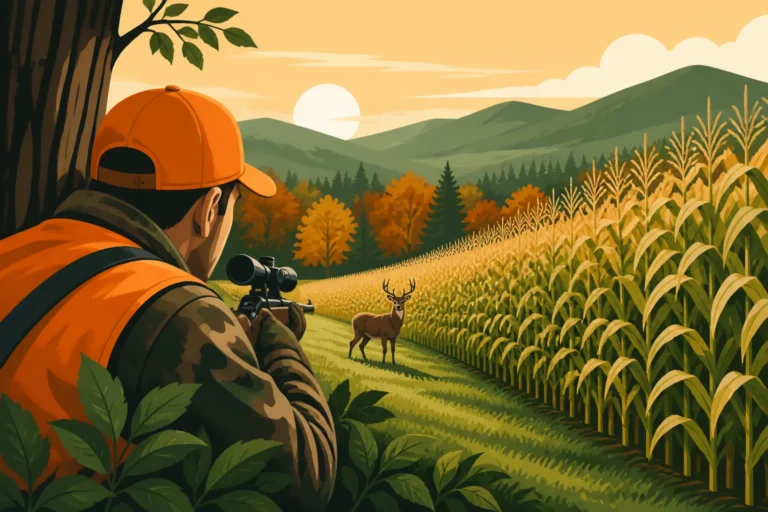
In the Champlain Valley, where private farms meet public woodlots, focusing on transition zones is often highly effective. Deer will use thick fencerows, small drainage ditches, and river bottoms as cover to move between bedding areas and feeding fields. Working a Champlain Valley Cornfield Edge at dawn or dusk can be incredibly productive, as deer move in and out of the fields. Setting up a ground blind along such an edge, or in a natural funnel, can offer an excellent ambush point. Remember to be mindful of where the deer are coming from and going to, and consider prevailing winds.
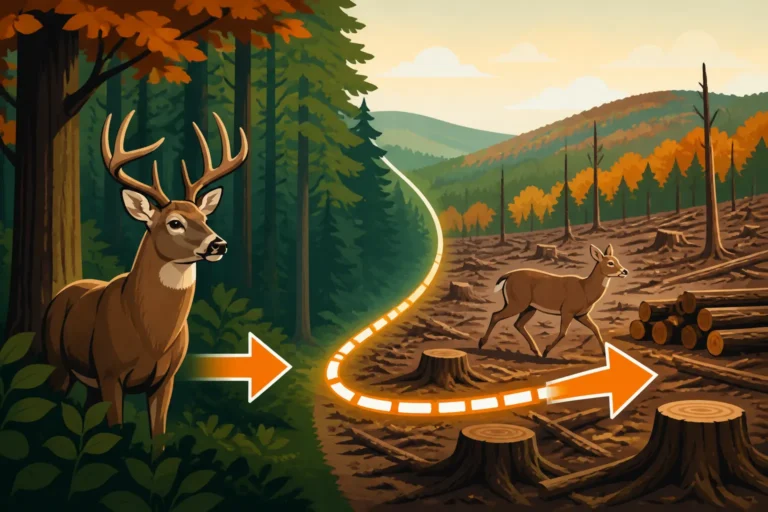
As you ascend into the Green Mountains, the game changes. Here, success often hinges on reading the contours of the land, understanding thermals, and locating key food sources like mast crops. Still-hunting, where you move slowly and deliberately, observing more than you walk, becomes a highly effective method. Targeting saddles, benches, and thick regenerating clear-cuts are often prime spots. You might spend more time glassing distant slopes with binoculars, looking for movement, especially when hunting for bear or observing large tracts of timber. Regardless of the specific terrain, patience, keen observation, and the ability to read the subtle signs of the woods will always be your greatest assets.
Disclaimer
This article is for general informational purposes only and does not constitute professional advice. Laws, prices and regulations vary by location and change over time. Consult a qualified professional for guidance on your specific situation.