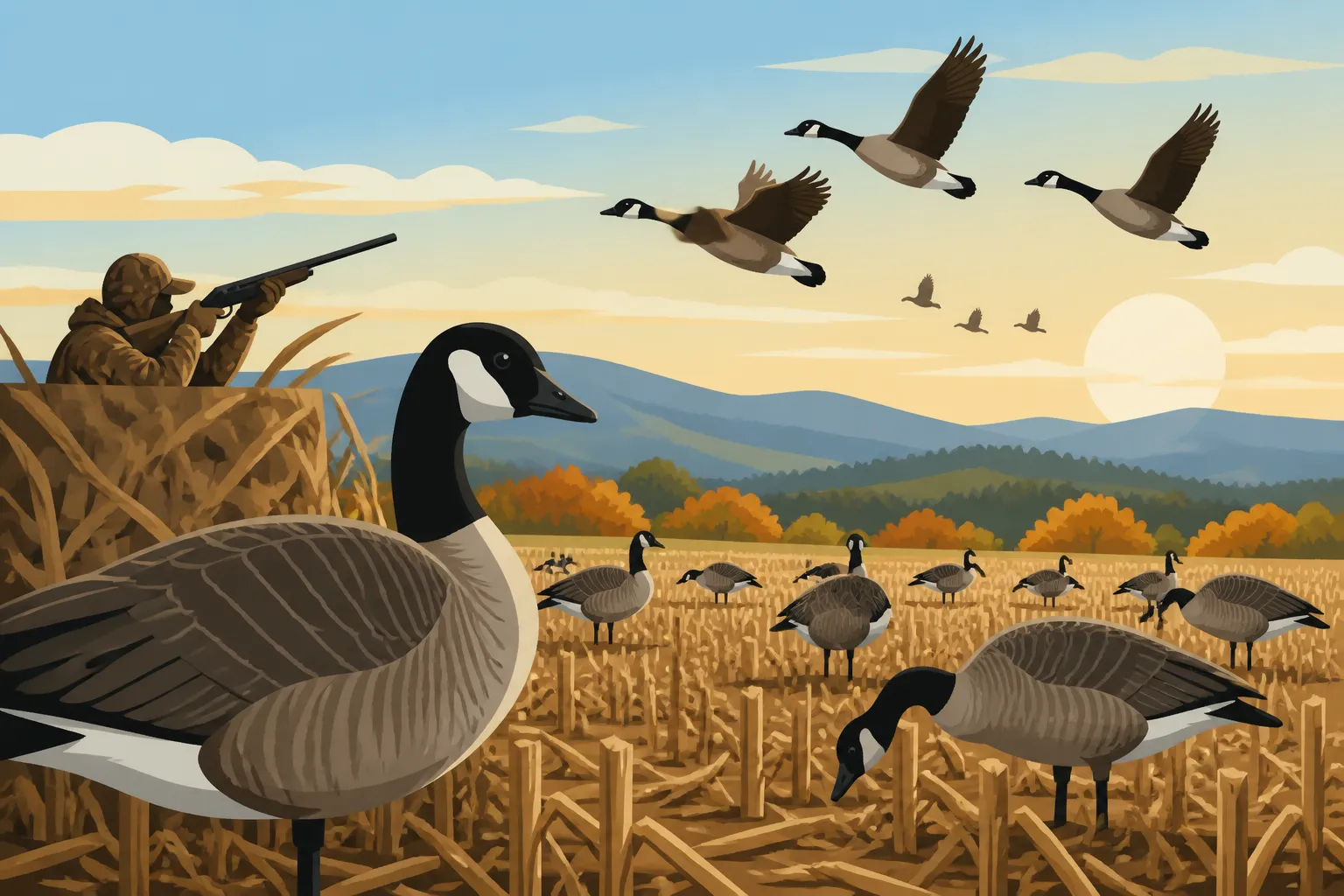
Best Goose Decoy Spread for a Champlain Valley Field
There's nothing quite like the rush of a flock of Canada geese cupping their wings and descending into your spread, but getting them to commit in a wide-open Champlain Valley field can feel like cracking a secret code. Many hunters throw out a few dozen decoys and hope for the best, only to watch birds flare at the last moment. This guide will walk you through crafting the most effective goose decoy spreads specifically designed for the discerning eyes of Vermont's Champlain Valley geese, turning those hopes into successful hunts.
Understanding Champlain Valley Goose Behavior in Fields
To truly master goose decoy spreads, you first need to become a student of the birds themselves, especially here in the Champlain Valley. These geese aren't just flying aimlessly; they have routines, preferences, and a sharp eye for anything that looks out of place. The agricultural landscape of the Champlain Valley, with its expansive cornfields, hayfields, and dairy farms, is a prime draw for both resident and migratory Canada geese, offering abundant food and safe loafing areas.
Observing how geese behave in these fields is paramount. They often arrive in smaller scout groups first, circling high, looking for signs of safety and an easy meal. If those scout birds don't like what they see – whether it's a spread that looks too sparse, too dense, or just plain unnatural – they'll pass right over your field and head to the next one. Understanding these patterns, like where they prefer to land, how they feed, and their flight paths, is critical. This is where pre-season scouting really shines. Driving around the Champlain Valley, watching fields at different times of day, noting where birds are feeding, where they're loafing, and the routes they take to get there, will give you invaluable insights. You might even find yourself using an app like GoHunt to mark specific fields or observation points, which can be a game-changer when you're trying to piece together their daily movements.
When geese are feeding, they typically spread out, but not too far. They want enough personal space to keep an eye out for predators, but they also want to be close enough to their flock mates to feel secure. Think about a family picnic: people aren't usually sitting on top of each other, but they're also not yelling across a football field to chat. This natural spacing, combined with varying head positions (some feeding, some alert), is what you need to replicate. Loafing geese, on the other hand, tend to be more tightly bunched, often in a sunny spot or near a water source, conserving energy. The key is to notice these subtle differences and tailor your spread to match the activity the real birds are doing, or that you want them to do. A realistic spread isn't just about the decoys; it's about telling a convincing story to wary geese.
Building Your Field Spread: Decoy Types, Numbers, and Layouts
Once you've done your homework on goose behavior, it's time to translate that knowledge into a physical decoy spread. The right mix of decoy types, sufficient numbers, and an intelligent layout are the cornerstones of success in a Champlain Valley field.
Choosing the Right Decoy Types for Realism
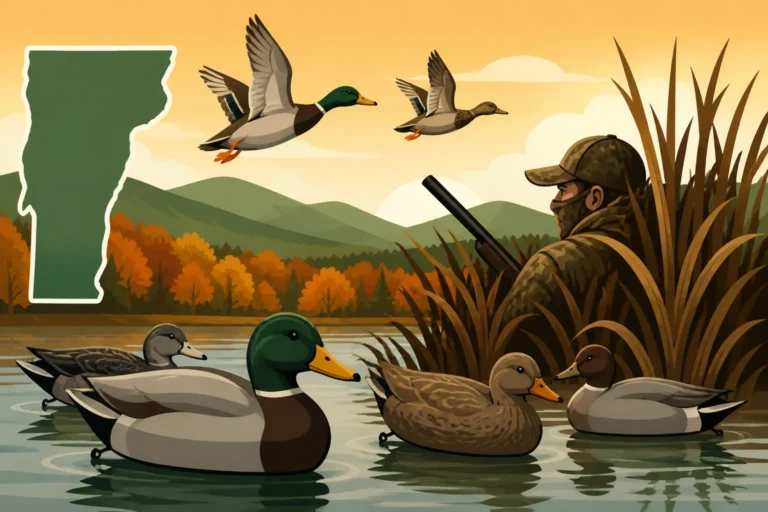
Not all goose decoys are created equal, especially when trying to fool birds that see spreads regularly. In the wide-open expanse of a harvested cornfield or a sprawling hayfield, realism matters more than ever. Full-body decoys are generally considered the gold standard. They offer three-dimensional realism, cast shadows, and can be posed in a variety of feeding, sentry, and resting positions. While they are certainly an investment and take up more space to transport, their lifelike appearance can make all the difference, particularly on calm, sunny days when shadows and detail are most visible. Many hunters find that a core of high-quality full-bodies forms the backbone of their field spread.
Shell decoys, which are essentially the top half of a goose body, are another popular option. They're more affordable and easier to transport in bulk, making them excellent for adding numbers to your spread without breaking the bank or your back. While they don't offer the full 3D realism of full-bodies, modern shell decoys often have highly detailed paint jobs and flocking that can fool geese from a distance. They work best when mixed with full-bodies, providing a sense of depth and density. Finally, silhouettes or "sillosocks" can be incredibly effective for adding massive numbers quickly and affordably, especially on windy days when their movement brings the spread to life. They are incredibly lightweight and portable, allowing you to deploy hundreds if needed. The trick is to position them strategically, perhaps further out from your landing zone, or in areas where a full body would be less visible, creating the illusion of a much larger flock. A blend of these types often yields the best results, combining the realism of full-bodies with the mass and movement of shells and silhouettes.
Here’s a quick comparison of popular decoy types for field hunting:
| Decoy Type | Realism | Portability/Bulk | Cost (Relative) | Best Use Case |
|---|---|---|---|---|
| Full-Body | Excellent | Low | High | Core of spread, close to landing zone |
| Shell | Good | Medium | Medium | Adding numbers, depth to spread |
| Silhouette | Fair (from distance) | High | Low | Mass appeal, movement, distant birds |
Determining Decoy Numbers and Density
The number of decoys you deploy is often dictated by the number of geese you've been seeing and the size of the field. In the Champlain Valley, geese often feed in decent-sized flocks, so a spread of at least 3-4 dozen decoys is a good starting point for attracting their attention. If you're targeting larger migratory groups or hunting in an area with a very strong goose presence, increasing your numbers to 6-8 dozen or even more can be highly effective. The more birds you can realistically portray, the more appealing your field will look to passing flocks.
Density also plays a crucial role. Geese rarely feed in a perfectly uniform pattern. Some areas will be more concentrated, while others will have birds more spaced out. Avoid setting your decoys in perfectly straight lines or evenly spaced grids; this looks unnatural and will immediately put wary geese on edge. Instead, think about organic clusters, mimicking small family groups or feeding pods. A common mistake is to place decoys too close to the blind, which can make the spread look too "hot" or create a wall that incoming birds are reluctant to fly over. Remember to leave plenty of space in your intended landing zone, as birds need room to work into the wind and touch down comfortably.
Crafting Effective Field Layouts
When it comes to the actual layout, there are a few tried-and-true patterns that work well in field settings. The "U" or "J" spread is a perennial favorite. Imagine your blind at the base of the "U" (or the crook of the "J"), with the open end facing into the wind. This creates a natural landing strip directly in front of your blinds, guiding birds right into your shooting zone. The birds will almost always try to land into the wind, so understanding the wind direction is absolutely critical to placing your spread correctly.
Another effective layout is the "blob" or "mass" spread, where you simply cluster your decoys in a large, irregular shape, perhaps with a slightly less dense area or a small "pocket" for the birds to land in. This mimics a large feeding flock and can be very enticing. Regardless of the specific shape, always consider the wind. Geese will almost always approach and land into the wind. Your landing zone should be directly in front of your blinds, allowing birds to cup their wings and float down comfortably. Don't be afraid to experiment. One day, a tight "U" might work, the next, a more dispersed "blob" might be the ticket. Flexibility and adaptation are key, especially as the season progresses and geese become more pressured. Consider scouting resources like GoHunt, which can help you identify open fields, access points, and even show historical aerial imagery to understand how fields are typically used by geese.
Strategic Placement and Realism: Making Your Spread Irresistible
Beyond the basic numbers and shapes, truly successful field hunting in the Champlain Valley hinges on the details of your decoy placement and the overall realism you present. These are the subtle cues that convince wary geese your spread is the real deal.
The Critical Landing Zone
Every successful decoy spread needs a clearly defined landing zone. This is the area you want the incoming geese to aim for, where they'll feel most comfortable committing to land. For field hunting, this zone should typically be 15-25 yards from your blinds, directly in front of you. It's crucial that this area is devoid of decoys or has only a sparse scattering of very realistic, low-profile decoys to suggest an inviting open space. Geese need room to maneuver and will rarely land directly on top of other birds (even fake ones).
Think of the landing zone as the bullseye of your target. Your decoy spread should frame this bullseye, guiding the birds' eyes and flight path right into it. The "U" or "J" shape mentioned earlier naturally creates this funnel. Ensure the open end of the "U" is directly into the prevailing wind, as this is how geese will approach. You can enhance the illusion of a safe landing spot by placing a few "sentinel" decoys, with alert head positions, just outside the landing zone. These decoys act as lookouts, signaling to incoming birds that the area is safe. This strategic placement helps convince those circling flocks in the big skies of the Champlain Valley that your field is the spot.
Adding Movement and Life to Your Spread
Static decoy spreads, especially on calm days, can look dead and unnatural. Geese are constantly moving, feeding, stretching, and interacting. Introducing movement into your spread can dramatically increase its effectiveness. Wind socks or "flapper" decoys are a fantastic way to add motion with minimal effort. Their lightweight fabric bodies catch the slightest breeze, creating a subtle, lifelike movement that mimics feeding geese. They are especially effective when mixed with full-body and shell decoys, providing an inexpensive way to add dynamic realism.
Motion decoys, such as those with motorized wings or shaking mechanisms, can also be very powerful. A spinning wing decoy or a motorized "feeder" can draw attention from a distance and give the impression of active, content birds. However, be mindful of overdoing it. A few well-placed motion decoys are often more effective than a field full of frantic movement. The goal is to suggest natural activity, not a rave. On a day with little wind, these motion devices can be the single most important factor in bringing reluctant geese into range. This is particularly true on those crisp, still mornings that are common across Vermont's varied topography.
Concealment: Don't Forget Yourself!
All the best decoy spreads in the world won't matter if the geese spot you. Superior concealment is non-negotiable for field hunting. Layout blinds are the standard for a reason: they allow you to lie low and become part of the field, blending in with the stubble or crop residue. It's not enough to simply lie in the blind; you must brush it in meticulously with local vegetation. If you're hunting a cut cornfield, grab cornstalks; if it's a hayfield, use hay. Make your blind disappear. Birds have incredible eyesight, and a dark lump in the middle of a light-colored field will send them packing every time.
Pay attention to your face and hands as well. Even if your blind is perfectly brushed in, a glint off exposed skin or a pair of binoculars can give you away. Wear face paint or a mask, and gloves. Keep movement to an absolute minimum, especially when birds are circling. The moment you start peeking over the blind or moving to grab a call, you risk flaring the entire flock. Patience and discipline in the blind are just as important as the decoys themselves. Mastering your concealment is often the final piece of the puzzle that turns a "good" spread into a "deadly" one. For more tips on setting up, check out Layout Blind Hunting a Champlain Valley Field.
Beyond the Decoys: Calling, Scouting, and Adaptability
While the decoy spread is the visual magnet, successful goose hunting in the Champlain Valley involves a holistic approach that includes effective calling, thorough scouting, and the ability to adapt to changing conditions.
The Art of Goose Calling
Calling is the auditory component that complements your visual spread. It's not about how loud you can blow a call, but how realistically you can mimic the sounds of a contented flock of geese. Start with softer greeting calls and clucks as birds are distant, letting them know your spread is there and inviting. As they get closer, transition to more excited clucks and moans, simulating geese feeding happily. Don't overcall; let the decoys do most of the work. If birds are committed and on a string, sometimes silence is the best call.
Knowing when to use a single honk versus a rapid series of clucks comes with experience. Practice listening to real geese in the fields and try to replicate those sounds. A good call can turn a hesitant flock into a committed one, drawing their attention and reassuring them that your field is a safe haven. It's the conversation that tells the circling birds, "Come on down, the food's great, and we're having a good time!" When hunting the larger fields, your calling needs to carry, but still sound natural.
Pre-Season and In-Season Scouting
Scouting is, arguably, the most important aspect of field hunting. You can have the best decoys and the most skillful calling, but if you're not where the birds want to be, you won't kill geese. Pre-season scouting involves driving around the Champlain Valley, locating fields that geese are using, noting their flight paths, and identifying where they enter and exit fields. Using an app like GoHunt, you can mark these locations, track observations, and even analyze terrain features that might funnel birds. Pay attention to crop rotations – geese prefer certain foods at different times of the year. Cut cornfields are often goose magnets, but they'll also hit winter wheat, hay, or even freshly planted fields.
In-season scouting is about staying current. Geese are creatures of habit until their habits change. A field that was hot last week might be barren this week due to increased pressure, a change in feed, or new weather patterns. Don't be afraid to move if a spot isn't producing. Getting permission to hunt private fields is often a result of diligent scouting and building relationships with landowners. Sometimes, a quick conversation with a farmer while Knocking on Doors in Champlain Valley Farm Country can open up a fantastic new opportunity. Continual scouting will help you stay ahead of the birds and maximize your success through the season, whether you're targeting early resident birds or later migrants moving through the Vermont Waterfowl Zones and Seasons.
Adapting to Conditions and Pressure
Geese, especially those in the Champlain Valley that see hunting pressure, get smart quickly. What worked perfectly on opening day might not work a few weeks later. Be prepared to adapt. On bluebird days with no wind, realism is paramount, and motion decoys become crucial. On windy, overcast days, movement is naturally abundant, and geese might be less wary, allowing for slightly larger spreads or less meticulous placement. If you notice birds flaring consistently, try adjusting your landing zone, reducing the density of your spread, or changing your blind's brushing.
Weather plays a huge role. Cold fronts can bring new birds, while warm spells can make them lethargic. Snow can completely change their feeding habits and visibility. Have a variety of decoy types, calling techniques, and blind options ready to deploy based on the conditions. Think about the Cold-Weather Sitting Strategy in the Northeast Kingdom – while that’s a different area, the principles of adapting to harsh conditions are universal in Vermont hunting. Being a flexible, observant hunter who can adjust on the fly will always put more geese in your game bag than someone who sticks to a rigid plan, no matter the situation. Remember that the journey of learning is continuous, and every hunt offers new lessons about these incredible birds and how to entice them into your carefully crafted spread. For general information on migratory birds, consider looking at Vermont Migratory Bird Certification.
Disclaimer
This article is for general informational purposes only and does not constitute professional advice. Laws, prices and regulations vary by location and change over time. Consult a qualified professional for guidance on your specific situation.