Best Headlamp Battery Life for Long Sits
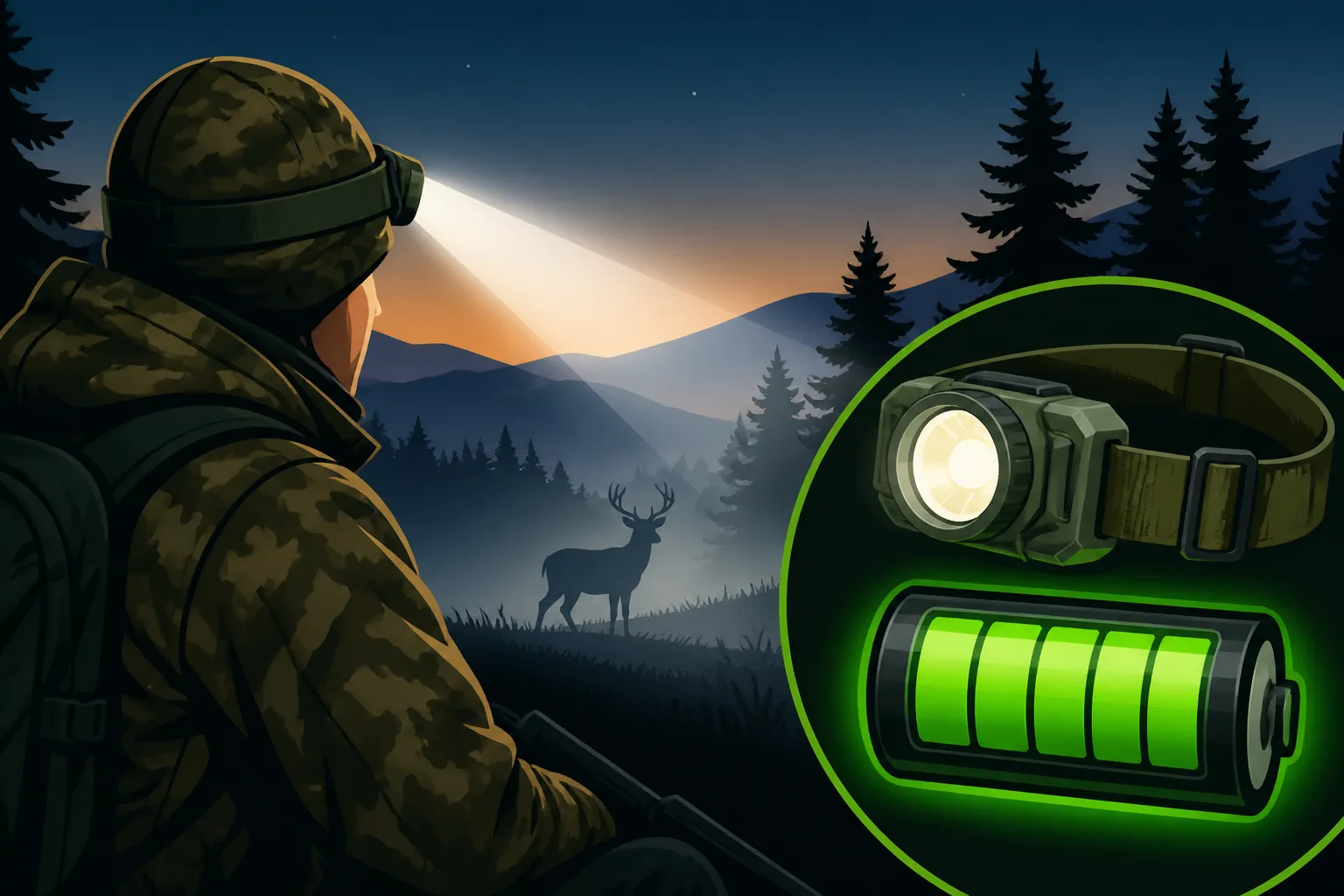
That gut-wrenching moment when your headlamp starts to dim, then flickers, and finally dies right when you need it most—it’s a feeling no hunter wants, especially not deep in the Green Mountain National Forest before dawn or during a late blood trail after sunset. For those of us who spend hours in a treestand, still-hunting through thick timber, or tracking game in challenging Vermont conditions, reliable illumination isn't just a convenience; it's a critical piece of safety and success. This comprehensive guide will help you navigate the often-overlooked world of headlamp battery life, ensuring you're equipped to make the best choices for your long sits in the Vermont woods.
The Unseen Challenge: Why Headlamp Battery Life Matters So Much for Vermont Hunters
It’s easy to focus on lumens, beam patterns, and fancy features when picking out a headlamp, but often, the most critical factor—battery life—gets pushed to the side. In Vermont, where conditions can change rapidly and hunts often extend into the twilight hours, understanding and managing your headlamp's power source is paramount.
Cold Weather's Cruel Impact
Anyone who has hunted a late-season deer in December or set out for a spring gobbler on a frosty May morning knows how quickly cold temperatures can sap the life out of electronics. Batteries, especially standard alkalines, are notoriously inefficient in the cold. The chemical reactions that produce electricity slow down significantly as temperatures drop, meaning a battery that might give you ten hours of runtime in your warm house could be dead in half that time on a crisp, 20-degree morning in the Northeast Kingdom. This isn't just an inconvenience; it can be dangerous. Imagine packing in before light to your stand for Cold-Weather Sitting Strategy in the Northeast Kingdom only to have your primary light source fail because you didn't account for the frigid air. You're left fumbling in the dark, potentially tripping on roots or losing your way.
Navigating Pre-Dawn and Post-Dusk
Vermont hunting often means early starts and late finishes. Whether you're making that long hike to your stand at 4:30 AM to catch the morning deer movement during Hunting the Rut in Early-to-Mid November or you're carefully Blood Trailing After Dark in Vermont after a late shot, your headlamp is your lifeline. These are not times for a headlamp that barely gets you by. A strong, consistent light source is essential for safely navigating uneven terrain, identifying landmarks, and checking your gear without fumbling. If your headlamp can't reliably last through both the pre-dawn setup and the post-dusk pack-out on a single charge or set of batteries, you're putting yourself at a significant disadvantage, not to mention risking a dangerous situation far from your truck.
Safety Beyond Illumination
Beyond simply seeing where you're going, a reliable headlamp is a crucial safety tool. It allows you to signal others, whether it's fellow hunters or emergency personnel, should you find yourself in a bind. It enables you to quickly identify any unexpected obstacles or hazards that might pop up, like a fresh downed tree or a patch of ice, especially when carrying a heavy pack or an animal. Furthermore, if you’re engaged in tasks like field dressing an animal after sunset, a strong and steady light source is essential for both efficiency and hygiene. The last thing you want is a dying headlamp when you're knee-deep in work, trying to get an animal quartered and cooled before the long drag out, whether it's a whitetail or even something larger like during Packing for a Northeast Kingdom Moose Hunt. Thinking of your headlamp as a piece of essential safety gear, not just a light source, helps emphasize why battery life is so critical.
Deciphering Battery Types: The Heart of Your Headlamp's Endurance
When it comes to powering your headlamp, not all batteries are created equal. The type of battery your headlamp uses dramatically impacts its performance, especially in the variable and often cold conditions of Vermont. Understanding these differences is key to making an informed choice for your long hunts.
Alkaline: The Affordable Workhorse
Standard alkaline batteries, like the ubiquitous AA and AAA cells, are perhaps the most common power source for many headlamps. Their main appeal is their affordability and widespread availability. You can pick them up at almost any gas station, convenience store, or hardware shop across Vermont. This makes them convenient for last-minute replacements or if you burn through batteries unexpectedly. However, alkaline batteries have a significant drawback for hunters: they perform poorly in cold weather. Their internal chemistry slows down dramatically when temperatures drop, leading to a rapid decrease in voltage and overall usable life. A headlamp that boasts 100 hours of runtime on alkalines at room temperature might only deliver a fraction of that in freezing conditions. They also tend to "dump" their power rather than maintain a steady output, meaning your light will get progressively dimmer as the battery drains, rather than staying consistently bright until it's nearly dead. Plus, older or cheaper alkalines can be prone to leakage, which can damage your headlamp over time, particularly if stored for extended periods.
Lithium: The Cold-Weather Champion
For serious hunters who demand reliable performance in any weather, lithium batteries (often sold as "Ultimate Lithium" in AA or AAA formats, or as specialized CR123A cells) are often the superior choice. While they come with a higher price tag than alkalines, their performance advantages are substantial. Lithium batteries excel in cold environments, maintaining their voltage and capacity far better than alkalines. This means your headlamp will stay brighter for longer, even on those bitter mornings waiting for a buck to cross your path. They are also significantly lighter than alkalines, which can make a difference on long treks or when every ounce in your pack counts. Furthermore, lithium batteries have a much longer shelf life and are far less prone to leakage, protecting your investment in your headlamp. If you're planning any extended excursions or expecting truly cold conditions, like a late-season Hunting Into the December Muzzleloader Close, investing in lithium batteries for your primary headlamp and spares is a wise decision.
Rechargeable: The Modern Convenience
Rechargeable battery technology, primarily lithium-ion (Li-ion), has made huge strides and is now integrated into many high-performance headlamps. These headlamps either come with a built-in rechargeable battery or use rechargeable cells like 18650 or 21700 formats. The primary benefit is cost savings over time and environmental friendliness; you're not constantly buying and disposing of single-use batteries. Modern rechargeable headlamps often offer consistent light output until the battery is nearly depleted, then drop to a low "reserve" mode for a period, giving you a predictable performance curve. However, they do require access to a charging source, which might be a wall outlet, a car adapter, or a portable power bank if you're out in the backcountry. Their performance in extreme cold can vary depending on the quality of the battery and the headlamp's internal regulation, though generally, they perform better than alkalines. A good strategy for extended hunts is to carry a fully charged spare rechargeable battery if your headlamp allows for swapping, or a small power bank to top off its internal battery. When planning your gear, looking into options that leverage rechargeable power sources can be greatly enhanced by checking out community discussions and gear reviews on platforms like GoHunt, where hunters often share their real-world experiences with different setups.
Here's a quick comparison of battery types:
| Battery Type | Pros | Cons | Cold Weather Performance | Typical Runtime (Medium) |
|---|---|---|---|---|
| Alkaline (AAA/AA) | Widely available, affordable, good for casual use | Poor in cold, voltage drops quickly, prone to leakage, heavier | Significantly reduced | Moderate |
| Lithium (AAA/AA/CR123A) | Excellent in cold, lightweight, long shelf life, steady output | More expensive, less common in standard stores | Very good | Good |
| Rechargeable (Li-ion) | Cost-effective over time, consistent power, customizable capacity, eco-friendly | Requires charging access, can be heavy if integrated, loses charge slowly when stored, initial investment | Good (can vary by quality) | Varies by mAh capacity |
Beyond Lumens: Key Features for Extended Headlamp Performance
When selecting a headlamp for those long, demanding sits in Vermont, it's easy to get caught up in the "lumen wars." While brightness is certainly important, it's far from the only factor—and often not the most important one—when battery life is your priority. Savvy hunters look for a combination of features that contribute to sustained, reliable performance.
Understanding Runtime Ratings
Every reputable headlamp will list its runtime, often for various brightness settings. However, it's crucial to understand how these ratings are typically determined. Most manufacturers follow ANSI FL1 standards, which measure runtime from the initial output down to 10% of that output. This means a headlamp might start at 500 lumens but gradually dim over several hours until it's only putting out 50 lumens, and that entire period counts towards the "runtime." For hunting, where a consistent, usable light level is vital, you want to pay attention to headlamps that specifically mention "regulated output" or provide graphs showing how the lumen output stays consistent before stepping down. A headlamp that maintains 200 lumens for 4 hours and then steps down to 50 lumens for another 10 hours is often more useful than one that starts at 800 lumens but immediately begins a steady, unregulated decline. For detailed reviews and real-world testing that goes beyond basic marketing, consulting reputable gear review sites or hunting forums, sometimes linked through resources like GoHunt, can be incredibly helpful. Look for headlamps that prioritize consistent output over peak burst brightness for practical hunting applications.
Intelligent Power Management Modes
Modern headlamps are much smarter than their predecessors. Many now incorporate sophisticated power management systems that offer a range of modes designed to conserve battery life without leaving you completely in the dark.
- Multiple Brightness Levels: This is fundamental. You don't always need max brightness. A low setting (20-50 lumens) is often perfect for reading a map, checking your phone, or making a short walk to your stand when you want to minimize disturbance. Medium settings (100-250 lumens) are ideal for general hiking and setting up camp. Reserve your high and "boost" modes for critical moments like Tracking a Deer in Fresh Green Mountain Snow or if you hear something approach and need to quickly scan your surroundings.
- Red Light Mode: This is a non-negotiable feature for hunters. Red light preserves your natural night vision, which is incredibly useful when you're transitioning between using your headlamp and scanning the woods. It's also much less likely to spook game or alert other hunters to your presence. Crucially, red light typically uses significantly less battery power than white light, making it an excellent choice for prolonged, low-level illumination tasks in camp or within your stand.
- Lockout Feature: Accidental activation in your pack can drain batteries unnoticed. A lockout feature prevents this by disabling the button until a specific sequence is pressed. This seems like a small detail, but it can save your battery life when you least expect it.
- Battery Level Indicators: Many headlamps include a small LED indicator that changes color to show remaining battery life. This visual cue is invaluable for knowing when it’s time to swap batteries or switch to a lower power mode.
Weight and Comfort for Long Wear
While not directly related to battery life, the physical characteristics of your headlamp can certainly influence how long you're willing or able to wear it, which in turn affects your overall experience during a long sit. A heavy, bulky headlamp with an uncomfortable strap can become a real nuisance after a few hours, leading you to take it off and then struggle in the dark later. Look for models with a balanced design, where the battery pack is sometimes located at the back of the head, distributing the weight more evenly. Adjustable, breathable headbands are also crucial for comfort, preventing chafing or sweating. If you're going to be wearing this device for extended periods, perhaps during a lengthy tracking effort or a late evening scouting mission like Scouting Vermont Public Land Before Season, you want it to feel like it’s barely there. A comfortable headlamp that you don't mind wearing means you'll use it when needed, rather than stashing it away and risking being unprepared for changing light conditions.
Mastering Your Headlamp: Strategies for Maximum Battery Life in the Field
Having the right headlamp is only half the battle; knowing how to manage its power and prepare it for the rigors of a Vermont hunt is the other. Proactive measures and smart field habits can dramatically extend your headlamp's usability and ensure it's always ready when you need it most.
Carrying Spares and Power Banks
This is perhaps the simplest yet most overlooked strategy for ensuring you always have light. For headlamps that use disposable batteries, always carry at least one full set of fresh spares. If you're using lithium batteries, they'll hold their charge for a very long time, making them excellent emergency backups. Store them in a small, waterproof bag to protect them from moisture and dirt. For rechargeable headlamps, the strategy shifts slightly:
- Spare Battery Packs: If your rechargeable headlamp uses removable 18650 or 21700 Li-ion cells, purchase an extra one or two, fully charge them, and carry them as backups. Swapping a battery is often quicker than fumbling with a power bank.
- Portable Power Banks: For headlamps with integrated rechargeable batteries, a portable USB power bank is your best friend. A small, lightweight power bank (e.g., 5,000 to 10,000 mAh) can fully recharge most headlamps multiple times. This is especially useful for multi-day hunts or when you’ll be far from conventional power sources, such as when preparing your camp for Moose Hunting Vermont's Northeast Kingdom. Make sure your power bank is also fully charged before heading out!
Remember, cold weather not only drains headlamp batteries but also power banks and other electronic devices. Keep your spare batteries and power bank in an inside pocket, close to your body, to keep them as warm as possible. This can significantly prolong their usable life in freezing conditions.
Optimizing Brightness and Modes
The biggest drain on any headlamp battery is excessive brightness. Resist the urge to always run your headlamp on its highest setting. Most tasks, like walking to your stand, setting up a Hanging a Stand on a Champlain Valley Field Edge, or even Reading Aerial Photos for Green Mountain Deer on your phone app, can be accomplished perfectly well with a low to medium setting (20-150 lumens).
- Use Red Light: As discussed, red light is a battery saver and a hunter's best friend. Use it for anything where preserving night vision is important or when you simply need to see immediately in front of you without blasting your eyes or spooking game. Setting up your Using a Ground Blind on Public Land in the pre-dawn hours is a perfect scenario for red light.
- Step Down Brightness: Get into the habit of stepping down to the lowest usable brightness for any given task. If you're just walking a clear trail, you might only need 50 lumens. If you're scanning dense timber, you might bump it up. Being mindful of your output will provide huge dividends in battery life.
- Avoid "Boost" Modes: Many headlamps have a temporary "boost" mode that provides maximum lumens for a very short duration. These are designed for quick bursts of intense light, like identifying a distant landmark, not for sustained use. Using boost mode frequently will drain your battery extremely quickly.
Pre-Season Prep and Storage
Your headlamp's battery life isn't just about what you do in the field; it starts long before the season opener.
- Fresh Batteries: Always start the season with fresh batteries. If using disposables, put in a new set before your first hunt. For rechargeable headlamps, ensure they are fully charged.
- Test Regularly: Don't wait until opening morning to discover your headlamp is dead. Test it periodically throughout the off-season. Cycle through all the modes and let it run for a bit to ensure everything is functioning correctly.
- Proper Storage: When storing your headlamp for extended periods, especially between seasons, remove the disposable batteries. This prevents leakage, which can corrode terminals and destroy your headlamp. For rechargeable headlamps, store them with about a 50-70% charge, as this is ideal for long-term cell health. Avoid storing them fully charged or completely dead for months on end. Keep your headlamp in a dry, room-temperature environment, protected from extreme heat or cold.
- Check Connections: Before each hunt, quickly inspect the battery compartment for any corrosion or loose connections. Clean terminals with a pencil eraser or a cotton swab dipped in rubbing alcohol if you see any buildup. A clean connection ensures efficient power transfer and reliable light when you need it most.
By thoughtfully selecting your headlamp, understanding its power source, and practicing smart management strategies, you can virtually eliminate the anxiety of a dead headlamp, ensuring your focus remains on the hunt itself, not on stumbling in the dark.
Disclaimer
This article is for general informational purposes only and does not constitute professional advice. Laws, prices and regulations vary by location and change over time. Consult a qualified professional for guidance on your specific situation.