Best Sleeping Bag Rating for Late-Fall Nights
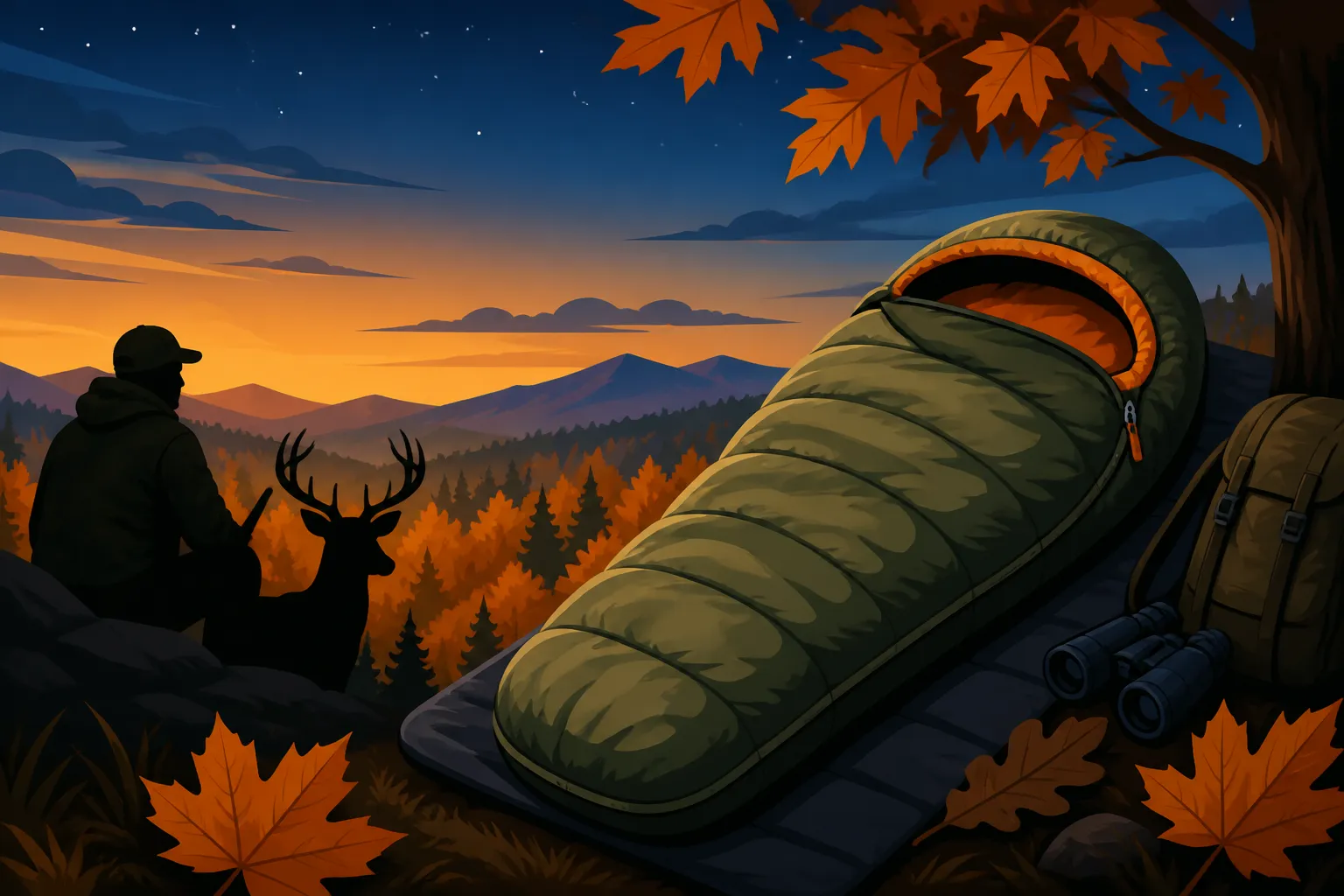
When you're out hunting in Vermont during the late fall, the nights can turn brutally cold without much warning. One minute you're enjoying a crisp evening around the campfire, the next you're shivering uncontrollably in your tent, wishing you'd paid more attention to your sleeping bag's temperature rating. This guide is all about helping you understand what those ratings mean and how to pick the best sleeping bag to keep you warm and comfortable when the mercury plummets on your overnight hunting trips.
Understanding Sleeping Bag Ratings: Deciphering the Numbers
Sleeping bag ratings can feel like a secret code, and for good reason—they're often an optimistic estimate. Manufacturers want you to buy their bag, so sometimes those numbers are more about marketing than real-world comfort. However, understanding the common rating systems is crucial to making an informed decision, especially when Layering for Vermont's Long Hunting Season is already a complex game.
The EN/ISO Rating System
Gone are the days when every manufacturer just slapped a "20-degree" label on a bag without any real testing standard. Nowadays, many reputable brands adhere to the European Norm (EN) or the newer International Organization for Standardization (ISO) testing standards. These standards provide a much more reliable way to compare bags because they're all tested under controlled laboratory conditions using a heated mannequin.
There are usually a few key temperature ratings you'll see:
- Comfort Limit: This is the temperature at which an average woman can expect to sleep comfortably in a relaxed position. For most of us, especially men, this is closer to what we'd consider the actual comfort rating.
- Lower Limit: This is the temperature at which an average man can sleep for eight hours in a curled-up position without feeling overly cold. This is often the number advertised as the bag's "rating." If you plan to push your bag to this limit, be prepared for some discomfort.
- Extreme Limit: This rating is really just a survival rating. It's the lowest temperature at which an average woman can survive for six hours without risk of death from hypothermia, but it doesn't mean you'll be comfortable or even safe from frostbite. Think of it as a "don't go below this unless it's an emergency" number.
When you're looking at a bag, focus on the Comfort Limit for a good night's sleep, or at least the Lower Limit if you're a warm sleeper or plan to use significant extra layers.
Interpreting Non-Rated Bags
While many higher-end bags now carry EN/ISO ratings, you'll still find plenty of bags, especially at more budget-friendly price points, that only have a single "temperature rating" listed. This is where you need to be cautious. Without a standardized test, that 20-degree bag from one brand might perform like a 40-degree bag from another.
When faced with these unrated bags, consider these factors:
- Manufacturer Reputation: Brands known for quality outdoor gear are generally more reliable in their temperature claims than unknown brands.
- Fill Material: Is it down or synthetic? How much fill (in ounces or grams) does it contain? More fill, particularly good quality down, usually means more warmth.
- Construction: Does the bag have baffled construction (for down) or shingle/offset construction (for synthetic) to prevent cold spots? Look for a draft collar around the neck and a draft tube along the zipper.
- Your Personal Tolerance: Are you a naturally warm or cold sleeper? If you tend to run cold, always err on the side of a warmer bag or be prepared to add layers. My buddy, Mark, always brings a zero-degree bag, even on nights I'd be fine in a 20-degree, just because he's perpetually chilly.
For late-fall Vermont hunting, when nights can easily dip into the 20s or even teens, an unrated bag that claims a 20-degree rating is probably not going to cut it. You'll likely need something advertised as 0-degree or 10-degree for true comfort if it's not EN/ISO rated.
Factors Beyond the Bag: Enhancing Your Warmth in a Vermont Backcountry Camp
It's easy to focus solely on the sleeping bag, but a truly warm night in the backcountry, especially when you're deer hunting in the Green Mountains or bear hunting in the Northeast Kingdom, is a system. No matter how good your bag, if other elements of your sleep system are lacking, you'll still be cold.
The Unsung Hero: Your Sleeping Pad's R-Value
This is probably the most overlooked piece of gear when it comes to staying warm. Your sleeping bag works by trapping air to create an insulating layer around you. However, the compression of your body weight against the ground flattens the insulation on the bottom of the bag, making it far less effective. That's where your sleeping pad comes in.
Sleeping pads are rated by their R-value, which measures their thermal resistance. The higher the R-value, the better the insulation against the cold ground.
- R-values for different conditions:
- 1-2: Minimal insulation, suitable for warm summer nights.
- 2-3: Three-season camping, fine for mild fall nights.
- 3-4: Good for colder three-season use and early-to-mid fall.
- 4-5+: Essential for late-fall and winter camping when ground temperatures are low.
For late-fall Vermont hunting, you'll want a pad with an R-value of at least 4, and ideally 5 or higher. The ground, even without snow, sucks heat out of you relentlessly. A thin foam pad might be light, but it won't save you from shivering when the temps drop into the 20s. Don't cheap out here; a high-R-value pad can make a 20-degree bag feel like a 10-degree bag, and a low-R-value pad can make a 0-degree bag feel like a 30-degree bag.
Shelter Type: Tent, Bivy, or Tarp
Your shelter also plays a significant role in your overall warmth. Even a thin layer of fabric can help trap some warmth and block wind, which is crucial in reducing convective heat loss.
- Tent: A fully enclosed tent, especially a four-season model, creates a small microclimate that can be several degrees warmer than the outside air. The double walls of a tent help prevent condensation from dripping on your bag and body, which is a major warmth killer. If you're planning a multi-day hunt, like a Moose Hunting Vermont's Northeast Kingdom expedition, a good tent is non-negotiable.
- Bivy Sack: A bivy (bivouac) sack is essentially a waterproof, breathable cover for your sleeping bag. It adds a few degrees of warmth by trapping air and protecting your bag from wind and moisture. It's lighter than a tent but offers less space and no protection from bugs. It's a good option for minimalist hunters or those using a tarp for primary shelter.
- Tarp: While a tarp offers excellent protection from rain and snow, it provides very little thermal insulation. If you're sleeping under a tarp, your sleeping bag and pad need to be absolutely top-notch, and you'll rely heavily on your layering system to stay warm. Wind blocks are essential if you're using a tarp in cold weather.
Consider the expected conditions and your personal comfort level when choosing your shelter. If you're in an exposed area or expecting high winds, a more robust shelter will make a huge difference. You'll want to check Camping Rules on Green Mountain National Forest Land for specifics on where and how you can set up your camp.
Choosing the Right Rating for Vermont's Variable Late-Fall
Vermont's late fall can be incredibly unpredictable. One week it's Indian Summer, the next you're tracking deer through a foot of fresh snow. This variability makes choosing the "perfect" sleeping bag rating tricky. My advice? Always plan for the coldest possible scenario, then layer down if it's warmer.
The "Comfort Zone" for Late-Fall Vermont
For most late-fall Vermont hunting trips, especially those involving overnight stays, you're looking at nighttime temperatures that can easily dip into the low 20s, teens, or even single digits Fahrenheit.
Here's a general guideline for sleeping bag ratings to consider:
| Expected Low Temperature | Recommended EN/ISO Lower Limit | Recommended Non-Rated Bag | Notes |
|---|---|---|---|
| 30-40°F (Mild Fall) | 20-30°F | 10-20°F (if reliable brand) | With a good pad, you might be comfortable. Layering still smart. |
| 20-30°F (Typical Late-Fall) | 10-20°F | 0-10°F (if reliable brand) | This is the sweet spot for many. Ensure a high R-value pad. |
| 0-20°F (Cold Late-Fall/Early Winter) | 0-10°F | -10 to 0°F (if reliable brand) | Essential for cold sleepers or exposed conditions. Consider over-specifying. |
| Below 0°F (Extreme Cold) | -10°F or lower | -20°F or lower | Specialized winter bags are needed. This is serious cold. |
Remember, these are starting points. Your personal metabolism, the food you've eaten, how hydrated you are, and even how tired you are can all impact how warm you feel. A good rule of thumb is to take the lowest temperature you expect to encounter and subtract another 10-15 degrees Fahrenheit for your bag's comfort rating, especially if you tend to run cold.
Down vs. Synthetic Insulation: The Perennial Debate
Both down and synthetic sleeping bags have their pros and cons for Vermont's conditions.
-
Down Insulation:
- Pros: Incredible warmth-to-weight ratio, highly compressible (packs down small), very durable if cared for. High-fill-power down (e.g., 800-fill) offers the best performance.
- Cons: Expensive, loses almost all insulating properties when wet, requires careful washing and drying, not ideal for consistently damp environments without a good waterproof shell or bivy.
- Vermont Suitability: Excellent for cold, dry late-fall nights, or if you are diligent about keeping it dry in your tent. If you plan to carry your camp deep into the Green Mountains, the weight savings are significant.
-
Synthetic Insulation:
- Pros: Retains most of its insulating properties when wet, less expensive than down, hypoallergenic, easier to care for.
- Cons: Heavier and bulkier than down for the same warmth, less compressible, typically shorter lifespan as the fibers break down over time.
- Vermont Suitability: A fantastic choice for Vermont's notoriously damp weather. If you're concerned about rain, melting snow, or condensation, a synthetic bag offers peace of mind. For shorter hikes to camp, the extra bulk might be worth the peace of mind.
Given Vermont's often damp and variable weather, many hunters lean towards synthetic bags for their resilience, or a down bag with a highly water-resistant outer shell. Make sure you check out Best Insulated Layer for a December Muzzleloader Hunt to ensure your clothing system matches your sleeping system.
Practical Tips for Staying Warm on Cold Vermont Nights
Getting a good night's sleep in a cold camp isn't just about the gear; it's also about technique. A few smart moves can make all the difference between shivering and snoozing soundly.
The "Layering Up (and Down)" Principle for Sleep
Just like you layer for hiking or sitting in a stand, you can layer for sleep. This isn't about throwing on your bulky hunting jacket inside your bag, which can actually compress the bag's insulation and make you colder. Instead, think about dedicated sleep layers.
- Clean, Dry Base Layers: This is paramount. Never sleep in the clothes you've been sweating in all day. Your body produces moisture, and damp clothes will draw heat away from you. Change into a fresh, dry set of merino wool or synthetic base layers right before bed. These are your Best Base Layer for a September Archery Sit, and they work for sleeping too!
- Warm Hat and Socks: A significant amount of heat escapes through your head and feet. A warm knit hat, even one you don't wear during the day, can make a huge difference. Similarly, fresh, dry wool socks are a lifesaver for cold feet. I always pack a dedicated pair of "sleep socks" for camp.
- Don't Over-Layer Inside the Bag: As mentioned, too many bulky layers inside your bag can compress the insulation and create cold spots. The goal is to let the bag do its job by trapping air. If you're still cold, adding a lightweight puffy vest or jacket over your base layers, but not so bulky that it compresses the bag, can help.
Consider bringing an extra puffy jacket that you can drape over the top of your sleeping bag or wear inside if you're really pushing the temperature limits.
Fueling Your Internal Furnace
Your body needs calories to produce heat. Don't go to bed hungry on a cold night.
- Eat a High-Calorie Meal: A warm, hearty meal before bed provides the fuel your metabolism needs to keep you warm throughout the night. Even a simple packet of instant oatmeal or a cup of hot chocolate can make a difference.
- Stay Hydrated: Dehydration can hinder your body's ability to regulate temperature. Drink plenty of fluids throughout the day, but avoid excessive caffeine or alcohol right before bed, as they can interfere with sleep and dehydrate you.
- Hot Water Bottle Trick: This is an old but gold trick. Boil some water (if you have a Best Camp Stove for a Backcountry Hunt), pour it into a sturdy Nalgene bottle (make sure it's leak-proof!), and tuck it into your sleeping bag about 15-20 minutes before you get in. It warms up the bag and provides a warm spot for hours. Just be careful not to burn yourself!
Site Selection and Pre-Bed Rituals
Where you set up camp and what you do before crawling into your bag can also significantly impact your comfort.
- Choose a Sheltered Spot: Avoid open ridges or low-lying depressions where cold air collects. Look for natural windbreaks like dense evergreen stands or rock formations. A spot just below a ridge can sometimes be warmer than the very top.
- Go to Bed Warm: Don't get into your sleeping bag already cold. Do a few jumping jacks, push-ups, or walk around camp briskly for a few minutes to get your blood flowing before you crawl in. Once you're warm, the bag can then trap that heat.
- Ventilate Your Tent: It sounds counterintuitive, but a little ventilation helps prevent condensation, especially in cold weather. Condensation adds moisture to the air and can make your gear damp, reducing its insulating properties. Crack a tent vent or zipper slightly if possible.
By combining the right sleeping bag rating with a good sleeping pad, appropriate shelter, and these practical tips, you'll be much better equipped to enjoy those beautiful, quiet, and often very cold, late-fall nights in the Vermont woods.
Disclaimer
This article is for general informational purposes only and does not constitute professional advice. Laws, prices and regulations vary by location and change over time. Consult a qualified professional for guidance on your specific situation.