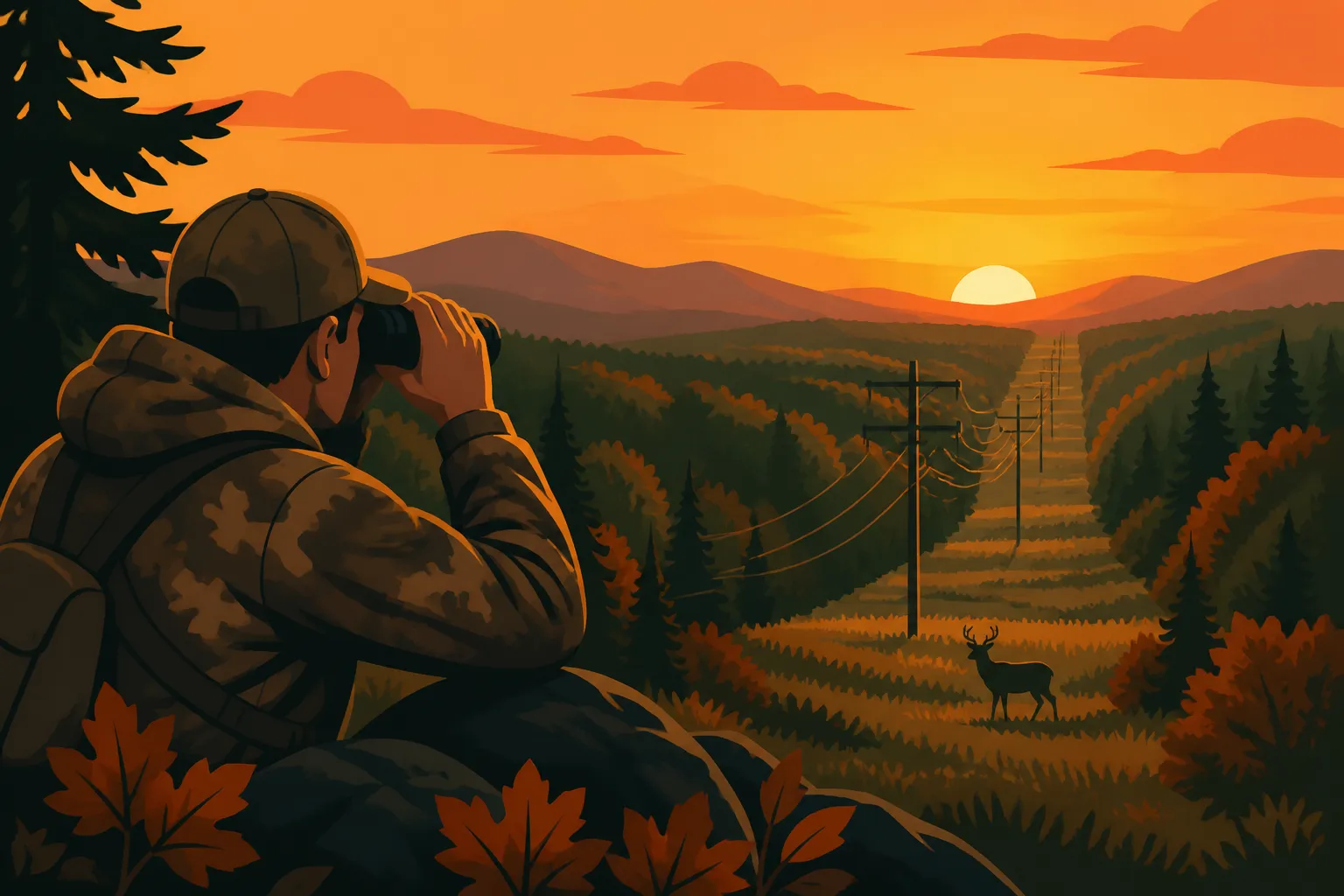
Glassing a Powerline Cut at Last Light
You’ve spent hours still-hunting through thick timber, trying to catch a glimpse of a buck moving through the Vermont hardwoods, only to feel like the deer are always one step ahead. It’s frustrating when the sun starts to dip, and you still haven't seen what you came for. But as daylight fades, those open powerline cuts can suddenly become your best friend, offering a unique opportunity to spot deer that were hidden all day. This guide will walk you through exactly how to effectively glass these crucial areas at last light, turning those final moments into a real chance at success.
The Allure of Powerline Cuts for Last-Light Deer
Powerline cuts might seem like unnatural gashes in Vermont's beautiful landscape, but to a whitetail deer, they represent an incredibly valuable, often underutilized, resource. These linear clearings, which crisscross our state, create unique ecological zones that deer absolutely love, especially during those critical twilight hours. Understanding why deer gravitate to these areas at the end of the day is the first step to successful last-light glassing.
Deer Movement Patterns and Cover Transitions
Deer, by nature, are creatures of the edge. They thrive where different habitats meet, offering them both food and security. Powerline cuts are, by definition, giant edges. They transition abruptly from dense forest cover to open, often brushy, clearings. This transition zone is a natural highway for deer moving from their bedding areas within the timber to evening feeding locations. Think of it: a mature buck might spend all day bedded deep in a cedar swamp or a thick conifer stand, a place where it feels completely safe. As the sun begins to fade, instinct tells him it's time to move. He’s not going to just burst out into a wide-open field right away. Instead, he’ll often use the protective cover of the forest edge, slowly working his way towards more open areas.
Powerline cuts provide this exact travel corridor. Deer can skirt the edge, staying just inside the timber, using the shadows for concealment, before cautiously stepping out to feed or observe their surroundings. These cuts also create natural funnels where deer movement is often concentrated. A deer might cross the open cut quickly, or it might browse along the edges, using the low-growing vegetation for cover. Knowing that deer are looking for security even as they move is paramount, making these linear clearings a predictable place to intercept them as they shift from deep cover to evening foraging. You can really hone in on these subtle shifts in deer behavior by studying resources like how to identify a good funnel between two woodlots, a common feature adjacent to these powerline corridors.
Food Sources and Edge Habitat
Beyond just providing a travel lane, powerline cuts are often ecological buffets for deer. The sunlight that now reaches the forest floor, due to the cleared canopy, allows for a completely different suite of plants to grow. You’ll find successional growth like brambles, young aspen, maple saplings, and various forbs that deer love to browse. In many areas, especially those maintained by utility companies, there might be specific seeding efforts with clover or other beneficial forage. These areas are essentially long, narrow food plots that run for miles.
The "edge effect" is in full display here. Not only do you have new growth, but the adjacent timber often drops acorns, beechnuts, or apples right along the periphery, creating a diverse smorgasbord. This concentration of varied food sources, coupled with the security of the immediate timber, makes powerline cuts irresistible at last light. Deer will often stage just inside the timber, observing the opening, then cautiously emerge to nip at the tender shoots and browse that line the cut. They feel a sense of urgency to feed before total darkness sets in, making these locations highly active during the golden hour. Understanding what late-season food sources for Vermont whitetails are available can give you an even sharper edge.
Essential Optics and Setup for Effective Last-Light Glassing
Glassing effectively at last light in a powerline cut isn't just about showing up with binoculars; it's about having the right tools and knowing how to use them to extract every last bit of available light and detail. Vermont’s terrain, with its mixed hardwoods and potential for long sightlines, demands quality optics and a stable setup.
Binoculars, Spotting Scopes, and Tripods
When it comes to glassing, your optics are your eyes. For general scanning and locating deer, a good pair of 10×42 or 12×50 binoculars is your bread and butter. Look for binoculars with excellent low-light performance, which often means larger objective lenses and quality glass. Brands like Vortex, Leupold, and Maven offer fantastic options that won't break the bank but deliver superb clarity and brightness when it matters most. You'll be using these for wide sweeps, picking apart the edges of the timber, and checking any movement in the cut itself. When you identify something promising at a distance, a spotting scope becomes invaluable. This is where you can truly determine if that brown blob is a stump or a bedded deer, or if that flicker of movement reveals a legal buck. A 15-45×60 or 20-60×80 spotting scope, often from the same quality brands, allows you to zoom in and discern details like antler size, body conformation, and even behavior without disturbing the animal.
However, even the best optics are useless if they're shaky. A sturdy tripod is absolutely non-negotiable for effective last-light glassing, especially with a spotting scope. Handheld binoculars might work for a quick scan, but for truly dissecting a distant powerline cut as light fades, you need a rock-solid platform. A lightweight carbon fiber tripod is ideal for packing into the Vermont woods, allowing you to set up, lock in, and patiently observe without fatigue or frustrating wobbles. Remember, the goal is to make your optics an extension of your vision, and a tripod ensures maximum stability and clarity, letting you soak up all the remaining light to catch that subtle movement. If you're looking for more info on how to maximize your visibility, check out a guide on choosing the best binoculars for a Northeast Kingdom bog or selecting the best spotting scope for long timber shots.
Clothing and Comfort for Stationary Hunts
Sitting motionless for an extended period, especially as the sun sets and temperatures drop, can quickly become miserable if you're not dressed correctly. In Vermont, evening temperatures can plummet, even on a mild fall day, and the dampness can make it feel even colder. Layering is key here. Start with a moisture-wicking base layer to manage sweat from your hike in. Add a mid-layer for insulation, perhaps a fleece or down vest. Your outer layer should be quiet, warm, and ideally windproof. Think about a good quality puffy jacket or a heavy wool sweater. It's always better to overdress and shed layers than to be shivering when that big buck finally steps out.
Comfort extends beyond just warmth. A small, lightweight pad to sit on can make a world of difference, especially on cold, damp ground or a rocky outcrop. A good backpack that allows easy access to your optics and extra layers is also essential. You don’t want to be fumbling around, making noise, when a deer appears. Consider a thermos of hot coffee or tea, too – it can be a real morale booster and help keep your core temperature up as you sit. Being comfortable allows you to remain still, focused, and patient, which are crucial attributes for successful last-light glassing. For more detailed advice on dressing for the unpredictable Vermont weather, consider reading about layering for a wet Green Mountain day.
Strategic Approaches to Glassing Powerline Cuts
Glassing isn't just about pointing your binoculars down a clearing. It's a strategic process that involves careful positioning, methodical scanning, and an understanding of how deer use the landscape around the powerline cut. Your success hinges on being in the right place, at the right time, with the right approach.
Choosing Your Vantage Point
Selecting the perfect vantage point is paramount for effective glassing. You need a spot that offers a clear, unobstructed view of as much of the powerline cut as possible, while also giving you a discreet position where you won't be easily silhouetted or detected by deer. Often, this means finding a rise or a knoll slightly back from the edge of the cut, within the timber. It should be high enough to allow you to see over any low-lying brush, but not so high that you stand out. Use topographical maps, or even better, a mapping app like GoHunt, to identify potential high points or bends in the powerline that might offer extended views.
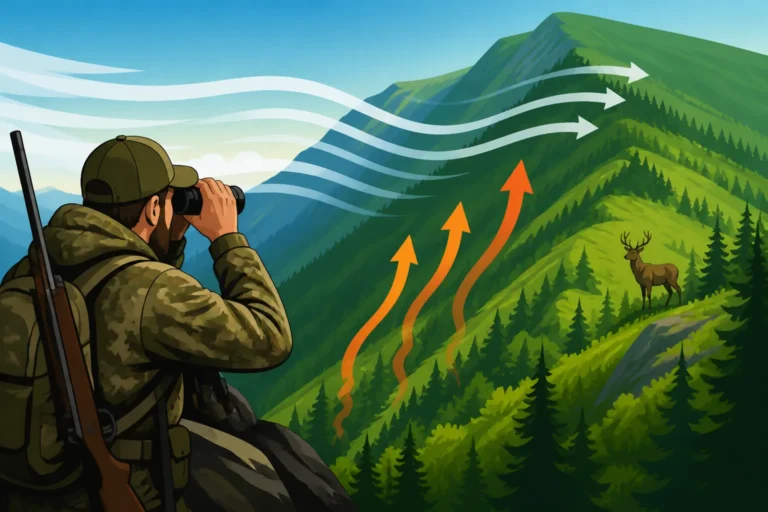
Consider the angle of the sun as it sets. You want the sun at your back, if possible, to illuminate the deer for you and keep them from looking directly into the glare. This also helps reduce glare on your optics. Also, always pay attention to the wind direction. Deer will almost always approach an open area with the wind in their favor, or at least quartering to them, to pick up scent. You need to be downwind of where you expect deer to emerge. This might mean sacrificing a perfect visual angle for a more favorable wind. Sometimes, the ideal spot isn't a single location but a series of spots you can move between if the wind shifts or deer emerge from an unexpected direction. This is a critical scouting step, so learning more about scouting Vermont public land before season can really pay off.
The Art of Patient Observation
Once you're in your chosen vantage point, the real work begins: patience. Glassing is not a race; it's a slow, methodical sweep. Don't just glance around. Instead, pick apart the terrain in small, overlapping sections, like reading a book. Start by scanning the timber edges, where deer will likely emerge. Look for horizontal lines (the back of a deer) in a vertical world (trees). Focus on areas with varied cover or breaks in the vegetation – deer love to follow the path of least resistance. Use your binoculars to scrutinize every shadow, every stump, every patch of brush that looks even remotely out of place.
As the light fades, switch to your spotting scope for those distant, hard-to-reach areas. Pay particular attention to dips, rises, and any potential points of cover within the powerline cut itself. Deer often surprise you by being much closer than you think, blending in perfectly. Look for subtle movements: an ear twitch, the flick of a tail, a patch of hide through the brush. It's not about finding the whole deer at once; it's about seeing a piece of it and then confirming. Remember to give each area time. Deer don't always appear instantly; they might step out, browse for a few minutes, then disappear back into cover before reappearing further down the line. Persistence and meticulous scanning are your greatest assets.
Planning Your Approach and Exit
Your strategy shouldn't end when the sun goes down or when you spot a deer. Getting into and out of your glassing position without spooking game is just as important. Before you even head out, use a mapping app like GoHunt to plot your entry and exit routes. You want routes that minimize noise, avoid crossing open areas unnecessarily, and keep you downwind of prime deer activity.
If you spot a deer and decide to make a move, you need a plan for your stalk. Is there enough cover to get closer? Is the wind favorable? Do you have enough light to make an ethical shot and recover the animal? If not, sometimes the best move is to watch the deer until dark, note its direction of travel, and plan to be in that area the next morning. When it's time to exit, move slowly and deliberately. Use a reliable headlamp to navigate in the dark, but keep it on a low setting or red light to preserve your night vision and minimize your disturbance. Don't be surprised if you bump deer on your way out; that's often when they’ve fully committed to feeding in the open. A quiet, well-planned entry and exit ensures you don't educate the deer in the area, keeping it a hot spot for future hunts. Learning how to properly use a headlamp for a pre-dawn ridge climb can be directly applied to your post-dusk exit strategy as well.
Beyond the Scan: Interpreting Deer Behavior in Openings
Spotting a deer is one thing; understanding what it's doing and where it's likely headed next is another entirely. Effective last-light glassing involves not just seeing deer, but actively interpreting their behavior in and around powerline cuts. This insight can help you confirm a future hunting strategy or even make a move on a deer you've spotted.
Reading Body Language and Movement
Deer communicate a lot through their body language, and paying close attention can tell you if they're relaxed, nervous, or on a mission. A deer that emerges into the powerline cut, head up, scanning intensely, is likely still wary and testing the air. It might be a good idea to stay put and let it settle. A deer that lowers its head and begins to feed calmly, perhaps flicking its tail gently, is generally relaxed and feels secure. This is when you might consider if a stealthy approach is possible, given the wind and cover.
Watch their direction of travel. Are they moving purposefully from one side of the cut to another, indicating a travel corridor between bedding and a more distant food source? Or are they slowly meandering, browsing as they go, suggesting they've reached an evening feeding ground? Pay attention to how they interact with each other. If a doe and her fawns are feeding, and a larger deer steps out, watch how they react. Sometimes, the appearance of a dominant buck will cause other deer to become more alert or even move out of the way. Understanding these subtle cues can help you predict their next move, giving you a distinct advantage.
Identifying Prime Feeding and Staging Areas
Within the broader powerline cut, certain micro-habitats are often favored by deer for feeding or staging before fully committing to the open. As you glass, try to identify these specific spots. Look for areas where different types of vegetation grow. For instance, a patch of clover or a dense thicket of blackberry bushes will likely see more activity than a bare, grassy strip. Deer often focus their feeding on these specific, attractive food sources, so mentally marking these areas can help you anticipate where deer will emerge or concentrate their activity.
Staging areas are also crucial. These are typically just inside the timber, often on a slight rise or in a thick clump of evergreens, where deer will pause before stepping into the main clearing. They’ll use these spots to assess the wind, listen for sounds, and look for danger. If you can identify these common staging points, you can focus your initial glassing efforts there, knowing that deer will often pause here for several minutes before making their final move into the open. Using mapping tools to identify subtle contours and vegetation changes can be incredibly helpful for pinpointing these prime locations before you even step foot in the woods. Tools like GoHunt, with its detailed satellite imagery and topographic overlays, are invaluable for this kind of pre-hunt analysis, allowing you to identify likely staging and feeding grounds from your couch.
| Factor | Ideal for Last-Light Glassing | Less Ideal |
|---|---|---|
| Vantage Point | Slight rise within timber, clear view, downwind of activity | Directly in the open, silhouetted, upwind |
| Sun Position | At your back, illuminating the cut | Facing you, causing glare and shadows |
| Wind Direction | Steady, consistent, blowing from deer to you | Swirling, unpredictable, blowing from you to deer |
| Optics | Quality 10x or 12x binoculars, spotting scope on tripod | Handheld compact binoculars only, shaky views |
| Clothing | Layered, warm, quiet, windproof | Thin, noisy, cotton that soaks moisture, shivering |
| Target Areas | Timber edges, dense browse patches, subtle humps or dips | Wide open, uniform grass, middle of the cut without cover |
| Timing | Last 60-90 minutes of legal shooting light | Mid-day or very early morning (less deer movement) |
Disclaimer
Hunting is an inherently dangerous activity. This guide is for informational purposes only and does not supersede local, state, or federal hunting regulations. Always prioritize safety, responsible hunting practices, and adhere to all Vermont Fish & Wildlife Department rules and regulations. Ensure you have the proper licenses and permits before hunting.