Working a Timbered Fence Line for Deer
Many hunters spend countless hours scouting vast timber blocks or overlooking expansive fields, only to feel frustrated when deer seem to vanish into thin air. The truth is, often, the whitetails aren't "vanishing" so much as they're using subtle, less obvious travel routes – and a timbered fence line, a place many overlook, can be one of the most consistent deer highways in Vermont. This guide will walk you through understanding why these forgotten boundaries are so crucial for deer, how to read their subtle signs, and precisely how to set up for success, no matter the season.
Why Timbered Fence Lines Are Deer Magnets
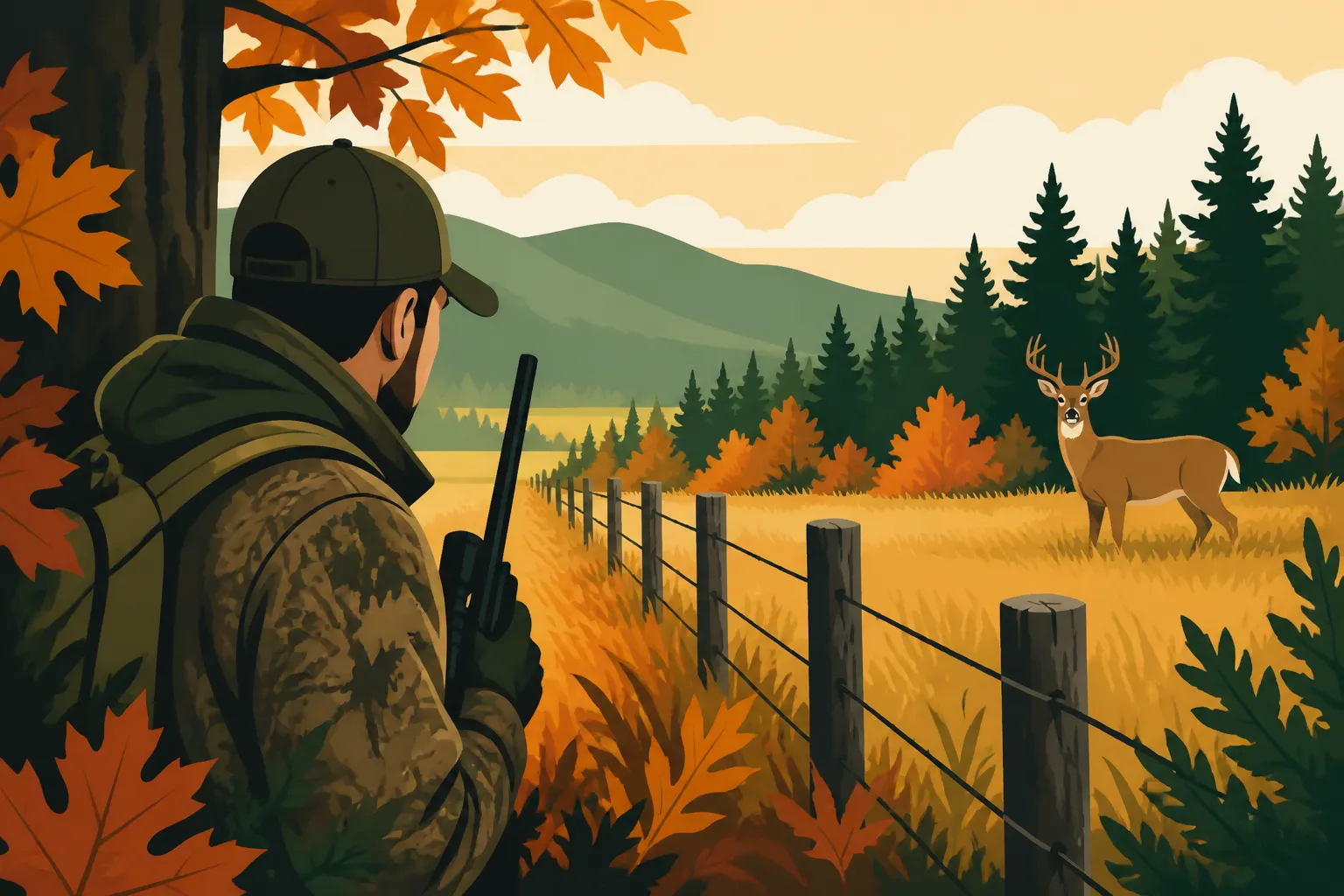
A timbered fence line, whether it's an old stone wall swallowed by trees, a fenceline grown up into a narrow band of woods, or a thicket bordering agricultural land, provides a unique combination of security, travel, and resources that deer absolutely love. They offer a distinct edge habitat that’s inherently attractive, often connecting different pockets of cover or food sources.
Security and Shelter in the Narrow Band
Deer are creatures of habit and security. A timbered fence line, even if it's only a few yards wide, offers a sense of concealment that open woods or bare field edges simply can't. Think about a buck moving across open ground versus one slipping along a dense fencerow – the latter feels far safer from predators, including us. These narrow strips of timber often contain thicker undergrowth, tangled vines, and downed logs, creating excellent visual barriers. They provide thermal cover in cold weather, breaking the wind and offering a bit of warmth, especially if it's a south-facing slope. In a state like Vermont, where harsh winters can be common, any bit of shelter is valuable. This consistent cover makes them prime spots for deer to travel during daylight hours without feeling exposed.
Natural Funnels and Travel Corridors
Perhaps the most critical function of a timbered fence line is its ability to funnel deer movement. Imagine a sprawling agricultural field on one side and a mature woodlot on the other. Deer don't want to trot across the wide-open field, nor do they always want to push through the densest part of the woods if there’s an easier path. That narrow timbered strip along the old fencerow becomes a natural highway, channeling their movement between bedding areas, food plots, and water sources. These linear features act like a natural river, forcing deer into predictable paths. This is especially true when they connect two larger blocks of cover or provide a safe route around a human disturbance, like a busy road or an open pasture. You might even find these lines serving as key routes for bucks during the rut, as they move between doe groups. Consider how a deer might move from a deep draw to a feeding area; that timbered fence line could be the subtle bridge it uses. Understanding how deer use these linear features can completely change your approach, especially when scouting Vermont public land before season.
Food and Cover Edges
Beyond security and travel, timbered fence lines often represent a convergence of food sources and bedding cover. The edge habitat created by the transition from timber to field is incredibly productive. You'll often find a mix of brushy browse, young saplings, briar patches, and mast trees like forgotten apple trees or oaks that have seeded themselves along the old fence line. This edge provides both sustenance and immediate escape cover. Deer can browse on tender shoots or fallen acorns along the line, and if spooked, they're only a step or two away from disappearing into the thicker timber or dense brush of the fencerow itself. This proximity of food and cover makes them highly attractive, particularly during the shoulder seasons when deer are looking for easy meals close to safety. You might even find deer rubbing young saplings here, an indicator of a buck's presence.
Reading the Sign on a Timbered Fence Line
Successfully hunting a timbered fence line hinges on your ability to interpret the subtle clues deer leave behind. These lines aren't always screaming with obvious sign like a major scrape line along a logging road, but the sign they do hold is often highly concentrated and indicative of consistent use. You'll need to develop a keen eye for these nuanced details.
Identifying Key Crossings and Pinch Points
Deer will typically cross a timbered fence line at its weakest points or where it naturally converges with another feature. Look for worn trails or distinct tracks where deer are regularly entering or exiting the timber strip into an adjacent field, woodlot, or even crossing a small creek. These crossings might be subtle, just a slight depression in the dirt or a broken twig, but they indicate consistent travel. Pinch points, where the timbered line narrows significantly or funnels deer between an obstacle like a pond or a steep bank, are particularly valuable. These natural bottlenecks force deer into predictable patterns, offering prime ambush locations. Take your time walking these lines, looking for where deer are actually putting their feet, not just where you think they should be. Sometimes, a subtle dip in the terrain or an old logging trail intersecting the fencerow will be the primary crossing point.
Deciphering Scrapes and Rubs
While full-blown scrape lines might be less common directly within a narrow timbered fenceline, you'll often find individual scrapes and rubs on the trees or saplings that make up the edge. A rub, where a buck has polished his antlers, indicates his presence and often his direction of travel. Pay attention to the height and size of the rub – higher rubs often mean a more mature buck. Scrapes, areas where a buck paws the ground and deposits scent, are communication hubs. Look for these near overhanging branches that bucks will lick and chew. While a single scrape might not seem significant, several scattered along a fenceline, especially during the rut, suggest a buck is actively patrolling that corridor. These signs become particularly potent indicators during hunting the rut in early-to-mid November when bucks are actively seeking does. A single, fresh rub on a cedar post along an old fenceline could be all the information you need to know a good buck is working that particular edge.
Understanding Bedding Near the Line
Deer will often bed down very close to, or even within, a dense timbered fence line, especially if it offers thick cover and a good vantage point to watch their backtrail or downwind access. Look for flattened grass or leaves, often with droppings nearby, indicating where a deer has rested. Pay attention to how the wind usually blows in that area and try to imagine why a deer would choose that specific spot – it's always about security. Often, bucks will bed just off the leeward side of the fenceline, using the dense cover to break the wind and their noses to detect anything approaching from downwind. Does and fawns might bed tighter into the thickest part of the fenceline itself. These bedding areas, particularly where Vermont bucks bed in thick cover, are critical to identify because they inform how deer will approach and depart the fenceline. Knowing where they sleep tells you a lot about their travel habits.
Strategic Hunting Setups Along a Timbered Fence Line
Once you've identified a promising timbered fence line with good deer sign, the next step is to strategize your approach. Unlike hunting a sprawling woodlot or open field, a narrow fenceline requires precision in stand placement, careful use of cover, and an absolute understanding of wind dynamics.
Optimizing Stand Placement for Subtle Movements
Due to the linear nature of a timbered fence line, stand placement is paramount. You need to be positioned to intercept deer traveling along it, as well as those crossing into or out of it. Look for trees that offer excellent concealment within the fenceline itself, not just along its outer edge. This allows you to blend in with the natural clutter. Ideally, you want to set up where you can see a good stretch of the fenceline in both directions, but also have shooting lanes to any established crossing points. Aim to be slightly back from the hottest sign, allowing deer to pass naturally without looking up directly into your setup. Consider the sun's position throughout the day – you don't want to be backlit at prime hunting times. For example, if deer are often crossing from a field into the fenceline, hanging a stand on a Champlain Valley field edge about 15-20 yards in from the crossing might give you the perfect angle. For those using apps like GoHunt, marking these specific crossing points and potential stand locations on your map is invaluable for planning.
Utilizing Natural Cover for Concealment
The beauty of a timbered fence line is the abundance of natural cover it provides. Instead of trying to hide from the fenceline, use it to your advantage. If you're using a ground blind on public land, brush it in meticulously with local vegetation – fallen branches, leaves, and tall grasses – to break up its outline. For treestand hunters, choose a tree with a busy trunk, multiple branches, or dense foliage to help you disappear. The goal is to become an extension of the fenceline, not an anomaly within it. Don't trim too many shooting lanes, as this can open up your position and remove valuable cover. Instead, choose a spot where natural openings already exist or require minimal trimming. Remember, deer are constantly looking for danger along these secure routes, so any unnatural sight or movement will be quickly detected.
Playing the Wind and Thermals
Wind and thermals are always crucial in deer hunting, but they become hyper-critical when hunting a narrow linear feature like a timbered fence line. Because the deer are often traveling predictably along a confined path, your wind direction needs to be impeccable. A shifting wind can carry your scent down the fenceline for a considerable distance, alerting any deer approaching from either direction. Always try to set up with the wind quartering to your face, blowing your scent away from the primary travel corridor. In rolling terrain, especially in the Green Mountains, pay close attention to thermals. In the mornings, air tends to flow downhill, and in the evenings, it rises. If your fenceline is on a hillside, this means a morning hunt might require you to be higher than the deer, while an evening hunt could place you lower. Understanding wind and thermals in steep Green Mountain terrain is not just a suggestion; it's a necessity. Using a wind checker frequently, even while walking in, is a smart habit to cultivate.
Hunting Different Seasons Along the Fence Line
The beauty of a timbered fence line is its versatility. While it might consistently attract deer, the reasons they use it and how you should hunt it will shift dramatically throughout Vermont's hunting seasons. Adapting your strategy to these seasonal changes is key to consistent success.
Early Season Food Focus
In the early archery season, typically September and October in Vermont, deer movement is heavily dictated by food sources. Timbered fence lines become hotspots if they offer desirable browse, soft mast like apples or berries, or connect directly to prime feeding areas like a standing apple orchard or a lush green field planted for deer. Deer will often use the security of the fenceline to access these food sources during daylight hours. Your strategy should focus on evening hunts, setting up between a known bedding area and the feeding spot, with the fenceline acting as the main travel route. Morning hunts can also be productive if you can sneak in and catch deer returning from feeding, but be extremely careful not to spook them into their bedding area. Look for fresh droppings and tracks that indicate recent feeding activity.
Rutting Buck Patrols
As the rut heats up, usually in early to mid-November in Vermont, timbered fence lines transform into high-traffic patrol routes for bucks. They offer safe passage for bucks cruising for does, connecting different pockets of doe bedding and feeding areas. During this time, bucks are far more mobile and less predictable in their individual movements, but they will still gravitate towards secure travel corridors. Your strategy shifts from focusing on food to focusing on interception points along these travel routes. Set up in pinch points where the fenceline narrows, or where it intersects with another cover strip or even a subtle creek crossing at first light. Bucks will often follow these lines, scent-checking for does, rubbing trees, and making scrapes. This is an excellent time for all-day sits, as bucks can move at any time.
Late Season Thermal Cover and Food
Once the leaves fall and the colder weather sets in, especially during the December muzzleloader season, timbered fence lines become critical for thermal cover and accessing dwindling food sources. Deer will seek out the thickest parts of these lines to escape harsh winds and find what little browse or hard mast remains. South-facing fencelines that catch the sun can be particularly attractive. Your hunting strategy should revert to a food focus, but with an added emphasis on thermal cover. Look for late-season food sources for Vermont whitetails like leftover standing corn, brassicas, or even evergreen groves along the fenceline. Deer will often bed in the thickest part of the fenceline or adjacent cover during the day and make short trips out to feed in the evening. Hunting these spots means focusing on mid-day movement between cover and food, or short, cold sits during the golden hours. Patience and warm gear are paramount during these frigid late-season hunts.
Disclaimer
Hunting is an inherently dangerous activity. Always prioritize safety, understand and follow all Vermont Fish & Wildlife Department regulations, and respect private property. The information provided here is for educational purposes and should not replace proper hunter education or professional guidance. Always verify current regulations before hunting.