Vermont Firearms Discharge Setback Rules
Navigating the regulations around hunting can sometimes feel like trying to untangle a knot, especially when it comes to rules designed to keep everyone safe. One area that often causes a lot of head-scratching for Vermont hunters is the firearms discharge setback rules. It’s not always obvious where you can safely and legally take a shot, particularly as development spreads and wild spaces feel a little less wild. This guide aims to clear up that confusion, helping you understand the specifics of Vermont's laws so you can hunt responsibly and with confidence.
Understanding Vermont's 500-Foot Setback Rule for Firearms
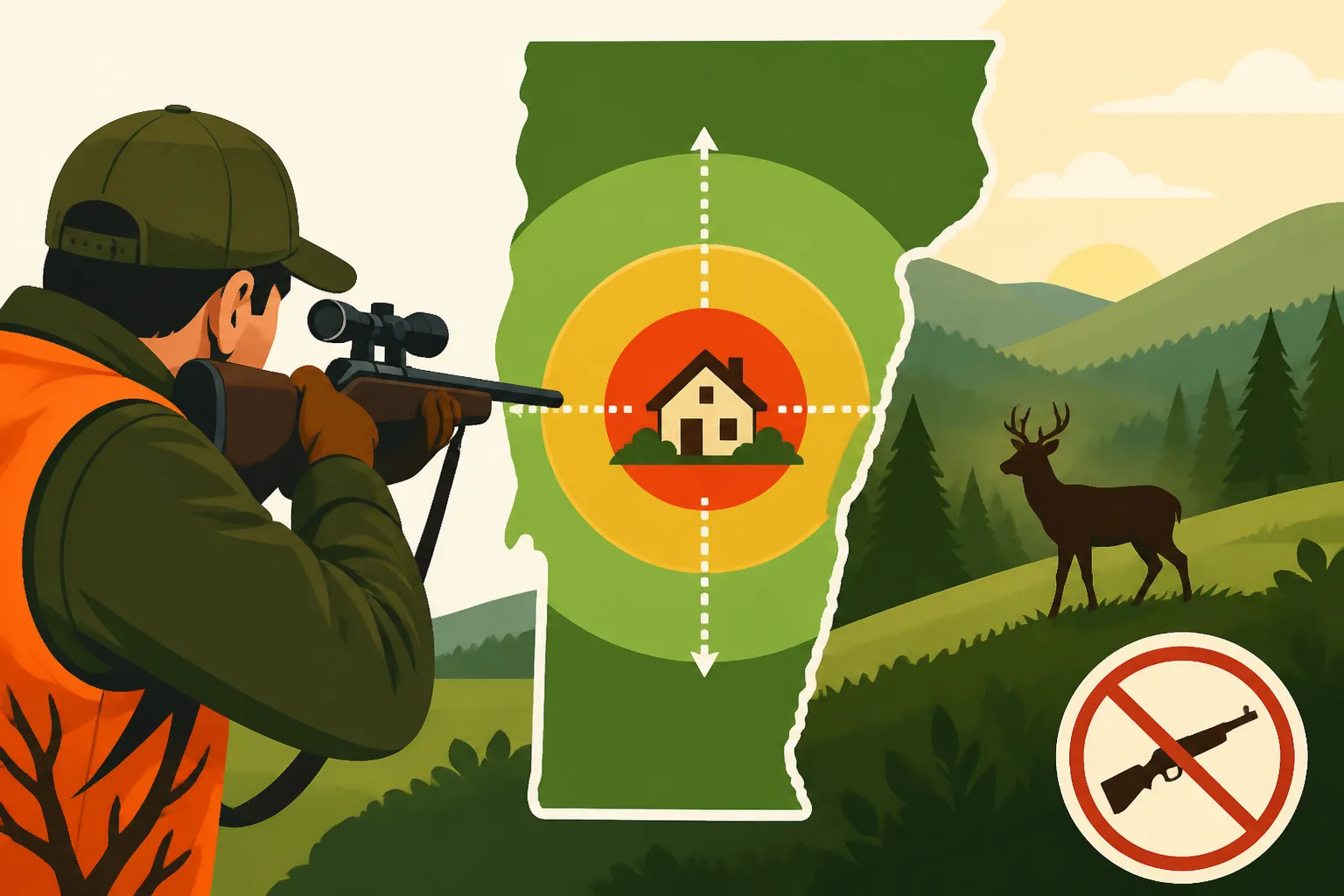
At the heart of Vermont’s firearm discharge regulations is the crucial 500-foot setback rule. This is one of those bedrock principles of safe hunting that every hunter, whether a seasoned veteran or someone just starting out through the Vermont Hunter Education Requirements, needs to know inside and out. Simply put, Vermont law prohibits the discharge of a firearm within 500 feet of a dwelling, school, or occupied building without the consent of the owner or occupant. This isn't just a suggestion; it’s a non-negotiable legal requirement designed to ensure public safety and minimize disturbances.
What Constitutes a "Dwelling or Occupied Building"?
This is where some of the nuance comes in, and it's a critical distinction. A "dwelling" generally refers to a place where people live, like a house, apartment, or even a seasonal camp that's actively being used. An "occupied building" expands on this to include structures that people might be using for other purposes, such as a barn with livestock, a workshop, a business, or even a public facility like a church or town hall. The key word here is "occupied" – if someone is living, working, or otherwise legitimately present in a structure, it falls under this protection. This typically wouldn't include an abandoned shed or a dilapidated building that clearly isn't in use, but always err on the side of caution. If there's any doubt, assume it's protected.
This rule applies whether you're rifle hunting during Vermont's November Rifle Season or carrying a shotgun during one of the state's other legal firearms seasons. The intent is clear: to create a safety buffer zone around places where people might be, preventing stray bullets, minimizing noise complaints, and ensuring peace of mind for landowners and residents. It’s less about judging the hunter’s intent and more about the inherent risk associated with projectile weapons discharged close to populated areas.
Consent and Its Importance
The "without the consent" clause is important, but it's not a loophole. If you're hunting on private land that you own, or with explicit permission from a landowner who also owns the dwelling within 500 feet, then you have that consent. However, this consent needs to be clear and demonstrable. A casual nod from a friend often isn't enough; ideally, you'd have written permission, especially if there's any chance of misunderstanding. This is crucial for avoiding issues down the line. Remember, even if you have consent to hunt on a property, that specific consent doesn't automatically extend to shooting within 500 feet of an occupied building if that building isn't on the property you have permission for, or if the occupant is different from the landowner. Always be absolutely certain of the scope of your permission.
The Vital Role of Safety and Respect
These setback rules aren't just bureaucratic red tape; they are fundamental to preserving both human safety and the future of hunting in Vermont. They underscore a deep respect for both life and private property, principles that are paramount to responsible outdoor recreation.
Protecting People and Property
The most obvious reason for a 500-foot setback is safety. A bullet, especially from a high-powered rifle used for deer or moose hunting, can travel a significant distance and maintain lethal force far beyond its intended target. Even an arrow, while not traveling as far, can still cause serious harm. The 500-foot buffer provides a substantial margin of safety, reducing the risk of accidental injury to people or damage to buildings. Imagine the catastrophic consequences if a shot meant for a deer inadvertently struck a child playing in their backyard or penetrated the wall of a neighboring home. These rules are designed to prevent such tragedies. They acknowledge the inherent power of firearms and place the onus on the hunter to use them far away from potential hazards.
Furthermore, it's not just about direct impacts. The loud noise of a firearm discharge can be startling and distressing for residents, especially those unfamiliar with hunting. Adhering to these setbacks demonstrates consideration for others living near hunting areas, fostering a more harmonious relationship between hunters and the general public. It's about being a good neighbor in the woods, even if you don't know your neighbors personally.
Maintaining Public Perception of Hunting
Every hunter knows that our traditions and rights are often under scrutiny. Incidents of unsafe hunting, even rare ones, can quickly erode public trust and provide ammunition for those who wish to restrict hunting opportunities. By diligently following setback rules, hunters collectively uphold a standard of ethical behavior that reinforces hunting as a safe, regulated, and responsible activity.
When hunters show a consistent commitment to safety, it helps maintain broad public support. Conversely, if violations become common, it can lead to calls for stricter regulations, or even outright bans in certain areas. Think about the importance of hunter education, or even something as simple as How Much Blaze Orange Vermont Requires—it’s all part of presenting hunting as a legitimate and safe pursuit. Every time you consciously ensure you’re 500 feet clear, you’re not just following the law; you’re contributing to a positive image of hunting for everyone. This is especially true when hunting close to populated areas, like when Hunting a Champlain Valley Dairy Farm Edge, where public perception is often more sensitive.
Practical Application: Navigating Different Scenarios
Understanding the 500-foot rule in theory is one thing; applying it in the varied and often challenging terrain of Vermont is another. From dense Green Mountain forests to open Champlain Valley fields, hunters face different obstacles in ensuring compliance.
Hunting Near Roads and Trails
Vermont's woods are crisscrossed with logging roads, hiking trails, and town roads, some active, some less so. While the 500-foot rule primarily concerns dwellings and occupied buildings, common sense and a strong ethical compass dictate extra caution around any area where people might be present. While you might not be within 500 feet of a house, discharging a firearm across or down a public trail that hikers, dog walkers, or mountain bikers might be using is incredibly irresponsible and dangerous.
Many towns also have their own ordinances regarding discharging firearms near roads or trails, which can be more restrictive than state law. It's always a good idea to check local regulations in addition to state laws. When using tools like GoHunt or the Vermont Fish and Wildlife app, you can often identify roads, trails, and property lines that help you plan your approach and shot placement before you ever step foot in the woods. Always be aware of your surroundings and any potential non-hunting public land users.
Hunting on Private Land vs. Public Land
The distinction between private and public land doesn't change the 500-foot rule itself, but it does affect how you secure "consent." On private land, your ability to hunt and discharge a firearm near a dwelling hinges entirely on the landowner's permission. If you're hunting a small private tract, perhaps Hunting Small Private Tracts in Vermont, you might find yourself constantly within the 500-foot buffer of multiple buildings. This requires careful communication with the landowner and often necessitates limiting your shots to specific directions or areas. Knowing the exact property lines and the location of all buildings is essential, which mapping apps are great for.
On public land, like sections of the Green Mountain National Forest or one of Vermont's numerous Wildlife Management Areas, obtaining consent from a private landowner for a dwelling 500 feet away is usually not an option. This means you must maintain that 500-foot distance on your own, diligently scouting for houses, cabins, or other occupied structures that border public property. Many hunters use applications like GoHunt to scout aerial photos and property boundary layers, helping them identify potential setback conflicts before they even leave home. This proactive scouting is vital for ensuring you don't accidentally set up too close to a protected structure.
Special Considerations for Archery and Muzzleloader Seasons
The 500-foot setback rule applies specifically to firearms. This means that during archery-only seasons, such as the initial phases of Vermont's Expanded Archery Season Opens, or when Bowhunting During Vermont's Rifle Season, the 500-foot firearm discharge rule doesn't directly apply to your bow. However, this absolutely does not mean you can shoot an arrow indiscriminately near buildings. While arrows don't have the range or concussive force of a bullet, they are still deadly projectiles. Responsible archery hunting still dictates extreme caution and a significant safety buffer around dwellings and occupied areas. Many ethical bowhunters still adhere to a similar, albeit self-imposed, safety zone.
For muzzleloader seasons, like the Vermont October Muzzleloader Antlerless Window or the Vermont December Muzzleloader Season Dates, these are considered firearms. Therefore, the 500-foot rule applies fully. The same diligence in identifying structures and maintaining distance is required. Even though muzzleloaders have different ballistics than modern rifles, they are still powerful weapons, and the safety principles remain unchanged.
| Type of Structure | 500-Foot Setback Applies? | Requires Owner/Occupant Consent to Shoot Closer? | Primary Purpose of Rule |
|---|---|---|---|
| Dwelling (e.g., house, camp) | Yes | Yes, if closer than 500 ft | Personal safety and property protection |
| Occupied Building (e.g., barn with animals, workshop) | Yes | Yes, if closer than 500 ft | Personal safety and property protection |
| School Building | Yes | Yes, if closer than 500 ft | Child safety and educational environment |
| Abandoned Shed/Building | No (if truly abandoned/unoccupied) | Not legally required, but exercise caution | General safety, ethical hunting |
| Public Road/Trail | No (not a "dwelling/occupied building") | Not legally required, but exercise extreme caution; check local ordinances | Public safety, ethical hunting |
Legal Ramifications and Enforcement
Ignoring Vermont's firearms discharge setback rules isn't just a lapse in judgment; it carries significant legal consequences. The Vermont Fish and Wildlife Department takes these regulations very seriously, and for good reason.
Penalties for Violations
Violating the 500-foot setback rule is considered a wildlife violation. The penalties can range depending on the severity of the offense, whether it's a first-time or repeat offense, and if any property damage or injury occurred. You could face substantial fines, forfeiture of your hunting license, and even imprisonment in more extreme cases. This is not a slap on the wrist. A violation of this nature can certainly impact your ability to acquire future licenses, including long-term options like the Vermont Five-Year Resident License Cost.
Game Wardens are the primary enforcers of these laws. They are highly trained officers dedicated to protecting Vermont's wildlife and ensuring safe hunting practices. If a Warden observes you discharging a firearm within the prohibited distance without proper consent, or if a complaint is made and investigated, you will likely face charges. Understanding Vermont Wildlife Violation Penalties makes it clear that these rules are taken seriously. It's a risk simply not worth taking, especially when careful scouting and a bit of common sense can prevent it entirely.
The Role of Game Wardens and Citizen Reports
Vermont Game Wardens patrol public and private lands, often responding to calls from concerned citizens. Landowners and rural residents are often keenly aware of hunting activity around their homes, and they are not hesitant to report what they perceive as unsafe or illegal behavior. Many times, the person reporting a violation may not even be anti-hunting; they are simply worried about their safety or the safety of their family and property.
This is why hunter conduct is so important. A single complaint about a firearm discharged too close to a home can trigger an investigation that not only impacts the hunter involved but also reflects poorly on the entire hunting community. When considering how to approach an area, such as when you’re Scouting Vermont Public Land Before Season or looking for new ground to explore using GoHunt's satellite imagery, always prioritize knowing where houses and occupied buildings are located. It's not just about avoiding a ticket; it's about being a responsible steward of our hunting privileges and a good member of the community.
Final Thoughts on Responsible Firearms Use
The firearms discharge setback rules are a cornerstone of safe and ethical hunting in Vermont. They demand a high level of situational awareness, careful planning, and respect for both the law and the non-hunting public. While it can sometimes feel like an extra hurdle when you’re eager to get out into the field, these rules are ultimately designed to protect everyone and ensure that hunting remains a cherished tradition in the Green Mountain State. Take the time to understand your hunting area, use mapping tools effectively, and always, always prioritize safety.
Disclaimer
This guide is intended for informational purposes only and should not be considered legal advice. Hunting regulations in Vermont can change, and interpretations may vary. Always consult the most current Vermont Fish and Wildlife Department regulations or legal counsel for definitive information regarding firearms discharge setbacks and all hunting laws. It is the individual hunter's responsibility to know and follow all applicable state and local laws.