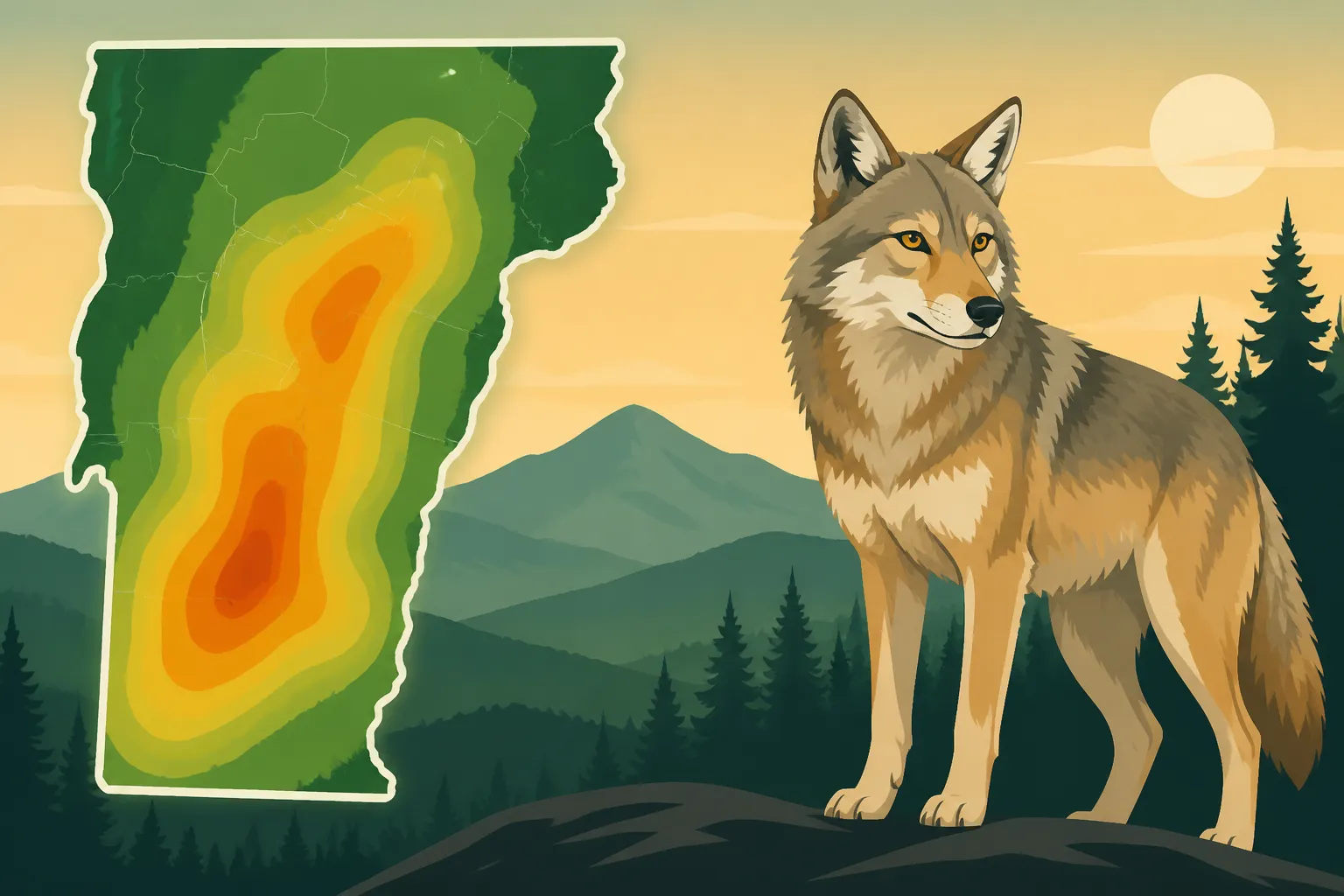
Vermont Coyote Range and Density
Anyone who spends time in the Vermont outdoors, whether you're a hunter, a farmer, or just enjoy a quiet hike, knows the distinct challenge of understanding the Eastern coyote. These intelligent and adaptable canids are an undeniable presence in our landscape, and sometimes it feels like they're everywhere, but figuring out where they truly thrive and why their numbers seem to fluctuate can be a real head-scratcher. This guide aims to pull back the curtain on the Vermont coyote, exploring their widespread range across our diverse terrain and diving deep into the factors that influence their density, helping you better understand these resilient predators.
Understanding the Eastern Coyote in Vermont
The Eastern coyote (Canis latrans var.) isn't just any coyote; it's a fascinating and robust adaptation that has truly made Vermont its home. When we talk about coyotes here in the Green Mountain State, we're talking about a creature that embodies resilience and adaptability, capable of thriving in environments ranging from our deepest wilderness areas to the very edges of our agricultural communities.
A Hybrid's Journey: Origins and Expansion into the Green Mountain State
The story of the Eastern coyote's arrival in Vermont is one of expansion, adaptation, and a bit of genetic intrigue. Unlike the coyotes of the American West, our Eastern variety carries a unique genetic signature, a testament to its journey eastward. As forests were cleared and large predators like wolves were extirpated from much of the Northeast, a void was created, and Western coyotes began to push into new territories.
During this eastward migration, these pioneering coyotes encountered remnants of wolf populations, particularly eastern wolves or red wolves, in areas like Ontario and Quebec. Through interbreeding, the Eastern coyote developed a larger body size, broader skull, and often darker fur than its Western cousins, gaining some wolf-like characteristics that have undoubtedly contributed to its success in the more forested and prey-rich Eastern landscapes. This genetic blend makes them formidable predators, perfectly suited for the varied terrain and abundant wildlife of Vermont, allowing them to fill a crucial ecological niche that had been vacant for centuries. You can learn more about their unique lineage in our discussion on Vermont's Eastern Coyote Origins.
Physical Traits and Behavioral Adaptations for Vermont's Landscape
The Eastern coyote's physical attributes and keen intelligence are perfectly tuned for survival in Vermont. They are generally larger than their Western counterparts, often weighing between 30 to 50 pounds, with some larger individuals pushing 60 pounds or more. This increased size allows them to take down larger prey, including deer, which becomes a significant food source, especially in winter. Their coat color can vary widely, from reddish-brown to grizzled gray, sometimes with black markings, providing excellent camouflage in both dense forest and open fields.
Behaviorally, they are incredibly opportunistic and intelligent. Coyotes are known for their keen senses, particularly their hearing and smell, which they use to locate prey and avoid detection. They are adaptable hunters, capable of hunting alone for small game like rabbits and voles, but also forming packs to take down larger animals, especially during harsh winter months. This social flexibility is a key adaptation, allowing them to adjust their hunting strategy based on prey availability and environmental conditions, making them extremely effective and persistent predators across Vermont's diverse habitats.
Mapping the Range: Where Vermont's Coyotes Roam
If you've spent any time exploring Vermont's wilder corners, or even just driven through its rural backroads at dusk, you've likely seen or heard signs of coyotes. These animals are remarkably widespread, showing up in nearly every type of habitat our state offers. It's not a question of if they're in a particular region, but rather how many and how active they are.
Statewide Presence: From Champlain Valley Farmlands to Northeast Kingdom Forests
Coyotes are truly ubiquitous in Vermont, establishing a strong presence from the fertile lowlands of the Champlain Valley all the way up to the rugged, remote forests of the Northeast Kingdom. They thrive in "edge" habitats – those transitional zones where different types of cover meet, like where a hayfield borders a woodlot, or a dense conifer stand gives way to a mixed hardwood forest. These areas provide both abundant prey and crucial cover for hunting, denning, and resting.
In the Champlain Valley, you'll find them using brushy fencerows, small woodlots, and even the margins of active agricultural fields, often preying on rodents, rabbits, and deer that also frequent these areas. Moving eastward into the more mountainous and heavily forested regions like the Green Mountains and the Northeast Kingdom, they readily inhabit vast tracts of timber, utilizing logging roads, clear-cuts, and river bottoms as travel corridors and hunting grounds. Their ability to adapt to such varied landscapes demonstrates their incredible ecological plasticity, making them a fixture in nearly every one of Vermont's Wildlife Management Units (WMUs).
Habitat Utilization: Why Certain Areas Draw More Coyotes
While coyotes are found statewide, certain characteristics make particular areas more attractive, leading to higher concentrations. The primary driver for coyote presence is, unsurprisingly, food availability. Areas with healthy deer populations, especially those with vulnerable fawns or winter-stressed adults, will naturally support more coyotes. Similarly, regions rich in small game like snowshoe hare, wild turkeys, and various rodent species also become magnets for these opportunistic predators.
Beyond food, suitable denning and cover sites are crucial. Dense brush, rocky outcrops, abandoned burrows, and thick conifer stands provide protection for pups and refuge from harsh weather or human disturbance. Water sources are also important, particularly in drier periods. Hunters often use mapping tools like GoHunt to identify these key habitat features – looking for the convergence of dense cover, reliable water, and open foraging areas, which often indicates prime coyote territory. Understanding how deer move through an area, for instance, by Reading Aerial Photos for Green Mountain Deer, can also clue you into where coyotes will be.
Unpacking Density: Factors Influencing Coyote Numbers Across Vermont
Just because coyotes are everywhere doesn't mean their numbers are uniform across the state. Coyote density, or the number of individuals per square mile, can fluctuate significantly from one region to another, and even within specific locales year to year. These variations are influenced by a complex interplay of environmental factors, prey dynamics, and human activities.
Prey Availability and Landscape Carrying Capacity
One of the most significant determinants of coyote density is the availability of their primary food sources. In Vermont, white-tailed deer are a major component of their diet, especially during winter months when other prey is scarce, and during the fawning season when young, vulnerable deer provide an easy meal. Areas with higher deer densities, particularly those with good cover for fawning or winter yards, tend to support more coyotes. For instance, the richer agricultural and mixed forest lands of the Champlain Valley or parts of southern Vermont, which often hold higher deer populations, might see a greater concentration of coyotes than the more remote, rugged, and less productive uplands of the central Green Mountains.
Beyond deer, populations of small game like rabbits, hares, and various rodents also play a critical role. If a particular year sees a boom in rabbit numbers due to favorable breeding conditions, local coyote populations might respond with increased pup survival and overall density. The concept of "carrying capacity" is key here: each landscape can only sustainably support a certain number of predators based on its resources. When prey numbers are robust, the carrying capacity for coyotes is higher, allowing their populations to thrive. Conversely, sustained periods of low prey availability will eventually lead to a decline in coyote numbers as food competition increases and survival rates drop. Understanding Vermont Deer Population Estimate can provide insights into local coyote potential.
Human Pressure and Management Strategies
Human activities, particularly hunting and trapping, also exert a measurable influence on local coyote densities. Vermont has a long and active tradition of predator management, and hunters and trappers contribute significantly to controlling coyote numbers. While coyotes are incredibly resilient and have high reproductive rates, sustained pressure in a specific area can temporarily reduce local populations. This doesn't necessarily mean a statewide reduction, as coyotes from surrounding areas can quickly move in to fill vacant territories, a phenomenon known as compensatory reproduction and immigration.
Vermont's regulations on hunting and trapping coyotes are designed to allow for management without eradicating the species. Hunters can pursue coyotes throughout much of the year, with specific regulations for nighttime hunting that help ensure ethical practices, as detailed in Night Hunting Rules for Vermont Coyotes. Trappers, operating under Vermont Trapping License Requirements, also play a role. However, it's important to understand that coyotes are not easily "wiped out." Their intelligence and adaptability mean that traditional harvest methods tend to keep populations in check rather than eliminate them, often targeting younger or less experienced individuals, which can even spur an increase in litter size among surviving females.
Competition and Predator Interactions
Coyote density can also be subtly influenced by the presence and interaction with other predators in the Vermont ecosystem. While coyotes are often the dominant canid, they share the landscape with other carnivores like bobcats, red foxes, and even black bears. For instance, bobcats are formidable predators that can compete with coyotes for smaller prey items like rabbits and rodents, and in some cases, even pose a threat to coyote pups. However, direct conflict is usually avoided, with species often partitioning resources or hunting at different times or in slightly different microhabitats.
Red foxes, being smaller, are generally subordinate to coyotes. Where coyote densities are high, fox populations may decline as coyotes outcompete them for food or actively displace them from preferred territories. This phenomenon is known as intraguild predation or competitive exclusion. Black bears, while omnivorous, can occasionally prey on coyote pups or carrion that coyotes might otherwise utilize. However, their dietary overlap is often limited, and severe competition is rare. These intricate predator relationships contribute to the overall balance and distribution of coyote populations across Vermont's varied habitats. You can often see these interactions play out when Scouting Vermont Public Land Before Season.
Impact and Interactions: Coyotes in the Vermont Ecosystem
The Eastern coyote's presence in Vermont has brought with it a complex set of ecological and social impacts. While they play a vital role in maintaining ecosystem health, their interactions with other wildlife and human interests often stir debate and require careful consideration.
Role as Apex Predators and Ecosystem Balance
Coyotes, as opportunistic predators, play a critical role in maintaining the balance of Vermont's ecosystems. They act as natural regulators of prey populations, particularly white-tailed deer. By preying on fawns, weak, or sick deer, coyotes help to cull less fit individuals from the herd, contributing to a healthier and more robust deer population overall. This natural selection process can prevent overpopulation, which could otherwise lead to overbrowsing of vegetation and habitat degradation, impacting many other species.
Beyond deer, coyotes also help control populations of small mammals like rodents, rabbits, and hares, which can have cascading effects throughout the ecosystem. For farmers, this can mean a reduction in crop damage from these smaller pests. Their role as scavengers is also noteworthy; they efficiently clean up carrion, preventing the spread of disease and recycling nutrients back into the environment. While sometimes controversial, their presence fills a significant ecological niche, proving that nature abhors a vacuum, especially one left by extirpated larger predators.
Livestock Depredation and Farmer Concerns
Despite their ecological benefits, the presence of coyotes can undoubtedly lead to significant frustrations and economic hardship for Vermont's agricultural community. Livestock depredation, particularly on sheep, goats, and poultry, is a very real concern for farmers in many parts of the state. These incidents, while often isolated, can cause substantial financial losses and emotional distress, leading to negative perceptions of coyotes.
Farmers employ various strategies to mitigate these losses, ranging from traditional fencing and guard animals (like donkeys, llamas, or specific dog breeds) to more modern deterrents like motion-activated lights and sounds. Proper animal husbandry, such as securing livestock at night and prompt removal of carcasses, also helps reduce attractants. The Vermont Fish and Wildlife Department often works with landowners to provide assistance and advice on non-lethal and lethal control methods to address specific depredation issues. You can read more about these challenges in our piece on Vermont Coyote Attacks on Livestock. The challenge lies in finding a balance where coyotes can continue their ecological role while minimizing their negative impact on human livelihoods.
Navigating Coyote Country: Strategies for Hunters and Landowners
Understanding coyote range and density isn't just academic; it's practical knowledge for anyone looking to hunt them effectively or manage their presence on private land. Whether you're seeking to call in a coyote or simply minimize conflicts, knowing how to interpret their presence is key.
Scouting for Sign and Understanding Movement Patterns
Effective coyote hunting or management starts with thorough scouting. Coyotes are creatures of habit, often utilizing the same travel corridors, feeding areas, and den sites year after year. Look for distinctive signs: tracks, which are typically more oval and less splayed than a domestic dog's, often showing claw marks. Scat, which frequently contains hair and bone fragments from their prey, can also indicate their recent presence and diet. Howling at dawn or dusk can help you locate packs and pinpoint general areas of activity.
Pay close attention to "edge" habitats, as discussed earlier. These areas provide optimal hunting grounds for coyotes. Funnels, pinch points, and natural travel corridors between woodlots and open fields are prime locations to set up a stand or initiate a calling sequence. Utilizing mapping applications like GoHunt can be incredibly helpful for identifying these features from an aerial perspective, allowing you to mark potential sign, visualize terrain, and plan your approach before you even step foot in the woods. This detailed scouting allows you to focus your efforts where coyotes are most likely to be active, increasing your chances of success.
Calling and Hunting Techniques for Vermont Coyotes
Once you've identified potential coyote country, the next step is to apply appropriate hunting techniques. Calling is by far one of the most popular and effective methods for hunting coyotes. There are generally two main types of calls: distress calls (mimicking an injured rabbit or fawn) and vocalizations (howls, barks, pup distress). The key is to understand when and how to use each. Distress calls are often most effective when coyotes are actively hunting, drawing them in with the promise of an easy meal. Vocalizations, on the other hand, can be used to locate coyotes, challenge a dominant male, or entice curious individuals.
Setting up for a call is crucial. Always approach quietly and set up with the wind in your favor, as a coyote's nose is its primary defense. Position yourself in an area with good visibility but also enough cover to break up your silhouette. In Vermont's varied terrain, this might mean setting up on a ridge overlooking a valley, or tucked into the edge of a woodlot facing an open field. Be patient, and vary your calling sequence. Many coyotes will circle downwind to scent-check the area, so being prepared for a shot in all directions is vital. We delve deeper into specific strategies in articles like Coyote Calling Vermont Farm Country and Predator Calling Green Mountain Backcountry], which offer tailored advice for different landscapes. The season also plays a role, with different strategies being more effective when Hunting Vermont's New Archery-Rifle Overlap or deep into winter.
The Future of Coyotes in Vermont: Coexistence and Conservation
The Eastern coyote is here to stay in Vermont, and understanding their range and density is fundamental to responsible wildlife management. The conversation around coyotes often ignites strong opinions, but ultimately, the goal is to foster a sustainable coexistence between this adaptable predator and Vermont's human and wildlife populations.
Ongoing Research and Monitoring Efforts
The Vermont Fish and Wildlife Department, along with academic institutions and other conservation partners, continuously conducts research and monitoring programs to better understand coyote populations. These efforts might include tracking studies using GPS collars to observe movement patterns, habitat use, and dietary habits. Population surveys, often conducted through trail camera networks or scent station surveys, help estimate density and identify trends over time.
This data is crucial for informed decision-making regarding coyote management strategies. It helps wildlife biologists assess the impact of coyotes on prey species, understand their role in disease ecology, and develop science-based recommendations for hunting and trapping regulations. By continually gathering and analyzing information, Vermont can adapt its approach to managing coyotes, ensuring their long-term health as a species while addressing concerns from landowners and other stakeholders.
Balancing Wildlife Management with Human Needs
The challenge of managing a highly adaptable and widespread predator like the coyote lies in striking a balance between its ecological role and the legitimate concerns of humans. On one hand, coyotes are a vital component of Vermont's natural heritage, providing essential ecosystem services. On the other, their presence can create conflicts, particularly with livestock producers and sometimes with deer hunters who perceive them as competition.
Effective management involves a multi-faceted approach that includes educating the public about coyote ecology, promoting responsible landowner practices (like securing attractants), and providing avenues for both recreational hunting/trapping and targeted control when depredation becomes an issue. It’s about fostering an environment where coyotes can thrive as a species, yet their individual impacts are managed to minimize negative interactions. Through ongoing dialogue, research, and adaptive strategies, Vermont strives to achieve a sustainable coexistence with its Eastern coyote population.
Disclaimer
This article is for general informational purposes only and does not constitute professional advice. Laws, prices and regulations vary by location and change over time. Consult a qualified professional for guidance on your specific situation.