Vermont Turkey Brood Survey Results
It can be incredibly frustrating to head into a new turkey season feeling like you're flying blind, wondering if all the hard work you put into scouting last year will even pay off. You might see a few birds here and there, hear some distant gobblers, but it's tough to get a real feel for how the overall population is doing, especially when it comes to the success of the most recent hatch. This guide is going to pull back the curtain on Vermont's turkey brood survey results, explaining what these surveys are, how they're conducted, and most importantly, how you can use this vital information to better predict your hunting success and plan your strategy for upcoming seasons.
Understanding Vermont Turkey Brood Surveys
When you're out there in the spring or fall, walking through the woods, listening for gobblers or trying to break up a fall flock, you're interacting with a population that's constantly changing. The success of a given hunting season, and even the overall health of the Wild Turkeys in Vermont population, hinges significantly on how well the poults (young turkeys) survive their first few weeks of life. That's where Vermont's turkey brood surveys come in – they're a critical tool that wildlife biologists and dedicated volunteers use to monitor the pulse of our wild turkey populations.
What Exactly Is a Brood Survey?
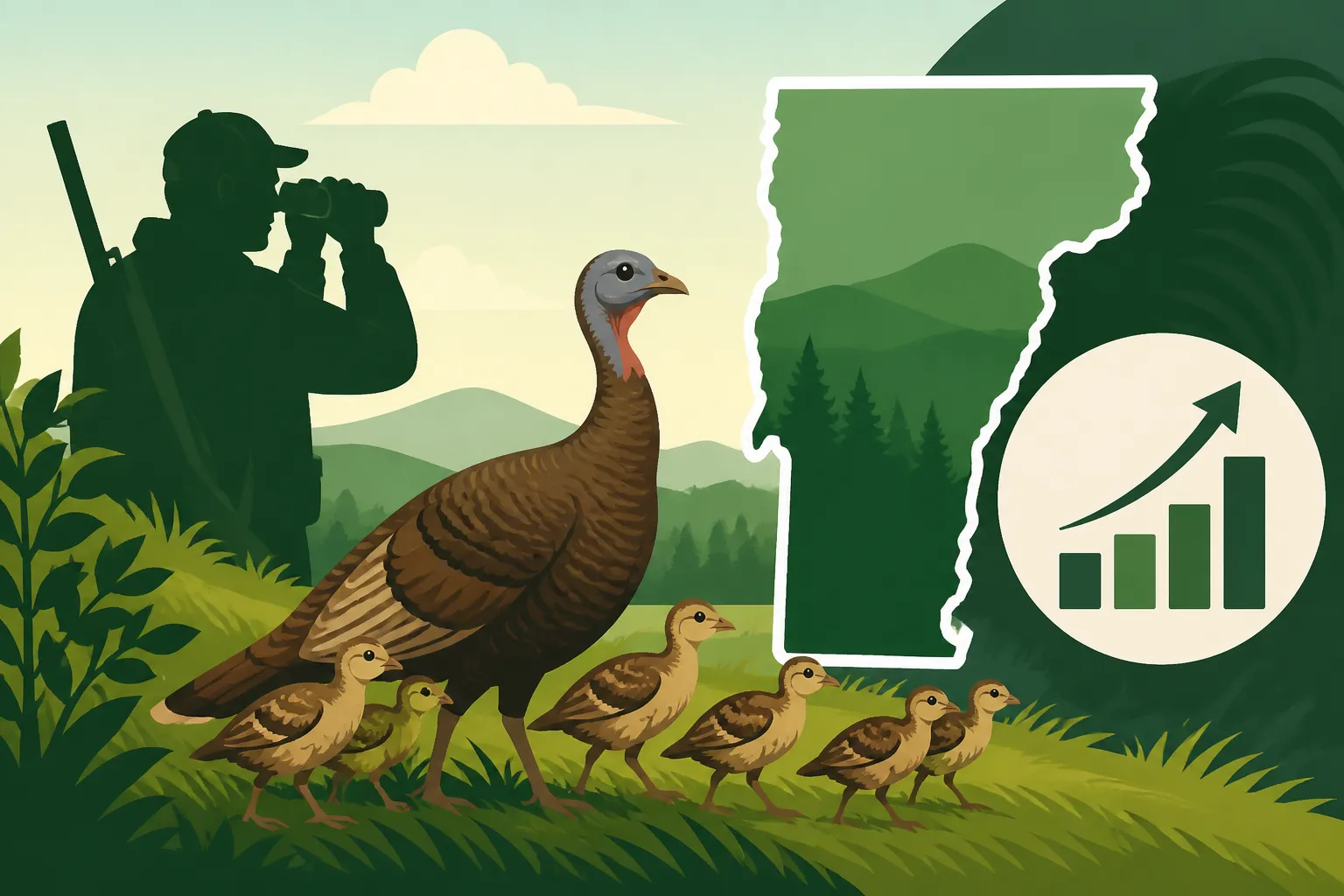
At its heart, a turkey brood survey is simply an organized effort to count turkey hens and their poults during the summer months. It's not about counting every single turkey in the state, which would be an impossible task. Instead, it's about getting a representative sample. Think of it like taking a snapshot of a family photo: you see the adults and how many kids they have with them. In the turkey world, we're looking for adult hens and the number of poults they've successfully raised.
This data is crucial because the number of poults that survive from late spring into summer directly impacts the number of juvenile birds that will be available for harvest in the upcoming fall and even the next spring season. A good hatch means more young birds maturing, leading to a healthier, more robust population. A poor hatch, on the other hand, can signal a dip in numbers down the road, making hunting potentially tougher. Volunteers and professionals record sightings of hens, along with the number and age class of poults seen with them, often noting the date and location of the sighting. This meticulous approach helps create a statewide picture of nesting success and early poult survival.
Why Brood Surveys Are So Crucial for Hunters
For us hunters, brood survey results are like having a crystal ball, offering a glimpse into what the future holds for turkey hunting. They provide the most reliable indicator of reproductive success, which directly correlates to the recruitment of new birds into the population. If a survey indicates a strong hatch, with many hens observed with large broods, we can anticipate a better fall hunting season for young birds, and potentially a more vocal and abundant spring gobbler season a year or two down the line as those poults mature. Conversely, a poor brood year suggests fewer young birds will enter the hunting population, often leading to more challenging hunts.
Beyond predicting short-term hunting prospects, these surveys also help us understand Vermont Turkey Population Trends over a longer period. Biologists use this data to identify patterns, pinpoint factors affecting reproduction, and make informed management decisions. For example, consistent low brood success in a particular Wildlife Management Unit (WMU) might prompt an investigation into habitat changes, disease prevalence, or increased predation pressure. For a dedicated hunter planning a season, consulting these survey results, often available through the Vermont Fish & Wildlife Department's reports or platforms like GoHunt, can be a game-changer. It allows you to focus your efforts on areas that have shown better reproductive success, increasing your odds of encountering more birds.
How Vermont Conducts Brood Surveys
Conducting statewide turkey brood surveys is a huge undertaking, relying on the collective effort of both wildlife professionals and, critically, everyday citizens. It's a testament to the community's dedication to our wild resources that so many folks get involved. This collaborative approach ensures a broad geographical spread of data collection, giving biologists the comprehensive picture they need.
Who Participates and What They Look For
The backbone of Vermont's turkey brood survey is a network of volunteer observers, typically landowners, farmers, rural residents, and, of course, passionate hunters and outdoor enthusiasts. These folks are out and about during the crucial summer months when poults are still small and easily identifiable with their mothers. The Vermont Fish & Wildlife Department provides clear instructions on what to report, and often, participants can submit their observations through an online portal or a dedicated app. This makes it really accessible for anyone to contribute valuable data.
What are they looking for? Specifically, they're recording sightings of:
- Adult hens with poults: This is the bread and butter of the survey. Observers count the number of poults seen with each hen.
- Adult hens without poults: These sightings are also important, as they indicate hens that either didn't nest, lost their clutch, or lost their entire brood early on.
- Poults only: While less common, sometimes poults are seen separated from their mother.
- Gobblers: While not directly part of the brood count, seeing mature gobblers helps estimate the overall adult population.
The timing of these observations is key, generally from June through August. This window allows enough time for eggs to hatch and for poults to grow a bit, but before they become too independent and harder to distinguish from adult birds. The more observations gathered, especially from diverse locations across different Vermont WMUs for Turkeys, the more accurate the overall survey results become.
The Data Collected and How It's Analyzed
Once observations are submitted, usually detailing the date, time, location, and the specific count of hens and poults, this raw data is compiled and analyzed by wildlife biologists. The primary metric they're looking for is the "poult-to-hen ratio." This ratio is calculated by dividing the total number of poults observed by the total number of hens observed. A higher poult-to-hen ratio indicates a successful reproductive season, meaning many poults hatched and survived their initial vulnerable period. A lower ratio suggests a tougher year for turkey reproduction.
The analysis isn't just a simple average, though. Biologists also consider:
- Geographical Distribution: Are some regions showing better success than others? This helps identify areas that might be hotbeds for turkey activity or areas needing closer monitoring. This kind of detailed mapping can also be integrated into platforms like GoHunt, helping hunters pinpoint zones with higher potential.
- Temporal Trends: How does this year's ratio compare to previous years? This helps track Vermont Turkey Population Trends over time and assess the long-term health of the flock.
- Environmental Factors: They'll often cross-reference brood data with weather patterns, such as spring rainfall and summer temperatures, to understand potential impacts on poult survival. We'll delve into this more later.
The aggregated results are then typically shared with the public, often through annual reports or summaries on the Fish & Wildlife Department's website. These reports are invaluable resources for hunters looking to understand the health of the turkey population and plan their hunts accordingly.
Interpreting Brood Survey Results for Your Hunt
Understanding the mechanics of brood surveys is one thing, but knowing how to translate those numbers into actionable hunting intelligence is where the real value lies. As hunters, we're always looking for any edge we can get, and this data provides exactly that: a scientifically-backed prediction of what we can expect to encounter in the woods.
Linking Brood Success to Future Hunting Prospects
A strong poult-to-hen ratio in a summer brood survey is generally fantastic news for hunters. Here's why:
- Fall Hunting: Young-of-the-year birds (poult hatched that summer) make up a significant portion of the fall turkey harvest. If there are more poults, there are simply more birds available to chase when Fall Turkey Hunting Vermont's Statewide Archery Window or in the limited shotgun WMUs. These young birds are often less wary than adults and can be more responsive to calls, making for exciting hunts. Also, larger family groups (broods) are often easier to locate and pattern in the fall.
- Spring Hunting: While spring hunters are after mature gobblers, the success of a brood survey still plays a huge role. The poults that survive one summer become jakes (sub-adult gobblers) the following spring, and then mature gobblers in subsequent years. A few good brood years back-to-back can really build up the population of mature birds, leading to more competitive gobbling activity and a higher overall density of birds available. This is crucial for hunters aiming to fill their Vermont Spring Turkey Bag Limit for Residents.
Conversely, a poor brood year means fewer birds available for fall hunting and a potential dip in the number of jakes and gobblers in the coming seasons. This doesn't mean you won't find turkeys, but it might mean you'll have to work harder, scout more extensively, and adapt your tactics to find the available birds. This is where detailed scouting and utilizing resources like GoHunt to understand current bird movement and habitat can really help compensate for lower overall numbers.
Regional Variations and What They Mean
One of the most important takeaways from brood survey results is that turkey populations aren't uniform across the entire state. What might be a fantastic year in the Champlain Valley could be an average year in the Northeast Kingdom or a challenging year in the Green Mountains. These regional variations are critical for hunters to consider.
For example, a report might show that Addison County had a poult-to-hen ratio of 4.5, while Essex County reported 2.1. This tells you that, on average, hens in Addison County raised more poults successfully. For a hunter planning their Fall Turkey Hunting Vermont's Statewide Archery Window or Hunting the Statewide Fall Archery Turkey Season, this insight is golden. It suggests that areas within Addison County, or similar regions with high ratios, might offer better prospects for locating family groups and filling a tag.
These regional differences can be influenced by a myriad of factors, including:
- Localized Weather: A severe spring storm or an unusually wet and cold period during hatching season can devastate poult survival in one area, while a neighboring region experiences milder conditions.
- Habitat Quality: Areas with abundant insect populations, good nesting cover, and escape terrain tend to support better brood survival. Changes in agricultural practices or forest management can impact this.
- Predation: Localized increases in predator populations can also depress poult numbers.
By paying attention to these geographical nuances in the brood survey data, hunters can make more informed decisions about where to focus their efforts. If you typically hunt a WMU that shows consistently low brood numbers, it might be worth investigating adjacent WMUs or public lands that show better success. The Vermont Fish & Wildlife app, or external tools like GoHunt with its detailed mapping layers, can help you visualize these regional differences and adapt your hunting plan accordingly.
| Brood Survey Poult-to-Hen Ratio | Implications for Fall Hunting (Current Year) | Implications for Spring Hunting (Next Year) | Overall Population Trend | Hunter Strategy Recommendation |
|---|---|---|---|---|
| > 4.0 (Excellent) | Abundant young birds, good family groups. | Strong numbers of jakes, healthy gobbler population. | Growing / Stable | Focus on feeding areas, expect active birds. |
| 3.0 – 3.9 (Good) | Good numbers of young birds, fair family groups. | Good numbers of jakes and mature gobblers. | Stable | Standard scouting, responsive calling. |
| 2.0 – 2.9 (Average) | Moderate young birds, some smaller family groups. | Average jake numbers, stable gobbler numbers. | Stable / Slightly declining | Increased scouting, adaptable tactics. |
| < 2.0 (Poor) | Few young birds, scattered family groups. | Fewer jakes, potentially fewer gobblers. | Declining | Intense scouting, focus on prime habitat, consider new areas. |
The Impact of Environmental Factors on Turkey Broods
Wild turkeys are remarkably resilient creatures, but like all wildlife, their success is inextricably linked to the environment around them. When we look at Vermont's turkey brood survey results, we're not just seeing numbers; we're seeing the echoes of the weather, the landscape, and the challenges these birds face in raising their young. Understanding these environmental influences helps us put the survey data into context.
Weather's Role in Poult Survival
Without a doubt, weather is one of the most significant factors influencing poult survival, especially in their first few weeks. Young poults are incredibly vulnerable to cold and wet conditions. They don't have well-developed feathers to shed water, and prolonged exposure to rain and low temperatures can quickly lead to hypothermia.
Consider a spring where Vermont experiences an unusually wet and cold stretch right after the majority of turkey nests have hatched. The ground is saturated, insects (a primary food source for poults) might be less active, and the air temperature dips below ideal. This scenario can be devastating for poult survival, leading to a much lower poult-to-hen ratio in that year's brood survey. Conversely, a warm, relatively dry spring and early summer can provide ideal conditions for poults to thrive, grow quickly, and avoid succumbing to the elements. This leads to higher survival rates and a more robust poult crop, which, in turn, contributes positively to Vermont Spring Turkey Harvest Numbers in subsequent years.
Biologists often cross-reference weather data with brood survey results. If a particular year shows a low poult-to-hen ratio, they can often point to a period of inclement weather during the critical brooding phase. For hunters, knowing this helps explain why turkey numbers might be down in a given year, or why a specific region might have struggled more than others. It's a reminder that even in healthy populations, Mother Nature always has the final say in the short term.
Habitat Quality and Its Influence
Beyond immediate weather, the overall quality of the habitat plays a monumental role in a turkey brood's chances of survival. Turkeys need a mosaic of different habitat types to thrive, especially during the breeding and brooding seasons.
- Nesting Cover: Hens need dense, low-growing vegetation for nesting to conceal their nests from predators. If suitable nesting cover is scarce due to extensive logging, development, or certain agricultural practices, nesting success can decline.
- Brooding Habitat: Once poults hatch, they need areas rich in insects, like recently mowed hayfields, open woodlands, or young clearcuts, where they can easily forage. They also need nearby escape cover (dense shrubbery or tall grasses) to hide from aerial predators like hawks and owls, or ground predators like coyotes and bobcats. Good brooding habitat ensures easy access to food and protection.
- Water Sources: Turkeys, especially poults, need reliable access to water, which is usually found in abundant insect life in good habitat, or nearby springs and creeks.
A landscape that offers this diversity of resources will consistently produce better brood survival rates than one that is fragmented or lacking in key components. This is why areas like the Champlain Valley, with its mix of agriculture, field edges, and woodlots, often support higher turkey densities and better brood success than, say, uniform, deep northern hardwood forests. Land management practices on both public and private land, including those on Vermont Wildlife Management Areas, are constantly working to improve and maintain this critical habitat for turkeys and other game species. For hunters scouting new areas, looking for diverse habitat that offers both food and cover, especially for young birds, can be a highly effective strategy.
How Vermont Brood Survey Data Informs Management Decisions
The dedicated work of conducting turkey brood surveys isn't just about giving hunters a heads-up on the next season; it's fundamental to sound wildlife management. The data collected provides wildlife biologists with essential insights that directly influence how Vermont's wild turkey populations are managed for long-term health and sustainability. This ensures that the efforts put into How Turkeys Were Restored to Vermont continue to yield positive results for generations to come.
Adjusting Season Lengths and Bag Limits
One of the most direct ways brood survey results impact us as hunters is through their influence on hunting regulations. If brood surveys consistently show low poult-to-hen ratios across multiple years or in specific regions, indicating a struggling turkey population or poor recruitment of new birds, wildlife managers might consider adjusting season lengths or bag limits. This could mean shorter seasons, reduced daily or seasonal bag limits, or even more restrictive rules in certain WMUs to allow the population to rebound.
Conversely, if brood surveys indicate several consecutive years of strong poult production and a robust, expanding turkey population, the department might explore opportunities to offer more generous hunting opportunities, such as increasing bag limits or extending certain seasons. This adaptive management approach is all about finding a balance: providing ample hunting opportunities while ensuring the long-term health and stability of the turkey resource. While you might not see changes every single year, consistent trends in brood data are a key driver for these important decisions. This kind of data-driven approach is what allows platforms like GoHunt to offer predictive analytics that are actually grounded in scientific observation, rather than just guesswork.
Identifying Habitat Needs and Conservation Priorities
Beyond direct hunting regulations, brood survey data also helps biologists identify critical habitat needs and prioritize conservation efforts. If a particular region consistently reports low brood success despite seemingly good weather, it signals that there might be underlying habitat issues that need addressing. For instance, a lack of quality nesting cover in one area, or insufficient brooding habitat with sparse insect populations in another, could be revealed through these consistent low numbers.
This information can then guide various conservation initiatives:
- Habitat Restoration Projects: The Fish & Wildlife Department might initiate projects to create or enhance specific habitat types, such as planting native grasses for nesting cover or managing forest clearings to promote insect production for poults.
- Landowner Incentive Programs: They might work with private landowners to encourage practices that benefit turkey habitat, recognizing that a significant portion of Vermont's landscape is privately owned.
- Research into Limiting Factors: Persistent low brood success might also trigger further research into other limiting factors, such as disease prevalence, specific predator impacts, or changes in agricultural land use.
These conservation efforts benefit not only wild turkeys but often a host of other wildlife species that share similar habitat requirements. By understanding the success of turkey broods, we gain a clearer picture of the health of the entire ecosystem, leading to more targeted and effective conservation strategies that ultimately benefit hunters and wildlife alike. Understanding these dynamics helps us appreciate the complexity of Vermont Turkey Population Trends and the ongoing work to support them.
Final Thoughts on Vermont Turkey Brood Survey Results
As hunters, we're deeply connected to the ebb and flow of nature, and the wild turkey is a perfect example of a species whose success can fluctuate from year to year. The Vermont turkey brood survey results are more than just dry statistics; they are a vital report card on the health of our flocks, directly impacting our hunting seasons and reminding us of the delicate balance within the ecosystem.
For someone like me, who lives for the sound of a spring gobble or the sight of a scattered fall flock, these surveys offer a crucial piece of the puzzle. They empower us to be more informed hunters, to understand why some years are tougher than others, and to appreciate the hard work that goes into managing this incredible resource. Whether you're planning your spring strategy or hoping to put some fall birds in the freezer, taking a moment to review the latest brood survey results can dramatically improve your outlook and, potentially, your success in the field. Tools like GoHunt can help you integrate this information into your overall hunting plan, allowing you to head into the woods with a deeper understanding and a more strategic approach. So, next time you're dreaming of turkey season, remember to check those brood reports – they're one of the best ways to predict where the birds will be and how abundant they'll be when you're out there chasing them.
Disclaimer
This article is for general informational purposes only and does not constitute professional advice. Laws, prices and regulations vary by location and change over time. Consult a qualified professional for guidance on your specific situation.