How Turkeys Were Restored to Vermont
It's incredibly frustrating to think about how some of Vermont's most cherished wildlife, like the wild turkey, were once almost completely gone from our landscape. For generations of hunters and wildlife enthusiasts, the idea of a spring morning without the booming gobble of a tom would have been unthinkable, yet that was our reality for a long time. This guide is dedicated to exploring the remarkable journey of how wild turkeys made their triumphant return to the Green Mountain State, offering a deep dive into the tireless efforts that brought them back.
The Vanishing Act: Why Turkeys Disappeared from Vermont
For centuries, wild turkeys were a vital part of Vermont's ecosystem and a traditional food source for its earliest inhabitants. But as European settlers moved in and the landscape changed, so did the fate of these magnificent birds. It's a sad chapter in our state's natural history, but one worth understanding to appreciate their comeback fully.
Historical Presence and Abundance
Imagine Vermont's forests before the widespread logging and farming of the 18th and 19th centuries. These lands, primarily mature hardwoods, were prime real estate for wild turkeys. They roamed freely, finding abundant mast crops like acorns and beechnuts, and plenty of cover. Historical accounts suggest that turkeys were once widespread across the lower elevations and river valleys, providing a consistent bounty for early Vermonters. They were integral to the diet and culture of the Abenaki people and later, early European colonists. These were truly the good old days for Meleagris gallopavo.
Reasons for Their Decline and Extirpation
The factors leading to the disappearance of wild turkeys from Vermont weren't singular but a perfect storm of environmental change and human impact. The primary culprit was widespread habitat destruction. As Vermont was settled, forests were cleared at an astonishing rate to make way for farms, pastures, and timber. Turkeys need large, contiguous blocks of mature forest for roosting, foraging, and protection from predators, especially during severe winters. This fragmentation of their home range left them vulnerable.
Compounding this was unregulated market hunting and subsistence hunting. Without any wildlife management laws in place, turkeys were hunted year-round, often for commercial sale, further depleting their numbers. Even small, isolated populations couldn't withstand the pressure. By the mid-1800s, wild turkeys were completely extirpated from Vermont, meaning they were entirely gone from the state. For nearly a century, Vermont's woods were silent to the sound of a gobble, a stark reminder of what happens when natural resources are exploited without foresight.
Early Efforts and the Roadblocks to Restoration
The idea of bringing wild turkeys back wasn't new even after they vanished, but the "how" was a formidable challenge. Initial attempts were often well-intentioned but critically flawed, teaching valuable lessons that paved the way for eventual success.
Failed Early Restorations
In the early to mid-20th century, as wildlife conservation began to gain traction, some states experimented with various methods to bring back lost game species. For turkeys, this often involved releasing pen-raised birds. These birds, bred in captivity, looked like wild turkeys, but they lacked the essential instincts and survival skills needed to thrive in the wild. They were often tame, susceptible to disease, and lacked the wariness that allows wild turkeys to evade predators and harsh weather. They simply weren't equipped for life outside a pen. Efforts to release these domestic or semi-domesticated birds in Vermont, much like in other states, met with dismal failure. They couldn't find food, became easy prey, or interbred with domestic fowl, losing their wild genetics. It was a disheartening cycle that showed conservationists they needed a fundamentally different approach.
Learning from Mistakes: The Shift in Strategy
The consistent failure of releasing pen-raised birds forced wildlife biologists to rethink their entire strategy. The critical realization was that only truly wild turkeys possessed the genetic makeup and learned behaviors necessary for survival and reproduction in the challenging conditions of a Vermont forest. This paradigm shift meant moving away from breeding birds in captivity and towards capturing genuinely wild birds from healthy populations elsewhere and releasing them into suitable habitats. This concept, known as "trap-and-transfer," became the cornerstone of nearly all successful wild turkey restoration programs across North America. It required significant resources, specialized equipment, and a deep understanding of turkey biology, but it promised a much higher chance of success.
The Game Changer: Trap-and-Transfer Operations
The development and refinement of the trap-and-transfer method was nothing short of revolutionary for wild turkey restoration. It marked the turning point for Vermont and many other states.
The Rocket Net Revolution
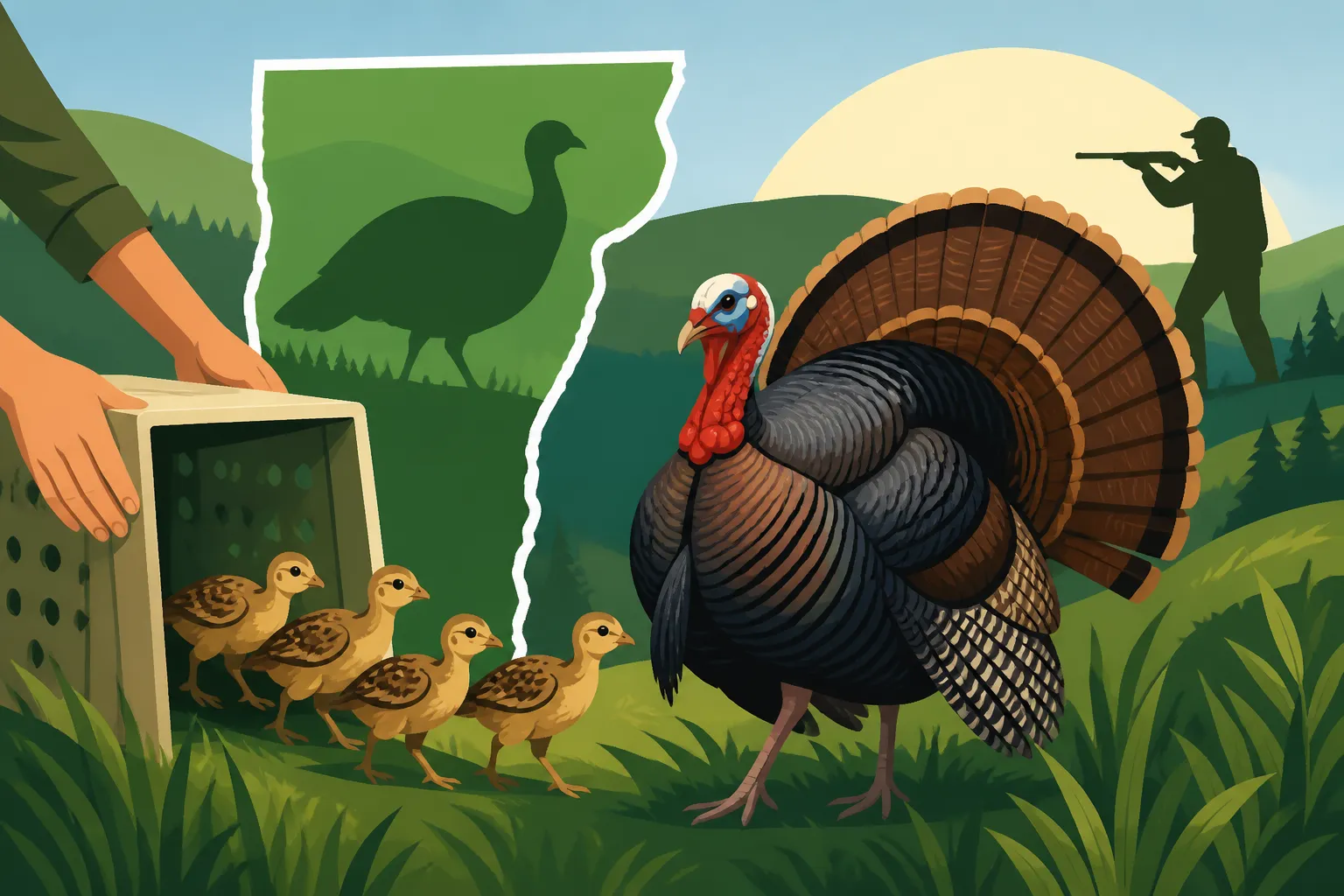
The trap-and-transfer method relied heavily on an ingenious piece of equipment: the rocket net. This system uses a large net, often camouflaged and folded, placed over a baited area (usually corn). When turkeys gather to feed, small rockets attached to the net are remotely fired, launching the net over the flock in an instant. This method allowed biologists to capture multiple wild birds simultaneously, efficiently, and with minimal stress to the animals. Once netted, the birds were quickly processed—checked for health, banded for identification, and then carefully placed into specialized transport boxes for their journey to new homes. This technology, developed in the mid-20th century, was a game-changer, providing a safe and effective way to acquire the precious wild breeding stock needed for restoration.
Sourcing Wild Birds for Vermont
Vermont's wild turkey restoration story officially began in the late 1960s and early 1970s. Since Vermont had no wild turkeys, birds had to be sourced from other states with thriving populations. The Vermont Fish and Wildlife Department partnered with the New York Department of Environmental Conservation, which had a robust turkey population in its southwestern counties. These birds were truly wild and adapted to similar northeastern forest conditions.
Between 1969 and 1976, Vermont received 31 wild turkeys from New York. These pioneer birds, captured from thriving populations, were tough, smart, and genetically primed for survival. They were released in strategic locations in Rutland and Bennington counties, chosen for their extensive, unbroken forest habitat and proximity to traditional turkey ranges. This initial introduction, though small in number, formed the foundational breeding stock for all of Vermont's current wild turkey population. The success of these releases underscored the importance of genetic purity and wild instincts.
Building New Flocks: Release Sites and Habitat
Successfully moving wild turkeys is only half the battle. Ensuring they have a place to thrive is equally, if not more, important. Careful planning went into selecting the initial release sites and monitoring the newly established flocks.
Site Selection Criteria for Success
The selection of release sites was a meticulously planned process, critical to the long-term success of the restoration. Biologists weren't just dropping birds anywhere; they were looking for very specific conditions. Key criteria included:
- Extensive Forest Cover: Turkeys need large, unfragmented tracts of mature deciduous and mixed forests. These provide roosting trees, escape cover, and foraging opportunities. Areas like the Green Mountain National Forest or other large swaths of public land were ideal.
- Abundant Food Sources: A reliable supply of mast crops (acorns, beechnuts, cherries) was essential for winter survival and reproduction. Areas with diverse tree species were preferred to ensure food availability even if one mast crop failed.
- Low Human Disturbance: Initial release sites needed to be relatively remote, minimizing contact with people and domestic fowl, which could introduce disease.
- Predator Balance: While predators are a natural part of the ecosystem, sites with excessively high predator populations might hinder the establishment of a new, small turkey flock.
The Vermont Fish and Wildlife Department studied maps, conducted field surveys, and collaborated with landowners to identify optimal locations. For instance, the initial releases focused on areas in southern Vermont that offered vast tracts of suitable habitat, allowing the turkeys to establish a foothold without immediate pressure. This careful planning laid the groundwork for the birds to not just survive, but truly flourish.
Post-Release Monitoring and Support
Once the wild turkeys were released, the work wasn't over. Extensive post-release monitoring was crucial to track their movements, survival, and reproductive success. Biologists used various methods, including radio-tagging a subset of birds, to follow their dispersal patterns and observe their behavior. Reports from local landowners and hunters also provided valuable anecdotal evidence of successful integration into the landscape.
The early years involved careful observation of brood success, winter survival rates, and the expansion of the turkey range. It was a hands-off approach in many ways, allowing the wild birds to do what they do best: adapt and multiply. This period of establishment was vital before any consideration of hunting seasons could even be entertained. The patience and scientific rigor applied during this phase were instrumental in ensuring that the small number of introduced birds could genuinely seed a future population.
The Boom and Beyond: Managing a Healthy Population
The restoration effort was a resounding success. From those initial few dozen birds, Vermont's wild turkey population exploded, leading to sustainable hunting opportunities and ongoing management challenges.
Population Growth and Statewide Expansion
The wild turkeys introduced to Vermont didn't just survive; they thrived. With suitable habitat, abundant food, and effective protection from hunting during their establishment phase, their numbers grew exponentially. From the initial release sites in southern Vermont, the birds gradually expanded their range, moving north and east, colonizing new forests and adapting to varying elevations. Within a few decades, wild turkeys were once again a common sight and sound across most of the state where appropriate habitat existed. This incredible expansion meant that areas like the Champlain Valley, the Northeast Kingdom, and the central Green Mountains all saw the return of healthy turkey flocks. Today, you can find them almost anywhere, from remote timberlands to the edges of rural villages, demonstrating their remarkable adaptability.
The success story of turkey restoration is a testament to sound wildlife management principles. It also highlights the vital role that hunters and conservationists play through license fees and excise taxes on hunting equipment, which directly fund these types of programs. Organizations like the National Wild Turkey Federation also played a huge part in supporting these efforts, both financially and through volunteer work, emphasizing the collective effort needed for such an undertaking.
Sustainable Hunting Seasons
With a robust and expanding wild turkey population, the Vermont Fish and Wildlife Department eventually established controlled hunting seasons. The first modern spring turkey season opened in 1973, initially restricted to a small area and with very conservative bag limits. This cautious approach allowed biologists to continue monitoring the population while offering hunters the chance to participate in the success story. As the population continued to grow, the seasons gradually expanded to include more areas and eventually a statewide spring season, and later, a fall season.
Today, Vermont offers generous opportunities for turkey hunters, with a two-bird limit for residents in the spring and various options for fall hunting, including archery and shotgun seasons in designated WMUs. This is a far cry from the complete absence of turkeys just a century ago. Responsible management ensures that harvest levels remain sustainable, preventing overhunting and maintaining a healthy age structure within the flocks. Hunters are an integral part of this management, providing data through harvest reports and supporting conservation efforts. If you're looking for information on specific dates, you can always check out resources on subjects like Vermont Spring Turkey Season Dates or Vermont Fall Archery Turkey Season Dates.
What This Means for Today's Hunter
The wild turkey restoration is more than just a biological success; it's a testament to effective conservation and provides incredible opportunities for modern hunters.
Modern Hunting Opportunities
For hunters in Vermont, the presence of wild turkeys means abundant opportunities. Spring turkey season is a highly anticipated event, bringing hunters into the woods during one of the most beautiful times of the year. The challenge of " Calling an Early May Gobbler Off the Roost " is a rite of passage for many, requiring skill, patience, and a deep understanding of turkey behavior. Fall hunting offers a different experience, often focusing on breaking up flocks and calling birds back, a strategy covered in topics like Working a Fall Flock Apart Statewide With a Bow. Whether you prefer shotgun or archery, there are seasons and methods tailored to various preferences.
With healthy populations across the state, hunters can find opportunities on both public and private lands. Tools like the Vermont Fish and Wildlife app or scouting platforms can help identify potential hotspots and understand land boundaries. If you're just getting started, researching the specific rules and regulations is key, as is understanding the nuances of different hunting styles. For instance, Decoy Placement for Pressured Spring Birds can be critical for success, while Setting Up Against a Big Sugar Maple might be your ideal strategy on a quiet morning.
The Ongoing Stewardship and Future Outlook
The success of wild turkey restoration is not a one-time event; it's an ongoing commitment to stewardship. Habitat preservation remains paramount. While turkeys are adaptable, sprawling development and habitat fragmentation still pose challenges. Vermont's diverse landscapes, from the mixed forests of the Green Mountains to the agricultural edges of the Champlain Valley, continue to support healthy turkey numbers. Hunters contribute to this ongoing stewardship through their license fees, which fund habitat projects and wildlife research, and by participating in voluntary surveys and reporting their harvests.
Looking ahead, the Vermont Fish and Wildlife Department continues to monitor Vermont Turkey Population Trends and adapt management strategies as needed. While the population is robust, factors like severe winters, predator numbers, and disease outbreaks always require vigilance. The future of wild turkeys in Vermont looks bright, a shining example of what can be achieved when science, dedicated effort, and hunter-conservationists work together to bring back a cherished wildlife resource. For those eager to scout and understand these diverse habitats, modern mapping tools can be invaluable. Using platforms like GoHunt, for example, allows you to overlay different land types, elevation, and even historical satellite imagery to pinpoint prime turkey foraging and roosting areas, much like the original biologists would have done with paper maps and aerial photos. Understanding these habitat features is key to successful Spring Turkey Hunting in Vermont or even during the fall seasons.
Key Milestones in Vermont's Wild Turkey Restoration
To truly appreciate the journey, it's helpful to see the timeline of critical events that led to the thriving turkey populations we have today.
| Year Range | Event | Impact |
|---|---|---|
| Mid-1800s | Turkeys Extirpated from Vermont | Complete loss of wild turkeys due to habitat loss and hunting. |
| 1969-1976 | First Trap-and-Transfer Introductions | 31 wild turkeys from New York released in southern Vermont. |
| 1973 | First Modern Spring Hunting Season | Limited season, highly restricted areas, and bag limits. |
| 1970s-1980s | Population Growth & Range Expansion | Turkeys successfully reproduce and begin spreading statewide. |
| 1980s | Statewide Spring Season Established | Reflects growing population and successful management. |
| Early 1990s | Fall Archery Season Introduced | More hunting opportunities as population continues to thrive. |
| Late 1990s | Fall Shotgun Season Introduced | Further expansion of hunting opportunities in specific WMUs. |
| Present Day | Sustainable, Widespread Population | Wild turkeys thrive across Vermont, managed with annual seasons. |
Disclaimer
Please remember that hunting regulations and seasons can change. Always consult the official Vermont Fish and Wildlife Department website or their printed digest for the most current and accurate information before planning any hunting trip. This guide provides general information and historical context but should not be used as a substitute for official legal documents.