Where Vermont Hare Populations Hold Up Best
There's nothing quite like the sight of a snowshoe hare bounding through a winter wonderland, or the thrill of hearing beagles open up on a track. But if you've spent frustrating hours stomping through what looks like prime cover only to find nothing, you know the struggle is real. Finding consistently productive snowshoe hare populations in Vermont requires understanding their very specific habitat needs and knowing where those conditions truly exist. This guide will help you pinpoint the best areas in the Green Mountain State where these elusive critters thrive, and how you can increase your chances of finding them.
The Elusive Snowshoe Hare: Understanding Their Preferred Vermont Habitat
Snowshoe hares (often called varying hares because their coat changes with the seasons) are creatures of dense cover. They aren't going to be found hopping around in open hardwood stands or wide-open fields. Their survival strategy hinges on their ability to blend in and disappear into thick, tangled vegetation, which provides both shelter from predators and a consistent food source. If you want to find hares, you first need to understand the kind of habitat that makes them feel safe and keeps them fed.
Dense Conifer Thickets: The Ultimate Hideout
When we talk about prime hare habitat, the first image that should spring to mind is a dense stand of young conifers – spruce, fir, or even tight cedars. These thickets, often barely penetrable for humans, are sanctuaries for snowshoes. The low-hanging branches and tight spacing offer incredible thermal protection from harsh Vermont winters and excellent concealment from aerial predators like hawks and owls, as well as ground predators such as coyotes and bobcats. Inside these green fortresses, hares can move around relatively unmolested, browsing on the tender shoots and bark. It’s a literal maze of safety. You'll often find these types of thickets near swamps, along stream banks, or in areas that were previously logged and have now regenerated into dense softwood growth. Think about the sort of place where you practically have to crawl on your hands and knees just to get through; that’s exactly what a hare is looking for.
Regenerating Clearcuts and Young Forests: Food and Cover Alike
Beyond the established conifer thickets, recently logged areas or young, regenerating forest stands are also magnets for snowshoe hares. After a timber harvest, new growth explodes from the forest floor. This means a bounty of young deciduous shrubs, saplings, and herbaceous plants – all excellent food sources for hares. As these areas mature, they quickly become incredibly dense, creating a mosaic of food and cover. While these areas might not offer the same deep, dark thermal cover as a mature conifer stand, the sheer volume of available forage and the tangled nature of the new growth make them irresistible to hares. Look for cuts that are anywhere from 5 to 20 years old, where the saplings are now shoulder-high or taller and creating a nearly impenetrable tangle. These younger forests often exist on both public and private lands across Vermont.
Wetland Edges and Beaver Flowages: A Less Obvious Haven
Don't overlook the edges of wetlands, marshes, and especially beaver flowages. While not always pure conifer, these areas often feature dense, brushy growth along their perimeters, including alders, willows, and young aspens. These provide excellent cover and browse for hares. The unique topography and sometimes perpetually damp ground can deter some predators, offering a bit of a natural buffer. Beaver activity itself creates a constantly changing environment, felling trees and encouraging new, dense growth around the water's edge, which can be fantastic for hares. The dense vegetation and often difficult access for humans mean these spots are less pressured and can harbor surprisingly good numbers of hares. When you’re Hunting a Beaver Flowage Edge at Dusk, keep an eye out for hare sign along the banks.
Top Regions Where Vermont's Snowshoe Hare Populations Thrive
Given their specific habitat needs, it stands to reason that certain geographical areas in Vermont are more conducive to healthy snowshoe hare populations than others. While you can find hares in pockets throughout the state, some regions consistently stand out due to their expansive, ideal habitat.
The Northeast Kingdom: A Classic Hare Stronghold
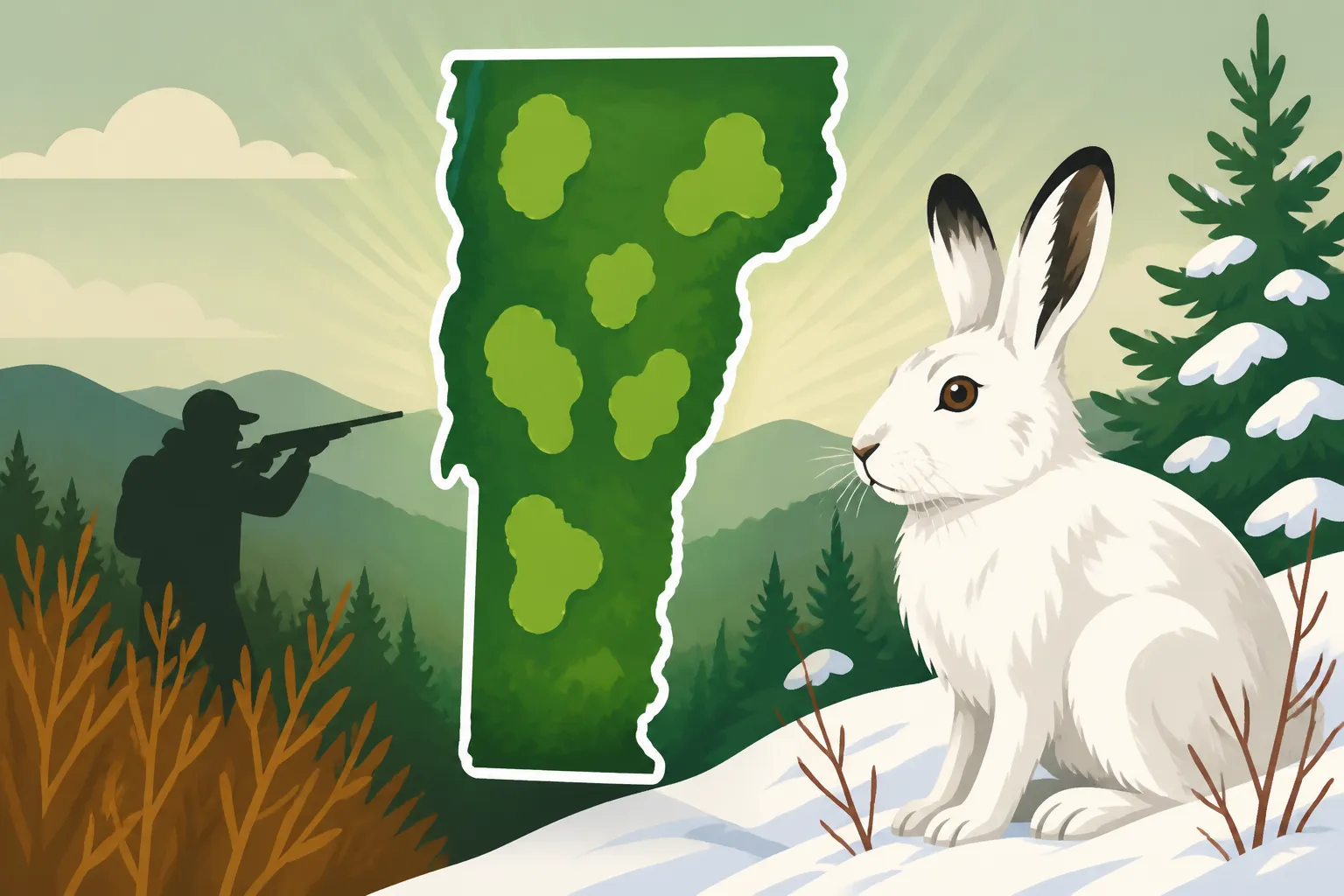
The Northeast Kingdom (NEK) is arguably Vermont's quintessential snowshoe hare country. This region, encompassing Essex, Orleans, and Caledonia counties, is characterized by vast expanses of working forest, higher elevations, and a climate that generally sees more snow and colder temperatures – conditions that favor hares. Here, you'll find extensive softwood plantations, sprawling clearcuts that have regenerated into dense thickets, and numerous swamps and bogs ringed with ideal cover. The sheer scale of suitable habitat means hares have plenty of room to roam and plenty of places to hide. Public lands like Victory Basin Wildlife Management Area and the extensive private timberlands managed for forestry are prime examples of places where hare populations tend to hold up exceptionally well. When you're Hunting the Northeast Kingdom, remember to seek out those dense, impenetrable stands.
Higher Elevations of the Green Mountains: Persistent Pockets
While the Green Mountain National Forest is often thought of for deer and moose, its higher elevations and rugged backcountry also hold persistent pockets of snowshoe hares. These areas, particularly where spruce and fir dominate and create dense, dark timber, offer the kind of long-term cover hares rely on. You might not find the same sprawling numbers as in the NEK, but these high-elevation hares are often less pressured due to the challenging terrain. Look for areas along mountain benches, steep ravines, and particularly north-facing slopes where conifer regeneration is thick. Access might be tougher, requiring a good pair of boots and a willingness to hike, but the reward can be excellent opportunities for Running Beagles on a Vermont Snowshoe Hare in solitude. Use a mapping app like GoHunt to scout these less accessible spots, looking for contour lines that suggest benches or saddles with dense cover.
Select Lowland Swamps and Public Forests: Hidden Gems
Beyond the two major strongholds, Vermont has numerous smaller, often overlooked lowland swamps and scattered public forest parcels that can be genuine hidden gems for hare hunters. These areas might not be extensive, but they offer crucial dense cover in otherwise mixed habitat. Think about the smaller wildlife management areas (WMAs) or state forest parcels that have significant low-lying, wet ground with dense thickets of young alders, spruce, or cedar. These might be harder to find on a map without zooming in, but they're worth the effort. Often, these are smaller tracts that get less attention, meaning less hunting pressure on the hares. Always check WMA-specific rules, as some may have unique regulations regarding hunting methods or access.
Here’s a quick overview of hare habitat characteristics in different Vermont regions:
| Region | Primary Habitat Types | Hare Density | Hunting Pressure | Key Considerations |
|---|---|---|---|---|
| Northeast Kingdom (NEK) | Dense conifer thickets, regenerating clearcuts, swamps | High | Moderate | Large tracts of land, remote, more snow |
| Green Mountains (High) | Spruce/fir timber, dense young growth in ravines | Moderate | Low | Rugged terrain, challenging access, specific pockets |
| Lowland Swamps/WMAs | Alder/willow thickets, young conifers, beaver flowages | Moderate | Varies | Smaller, isolated pockets, can be overlooked by hunters |
Key Factors Influencing Vermont's Hare Abundance and Distribution
While habitat is paramount, it's not the only factor that dictates where Vermont's hare populations will hold up best. Several other environmental and ecological elements play significant roles in how many hares you'll find and where. Understanding these can give you an edge in your scouting efforts.
Predation Pressure and Habitat Interconnectivity
Snowshoe hares are a foundational prey species for many of Vermont's predators, including coyotes, bobcats, foxes, and various raptors. Where predator populations are high and hare habitat is fragmented, hare numbers can suffer. Conversely, areas with large, contiguous blocks of prime habitat allow hares to disperse and avoid concentrated predator pressure. Think of it like a game of hide-and-seek: the more places to hide, the better the hares' chances of survival. Habitat corridors, or "travel lanes," are also crucial. If prime hare habitat is isolated by open fields or mature, open woods, hares are less likely to colonize new areas or recover from localized population dips. The interconnectivity of dense cover across a landscape directly impacts how well Vermont Snowshoe Hare Population Trends are maintained.
Snow Depth and Winter Survival
The "snowshoe" in their name isn't just for show. Their large, fur-covered feet act like natural snowshoes, allowing them to move across deep snow that other animals, including many predators, struggle with. Vermont's winters are legendary for their snow, and regions that consistently receive abundant, deep snow often support healthier hare populations. This deep snow not only aids their mobility but also elevates them, allowing access to browse on shrubs and saplings that would otherwise be out of reach. A winter with little snow can make hares more vulnerable to predators and limit their access to food, directly impacting survival rates and subsequent breeding success. This is particularly noticeable in regions that typically receive less snow, making those deep snow regions even more critical.
Timber Management Practices and Succession
The way forests are managed has a profound impact on snowshoe hare habitat. Hares thrive in early successional forests – those young, regenerating stands that follow disturbances like timber harvests or natural events. In Vermont, responsible timber management, which includes clearcutting and patch cutting, can actually be beneficial for hares by creating these necessary early successional habitats. However, if an area is allowed to mature into old-growth forest without new disturbances, it eventually loses its appeal for hares as the understory thins out. Understanding local logging activity and future timber plans can be a huge asset in predicting where hare habitat will be available in the coming years. This is where tools like GoHunt's satellite imagery can help you identify recent cuts and monitor forest regeneration over time, revealing emerging hare hotspots.
Finding and Hunting Vermont's Best Hare Cover: Strategies for Success
Knowing where hares generally live is one thing; actually finding them and having a successful hunt is another. It requires a combination of good scouting, appropriate hunting methods, and respect for the environment.
Scouting Smart: Tools and Techniques
Effective scouting is key to consistently finding hares. It starts well before you ever step foot in the woods. Begin by studying topographical maps, aerial imagery, and forest management plans. Look for those tell-tale signs: dense green areas (conifers), recent clearcuts (showing varied regrowth), and the edges of wetlands or beaver flowages. GoHunt mapping software or the Scouting With the Vermont Fish and Wildlife App can be invaluable here, allowing you to identify potential hotspots from your couch.
Once you're in the field, look for specific hare sign:
- Tracks: In snow, hare tracks are distinct – two large hind feet forward, two smaller front feet tucked behind. In mud or dirt, they might be harder to discern, but look for a similar pattern.
- Droppings: Small, round pellets, often found in concentrated areas where hares rest or feed.
- Clipped Vegetation: Hares will clip small twigs and branches at a sharp angle, leaving a clean cut. Look for this on low-growing shrubs and young saplings within their dense cover.
- Runs: In very dense cover, hares will create small tunnels or "runs" through the vegetation that they use repeatedly.
Focus your scouting efforts on the transition zones between different cover types. For example, where a dense spruce stand meets a regenerating clearcut, or where a swamp edge transitions to drier upland conifers. These "edge habitats" often provide the best of both worlds – diverse food sources and security cover. Don't be afraid to put on some miles. Sometimes the best hare habitat is a good walk off the beaten path, away from easy access points, which often means less human pressure.
Hunting Methods for Hare in Prime Areas
Hunting snowshoe hares is typically a social affair, often involving dogs, but it can also be a solitary endeavor.
- Hunting with Beagles: This is the classic method and often the most productive. A good pack of beagles will pick up a hare's scent, push it through the thick cover, and circle it back to the hunters. The key here is for hunters to position themselves strategically on known hare runs or escape routes, waiting for the dogs to bring the hare by. The thick cover that hares love makes it challenging for dogs, but also provides a thrilling chase. For more details, consider reading Running Beagles on a Vermont Snowshoe Hare.
- Still-Hunting/Stomping: For the solo hunter or those without dogs, still-hunting or "stomping" through thick cover can be effective. This involves moving slowly and deliberately through prime habitat, pausing frequently to scan for movement. Hares will often "sit tight" until almost stepped on before bursting out. A shotgun with open choke and smaller shot (like #4 or #6) is usually ideal for these close-range, quick-reaction shots in dense cover. Focus your efforts on the thickest parts of the habitat you've identified through scouting.
- Snowmobiles/ATVs (where legal): In some areas, particularly the expansive tracts of the Northeast Kingdom, snowmobiles or ATVs can be used to access remote hare habitat, where legal and permitted on designated trails. This isn't about chasing hares with vehicles, but about getting to otherwise inaccessible cover to then hunt on foot. Always check local regulations for specific land parcels regarding motorized vehicle use for hunting. You might use GoHunt or onX Layers for Vermont Land Status to verify legal access.
Respecting the Resource and Ethical Hunting
As with all hunting, ethical practices and respect for the resource are paramount. Snowshoe hare populations can fluctuate, and understanding local conditions is important.
- Check Regulations: Always consult the current Vermont Fish & Wildlife Department regulations for season dates, bag limits, and any specific rules for the WMU or private land you are hunting.
- Leave No Trace: Pack out everything you pack in. Leave the woods cleaner than you found them.
- Clean Harvest: Aim for clean, ethical shots. Retrieve all game promptly.
- Share the Experience: Hare hunting is a fantastic way to introduce new hunters, especially youth, to the sport. The excitement of dogs on a track and the challenge of quick shots in thick cover make for memorable outings. You can even combine a hare hunt with Small Game and Predator Hunting in Vermont if the season dates align.
By understanding their preferred habitat, focusing your efforts on the regions where those conditions are most prevalent, and employing smart hunting strategies, you can enjoy some truly exciting snowshoe hare hunting experiences in Vermont. Good luck out there!
Disclaimer
This article is for general informational purposes only and does not constitute professional advice. Laws, prices and regulations vary by location and change over time. Consult a qualified professional for guidance on your specific situation.