Vermont Whitetail Color Phase Rarities
The majestic whitetail deer is a common sight across Vermont, their coats a familiar blend of browns and grays that shift with the seasons. But every so often, a glimpse of something truly extraordinary catches a hunter's eye—a deer that doesn't quite fit the mold. These rare color variations are fascinating genetic anomalies, and understanding them can deepen your appreciation for the natural world you immerse yourself in, offering a unique perspective on the wild deer herds we cherish in our state.
The Standard Palette: Understanding Typical Whitetail Coloration
Before we dive into the unusual, let's talk about what's considered "normal" for a Vermont whitetail. Most of us are familiar with the classic deer coat, but even that has its subtle shifts throughout the year. It's a testament to their adaptability and natural camouflage, helping them blend seamlessly into the Green Mountain landscape.
Seasonal Shifts in a Whitetail's Coat
Think about how your own wardrobe changes with the seasons; deer do much the same! In the warmer months, typically from late spring through early fall, a whitetail's coat is what we call its "summer pelage." This coat is usually a reddish-brown, often quite sleek and fine. It’s designed to be lightweight, helping the deer stay cool during the humid Vermont summers while still providing excellent camouflage among the green foliage. If you're out Scouting Vermont Public Land Before Season in August, you'll see this rich, vibrant brown.
As autumn deepens and the air grows crisp, usually around September or October, deer begin to shed their summer coats and grow in their "winter pelage." This is a thicker, denser coat with longer, hollow guard hairs, providing superior insulation against the bitter Vermont cold. The color typically shifts to a grayish-brown, sometimes almost a steely gray, particularly noticeable on their backs and flanks. This change helps them blend into the bare woods, rocky outcrops, and often snowy landscape of late fall and winter. The underbelly, throat, and around the eyes usually remain white, which is a consistent characteristic across almost all whitetails.
The Role of Pigmentation in Deer Health
The standard brown and gray coloration isn't just for looks or camouflage; it's a direct result of melanin, a pigment produced within the deer's body. Eumelanin creates black and brown tones, while pheomelanin creates red and yellow tones. The combination and distribution of these pigments are what give a whitetail its characteristic hue. This pigmentation also plays a crucial role in protecting the deer's skin from the sun's UV rays, much like melanin does for humans. Healthy pigmentation is often an indicator of overall deer health and a well-functioning genetic makeup. When we see a healthy Vermont Deer Population Estimate, we're seeing countless individuals with this ideal, adaptive coloration.
Rare Genetic Anomalies: Albinism, Leucism, and Melanism
While most whitetails fit that familiar brown-to-gray spectrum, genetics can sometimes throw a curveball, resulting in deer with truly striking, and sometimes challenging, color variations. These aren't just subtle shifts; they're profound departures from the norm, making these deer incredibly rare and memorable sightings.
Understanding Albinism in Whitetails
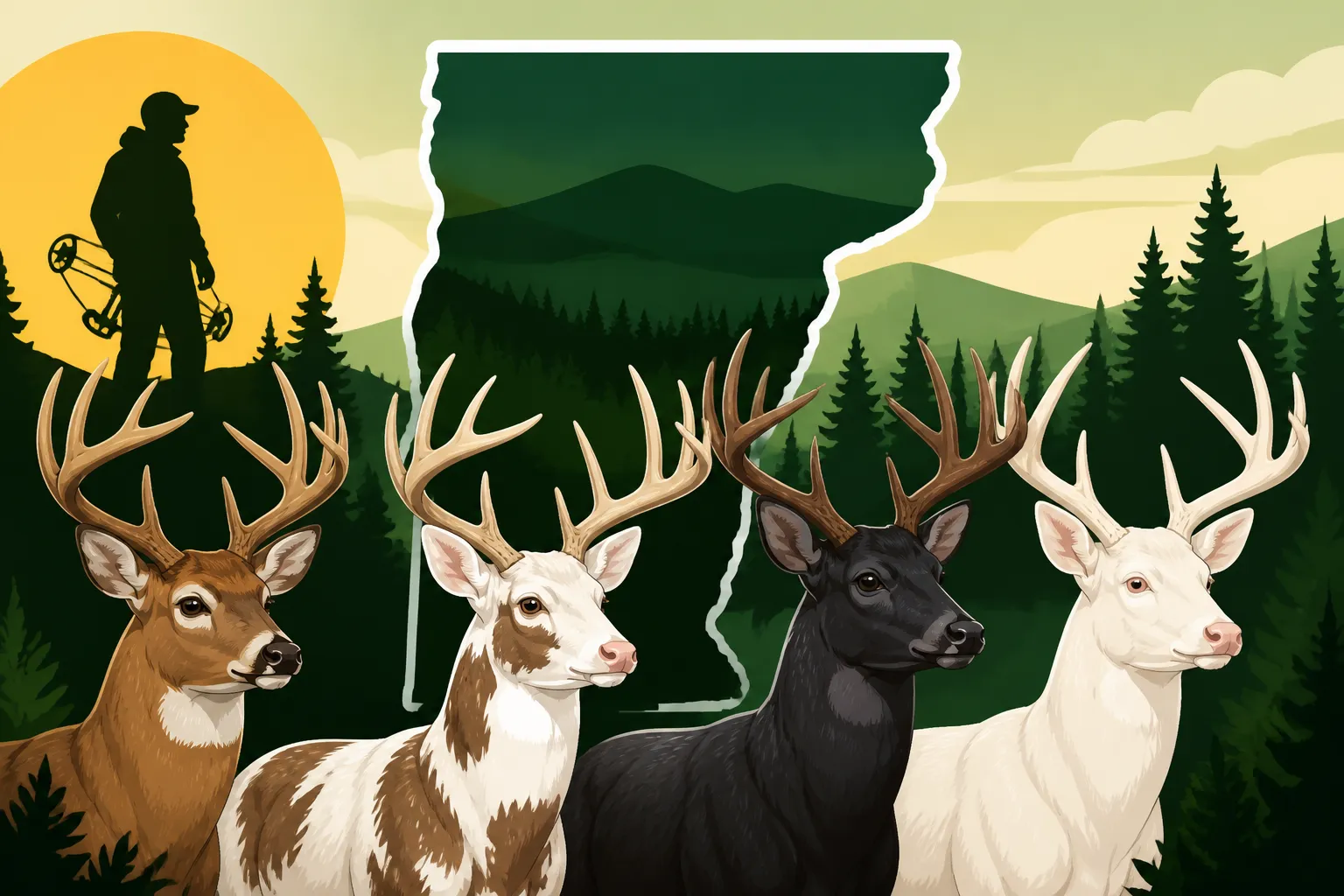
True albinism is perhaps the most famous and widely recognized color anomaly. An albino whitetail lacks all pigment in its skin, hair, and eyes due to a complete absence of melanin production. This is caused by a recessive gene that prevents the enzyme tyrosinase from functioning, which is essential for melanin synthesis. The result is a deer with snow-white hair, pink eyes (due to the blood vessels showing through the unpigmented iris), and pink hooves and nose.
Seeing a true albino whitetail in Vermont is incredibly rare. They often face significant challenges in the wild. Their pure white coat, while beautiful to us, makes them stand out starkly against most natural backgrounds, rendering their natural camouflage ineffective. This vulnerability makes them easier targets for predators, from coyotes to bobcats. Furthermore, their pink eyes are highly sensitive to sunlight, sometimes leading to impaired vision, which can hinder their ability to forage, detect threats, and navigate their environment safely. Vermont Predator Impact on Fawn Recruitment studies often show how any disadvantage, including poor camouflage, can severely reduce survival rates.
The Nuances of Leucism
Often confused with albinism, leucism is a distinct genetic condition that also results in a white or very pale deer, but with crucial differences. Leucistic deer have a partial loss of pigmentation, meaning they still produce some melanin, but it's not deposited normally in all their cells. The key distinction from albinism is that leucistic deer will typically have normal eye color—brown or blue—not pink. Their hooves and nose will also usually retain their dark pigmentation.
Leucism can manifest in various ways, from an almost entirely white coat with just a few brown patches to a mostly normal-colored deer with significant white splotches. This condition is also caused by a recessive gene, but it's different from the albino gene. Leucistic deer, like albinos, can face challenges with camouflage, though those with more patchy coloration might fare slightly better. Their vision, however, is generally unaffected, giving them a distinct advantage over true albinos in terms of survival in the wild. While still extremely rare, you might be more likely to encounter a leucistic deer than a true albino in Vermont, simply because they tend to have better survival odds.
The Mystery of Melanism
On the opposite end of the spectrum from albinism and leucism, we have melanism. This is a condition where a deer produces an excess of melanin, resulting in an unusually dark, often completely black, coat. This is also caused by a genetic mutation, but instead of reducing or eliminating pigment, it overproduces it. Melanistic whitetails are exceedingly rare, far more so than even albinos or leucistics, and they are almost never reported in the northern reaches of the whitetail's range, including Vermont. Most documented cases come from much warmer, southern states, particularly in certain localized populations in Texas.
A melanistic deer would have dark eyes, hooves, and nose, consistent with their overproduction of dark pigment. Their dark coloration could potentially offer some camouflage advantages in very specific dark, shadowy, or heavily conifer-filled environments, but in the mixed hardwoods and open fields of Vermont, it would likely make them stand out just as much as a white deer, especially against a snowy backdrop. The extreme rarity means that if you ever caught sight of a truly black deer in Vermont, you'd be witnessing something almost unheard of.
Piebaldism: The More "Common" of the Rarities
While albinism and leucism involve a near-complete or total absence of certain pigments, piebaldism is a fascinating condition characterized by irregular patches of white on a deer's body, interspersed with areas of normal coloration. This is arguably the most frequently observed color anomaly in whitetails, though it's still incredibly rare.
What is Piebaldism?
Piebaldism is a genetic trait caused by a recessive gene, similar to the others we've discussed. However, instead of affecting overall melanin production or distribution evenly, this gene prevents pigment from developing in specific areas of the skin and hair follicles. The result is a deer that looks like it's wearing patches of white paint over its otherwise brown or gray coat. The amount of white can vary wildly, from just a few small spots on the legs or belly to extensive white areas covering much of the body.
Often, piebald deer will also exhibit other physical characteristics beyond just coloration. These can include:
- Skeletal Deformities: Shortened legs, bowed noses (Roman nose), or curved spines are not uncommon. These can affect their agility and ability to run.
- Internal Organ Issues: Sometimes, internal organs can be affected, though these are less visible.
- Abnormal Hooves: Hooves may be discolored or misshapen.
- Malformed Antlers: Bucks might have unusual or stunted antler growth.
These accompanying physical traits can significantly impact a piebald deer's survival in the wild. Their unique markings, combined with potential physical handicaps, make them more susceptible to predation. A deer struggling with mobility due to skeletal issues is simply an easier target.
Spotting a Piebald in Vermont
Despite the challenges, piebald deer do survive and are occasionally sighted in Vermont. I've heard stories from hunters near the Champlain Valley and even up in the Northeast Kingdom who've seen these unique animals. Imagine spending countless hours Reading a Green Mountain Deer Yard or Scouting Vermont Public Land Before Season and then, suddenly, a deer steps out of the timber, half white, half brown. It’s a truly breathtaking experience.
Because the severity of piebaldism varies, some deer might only have a white patch on their forehead or a white lower leg, making them harder to distinguish at a distance. Others are unmistakable, looking like a canvas splashed with white. You might be more likely to spot these deer in areas with higher deer densities, simply because there's a greater chance for the recessive gene to express itself in a larger population. Tools like GoHunt can be incredibly useful for marking unusual sightings like this, allowing you to track potential movement patterns if you're lucky enough to see one more than once.
Why These Rarities Matter to Hunters and Wildlife Enthusiasts
While these color phase rarities are a genetic curiosity, they also spark important discussions among hunters, wildlife biologists, and anyone who appreciates the natural world. From ethical considerations to population health, these unusual deer present unique perspectives.
Ethical and Legal Considerations for Hunters
The appearance of an albino, leucistic, or piebald deer often brings up questions about hunting them. In Vermont, generally speaking, these deer are legal to harvest if they meet the existing legal requirements for the season and the hunter holds the appropriate tags. There are no statewide laws specifically protecting "white deer" or other color variants. However, some hunters choose not to harvest them out of respect for their rarity, or because they view them as a natural wonder. It's a personal choice, and one that often leads to lively discussions around the campfire.
The ethical considerations extend beyond just rarity. If a piebald deer exhibits severe skeletal deformities, some might argue that harvesting it could be a mercy, removing an animal that is struggling to survive. Others might argue that nature should take its course. It's a complex topic with no single right answer, and it truly speaks to the deep connection hunters have with the animals and the landscape. When discussing Vermont Deer Camp Traditions, conversations about unique sightings like these often come up, adding to the rich tapestry of hunting lore.
Indicators of Population Health and Genetic Diversity
From a wildlife management perspective, the presence of these genetic anomalies can be quite telling. While an individual albino or piebald deer might seem like an isolated incident, an unusual spike in sightings within a localized area could potentially indicate a few things:
- High Deer Density: In areas where deer populations are very high, and especially if the population has been somewhat isolated, there's a greater chance for recessive genes to express themselves. More deer means more chances for these rare genes to pair up.
- Reduced Genetic Diversity: If a population has low genetic diversity—perhaps due to a bottleneck event in the past or geographical isolation—recessive genes are more likely to be passed on and expressed. A healthy, diverse gene pool usually keeps these rare traits at a very low frequency.
- Inbreeding: In some extreme cases, repeated sightings of rare color phases in a very localized area could hint at some level of inbreeding within a specific deer subgroup, which is generally not desirable for long-term population health.
Wildlife biologists keep an eye on these things as part of their broader work in monitoring How Fish and Wildlife Counts the Deer Herd and maintaining a robust Vermont Deer Population Estimate. While a single sighting isn't cause for alarm, consistent patterns of anomalies could trigger further investigation into the genetic health of a particular local herd. It’s another small piece of the puzzle that helps us understand the intricate dynamics of Vermont’s whitetail population.
Observing and Documenting Vermont's Rare Deer
For many, encountering a rare color phase whitetail is a truly special moment in the woods. Whether you're a hunter, hiker, or wildlife photographer, seeing one of these unique animals is an experience you won't soon forget.
Best Practices for Observation
If you're fortunate enough to spot one of these rare deer, remember that they are wild animals first and foremost. Always maintain a respectful distance, ensuring you don't disturb their natural behavior. Use binoculars or a spotting scope to get a closer look without intruding. If you're hunting, always be 100% certain of your target and what you're shooting at, regardless of its color. Positive identification of antlered or antlerless status is paramount.
Observing these deer can teach us a lot. Pay attention to how they interact with other deer, how well they blend into their surroundings (or don't), and if they seem to have any physical limitations. Over time, these observations contribute to our collective understanding of these rare genetic traits and their impact on survival. For example, you might notice an albino deer is more skittish or stays closer to thick cover than its normally colored counterparts, trying to compensate for its lack of camouflage when Hunting a Funnel Between Two Woodlots.
Contributing to Citizen Science
Many state wildlife agencies, including Vermont Fish and Wildlife, appreciate reports of rare wildlife sightings. While they likely won't launch a full-scale investigation for every sighting, documentation helps them track general trends and areas where these anomalies might be more prevalent. If you get a clear photo or video, consider sharing it with your local game warden or directly with the department. Be sure to note the location (as specific as you're comfortable with), date, and any other pertinent details.
Using mapping applications like GoHunt can be fantastic for this. You can precisely drop a pin, add notes, and even attach photos right there in the field, creating a personal record that also serves as valuable anecdotal data. It helps you keep track of potential patterns, especially if you happen to see the same animal more than once in an area you frequent, like when Still-Hunting Green Mountain National Forest Timber. These observations, while individual, paint a broader picture of the incredible genetic diversity, and sometimes the challenges, within our beloved Vermont whitetail herd.
| Color Phase | Genetic Cause | Appearance | Rarity in Vermont | Survival Challenges |
|---|---|---|---|---|
| Normal | Standard melanin production | Reddish-brown (summer), grayish-brown (winter) | Abundant | Standard for wild deer |
| Albino | Complete lack of melanin (recessive) | Pure white hair, pink eyes, pink nose/hooves | Extremely rare | Poor camouflage, sensitive vision, predation risk |
| Leucistic | Partial lack of melanin (recessive) | White or pale patches; normal eye color | Very rare (more than albino) | Poor camouflage (variable), generally normal vision |
| Melanistic | Excess melanin production (mutation) | Dark to completely black coat | Almost unheard of in Vermont | Poor camouflage in light environments, heat absorption |
| Piebald | Patches of unpigmented skin (recessive) | Irregular white patches over normal color | Rare (most observed anomaly) | Poor camouflage, often associated with deformities |
Disclaimer
This article is for general informational purposes only and does not constitute professional advice. Laws, prices and regulations vary by location and change over time. Consult a qualified professional for guidance on your specific situation.