Best ATV Rack for Hauling Out Game
There's nothing quite like the immense satisfaction of harvesting game in Vermont's beautiful, rugged landscapes. But let's be honest, the adrenaline rush quickly gives way to the daunting reality of getting that animal from where it fell to your truck. Whether it's a hefty whitetail buck taken deep in the Green Mountains or a bear from a remote Northeast Kingdom ridge, the haul out can be the hardest part of the hunt. This guide is all about making that job easier, exploring the best ATV rack solutions for safely and efficiently hauling your hard-earned game across Vermont's varied terrain.
The Challenges of Hauling Game in Vermont
Vermont hunting isn't for the faint of heart, and that goes double for packing out an animal. Our landscape is breathtaking, but it's also notoriously challenging, presenting unique obstacles that make proper gear planning absolutely critical.
Steep Terrain and Uneven Ground
Anyone who has spent time hunting in the Green Mountains knows that flat ground is a rare luxury. You're constantly dealing with inclines that would make a billy goat reconsider, rocky streambeds, slick mud, and tangles of blowdowns. Dragging a deer, even a small one, up a 30-degree slope, or navigating a rock garden, is back-breaking work. When you factor in the weight of an animal, gravity becomes your biggest adversary. A seemingly short distance can turn into an epic journey when you're pulling a dead weight over roots and rocks. An ATV is a godsend in these situations, but even then, how you load and carry your game makes all the difference between a smooth ride and a frustrating, even dangerous, experience.
Imagine you've just dropped a beautiful 8-point buck on a hillside above a ravine, a spot where you know deer like to bed. The shot was perfect, and the deer didn't take another step. Now, reality sets in. That hillside is a tangle of saplings and boulders, and the ravine itself is steep and damp. Without the right setup on your ATV, even getting the animal to an accessible trail can be a nightmare. You might be able to drag it a short distance, but protecting the meat from dirt and damage during such a rough extraction is a major concern. This is where a robust and well-designed ATV rack system truly earns its keep, helping you conquer those tough Vermont grades and keep your harvest in prime condition.
Distance from Access Points
Another common Vermont hunting scenario involves significant distances from designated access points. We often seek out those untouched pockets of wilderness, the places where deer pressure is minimal and the big bucks hide. This usually means venturing far beyond the truck, perhaps down miles of old logging roads that are now only passable by ATV or foot, or deep into public land like the Green Mountain National Forest. Hunting a Gated Logging Road Beyond the Public Lot is a perfect example of how easily you can find yourself miles from pavement.
When you harvest an animal in one of these remote locations, the challenge of transporting it back to your vehicle can become overwhelming. Trying to tie a deer across your existing ATV racks with bungee cords can quickly become a dangerous proposition, not to mention risking damage to your ATV or the game itself. You need a dedicated solution that allows for secure transport over long distances and varied terrain. Hauling a heavy animal for miles, even with an ATV, requires a system that ensures the load won't shift, snag on branches, or compromise your ATV's stability.
Protecting Your Harvest During Transport
Beyond the sheer physical effort, a critical concern for any hunter is protecting the integrity of the game meat. Once you've field dressed your animal, the goal is to get it home clean, cool, and free from bruising or contamination. Tossing a deer across a standard ATV rack, letting it hang over the sides, or dragging it directly on the ground (where legal and necessary) exposes the meat to dirt, leaves, mud, and excessive jostling.
Proper transport prevents bruising, which can affect the taste and texture of the meat, and keeps the animal elevated and off potentially contaminated surfaces. Think about those beautiful, clean cuts of venison you envision. Achieving that starts in the field with good field dressing, and it continues all the way through the transport process. A well-designed game rack helps keep your animal secure, elevated, and as clean as possible, ensuring that your hard-earned harvest translates into delicious meals at home.
Types of ATV Racks for Game Hauling
When it comes to outfitting your ATV for hauling game, you've got options. Each type of rack serves a slightly different purpose and has its own set of advantages and considerations, especially when you're looking at the varied game and terrain we have here in Vermont.
Front and Rear Utility Racks (Integrated)
Most ATVs come standard with integrated front and rear utility racks. These are typically flat, sturdy platforms designed for general utility – think carrying a backpack, a chainsaw, or a small cooler. For very small game, like squirrels or a rabbit after Squirrel Hunting Green Mountain Hardwoods, they might suffice. However, for anything larger, like a deer or bear, they quickly show their limitations.
These racks are usually not wide enough or long enough to comfortably hold a larger animal without it hanging precariously over the sides, where it can snag on brush or get coated in mud. They also place the weight directly on top of the ATV, which can raise the center of gravity and make maneuvering on uneven ground more challenging. While you can often strap a deer on top, it's not ideal. Some hunters try to add extensions or wire baskets to these factory racks to increase their capacity, which can help for slightly larger items but often still isn't the robust, stable solution needed for a substantial deer or bear.
Receiver Hitch Cargo Carriers
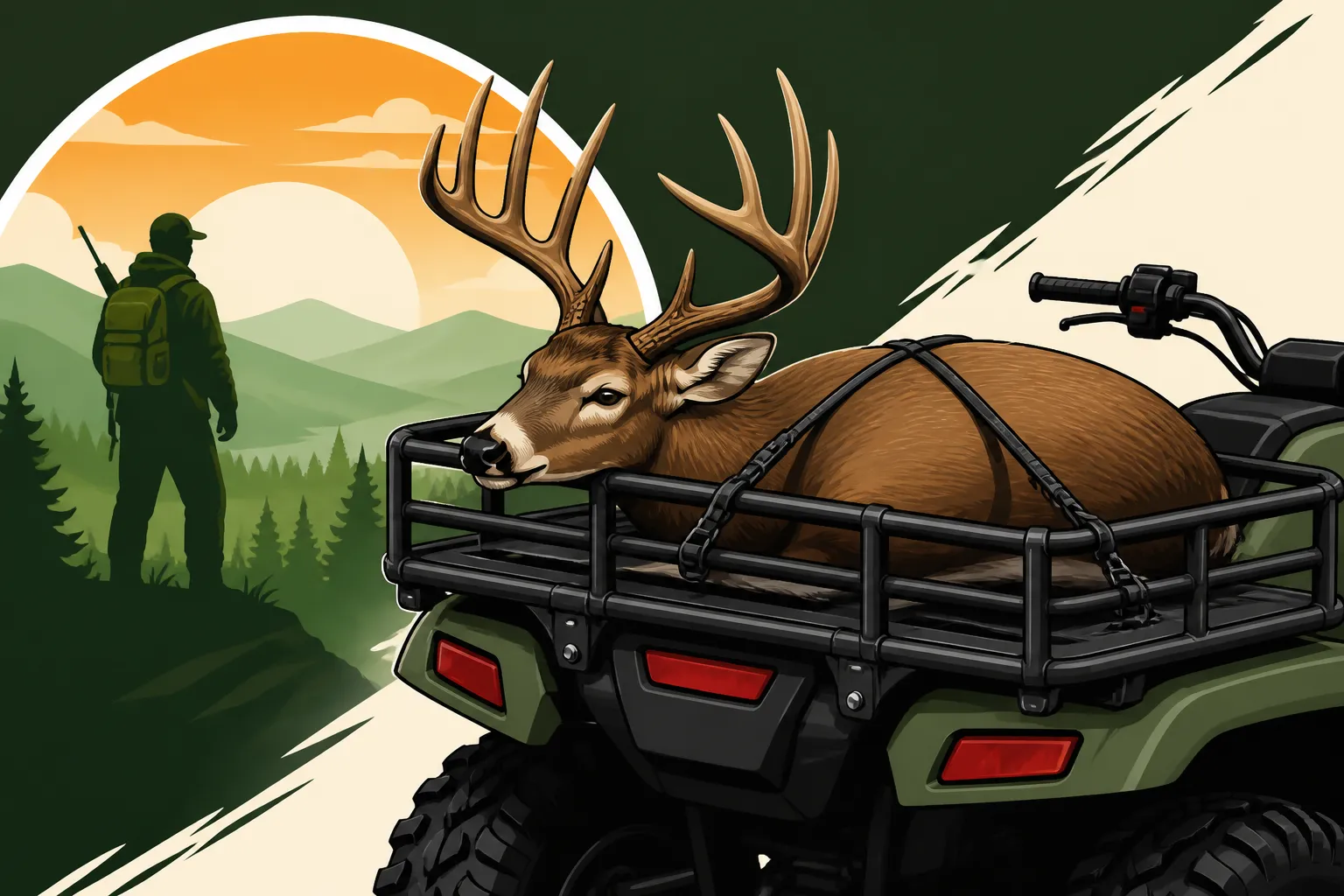
This is where many Vermont hunters start to find a truly effective solution for larger game. Receiver hitch cargo carriers, sometimes called hitch baskets or game carriers, slide directly into your ATV's rear receiver hitch. The beauty of these carriers is that they extend behind the ATV, keeping the load away from your machine and often lower to the ground. This helps maintain a more stable center of gravity for your ATV, especially on those side-hill trails we encounter so often.
Hitch carriers come in various sizes and weight capacities, typically made from steel or aluminum. You'll find solid platform styles, which are essentially flat trays, and basket styles with raised sides. For game, the basket style is often preferred as it helps contain the animal and prevents it from sliding off. Many models also feature a slight upward angle to give you better ground clearance over rough terrain. They are fantastic for hauling a whole, field-dressed deer or even a quartered bear, keeping the animal relatively clean and stable. This type of carrier often allows for easier loading and unloading, as you can back up to a bank or simply slide the animal on without having to lift it as high as you would onto a top rack. They are usually easy to attach and remove, meaning you don't have to dedicate your ATV solely to game hauling outside of hunting season.
Specialized Game Haulers and Trailers
For the hunter who regularly targets larger game, or who plans to venture truly deep into the backcountry, specialized game haulers and small trailers designed for ATVs are the ultimate solution. These go beyond simple racks, offering dedicated transport systems. A prime example is when you're fortunate enough to draw a moose permit in the Northeast Kingdom. Getting a Moose Out on a Logging Road or Packing Out a Vermont Moose isn't a job for a simple hitch basket; you need serious hauling power.
Small, single-axle ATV trailers often have mesh beds and sturdy construction, allowing you to haul multiple deer, a quartered moose, or even your stand and gear with ease. Some innovative designs even feature a tilt function for easy unloading. For really rugged, narrow trails, there are also specialized single-wheel game carts that can hitch to an ATV. These carts are designed to follow directly in the ATV's tire tracks, making them incredibly maneuverable through tight timber and over obstacles where a full trailer might get hung up. Brands like GoHunt often review various trailers and specialized carts, highlighting their suitability for different hunting scenarios and terrain. These specialized solutions represent a significant investment but can save immense physical effort and ensure your valuable harvest makes it home safely, no matter the conditions.
Key Features to Look For in an ATV Game Rack
Choosing the right ATV rack for hauling game isn't just about picking one that looks good. It's about finding a robust, reliable piece of equipment that can stand up to Vermont's challenging environment and protect your valuable harvest. There are several critical features you'll want to scrutinize before making a decision.
Durability and Construction Materials
Our hunting seasons throw everything at us: rain, snow, mud, ice, and relentless brush. Your ATV rack needs to be built to withstand it all. Look for racks made from heavy-gauge steel. This isn't just about strength to hold the weight of an animal; it's also about resisting bending and warping when you inevitably brush against a tree or hit a hidden stump. Steel is heavier than aluminum, but often offers superior durability for hard use.
Equally important is the finish. A good powder coating is essential for preventing rust and corrosion. Vermont's damp climate can quickly turn exposed metal into a rusty mess, compromising the rack's integrity and staining your gear. Check the welds – they should be clean, consistent, and strong, indicating quality manufacturing. A rack that's cheaply made with thin metal or poor welds is a recipe for disaster when you're miles deep in the woods with a heavy load.
Weight Capacity and Size Considerations
This is perhaps the most crucial factor. You absolutely must know your ATV's maximum weight capacity for both its integrated racks and its receiver hitch. Exceeding these limits is not only dangerous but can also damage your ATV's suspension, frame, or hitch. Refer to your ATV's owner's manual for these specifications. There's a big difference between a 150-pound whitetail buck and a 200-pound black bear, let alone the potential for a moose.
Consider the size of the game you typically hunt. A full-size deer can take up a surprising amount of space. A hitch-mounted carrier might be rated for 300-500 pounds, but will a large buck actually fit on it without excessive overhang? Measure your ATV's rear end and the dimensions of the rack to ensure a good fit. If you're hoping to haul a truly massive animal, like a moose, you'll almost certainly be quartering it and distributing the weight, or looking at a dedicated trailer. Even then, know the individual weight capacity of your system. Packing Meat Out of a Steep Ravine quickly reminds you that every ounce matters, both going up the hill and coming back down.
Ease of Loading, Unloading, and Cleaning
After the hard work of the hunt, the last thing you want is a struggle to load your game onto the rack. Look for features that make this easier. Some hitch carriers have a slight drop to the platform, meaning you don't have to lift the animal as high. Ramps can be a game-changer for larger animals, especially if you're hunting solo. Open-sided designs can also be easier to work with than enclosed basket types when maneuvering a large animal.
Once the game is loaded and you're back home, cleaning the rack is the next consideration. Racks with expanded mesh bottoms or drainage holes are far easier to spray down and clean than solid platforms that can trap blood and dirt. You want to avoid lingering smells that could attract critters or unpleasant residue. Remember, proper field care and transport, followed by easy cleaning, helps maintain the quality of your venison.
Attachment and Security Systems
How securely the rack attaches to your ATV is paramount. For hitch-mounted carriers, look for a tight-fitting hitch pin and an anti-wobble device. These devices dramatically reduce the side-to-side sway that can occur with a heavy load, making for a much safer and more stable ride, especially over rough Vermont trails. Without an anti-wobble device, even a short trip down a bumpy track can feel like you're fighting a bucking bronco.
For integrated racks, consider adding bungee cords, ratchet straps, or cargo nets to ensure your game is absolutely secure. No matter how good your rack is, a shifting load can be incredibly dangerous, especially on steep ascents or descents. Investing in good quality tie-downs is just as important as the rack itself. You've worked too hard to lose your harvest because of a loose strap. Consider how you'll also secure your primary pack on a rack, particularly if it's a larger pack meant for a moose hunt like Best Pack for a Northeast Kingdom Moose Hunt.
Maximizing Your ATV Rack's Effectiveness
Having the best ATV rack means nothing if you don't use it correctly and pair it with smart strategies for navigating Vermont's terrain. It's about more than just strapping down an animal; it's about a holistic approach to safe and efficient game recovery.
Proper Loading Techniques
Once you've field dressed your animal, proper loading is key. First, ensure the animal is as clean as possible. While a game rack will help keep it elevated, a quick rinse or wiping down with snow (if available) can remove excess dirt and debris before loading. If using a hitch-mounted carrier, try to position your ATV so you can back up to a slight rise or bank, making it easier to slide the animal onto the rack. Always try to lift with your legs, not your back!
Center the heaviest part of the animal over the strongest part of the rack or hitch. For most deer, this means the midsection. Distribute the weight as evenly as possible to prevent your ATV from leaning or becoming unstable. Secure the animal using heavy-duty ratchet straps or cam buckle straps. Never rely solely on bungee cords for a heavy load; they stretch and can fail under tension, especially on rough trails. Use at least two, preferably three, secure straps to prevent any shifting. If you're worried about keeping the meat pristine, using Game Bags for Field Care is an excellent idea to protect your harvest from dirt, insects, and drying out during transport.
Navigating Terrain with a Loaded ATV
A loaded ATV handles differently than an empty one. You'll immediately notice a change in your center of gravity, braking, and steering. Always proceed at a slower speed than you normally would, especially when traversing hillsides or bumpy trails. On steep inclines, the added weight can make the front end feel light, so lean forward and maintain good throttle control. On descents, the extra momentum requires more controlled braking, often using both front and rear brakes simultaneously to prevent skidding.
Be extra cautious around turns, over obstacles like logs or rocks, and through mud or water. A loaded ATV is more prone to tipping, so avoid sharp turns and always be aware of your vehicle's limits. Some terrain, even for an ATV, might simply be too dangerous with a heavy load. It's always better to make multiple trips or quarter the animal if the terrain is truly treacherous than to risk an accident. The GoHunt app can be incredibly useful for scouting potential routes beforehand, showing you topographical changes and potential obstacles, helping you plan the safest path back to your truck.
Maintenance and Care for Your Rack
Your ATV rack works hard, often in harsh conditions, so it deserves proper care. After each use, especially when hauling game, thoroughly clean the rack. Use a hose and brush to remove all blood, hair, dirt, and mud. Leaving organic material on the rack can lead to bacterial growth, unpleasant odors, and attract unwanted pests. More importantly, it accelerates rust.
After cleaning, inspect the rack for any signs of damage – bent components, cracked welds, or areas where the powder coating has chipped, exposing bare metal. Address these issues promptly. Touch up paint or rust-proof coatings on exposed metal can prevent widespread corrosion. Check all bolts and attachment points to ensure they are tight and secure. A well-maintained rack will last longer, perform better, and be safer for many hunting seasons to come.
Combining Racks with Other Hauling Solutions
Sometimes, even the best ATV rack isn't enough, or the situation calls for a multi-faceted approach. For instance, if you're hunting in a particularly remote area where ATV access might be limited to a main trail, you might need to combine your ATV rack with a specialized game cart for the initial haul. Best Deer Cart for Flat Farmland Terrain can be ideal for bridging the gap between where the animal fell and where your ATV can safely reach.
In late-season conditions, especially during Vermont's December muzzleloader season, snow often becomes a factor. Here, a sturdy sled, like those discussed in Best Sled for Dragging a Deer Over Snow, can be invaluable. You can often load a deer onto a sled and then pull the sled behind your ATV, distributing the weight and making for a smoother ride over snowy trails. For really big game like moose, you might quarter the animal, load the heaviest sections onto a specialized ATV trailer, and carry the lighter pieces (or your gear) on a separate front or rear rack. By understanding the strengths and weaknesses of each hauling tool and how they can complement each other, you can tackle virtually any game recovery challenge Vermont throws your way, ensuring your prized harvest makes it home intact.
| Rack Type | Primary Use Cases | Pros | Cons |
|---|---|---|---|
| Integrated Utility Racks | Small game, gear, occasional light loads | Always attached, simple, no extra setup | Limited capacity, high center of gravity, less secure |
| Receiver Hitch Carriers | Single deer, quartered bear, heavier gear | Low center of gravity, easy load/unload, keeps ATV clean | Can affect departure angle, obstruct taillights (some) |
| Specialized Game Trailers | Multiple deer, quartered moose, large equipment | High capacity, very stable, protects meat well | Bulky, can be difficult in tight terrain, additional cost |
| Hitch-Mounted Game Carts | Single large game, rugged terrain where ATV trailers struggle | Follows ATV track, good clearance, maneuverable | Lower capacity than full trailer, can be tippy if unbalanced |
Disclaimer
This article is for general informational purposes only and does not constitute professional advice. Laws, prices and regulations vary by location and change over time. Consult a qualified professional for guidance on your specific situation.