How Vermont’s Bear Population Grew
It can be truly astounding to think about how many black bears now roam Vermont's woods, especially for those of us who grew up hearing stories of bears being a rare sight. This guide will walk you through the fascinating journey of how Vermont's black bear population has not only recovered but thrived over the decades, exploring the key environmental shifts, conservation efforts, and management strategies that have led to their resurgence across the Green Mountain State.
The Historical Context: Bears in Early Vermont
For much of Vermont's history, the black bear wasn't seen as the iconic wildlife species we cherish today. Instead, they were often viewed through a very different lens, one shaped by the realities of pioneering life and early agricultural expansion. Understanding this historical perspective is crucial to appreciating the remarkable turnaround in their numbers.
Early Perceptions and Management
Imagine being a settler in early Vermont, trying to eke out a living from the land. Bears weren't just a majestic part of the wilderness; they were often perceived as competitors for resources and a direct threat to livestock and crops. This led to a management approach that was, by modern standards, incredibly harsh. Bounties were common, essentially placing a price on a bear's head to encourage their extermination. Folks hunted them relentlessly, not for sport as much as for survival and to eliminate what they saw as a nuisance. There wasn't a comprehensive understanding of their ecological role, and the prevailing sentiment was that fewer bears meant less trouble for burgeoning farms and communities. This era saw bear numbers plummet, restricted to the deepest, most inaccessible wilderness pockets.
Habitat Loss and Fragmentation
Concurrent with the aggressive hunting practices was an even more profound change: the relentless transformation of Vermont's landscape. As European settlers arrived and spread across the state, vast tracts of old-growth forest were cleared for timber, agriculture, and settlement. The very fabric of the wilderness that bears relied upon was systematically dismantled. Imagine ridge after ridge being clear-cut, valleys filled with farm fields, and homes sprouting up where dense woods once stood. This dramatic habitat loss pushed bears into ever-shrinking territories, fragmenting their populations and making it harder for them to find food, mates, and safe denning sites. It wasn't just the direct killing, but the destruction of their home that truly pushed Vermont's bear population to the brink.
A Turning Point: Conservation Efforts Take Root
Thankfully, the tide began to turn, albeit slowly. As the 20th century progressed, a growing awareness of wildlife ecology and the importance of conservation started to emerge. This shift in public sentiment, combined with critical legislative action, laid the groundwork for the black bear's incredible comeback story in Vermont.
Shifting Public Sentiment
The understanding of wildlife began to evolve beyond simple pest control. People started to grasp the intricate web of life and the vital role that apex predators like bears play in maintaining healthy ecosystems. Stories of the last remaining bears in remote areas sparked a sense of urgency and regret. Educational efforts by early conservationists helped illuminate the bear's shy nature, its preference for wild foods, and the minimal actual threat it posed to humans when given space. This change wasn't overnight; it was a gradual awakening that recognized bears as an integral part of Vermont's natural heritage, deserving of protection and careful management. It’s a powerful lesson in how our collective values can shape the fate of a species.
Legislative Changes and Protection
With shifting public sentiment came the political will to enact meaningful change. Gradually, bounties were phased out, and the black bear was reclassified from a pest to a valuable game animal. This reclassification was monumental, as it meant bears would now be managed by the Vermont Fish and Wildlife Department (VFWD) with an eye towards sustainable populations rather than eradication. Regulations were introduced to govern hunting, setting seasons, bag limits, and ethical practices. This wasn't about stopping hunting altogether, but transforming it into a tool for scientific management. These legislative protections provided bears the breathing room they desperately needed, allowing them to recover from generations of persecution and habitat loss. If you're interested in current regulations, understanding Vermont Bear Season Dates is essential.
Factors Fueling Modern Growth
The turnaround for Vermont's black bear population isn't just a tale of changing attitudes and laws; it's also a story of ecological recovery, driven by a combination of factors that have provided bears with the resources and conditions they need to thrive.
Abundant Habitat and Food Sources
One of the most significant drivers of bear population growth has been the natural reforestation of Vermont. As agriculture declined in the mid-20th century, many old farm fields and pastures reverted to forestland. Today, Vermont is one of the most heavily forested states in the nation, offering vast, contiguous blocks of habitat. These regrowing forests provide not just cover but a rich and diverse buffet of natural foods: wild berries, apples, nuts like acorns and beechnuts, and insects.
Bears are opportunistic omnivores, meaning they're quite adaptable in their diet. A good mast year – one with an abundance of acorns and beech nuts – can lead to higher cub survival and healthier bears going into hibernation. This natural bounty means bears often don't have to travel far to find food. However, this adaptability also means they readily take advantage of human-provided food sources like bird feeders, trash, and pet food, which, while sometimes leading to conflict, can also supplement their diet and contribute to their overall health and reproductive success in certain areas. It's a double-edged sword that plays a complex role in their expansion. If you're looking for areas that hold good mast crops, tools like GoHunt can help you visualize potential foraging areas and understand habitat patterns, even if it's generally focused on deer and elk for hunting purposes, the principles of habitat assessment apply across species.
Reproductive Success and Survival Rates
Black bears are remarkably resilient creatures, and under favorable conditions, their reproductive success can be quite high. Female bears typically don't reproduce until they are three or four years old, but once they start, they can produce litters of two or three cubs every two to three years. These cubs, born in the den during winter, are incredibly vulnerable but have high survival rates once they emerge with their mother in spring, especially in areas with good cover and food.
Crucially, Vermont's black bears face very few natural predators. Unlike western states with grizzlies or wolves, Vermont's landscape offers little to challenge a healthy adult black bear. This lack of predation, combined with careful management that minimizes human-caused mortality, means that once cubs make it past their first year, their chances of living a long life are good. Healthier adult bears, sustained by diverse food sources and secure habitats, are more likely to have successful breeding cycles, further fueling the population's growth. The VFWD's monitoring, which can be explored through resources like Vermont Bear Population Estimate, helps track these vital statistics.
Managed Hunting as a Tool
It might seem counterintuitive to suggest that hunting helps a population grow, but in the context of modern wildlife management, regulated hunting is a crucial conservation tool. For Vermont's black bears, well-managed hunting seasons ensure that the population remains healthy and balanced with its habitat. The Vermont Fish and Wildlife Department uses scientific data – including harvest numbers, age and sex ratios of harvested bears, and public sightings – to set permit numbers and season lengths. This data-driven approach helps prevent overpopulation, which could lead to increased disease, starvation, and more frequent human-bear conflicts.
Think of it this way: a healthy forest needs selective logging to thrive, removing weaker trees to allow stronger ones to flourish. Similarly, managed hunting can help maintain a robust bear population by harvesting a sustainable number of animals, often targeting younger males that might otherwise disperse to areas where conflicts are more likely. The revenue generated from hunting licenses also directly funds habitat conservation and wildlife research, benefiting bears and many other species. For instance, the careful planning that goes into Vermont Bear Hunting's Long September-to-November Season demonstrates how hunting is integrated into broader conservation goals.
Current Population Dynamics and Distribution
Today, Vermont's black bear population is flourishing, a testament to decades of hard work and natural recovery. However, this growth isn't uniform across the state, and understanding where bears are most prevalent helps us appreciate their current status.
Population Estimates and Trends
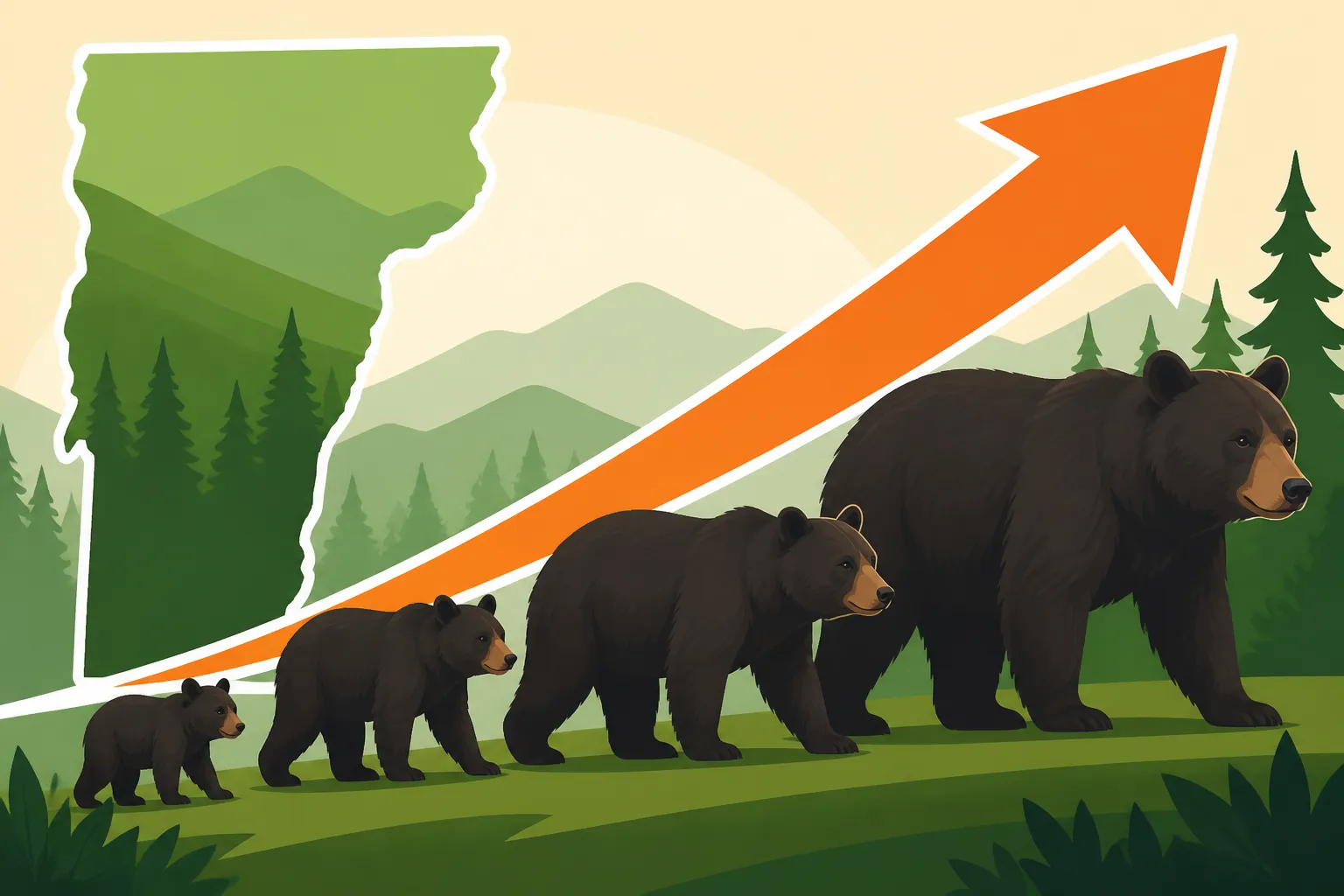
The Vermont Fish and Wildlife Department continuously monitors the state's black bear population, and the trends are overwhelmingly positive. While exact numbers are always estimates, the bear population is believed to be robust, growing steadily from historic lows in the early to mid-20th century. Experts estimate the population to be well over 5,000 individuals, a significant increase from just a few hundred a century ago. This growth is tracked through various methods, including harvest data, research projects like den studies, and public reporting of bear sightings.
The upward trend reflects a combination of factors: excellent habitat, a diverse food base, strong reproduction, and effective management strategies. This healthy and growing population indicates a thriving ecosystem and successful conservation efforts. However, continued monitoring is essential to ensure the population remains at a sustainable level, balancing wildlife needs with human communities. If you're keen on understanding these numbers further, the VFWD provides comprehensive harvest reports, giving insights into Vermont Bear Harvest Numbers by Season.
Here's a simplified look at the estimated bear population trend in Vermont:
| Year (Estimate) | Estimated Population | Notes |
|---|---|---|
| 1950s | < 1,000 | Post-habitat loss and unregulated hunting lows |
| 1970s | 1,500 – 2,000 | Early conservation efforts, forest regrowth begins |
| 1990s | 2,500 – 3,500 | Habitat continues to mature, regulated hunting |
| 2010s | 4,500 – 5,500 | Strong growth, increased human-bear interactions |
| Present (2020s) | 5,500 – 6,500+ | Thriving population, active management required |
Note: These are generalized estimates based on VFWD data and historical trends; actual figures may vary by year.
Regional Distribution Across Vermont
While bears can be found throughout Vermont, their distribution isn't uniform. You're far more likely to encounter a bear in certain regions of the state than others. The Green Mountain spine, stretching from south to north, and the vast, wild expanses of the Northeast Kingdom, are considered prime bear habitat. These areas offer extensive, unbroken forest cover, diverse terrain, and abundant natural food sources, providing the seclusion and resources bears need.
In these regions, bears are a common sight, and residents are generally more accustomed to living alongside them. Conversely, in the more developed Champlain Valley or the southern agricultural lowlands, bear populations are typically lower, though sightings are becoming increasingly common even in these areas as bears expand their range. It's not unusual for a bear to wander through a suburban backyard in search of easy food, highlighting the challenge of managing a thriving population in a state with both wild spaces and growing communities. Knowing where bears are densest can influence your Spot-and-Stalk Bear Hunting Vermont Ridges strategy or simply how you store your trash.
The Human-Bear Interface: Challenges and Coexistence
The success of Vermont's black bear population, while a conservation triumph, also brings with it new challenges. As bear numbers grow and their range expands, interactions between bears and humans are becoming more frequent, necessitating a proactive approach to coexistence.
Increased Sightings and Conflicts
It's a common story these days: a bear tipping over a bird feeder, rummaging through trash cans, or even helping itself to apples from an orchard. These incidents, while often perceived as aggressive, are almost always bears simply seeking out easily accessible food. As their population has grown, bears are naturally exploring more territory, sometimes venturing closer to human habitation, especially during periods when natural food sources might be scarce or a particularly attractive smell wafts from a backyard.
This increase in sightings and conflicts can be frustrating and even alarming for homeowners. It’s easy to feel like bears are becoming "too comfortable" around people. However, these interactions highlight the need for humans to adapt and minimize attractants rather than signaling a problem with the bears themselves. The bears are simply being bears, following their powerful sense of smell to an easy meal. Understanding why bears act this way is the first step toward effective coexistence.
Promoting Bear-Wise Practices
To manage these increasing interactions, the Vermont Fish and Wildlife Department, alongside local communities, heavily promotes "bear-wise" practices. This involves a suite of common-sense actions designed to reduce human-provided food sources that draw bears into residential areas. Simple steps like taking in bird feeders from April to November, securing trash in bear-resistant containers or sheds, cleaning barbecue grills, and harvesting fruit from trees promptly can make a huge difference.
Education is key here. Many people simply aren't aware of how tempting their backyard can be for a hungry bear. By actively removing these temptations, we teach bears that residential areas are not reliable food sources, encouraging them to stay in the wild where they belong. This proactive approach helps protect both bears and people, preventing bears from becoming habituated to human food, which can sadly lead to them being euthanized if they become a public safety risk. Resources on Baiting Bears Legally in Vermont highlight the strict rules around intentionally attracting bears, underscoring the importance of responsible practices. Hunters can use platforms like GoHunt to research best practices for minimizing their footprint and avoiding unintended bear encounters while scouting.
The Role of Hunters in Population Management
Hunters play a unique and often underappreciated role in the ongoing management of Vermont's bear population. Through regulated hunting, they provide critical data that the VFWD uses to monitor population health, trends, and distribution. Each harvested bear, when reported, contributes valuable information on age, sex, and physical condition, helping biologists make informed decisions about future seasons and management strategies.
Beyond data collection, ethical hunters contribute to population control, helping to stabilize numbers in areas where growth might otherwise lead to increased conflicts. By adhering to regulations and promoting responsible hunting practices, they are not just harvesting an animal but actively participating in conservation. This symbiotic relationship between wildlife managers, hunters, and the public is vital for maintaining a healthy and sustainable black bear population in Vermont for generations to come. When planning a hunt, checking specific regulations on things like Filling an Early-Season Bear Permit is essential for compliance and ethical practice.
Disclaimer
Please be aware that hunting regulations, seasons, and wildlife populations are subject to change. Always consult the official Vermont Fish and Wildlife Department website or current hunting guide for the most up-to-date and accurate information before planning any hunting activities. This content is for informational purposes only and does not supersede official regulations.