Vermont Raccoon and Skunk Trapping
For folks living in Vermont, the presence of wildlife is usually a welcome sight, a reminder of the wild beauty that surrounds us. But let's be honest, sometimes those wild neighbors get a little too close for comfort, especially when we're talking about raccoons and skunks. They can become a real headache, whether they're raiding your chicken coop, digging up your garden, or worse, making a smelly home under your porch or shed. If you've ever dealt with the aftermath of a nocturnal critter invasion or the unmistakable aroma of a skunk's defense, you know the frustration. This guide is here to walk you through the practicalities of raccoon and skunk trapping in Vermont, covering everything from understanding the regulations to effective techniques, so you can manage these common furbearers responsibly and ethically.
Why Managing Raccoon and Skunk Populations Matters in Vermont
It's easy to look at a cute raccoon or a striped skunk and think they're harmless, but these animals, while a natural part of Vermont's ecosystem, can quickly turn into significant nuisances and even pose health risks when their populations become localized around human dwellings or their numbers are simply too high in a given area. Their adaptability is remarkable, allowing them to thrive in both dense forests and suburban backyards, leading to some common, and often smelly, conflicts with homeowners and farmers.
Protecting Property and Livestock
One of the most immediate and frustrating reasons Vermonters consider trapping raccoons and skunks is the damage they inflict on property. Raccoons, with their incredibly dexterous paws, are notorious for turning gardens into war zones overnight, digging up freshly planted seeds, and pilfering ripe produce. If you've ever woken up to find your prize sweet corn stalks flattened or your pumpkins gnawed, you know the feeling. More seriously, they're significant predators of poultry. A single raccoon can wipe out an entire flock of chickens or ducks in one night, leaving a devastating mess and a significant financial loss for small farmsteads. They'll exploit any weakness in a coop, from loose latches to small gaps in wire, often leaving a trail of destruction that suggests a much larger animal.
Skunks, while not as destructive in terms of physical damage, present their own set of challenges. They love to dig for grubs and insects, which means they can quickly turn a pristine lawn into a pockmarked landscape. But their true notoriety comes from their powerful defensive spray. Imagine your beloved dog getting sprayed, or worse, a skunk deciding to take up residence directly under your house or shed. The lingering odor can make a portion of your home uninhabitable for days or even weeks, a scenario that can easily drive even the most wildlife-friendly person to seek solutions. These are the kinds of immediate, tangible problems that make folks reach for the phone or look into trapping methods.
Addressing Health and Safety Concerns
Beyond property damage, raccoons and skunks are known carriers of diseases that can affect both humans and domestic animals. Rabies is perhaps the most well-known and terrifying concern. While not every animal carries it, raccoons are one of the primary terrestrial vectors for the virus in the Northeast. An encounter with a rabid raccoon can be fatal for pets and requires immediate and often costly medical intervention for humans. The risk is ever-present, particularly if an animal is acting unusually bold or aggressive.
Another significant concern, particularly with raccoons, is raccoon roundworm (Baylisascaris procyonis). This parasite's eggs are shed in raccoon feces and, if ingested by humans or other animals, can cause severe neurological damage or even death. Raccoons often establish communal latrine sites, sometimes in attics, sheds, or even on decks, creating concentrated areas of contamination. Skunks can also carry diseases like distemper, which can be devastating to unvaccinated pets. For these reasons, managing populations, especially those that interact frequently with human spaces, isn't just about nuisance control; it's about public health and safety. Understanding Vermont's CWD Prevention Rules also gives us a broader context of how seriously the state takes wildlife disease management, even if raccoons and skunks aren't CWD carriers.
Navigating Vermont's Trapping Regulations for Raccoon and Skunk
Before you even think about setting a trap, it is absolutely essential to understand and abide by Vermont's trapping regulations. The state takes its wildlife management seriously, and ignorance of the law is never an excuse. These regulations are designed to ensure ethical treatment of animals, public safety, and the sustainable management of furbearer populations. Trying to cut corners or assuming you know the rules can lead to hefty fines, permit revocations, or worse.
Licensing and Season Dates
First and foremost, if you intend to trap furbearers like raccoons and skunks in Vermont, you need the proper license. It's not just a suggestion; it's a legal requirement. Generally, this means holding a Vermont Trapping License. There are specific age requirements and sometimes even a mandatory trapper education course you might need to complete if you're a new trapper or fall within certain age brackets. You can't just pick up a trap and go at it. The state wants to ensure that anyone participating in trapping understands the methods, ethics, and laws involved. You can find detailed information on Vermont Trapping License Requirements through the Vermont Fish & Wildlife Department.
Just as crucial as the license are the season dates. Vermont has specific open seasons for furbearers, and trapping outside these windows is strictly prohibited. These seasons are set to align with biological cycles, ensuring furbearer populations aren't over-harvested, and often, to coincide with the best fur quality. While raccoons and skunks are often considered nuisance animals, they are still protected by these seasonal regulations unless you obtain specific nuisance wildlife permits outside the regular season. Always check the current year's hunting and trapping guide, available through the Vermont Fish & Wildlife Department, to confirm exact dates for the zones you intend to trap. Trying to trap a problem animal outside of season without a special permit is a common mistake that can land you in hot water.
Permitted Trap Types and Setback Rules
Vermont regulations also dictate which types of traps are legal for furbearers and where they can be placed. Not all traps are created equal, and some are prohibited or restricted for specific situations to ensure humane capture and public safety. For raccoons and skunks, common legal traps might include cage traps (live traps), foothold traps (which must meet certain jaw spread and other specifications), and sometimes body-gripping traps (like Conibears), though these often have stricter placement rules, especially on land, due to concerns for non-target animals and domestic pets. You need to be intimately familiar with these rules.
A critical aspect of trap placement involves setback distances. This means how close you can set a trap to a dwelling, public road, or other specific locations. These rules are in place to prevent accidental capture of pets, livestock, or to ensure safety around populated areas. For example, setting a powerful body-gripping trap right next to a hiking trail or a well-trafficked road would be irresponsible and illegal. It's not enough to know what trap to use; you must know where to use it. When you're scouting potential trapping locations, whether it's on your own land or public lands, tools like the GoHunt app can be invaluable for identifying property lines and ensuring you're compliant with any setback requirements relative to roads or dwellings, helping you avoid accidental violations. Understanding topography and land use is key, and GoHunt provides excellent layers for that.
Trap Checking and Reporting Requirements
The ethical treatment of trapped animals is paramount, and Vermont's regulations reflect this through strict trap checking requirements. You cannot simply set a trap and forget about it. Traps must be checked within a specified timeframe, usually every 24 hours, to minimize stress and suffering for any captured animal. This means you need to commit to a daily routine of visiting your trapline, regardless of weather conditions. This is where dedication comes in, especially if you're Running a Trapline in Rural Vermont where access can be challenging.
Furthermore, once an animal is harvested, there are often reporting requirements. This typically involves registering your catch with the Vermont Fish & Wildlife Department within a certain period. This data is crucial for wildlife biologists to monitor furbearer populations, track harvest trends, and make informed management decisions for species like Vermont furbearers. You might need to report the species, date of harvest, and location. Failure to report can lead to penalties and compromise the integrity of the state's wildlife data. Always keep accurate records, and use the official channels for reporting your harvest. It’s part of being a responsible trapper in the Green Mountain State.
Effective Trapping Techniques for Raccoons and Skunks in Vermont
Once you've got your license and you're well-versed in the regulations, it's time to talk about actually getting those critters into a trap. Trapping raccoons and skunks isn't just about setting a trap; it's an art and a science, combining knowledge of animal behavior, proper trap selection, and smart placement. Success often comes down to paying attention to the details and adapting to the specific circumstances of your trapping location.
Choosing the Right Trap for the Job
Selecting the appropriate trap is your first critical step. For raccoons, especially if you're targeting a nuisance animal close to a home, a sturdy live-catch cage trap is often the preferred choice. These traps allow for the animal to be captured without harm, giving you options for relocation (where legal, always check regulations) or humane dispatch. Raccoons are strong and clever, so make sure your cage trap is robust and has a reliable locking mechanism. Look for double-door models or those with a trip plate mechanism that's hard to bypass.
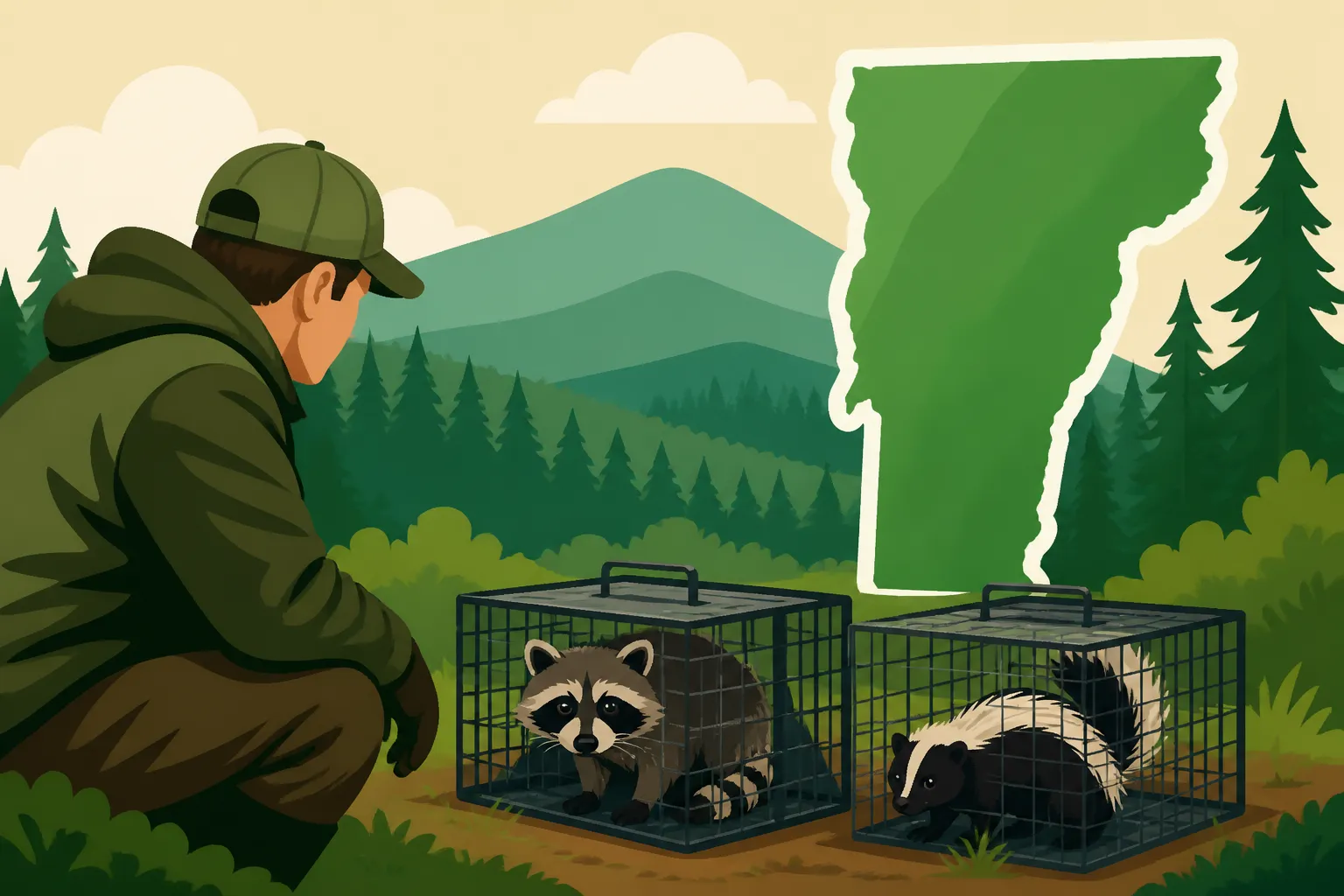
When it comes to skunks, cage traps are also very effective, and many trappers prefer them to avoid the dreaded spray. There's a trick to it, though: covering the cage trap with a dark tarp or heavy canvas. Skunks are less likely to spray if they feel secure and can't see what's happening around them once captured. Simply approach the covered trap cautiously, speaking softly, and move it to a safe location for dispatch or release. For trappers interested in fur, foothold traps are also common for both species. These must be correctly sized and set to minimize injury, often with padded jaws and laminated edges, and always secured to prevent the animal from escaping or injuring itself. Remember, any trap that can injure an animal also requires the trapper to handle it with extra care and knowledge.
Here's a quick comparison of common trap types for raccoons and skunks:
| Trap Type | Target Species | Pros | Cons | Considerations for Vermont Trapping |
|---|---|---|---|---|
| Live-Catch Cage | Raccoon, Skunk | Humane capture, no pelt damage, can release non-targets or relocate. | Bulky, requires covering for skunks, animal can still be stressed. | Excellent for nuisance animals near homes. Ensure solid construction and secure latches for raccoons. Tarp is a must for skunks. |
| Foothold Trap | Raccoon, Skunk | Durable, discreet, effective in various conditions, good for fur. | Potential for limb injury if not properly set/sized, requires training and daily checking. | Must meet Vermont's jaw spread/design regulations. Good for fur trappers. Learn proper setting and anchoring. |
| Body-Gripping Trap | Raccoon (rarely Skunk) | Very quick dispatch, effective for targeted species. | High risk to non-target animals (pets), strict placement rules (e.g., in water or specific cubbies). | Extremely restricted on land. Primarily used by experienced trappers in specific, legal sets (e.g., drowning sets for raccoons). |
Baiting Strategies and Location Scouting
Successful trapping often hinges on irresistible bait. For raccoons, you want something smelly, sweet, or oily that they can't resist. Marshmallows, fried chicken scraps, sardines, sweet corn, or commercial raccoon lures are all highly effective. Place your bait deep within a cage trap to ensure the raccoon fully enters before tripping the mechanism. For foothold traps, bait is often used with a "dirt hole" set, mimicking a rodent cache, or a "cubby" set, where bait is placed inside a small, natural or artificial enclosure.
Skunks are also attracted to smelly, meaty baits. Canned cat food, chicken scraps, peanut butter, or even a rotten egg can work wonders. The key with skunks is to place the bait in a way that encourages them to enter the trap fully and trip it. Again, a covered cage trap is your best friend.
Location, location, location! That's the mantra of any successful trapper. Both raccoons and skunks follow natural travel corridors. Look for signs like tracks in mud, disturbed soil (especially for skunks digging for grubs), scat, and damaged property. Common hotspots include:
- Along creek banks, ditch lines, and other water sources.
- The edges of fields and woodlots, where they transition between cover and food sources.
- Around old barns, abandoned buildings, and culverts.
- Near fruit trees, berry bushes, and gardens.
- Underneath porches, decks, and sheds for nuisance animals.
Using a mapping tool like GoHunt can really streamline your scouting efforts. You can mark potential hotspots, identify funnels, and even double-check public land boundaries if you're setting up a larger trapline, like one for Small Game and Predator Hunting in Vermont. This digital advantage helps you plan your trap placement strategically and efficiently.
Dealing with Non-Target Catches and Releasing Animals
Even with the best planning, non-target animals can occasionally find their way into your traps. This is particularly true with cage traps, where a curious squirrel, cat, or even an opossum might be caught. This is why daily trap checks are so crucial. When you have a non-target animal, the goal is always a safe and swift release. For small, non-aggressive animals, you can often simply open the trap door and allow them to depart. For larger or more aggressive animals, you might need to use a catch pole or heavy gloves, always prioritizing your safety and the animal's well-being.
When trapping skunks, the fear of getting sprayed is real. If you catch a skunk in a covered cage trap, you have a distinct advantage. Approach quietly, speak softly, and avoid sudden movements. You can then gently move the covered trap to a more remote location for release. Many times, if they feel safe and covered, they'll simply walk out without spraying. However, always be prepared for the possibility. Remember that relocating animals, even non-targets, has its own set of rules in Vermont. While some nuisance animals can be relocated short distances, it's often prohibited to move them over significant distances or across property lines without explicit permission or specific permits, due to concerns about spreading disease or disrupting local ecosystems. Always consult current regulations before considering relocation.
Handling and Processing Your Catch Responsibly
So, you've successfully trapped a raccoon or skunk. Now what? The final steps of the trapping process—dispatching the animal (if not releasing), skinning, and preparing the fur—are just as important as the setting of the trap itself, both ethically and practically. Responsible handling ensures the animal's humane treatment and maximizes the value of your efforts.
Humane Dispatch Methods
For trapped animals that are not being released, humane dispatch is a non-negotiable ethical obligation. Vermont regulations, and basic decency, require that any animal dispatched must be done so quickly and humanely. For most furbearers like raccoons and skunks, a well-placed shot from a .22 caliber firearm to the head is considered the most humane method, leading to instant unconsciousness and death. This requires a clear, unobstructed shot and absolute certainty in your ability to execute it safely. Always be aware of your surroundings, background, and any potential ricochet.
Other methods might include specialized dispatch tools or techniques, but whatever method you choose, it must be effective and quick. Never compromise on humane dispatch for convenience or speed. If you are uncertain about performing a humane dispatch, it is better to seek guidance from experienced trappers or refer to materials provided during trapper education courses. It’s part of the comprehensive education that allows you to hold a Vermont Trapping License Requirements.
Skinning and Fur Preparation
If your intention is to utilize the fur, proper skinning and preparation are crucial to preserving its quality and value. Raccoon and skunk pelts, when handled correctly, can be tanned for personal use or sold to fur buyers. Skinning involves carefully removing the hide from the carcass. Most furbearers are "cased skinned," meaning the hide is pulled off like a sock, leaving a tube of fur that can then be stretched and dried.
After skinning, the pelt needs to be "fleshed," which means removing all fat and muscle tissue from the hide. This is a meticulous process, often done on a fleshing beam with a specialized fleshing knife, and it's essential for preventing spoilage and ensuring the fur dries properly. Once fleshed, the pelt is stretched over a wooden or wire stretcher board, fur-side in (for raccoons) or fur-side out (for skunks, often), and allowed to dry in a cool, well-ventilated area away from direct sunlight or heat. The drying process can take several days to weeks, depending on the humidity. A well-prepared pelt reflects the trapper's skill and respect for the animal. It’s a craft that takes time to learn, much like understanding Fall Turkey Hunting Vermont's Statewide Archery Window or Hunting Vermont's November Rifle Season takes practice and patience.
Utilizing Carcass and Meat (Raccoons)
While skunks are generally not consumed, raccoon meat is surprisingly palatable and has a long history of being utilized by hunters and trappers. If you're going to harvest an animal, it's an ethical practice to use as much of it as possible. Raccoon meat, often described as dark and rich, can be stewed, braised, or roasted. The key is to properly clean and prepare the meat, ensuring all fat and glands are removed, as these can contribute to a gamey flavor. Some trappers soak the meat in brine or buttermilk before cooking.
Utilizing the meat not only honors the animal but also provides a sustainable source of food. If you're harvesting raccoons, consider trying a few recipes. Just like with deer from Hunting Vermont's November Rifle Opener or a turkey from Spring Turkey Hunting in Vermont, responsible use of the animal's resources is part of the hunting and trapping tradition. If you don't plan to use the meat, ensure the carcass is disposed of respectfully and legally, often by burying it or placing it in an area where scavengers can access it without causing public concern. Checking local regulations on carcass disposal is always a good idea.
Dealing with Skunk Spray After the Fact
No matter how careful you are, if you're trapping skunks, there's always a chance you (or your dog) might get sprayed. It's a rite of passage for many trappers! The smell is potent and persistent, and while it's awful, it's not the end of the world. Forget the old tomato juice myth; it largely just covers the smell temporarily. The most effective home remedy involves a chemical reaction to break down the thiols responsible for the odor.
A widely recommended solution is a mixture of:
- 1 quart of 3% hydrogen peroxide (fresh bottle works best)
- 1/4 cup baking soda
- 1-2 teaspoons of liquid dish soap
Mix these ingredients in an open container (it creates a slight chemical reaction) and apply it thoroughly to the affected area or person/pet as soon as possible, working it in well. Leave it on for 5-10 minutes, then rinse thoroughly. You might need to repeat the process. For dogs, avoid getting it in their eyes. For clothes, a strong wash with an odor-neutralizing detergent, possibly with a cup of white vinegar, can help. Having these ingredients on hand when you're targeting skunks is just good preparation.
Disclaimer
This article is for general informational purposes only and does not constitute professional advice. Laws, prices and regulations vary by location and change over time. Consult a qualified professional for guidance on your specific situation.