National Forest Camping Near Your Stand
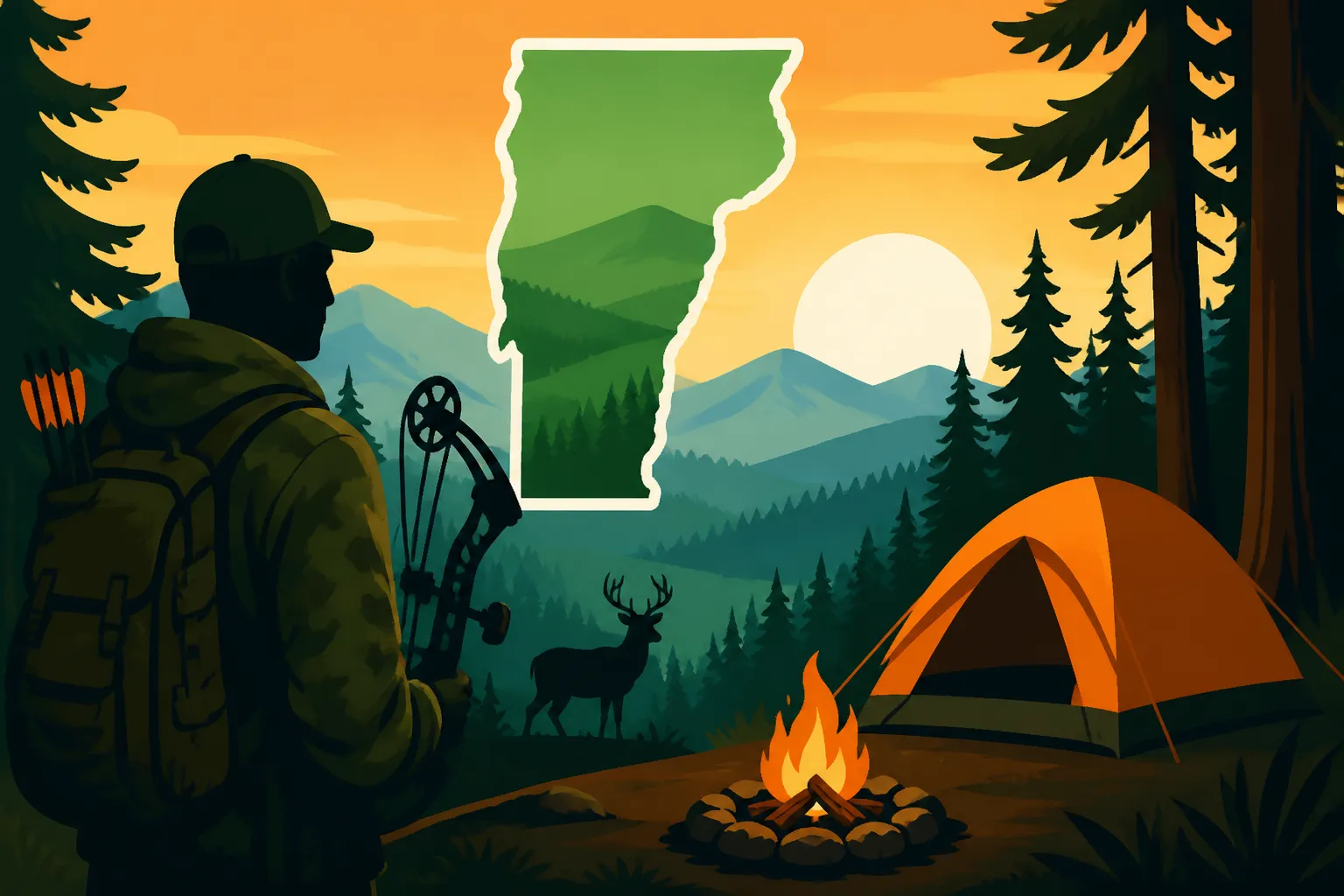
We've all been there: the alarm blares at 3:30 AM, you drag yourself out of bed, gulp down some coffee, and hit the road for an hour-long drive to your hunting spot. By the time you’ve parked, geared up, and hiked in, precious minutes of prime hunting light are gone, and you’re already feeling the grind. What if you could wake up just a few hundred yards from your stand, already in the woods, ready to slip in silently under the stars? This guide is all about how to leverage the Green Mountain National Forest for strategic camping near your stand, turning those pre-dawn struggles into an extension of your hunt.
The Undeniable Advantage of Camping Near Your Hunting Stand
There's a certain romantic ideal about hunting deep in the backcountry, sleeping under the stars, and waking up with the critters. But beyond the romance, there are some serious tactical advantages to setting up a temporary camp close to your hunting stand, especially when you're targeting elusive game in Vermont's diverse terrain. It’s not just about convenience; it’s about maximizing your time and increasing your chances of success.
Maximizing Time and Minimizing Travel Impact
Think about the time you spend traveling to and from your hunting area each day. Even a 30-minute drive, combined with a 45-minute hike in the dark, eats up valuable energy and opportunity. When you camp within a short, silent walk of your stand, you essentially eliminate that travel time. This means you can be in your stand earlier, often before the first hint of gray light, giving you a crucial edge on those deer or bears that move right at legal light.
Furthermore, a shorter walk means less scent distribution on your entry. You’re not walking for miles, leaving a long scent trail. Instead, you can pick a quiet, low-impact route from your camp to your stand, minimizing disturbance in the core hunting area. This stealth factor is incredibly important in areas with educated deer, where every advantage counts. Imagine the difference between stomping through the woods for an hour in the dark versus a silent, fifteen-minute creep.
Enhanced Understanding of the Hunting Area
Staying overnight in your hunting area offers a deeper, more intimate understanding of the landscape. You hear the nuances of the woods at night – owls hooting, coyotes yipping in the distance, maybe even the crunch of leaves from a passing deer. You feel the subtle shifts in wind and thermals as the sun rises and sets, which is critical for stand placement, especially in the undulating terrain of the Green Mountains.
This immersion allows you to observe game patterns more effectively over multiple days. If you hunt a morning stand, you can observe how animals filter in and out of bedding areas. If you hunt an evening stand, you see where they stage before feeding. You might even discover new trails or overlooked pockets of cover that you’d never notice on a quick day hunt. This intimate knowledge is something you simply can't gain by driving in and out daily. It's a key part of developing a long-term strategy for Hunting Vermont's Green Mountain National Forest.
Flexibility and Readiness for Changing Conditions
Vermont weather is notoriously fickle. One day it's crisp and clear, the next it's a cold, driving rain. When you're camped nearby, you have a base to retreat to for warmth, to dry out gear, or to quickly change tactics. If a sudden cold front rolls in, dropping temperatures and bringing snow, you're already there, ready to adapt. You don't have to pack up and drive home, missing out on prime hunting conditions.
Being right there also means you're always ready for tracking. If you make a marginal shot late in the evening and need to back out, you're not facing a long drive home with a deer on the ground and a restless night. You can retrieve your gear, make a plan for the morning, and be back on the blood trail at first light, fresh and ready. This kind of flexibility can be the difference between recovering a deer and losing it.
Navigating Green Mountain National Forest Camping Regulations
While the Green Mountain National Forest (GMNF) offers fantastic opportunities for backcountry camping, it's not a free-for-all. Understanding and respecting the specific regulations and Leave No Trace principles is paramount, not just for compliance but for preserving these incredible wild spaces for everyone.
Designated Campsites vs. Dispersed Camping
The GMNF offers both designated campsites and abundant opportunities for dispersed, or primitive, camping. Designated sites, often found in developed campgrounds like those near Hapgood Pond or Moosalamoo, provide amenities such as fire rings, picnic tables, and sometimes even vault toilets. These are great for families or those who prefer more comfort, but they often come with fees and are usually not "near your stand" unless your stand is right next to a well-used campground.
| Feature | Designated Campground | Dispersed/Primitive Camping |
|---|---|---|
| Location | Established sites, often near roads/trailheads | Anywhere suitable outside restricted areas |
| Amenities | Fire rings, picnic tables, toilets (sometimes water) | None, pack in/pack out everything |
| Cost | Often has a fee (check current rates) | Free |
| Privacy | Shared with other campers | High, if chosen carefully |
| Noise | Can be higher, rules for quiet hours | Depends on your group, minimize impact |
| Proximity to Stand | Unlikely to be truly "near" a remote stand | Ideal for setting up close to your hunting area |
| Rules | Specific site rules, reservation system may apply | General GMNF rules, Leave No Trace principles |
| Vehicle Access | Often car-camping friendly | Usually requires hiking in, no vehicle access |
For hunters looking to camp near their stand, dispersed camping is almost always the way to go. This allows you the freedom to set up camp deeper in the woods, closer to your desired hunting location. However, dispersed camping comes with its own set of responsibilities and rules you must follow.
Key GMNF Regulations for Dispersed Camping
When camping in the GMNF, you're generally allowed to set up camp anywhere unless otherwise posted, provided you adhere to the following:
- Distance from Water and Trails: Camp at least 200 feet (approximately 70 paces) away from any water source (streams, lakes, ponds) and any designated trail. This helps protect fragile riparian ecosystems and ensures a wilderness experience for other trail users.
- Distance from Roads: Your camp should also be at least 200 feet from roads. This reduces visual impact and maintains a sense of solitude.
- Fire Restrictions: Open fires are generally permitted in the GMNF, but always check for current fire bans or restrictions, especially during dry periods. If you do have a fire, keep it small, contained in a rock ring, and ensure it's completely out and cold to the touch before leaving. It's often safer and less impactful to use a small camp stove for cooking.
- Food Storage and Bear Safety: Vermont's black bear population is healthy, and bears are opportunistic. You must properly store all food and scented items (toothpaste, deodorant, trash). This means hanging it from a tree using a bear bag system, storing it in a bear-resistant canister, or keeping it in your vehicle if it's within sight and you're close enough. Never keep food inside your tent. A fed bear is a dead bear, and nobody wants that. Bear Hunting Vermont's Long September-to-November Season covers more about these incredible animals.
- Leave No Trace Principles: This isn't just a suggestion; it's how we ensure these lands remain wild. Pack out everything you pack in, including all trash, food scraps, and even human waste (dig a cathole 6-8 inches deep and cover it, at least 200 feet from water, camp, and trails). Leave your campsite looking as if no one was ever there. This also applies to things like Shed Hunting on Vermont Public Land – don't leave any trace behind.
- Wilderness Areas: Be aware that certain parts of the GMNF are designated as Wilderness Areas. These areas often have stricter regulations, such as limits on group size, prohibitions on mechanized transport (like bikes or game carts), and sometimes even specific requirements for bear canisters. Always check the specific rules for the Wilderness Area you plan to hunt and camp in. You can find detailed maps and rules by checking with the US Forest Service website or using mapping apps like
onX Huntwhich show specific land designations.
Always double-check the latest regulations with the Green Mountain National Forest District Ranger's office before your trip, as rules can change. You can also refer to our guide on Camping Rules on Green Mountain National Forest Land for more specifics.
Essential Gear and Setup for a Remote Camp
Setting up a remote camp in the GMNF for hunting requires a deliberate approach to gear. You're balancing the need for comfort and survival with the requirement to be mobile and low-impact. This isn't car camping; it's about efficiency and resilience in Vermont's often rugged and unpredictable environment.
Shelter and Sleep System
Your shelter needs to be lightweight, easy to set up, and capable of withstanding Vermont's weather. A compact backpacking tent or a robust tarp shelter are excellent choices. Look for something that blends in with the environment, in a subdued color. Don't forget a small footprint or ground cloth to protect the tent floor.
Your sleep system is paramount for a successful multi-day hunt. Cold nights can quickly sap your energy and spirits. Invest in a good quality sleeping bag rated for temperatures lower than you expect to encounter. Even early fall nights in the Green Mountains can dip into the 30s. Pair this with an insulated sleeping pad to provide crucial thermal protection from the cold ground. Air pads offer comfort, while closed-cell foam pads are bombproof. For colder late-season hunts, consider combining the two for maximum warmth. This ties directly into Layering for Vermont's Long Hunting Season – your sleep system is essentially your "layering" for the night.
Cooking and Water Systems
A lightweight backpacking stove and fuel are far more efficient and safer than building an open fire for every meal. Pack enough dehydrated meals or non-perishable food for the duration of your trip, plus a little extra for emergencies. Remember to factor in a sturdy pot, a cup, and a spork.
Water is heavy, so carrying enough for several days is often impractical. Instead, plan to filter or treat water from natural sources. A reliable water filter (like a Sawyer Squeeze or Katadyn BeFree) or purification tablets are essential. Always know where the nearest reliable water source is on your chosen Green Mountain National Forest's Two Districts and plan your camp setup accordingly. Don't forget a large Nalgene bottle or a hydration reservoir to carry water to your stand.
Navigation and Safety Gear
Even if you know the area like the back of your hand, never go into the backcountry without reliable navigation. A physical map and compass are non-negotiable backups, even if you primarily use a digital mapping app. Apps like onX Hunt are incredible tools for pinpointing your location, marking your stand, identifying property boundaries, and navigating through dense timber. Download offline maps before you leave home, as cell service is often non-existent deep in the GMNF. Best GPS App for Vermont Public Land offers more insights into choosing the right tools.
Beyond navigation, pack a small but comprehensive first-aid kit. Consider a headlamp with extra batteries, a whistle, a small knife, and an emergency shelter like a space blanket. A satellite communicator or personal locator beacon can be a lifesaver in areas without cell service, allowing you to call for help in an emergency. Being self-sufficient is the core of responsible backcountry hunting.
Integrating Your Camp into Your Hunting Strategy
Your camp isn't just a place to sleep; it's a strategic hub that can profoundly influence your hunting success. Thoughtful placement and meticulous planning can turn a simple tent into a tactical advantage.
Choosing Your Camp Location Wisely
The "near your stand" part is key, but "near" doesn't mean "on top of." You want your camp to be close enough for a quick, quiet walk, but far enough away not to spook game from your primary hunting area. Consider these factors:
- Wind Direction: Always, always think about the prevailing winds. Your camp's location should ideally be downwind of your primary hunting area. You don't want your cooking smells or body odor blowing into the area you intend to hunt. This is especially critical if you're hunting an area known for mature bucks.
- Terrain and Cover: Look for a relatively flat, well-drained spot with natural cover that breaks up your silhouette. A small rise, a cluster of thick pines, or even a large boulder can provide an excellent, camouflaged spot. Avoid setting up in a low-lying "thermal sink" where cold air (and your scent) collects and drains downhill. Wind and Thermals in Steep Green Mountain Terrain is a crucial read here.
- Water Access: As discussed, proximity to a reliable water source is important for convenience and safety. Just remember the 200-foot rule.
- Escape Routes/Accessibility: Consider how you'll get in and out of camp without disturbing the hunting area. Can you approach and depart discreetly? If you tag out, is there a relatively easy route to pack out your game? For larger animals like a moose, if you were lucky enough to draw a permit, you'd want to consider Getting a Moose Out on a Logging Road.
- Proximity to Sign: While you want to avoid camping directly on major deer trails or bedding areas, being close to secondary sign can be beneficial. You might be near a scrape line along a logging road or a rub line that indicates a buck's travel corridor. Use mapping tools like
onX Huntto scout potential camp locations and access routes before you even step foot in the woods. You can mark potential stand sites, bedding areas, and water sources, then plan your camp's relation to them.GoHuntcan also be a valuable resource for broader regional data, helping you identify areas with high potential before you zoom in on the micro-level mapping.
Maintaining a Low Impact and Stealth
Your camp, even when remote, can impact your hunting. Be diligent about keeping it clean and scent-free. Avoid leaving food scraps or wrappers around. If you're using a campfire (and it's permitted), keep it small, use only dead and downed wood, and ensure it's completely extinguished.
When moving to and from your stand, treat it like an extension of your hunt. Be quiet, move slowly, and pay attention to wind. Wear your hunting clothes from camp to stand, minimizing extra clothing changes at the stand itself that could introduce foreign odors. Every step you take, every sound you make, has the potential to alert game. Practice silent entry and exit routes, which you can map out meticulously using your onX Hunt app.
Multi-Day Strategy from a Basecamp
A remote camp allows you to hunt multiple days without the constant disruption of traveling. This opens up possibilities for different hunting strategies:
- Morning and Evening Hunts: You can easily hunt both prime times without lengthy breaks in between. Take a midday break back at camp to eat, rest, and refresh your strategy, then head back out for the evening hunt.
- Hunting Pressure: In areas where hunting pressure is high, such as parts of the GMNF, a remote camp allows you to access areas that other hunters might not bother with due to distance. Hunting Pressure on Vermont Public Land can be mitigated by pushing deeper.
- Adapting to Game Movement: Deer and other game often change their patterns based on weather, food sources, or hunting pressure. From a basecamp, you have the flexibility to quickly move your stand or hunt a different area entirely if your initial spot isn't producing. You can spend midday scouting new areas or adjusting existing setups. For example, if you notice deer aren't using a particular food source, you can use your midday break to scout for Late-Season Food Sources for Vermont Whitetails and adjust your evening hunt accordingly.
- Extended Season Opportunities: If you're participating in Vermont's expanded archery seasons, or even Bowhunting During Vermont's Rifle Season, a remote camp allows you to stay out longer and really immerse yourself in the extended opportunities.
By thinking of your camp as an integral part of your overall hunting plan, you transform it from a simple sleeping spot into a true strategic advantage. It takes effort, but the rewards of deeper immersion and increased opportunity in Vermont's wild landscapes are well worth it.
Disclaimer
This article is for general informational purposes only and does not constitute professional advice. Laws, prices and regulations vary by location and change over time. Consult a qualified professional for guidance on your specific situation.