Why Winter Ticks Shape Vermont’s Moose Permit Count
It's incredibly frustrating, isn't it? You spend years dreaming of drawing a Vermont moose permit, envisioning that majestic animal in the wild, only to see the number of available tags shrink year after year. It feels like a once-in-a-lifetime opportunity is becoming a near impossibility for many of us. This comprehensive guide will explain precisely why winter ticks have become such a critical factor in shaping Vermont's moose population and, consequently, the number of permits issued, helping you understand the complex challenges facing these magnificent animals.
The Silent Threat: Understanding Winter Ticks and Moose
When we talk about ticks in Vermont, most folks immediately think of deer ticks and Lyme disease. But for our moose, there's a far more insidious and deadly threat: the winter tick, or Dermacentor albipictus. Unlike the tiny deer tick that might pass on disease, winter ticks are masters of sheer numbers, and their life cycle is perfectly adapted to wreak havoc on our largest cervids.
The Unique Life Cycle of the Winter Tick
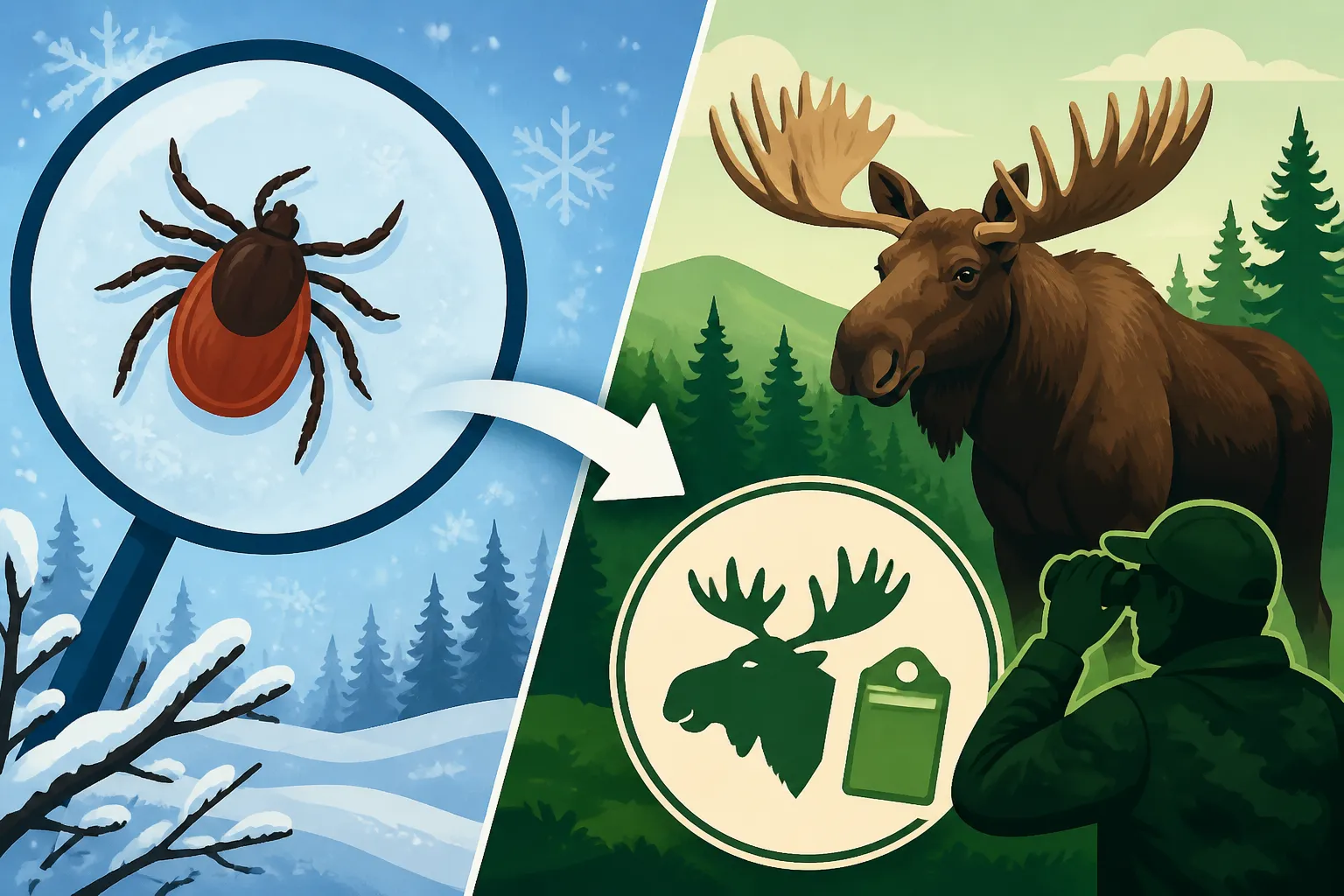
The winter tick's existence is a marathon, all spent on a single host. It starts in the spring, typically April or May, when adult female ticks, engorged with blood, detach from their moose hosts and drop to the forest floor. There, they lay thousands of eggs before dying. These eggs hatch into larvae around late August or early September, forming dense clusters on vegetation, sometimes looking like tiny black specks clinging to tall grasses and shrubs, just waiting.
Then comes the critical window: from late September through October. As moose move through the woods, these larval tick clusters "quest" – they extend their tiny legs, waiting to grab onto a passing animal. Once they latch on, they stay put. They'll feed, molt, and grow through the entire winter, from October all the way until spring. This continuous feeding, day in and day out, for months, is what makes them so devastating. They're not jumping off for a meal and then finding a new host; they're in it for the long haul, literally bleeding their host dry.
How Ticks Overwhelm Moose
Imagine enduring thousands upon thousands of tiny vampires feeding on you day and night for six months straight. That's the reality for a heavily infested moose. These aren't just a few dozen ticks; we're talking about burdens that can reach tens of thousands of individual ticks on a single animal. Researchers examining moose carcasses in Vermont and neighboring states have counted as many as 70,000 to 100,000 ticks on one moose.
The sheer volume of these parasites causes two primary problems. First, and most obviously, is massive blood loss. All those feeding ticks collectively drain an incredible amount of blood, weakening the moose significantly. Second, the constant irritation drives the moose to rub incessantly against trees, rocks, and anything they can find. This rubbing, known as "ghost moose" behavior because of the patchy, pale fur it leaves behind, strips away their insulating winter coat. Losing that dense fur exposes them to the cold, forcing them to burn even more precious energy just to stay warm. This constant battle against blood loss, irritation, and cold leaves them exhausted, malnourished, and highly vulnerable.
Vermont's Moose Population: A Historical Perspective
To truly appreciate the current struggles of Vermont's moose, it helps to look back at where they've come from. Their story is one of dramatic resurgence and, unfortunately, a more recent, equally dramatic decline.
The Boom and Bust Cycle
For much of the 20th century, moose were virtually absent from Vermont, extirpated by unregulated hunting and habitat loss. But thanks to conservation efforts and habitat regeneration, they began to make a remarkable comeback in the latter half of the century. By the late 1990s and early 2000s, Vermont's moose population was thriving, particularly in the vast, wild expanses of the Northeast Kingdom. We were seeing estimated populations soaring above 5,000 animals. It was an exciting time for wildlife enthusiasts and hunters alike, a true conservation success story. Hunters had a decent chance of drawing a permit, and seeing moose while out deer hunting was a common, welcome occurrence.
However, as we discuss in more detail when we examine Vermont Moose Population Decline Since the 1990s, this population boom inadvertently created the perfect storm for winter ticks. More moose meant more hosts, leading to an explosion in tick populations. The higher the moose density, the easier it was for the larval ticks on the ground to find a host, resulting in heavier infestations per animal.
Early Signs of Trouble
By the late 2000s and early 2010s, biologists and observant hunters began to notice troubling signs. The once-robust moose population, particularly calves, seemed to be struggling. Reports of "ghost moose"—animals with severe hair loss from rubbing off ticks—became more common. Hunters were finding moose that appeared emaciated or sluggish. The Vermont Fish and Wildlife Department, along with researchers in neighboring New Hampshire and Maine, quickly connected these observations to the escalating winter tick problem. The success story of moose recovery was now facing an unexpected and formidable foe.
The Connection: How Ticks Directly Impact Moose Survival
The link between winter tick infestations and moose mortality is not just anecdotal; it's a well-documented and devastating reality. The impact is most severe on the most vulnerable members of the herd.
The Impact on Calves
Moose calves, born in late spring and early summer, are the most susceptible to winter tick mortality. When the larval ticks latch on in the fall, these young animals have less body mass and less blood to spare than adults. As the winter progresses, the constant blood drain and irritation overwhelm their small systems. Studies have shown alarmingly low calf survival rates in areas with heavy tick burdens, sometimes as low as 30% or 40% in severe years. This means 60-70% of calves simply don't make it through their first winter. When we discuss How Many Ticks Infest a Vermont Moose Calf, the sheer numbers illustrate just how dire the situation can be.
Calves that do survive often emerge from winter severely weakened, anemic, and stunted in their growth. They haven't been able to put on enough fat reserves, and their immune systems are compromised, making them more vulnerable to other diseases or predation once spring finally arrives. This high calf mortality is the single biggest factor driving the overall decline in Vermont's moose population.
Adult Moose Vulnerabilities
While adult moose are larger and generally more resilient, they are by no means immune to the ravages of winter ticks. Heavy infestations can lead to significant weight loss, poor body condition, and severe anemia, especially in cows. This poor condition directly impacts their reproductive success, leading to lower birth rates or unhealthy calves in subsequent years. A cow that expends all her energy fighting ticks and staying warm simply doesn't have the resources to carry a healthy calf to term or produce enough milk to sustain it.
Furthermore, the constant stress and compromised health from tick infestations can make adult moose more susceptible to other health issues, including other parasites, diseases, or environmental stressors like harsh winters or periods of scarce food. Understanding these dynamics helps explain Why Winter Ticks Threaten Vermont Moose and why a robust moose population is so fragile in the face of this particular parasite.
Adaptive Management: Vermont's Response to the Tick Crisis
Given the profound impact of winter ticks, the Vermont Fish and Wildlife Department (VFWD) has had to adapt its management strategies significantly. This isn't just about preserving a species; it's about trying to maintain a healthy ecosystem balance.
The Role of Science and Research
The VFWD is not guessing about the tick problem. They, along with academic partners like the University of Vermont, conduct extensive research and monitoring. This includes aerial surveys to estimate population numbers and distribution, collaring studies to track individual moose and monitor their health and survival rates, and necropsies (animal autopsies) on found carcasses to determine causes of death and tick loads.
These scientific efforts provide crucial data that informs every management decision. For instance, data showing consistently low calf survival rates in certain Wildlife Management Units (WMUs) directly translates into management actions. When planning a hunt, resources like GoHunt can provide valuable insights into historical harvest data and population trends, which are often informed by this very research. It’s through this rigorous scientific approach that Vermont can develop a comprehensive Vermont's Winter-Tick-Driven Moose Permit Strategy.
Adjusting Permit Numbers
The most direct and often most painful consequence for hunters is the reduction in moose permits. The logic is straightforward, albeit difficult to accept: if calves aren't surviving winter due to ticks, and the overall moose population is declining, then fewer animals can be harvested without further jeopardizing the population's future. The VFWD aims to lower moose densities in areas where tick impacts are highest. The thinking is that fewer moose mean fewer hosts available for the ticks in the fall, which could potentially disrupt the tick life cycle and reduce tick numbers over time, eventually leading to healthier moose.
This table illustrates the stark reality of how moose permit numbers have changed in Vermont over the years, directly reflecting the management response to the winter tick crisis:
| Year (Approx.) | Total Moose Permits Issued | Estimated Moose Population | Calf Survival Rate (Approx.) | Management Strategy Reflected |
|---|---|---|---|---|
| Early 2000s | 1200 – 1500 | ~5000 | High (60-80%) | Population growth/Harvest opportunities |
| Mid-2010s | 400 – 500 | ~2500 | Moderate (50-60%) | Initial declines, reduced permits |
| Early 2020s | 85 – 100 | ~1800-2000 | Low (often <50%) | Aggressive reduction to combat ticks |
| 2024 | 85 | ~1800 | Very Low | Continued focus on population recovery |
Note: Population and survival rates are approximate averages and can vary by year and region.
This significant reduction in permits, down to just 85 total permits for years like 2023 and the upcoming 2026 season, as detailed in Vermont's Eighty-Five 2026 Moose Permits, is a tough pill to swallow. But it's a critical, data-driven decision made with the long-term health and survival of Vermont's moose herd in mind.
What This Means for Hunters: Navigating Permit Changes
For us hunters, seeing these permit numbers plummet can be disheartening. That dream of a Vermont moose hunt suddenly feels even more distant. But it's important to understand the situation and adapt our approach.
Understanding the Lottery
With fewer permits available, the Vermont moose lottery has become incredibly competitive. The odds of drawing a tag are significantly lower than they were two decades ago. This means that applying every year, consistently building preference points (if applicable), and simply having patience are more important than ever. You’ll want to be well-versed in the Vermont Moose Lottery Application Process and stay informed about the Vermont Moose Lottery Drawing Date.
Tools like GoHunt can be invaluable here. While they can’t guarantee a tag, they often provide data and analysis on draw odds, historical permit allocations, and even mapping tools that could help you scout out potential zones if you ever do draw a tag. Understanding these trends and statistics can help manage expectations and inform your application strategy.
What Hunters Can Do
Even if drawing a permit feels like a long shot, there are still ways we can contribute and participate. Supporting the VFWD's research efforts, whether through donations, volunteering, or simply by reporting observations of moose (especially sick or ghost moose), helps gather vital data. When you report a sighting, particularly if it's an animal in distress or showing severe hair loss, you’re directly contributing to the state's understanding of the tick problem and moose health.
If you are fortunate enough to draw one of the limited permits, it becomes an even more incredible opportunity. Focus on ethical hunting practices and be prepared for your hunt. Understanding Which WMU Vermont's 2026 Moose Permits Cover is essential for your scouting efforts. Learning about Packing for a Northeast Kingdom Moose Hunt and knowing how to properly Field Dressing a Moose in the Northeast Kingdom are critical skills that become even more significant when you've finally got that coveted tag. While the numbers are lower, the experience of Hunting a Drawn Moose Zone in the Northeast Kingdom remains an unparalleled adventure, a true testament to the wildness of Vermont. The reduced permit numbers are a direct reflection of a challenging conservation effort, and our understanding and support are vital for the future of moose in our Green Mountains.
Disclaimer
The information provided in this guide is for general informational purposes only and is not intended as legal or professional advice. Hunting regulations and wildlife management strategies can change, so always consult the most current Vermont Fish and Wildlife Department regulations and official sources before planning any hunting activities.