Hunting a Gated Logging Road Beyond the Public Lot
Vermont offers some incredible hunting opportunities, but let's be real: those easily accessible public land spots, especially near main roads and parking areas, can get pounded by hunter pressure. It's a common frustration, isn't it? You spend hours walking in, only to find fresh boot prints or another hunter already set up. This guide is all about helping you beat that pressure by looking beyond the obvious, specifically by understanding how to effectively hunt those often overlooked gated logging roads that extend deep into public and sometimes private lands.
The Allure of the Undisturbed: Why Gated Roads Call to Hunters
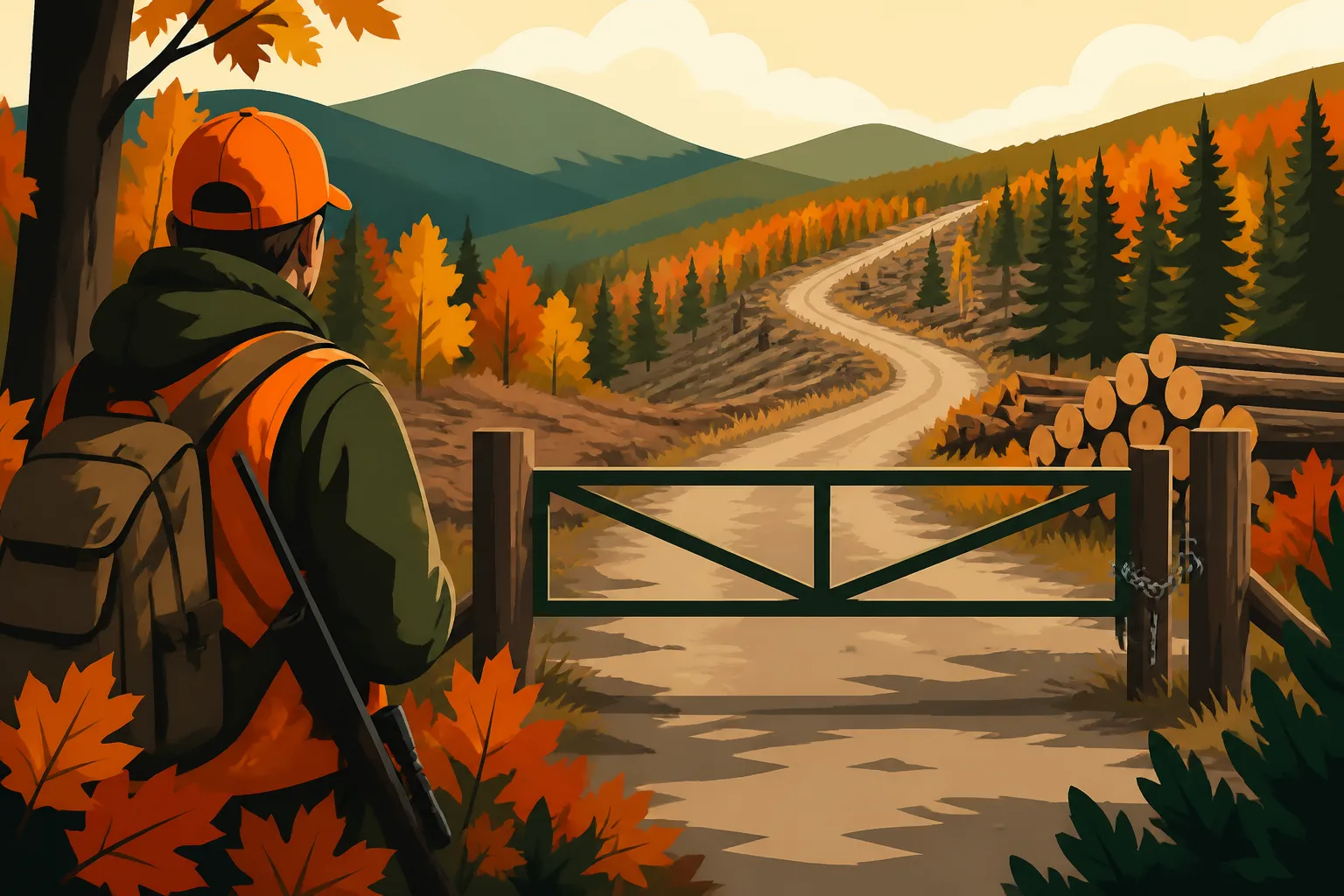
When you look at a map, those little lines disappearing behind a gate can seem like dead ends. But for the savvy hunter, they're invitations. They represent a boundary, a physical filter that weeds out a significant portion of the hunting crowd right at the trailhead. What lies beyond is often a completely different world – one with less disturbance and, consequently, more relaxed and predictable game.
Finding Solitude and Unpressured Game
Think about it: most hunters are looking for convenience. They want to park and be in their stand within a reasonable walk, often sticking to established trails or areas close to vehicle access. This creates a donut effect, where the outer edges of public land get hammered, but the deeper, harder-to-reach core remains relatively untouched. Gated logging roads are the arteries that lead you right into that core.
Beyond that gate, the noise of traffic fades, human scent becomes less prevalent, and the overall atmosphere changes. Deer, bear, and even turkeys, being highly sensitive to disturbance, quickly learn where they can find sanctuary. These animals don't want to bump into humans any more than we want to bump into them. They'll gravitate towards areas where pressure is minimal, and a logging road that's closed to vehicles but open to foot traffic often provides just that. You might walk a mile or two down a gated road before truly beginning your hunt, but that investment of effort pays dividends in terms of encountering less wary animals. You’re not just getting away from other hunters; you're getting into the heads of the game.
Accessing Prime, Remote Habitat
Logging roads aren't just pathways; they're often indicators of past or present timber management, which can create fantastic wildlife habitat. When timber is harvested, whether through clear-cutting, selective logging, or thinning, it creates a mosaic of habitat types that are incredibly beneficial for deer, bear, and other game.
These areas often feature dense regrowth, providing excellent bedding and cover, alongside older stands of timber that offer mast crops like acorns and beechnuts. The roads themselves can act as subtle travel corridors, funneling game along edges or between different cover types. They also create sunny openings where new vegetation can flourish, offering diverse forage. Deer might browse on young saplings, turkeys might scratch for insects and seeds in the gravel, and bears might find berry bushes growing along the sunny banks. A gated logging road can lead you directly to these dynamic, productive ecosystems that are often miles from any other easy access point. Finding these spots before the season often involves studying maps and identifying these remote cuts, which is where a tool like Reading Aerial Photos for Green Mountain Deer can really shine.
Navigating the Legal Landscape: Understanding Access and Ownership
The term "gated logging road" can be a bit ambiguous, and understanding the nuances of land ownership and specific access rules is paramount before you ever set foot beyond that barrier. A gate doesn't always mean the land is entirely public, nor does it always mean access is completely forbidden.
Deciphering Public and Private Boundaries Beyond the Gate
This is where a little bit of homework goes a long way. Many logging roads, even those originating from what appears to be solid public land, might eventually cross into or border private property. In Vermont, respecting private property is not just good manners; it's the law. Trespassing can quickly land you in hot water and damage the reputation of all hunters.
Before venturing deep, you absolutely need to consult detailed land ownership maps. Mapping applications like onX Hunt are invaluable for this. They allow you to see property lines clearly, identify landowners, and often show different land classifications (e.g., state forest, WMA, private, conservation easement). You might find a gated road that runs for miles entirely on Green Mountain National Forest land, or one that quickly crosses through a private parcel where permission is required. Never assume. Always verify. Knowing exactly where you are and whose land you're on, especially when onX Layers for Vermont Land Status are readily available, prevents accidental trespass and ensures you're hunting legally and ethically.
Rules of the Road: Understanding Gated Access
A gate usually signifies one thing: no motorized vehicle access. However, that doesn't automatically translate to no foot traffic, no bikes, or no other forms of non-motorized entry. Many gates are installed to prevent vehicle damage to the road, illegal dumping, or to simply manage access to working forestland.
The specific rules depend entirely on the land management entity.
- National Forest: Often, gated roads on the Green Mountain National Forest are open to foot and bicycle traffic, but it's always wise to check the local Ranger District's regulations.
- State Forests & Wildlife Management Areas (WMAs): Vermont's State Forests and WMAs often have specific rules posted at access points or available on the Vermont Fish & Wildlife Department website. Some might be open to foot traffic, others might have specific seasonal closures, and some might even allow horses.
- Private Land: If the gated road is on private land, even if it looks like public land, you must have permission from the landowner to access it. Sometimes, logging companies or large private timberland owners will allow foot access for hunting, but that's a privilege, not a right, and typically requires explicit permission.
It's crucial to look for signage at the gate itself. Is it clearly marked "No Trespassing"? Does it indicate what kind of access is permitted? If in doubt, always err on the side of caution or contact the relevant land management agency. Don't risk a ticket or, worse, losing access for everyone by ignoring posted rules.
Strategic Hunting on Vermont's Gated Logging Roads
Hunting a gated logging road isn't just about walking further; it's about adapting your strategy to this unique type of terrain and access. You're effectively entering a backcountry hunting scenario, even if you're not miles from civilization. The key is thorough preparation and thoughtful execution.
Pre-Season Scouting: Reading the Road and Its Surroundings
Scouting these deeper areas is paramount, and it's best done before the season opens, or at least during a time when hunting pressure is low. The road itself can be a great starting point for finding sign. Look for:
- Tracks: Are deer, bear, or turkey tracks consistently crossing the road? Which direction are they heading? Are there fresh sets indicating recent activity?
- Scat: Fresh droppings can tell you what animals are in the area and what they're feeding on.
- Rubs and Scrapes: Look for these signs of deer activity along the edges of the road, especially where younger timber meets older stands, or at bends in the road.
- Browse Lines: Are there signs of deer feeding on saplings or bushes along the road edges?
But don't just walk the road. Use the road to get deep, then venture off the road into the surrounding timber. This is where you'll find bedding areas, hidden food sources, and the real secrets of the woods. Use your mapping app, like onX Hunt, to identify potential pinch points, saddles, or benches in the terrain that might funnel game movement. Look for changes in timber type, density, or elevation that could indicate prime bedding or feeding areas. A clear-cut from five years ago might now be a deer magnet, full of browse and thick cover. Pay attention to water sources as well; animals need to drink, and knowing where they can find water can be a key piece of the puzzle. This detailed scouting will inform your stand placement, whether you're planning a Hanging a Stand on a Champlain Valley Field Edge strategy or a deep woods setup.
Effective Hunting Tactics and Stand Placement
Once you've scouted, it's time to put a plan into action. How you hunt these roads depends on the species, terrain, and time of year.
- Still-Hunting: This is a highly effective method on gated logging roads. Move slowly and deliberately, stopping frequently to glass and listen. The road offers a quiet, clear path to move through the woods, but also a potential exposure. Hunt into the wind, or with crosswinds, paying close attention to both sides of the road. Deer often use the edges of these roads for travel, or may be bedded just off the side in thick cover. Bear might be feeding on berries or nuts along the sunny banks.
- Stand Placement: If you're using a treestand or ground blind, strategic placement is key. Look for intersections where other game trails cross the logging road, or where the road bottlenecks between two features. A bend in the road that limits visibility for animals can be a great ambush point. Consider areas where game trails lead from dense bedding cover, across the road, to a feeding area. Always set up to account for wind direction and thermals, which can be tricky in Vermont's undulating terrain. Understanding Wind and Thermals in Steep Green Mountain Terrain is crucial for success, as air currents can shift dramatically in hilly country.
- Patience is a Virtue: Because these areas are less pressured, game might not be as skittish. This means you might have more time for a shot or to work a calling setup. However, it also means you might need to sit longer, as animals aren't constantly on the move trying to avoid hunters.
Logistics for Deeper Penetration and Game Recovery
Hunting deeper means carrying less, but carrying the right things. Your gear choices become even more critical when you're miles from your vehicle.
| Factor | Near Public Lot Entrance | Deeper on Gated Logging Road |
|---|---|---|
| Hunting Pressure | High, often with multiple hunters nearby | Significantly lower, more solitude |
| Game Behavior | Wary, nocturnal, quick to flee | More relaxed, potentially more active during daylight |
| Effort | Minimal walk, quick access | Longer walk-in, requires physical stamina |
| Gear Required | Can afford heavier gear, less critical | Lighter, essential gear, reliable pack |
| Game Recovery | Easier access for vehicle or short drag | Challenging, potentially miles of dragging, requires planning |
| Habitat | Often disturbed, edge areas | Untouched core habitat, diverse structure |
| Mapping Needs | Basic, for boundaries | Detailed, for ownership, terrain, and features (e.g., onX Hunt) |
- Pack Smart: Every ounce counts. Invest in a comfortable, well-fitting backpack that can handle layers, water, food, and potentially game bags for a quartered animal. Think about compact, lightweight optics.
- Reliable Boots: This cannot be overstated. You'll be walking miles, potentially over uneven terrain, through mud, and over rocky sections. Good boots are your most important piece of gear. Best Boots for Green Mountain Ridge Trails are a must for these kinds of excursions.
- Water and Food: Carry enough for the entire day, plus a little extra for emergencies. A water filter can be a lifesaver on multi-day trips.
- Game Recovery Plan: This is arguably the biggest challenge of hunting deep. If you tag a deer or bear two miles from the gate, how will you get it out? A lightweight game cart might work if the road surface is relatively smooth, but often, quartering the animal and packing it out is the most practical solution. Consider a Best Backpack Frame for a Quartered Moose type setup, even if you're only targeting deer, for efficient meat transport. Remember that Dragging a Deer Out of a Steep Ravine or over a long distance is exhausting work; plan for it.
- Safety and Communication: Cell service is often nonexistent deep in the woods. Carry a satellite communicator (like a Garmin inReach or Zoleo) for emergencies. Always tell someone exactly where you're going and when you expect to return. A good headlamp is also non-negotiable for pre-dawn walks or post-sunset recoveries.
Respecting the Resource and Ensuring Future Access
The privilege of hunting these remote, gated logging roads comes with a responsibility. Our actions directly impact whether these areas remain accessible and healthy for wildlife and future generations of hunters.
Practicing Leave No Trace and Ethical Hunting
The "Leave No Trace" principles are especially important when venturing into less-traveled areas. Your goal should be to leave the area exactly as you found it, or even better.
- Pack it in, pack it out: This includes all trash, food wrappers, spent cartridges, and anything else you bring with you. Even biodegradable items should be packed out.
- Stay on designated routes: While you'll venture off the road to hunt, avoid creating new, unnecessary trails that can lead to erosion or damage vegetation.
- Minimize impact: If you're using a ground blind, brush it in naturally and remove all materials when you leave. For treestands, adhere to Treestand Rules on Vermont Public Land and remove them at the end of the season.
- Respect wildlife: Adhere to all bag limits and season dates. Make ethical shots and prioritize quick, humane kills. Even though you're away from others, your actions reflect on all hunters.
Building Bridges with Landowners and Land Managers
The existence of these gated roads, and your access to them, often relies on the goodwill of landowners or the thoughtful management of public agencies. Being a responsible hunter helps maintain that goodwill.
- Adhere to all regulations: This includes legal shooting hours, blaze orange requirements (even when Hunting a Bow During the Rifle Season Overlap), and permit requirements.
- Report violations: If you see illegal dumping, poaching, or property damage, report it to the Vermont Fish and Wildlife Department. Protecting these areas ensures their longevity.
- Build relationships: If you encounter private property along a gated road, and you're interested in hunting it, politely ask for permission. A friendly conversation and a respectful request can sometimes open doors to incredible opportunities. Leaving a note with your contact information (if it's clear who the landowner is) can also be a thoughtful gesture.
By embracing the challenge of hunting beyond the public lot's immediate access points, you unlock a richer, more rewarding hunting experience in Vermont. It requires more effort, more planning, and a deeper respect for the land, but the rewards – solitude, unpressured game, and unforgettable memories – are well worth the walk.
Disclaimer
This article is for general informational purposes only and does not constitute professional advice. Laws, prices and regulations vary by location and change over time. Consult a qualified professional for guidance on your specific situation.