Hunting a Ski Area Backcountry Boundary
It's a common dilemma for hunters in Vermont: you see promising looking timber and thickets just beyond the groomed trails of a ski resort, and your hunter's intuition tells you there might be deer, bear, or turkeys using those untouched areas. But how do you navigate the often-confusing patchwork of land ownership, local regulations, and the unique challenges of hunting near a bustling recreational hub? This guide will walk you through the specifics of hunting the backcountry boundaries of Vermont ski areas, helping you identify potential hunting grounds, understand the rules, and execute a safe and successful hunt.
Understanding Ski Area Backcountry Boundaries in Vermont
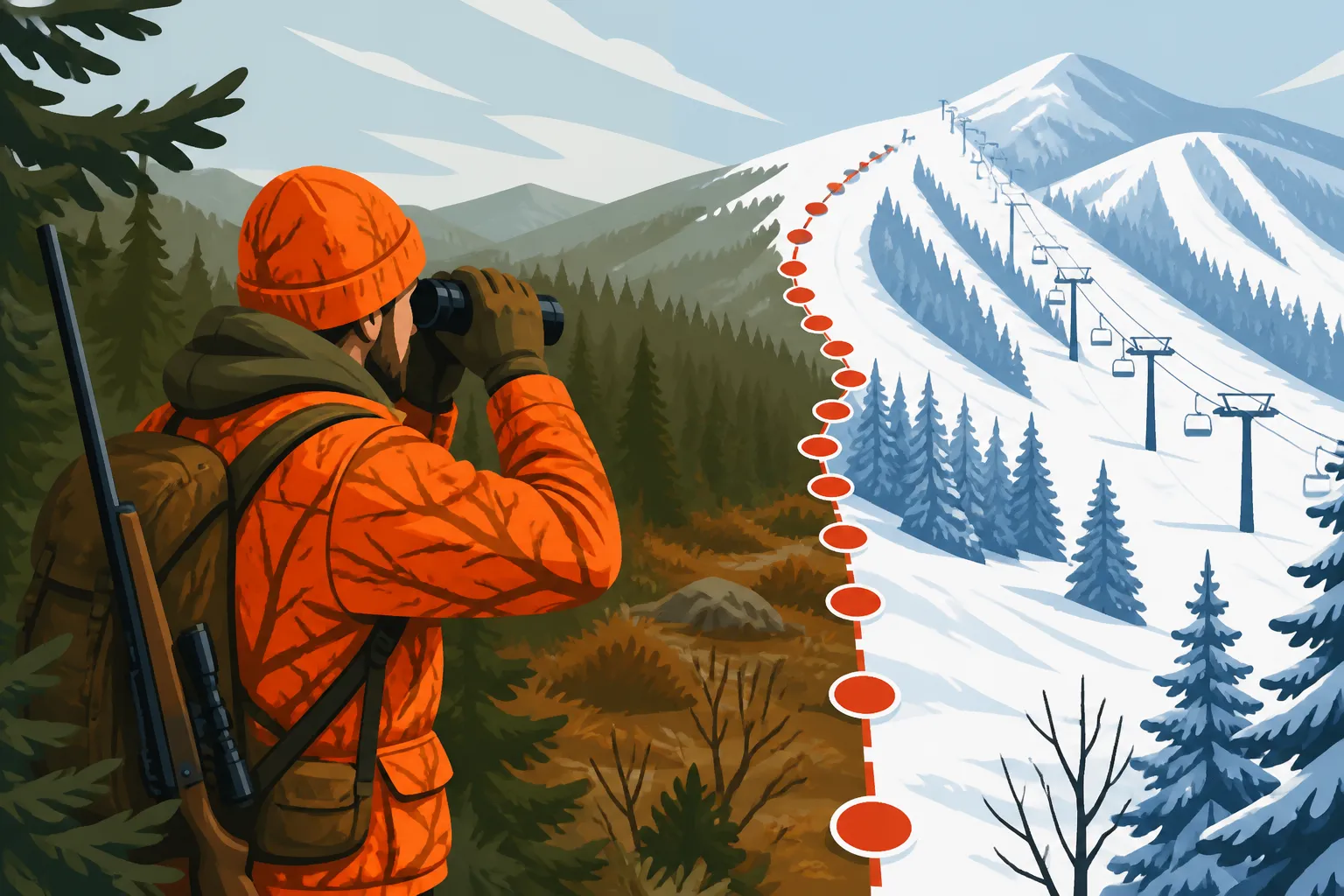
The term "backcountry" near a Vermont ski area can be a bit of a moving target, depending on who you're talking to. For a skier, it might mean any unpatrolled, un-groomed terrain accessible from the resort. For a hunter, it often refers to the wilder, unmanaged parcels of land that might butt up against the resort's official boundaries, presenting unique opportunities and challenges. It's not always clear where the resort's private property ends and where public land or other private parcels begin, and that's where most of the confusion, and potential frustration, lies for hunters.
What Defines "Backcountry" Near a Ski Area?
When we talk about hunting the "backcountry boundary" of a Vermont ski area, we're really talking about the interface where the resort's operational lands transition into less developed, often unmanaged forest. This could be anything from steep, thick timber plots that are too rugged for ski trails, to old logging roads that run alongside the property, or even forgotten corners of state forest or a Wildlife Management Area (WMA) that happen to share a border. These areas often provide thermal cover for deer, dense bedding areas, or travel corridors that animals use to move between different food sources or sheltered spots. They can be incredibly appealing to wildlife precisely because they're on the edge of human disturbance, offering a sense of security while still being close to potential resources.
Think about it: deer aren't stupid. They know where people are constantly moving and making noise. The very edges of ski area property can become a refuge, a place where they feel safe from the direct pressure of the resort, but can still utilize the larger forested landscape. These zones often benefit from less direct hunting pressure, as many hunters shy away from areas perceived as too close to human activity or too complicated in terms of access and land ownership.
Navigating Public vs. Private Land Near Resorts
This is where your mapping game needs to be absolutely on point. Many Vermont ski resorts are built on a mix of privately owned land (the resort's core property) and leased land, sometimes from state or federal agencies like the Green Mountain National Forest. You might also find that the resort abuts other large private landowners, conservation easements, or smaller public parcels like town forests or WMAs.
Before you even think about setting foot in these areas with a bow or gun, you absolutely must know whose land you're on. Relying on visual cues alone can be a recipe for trouble. What looks like an abandoned logging road might actually be a private access road for the resort, or a utility corridor where hunting is restricted. This is where tools like onX Hunt really shine. You can pull up property lines right on your phone, see landowner names, and differentiate between public, private, and managed lands. Some of these apps even show designated no-hunting zones or specific regulations for certain parcels. For instance, onX Layers for Vermont Land Status can be invaluable. Don't assume that just because it's not a groomed trail, it's fair game. Always confirm.
A thorough understanding of Vermont Trespass and Permission Law is also critical. While some public lands bordering ski resorts might be open to hunting, private lands always require explicit permission from the landowner. This might mean contacting the ski resort itself, or adjacent landowners, which can be a challenging process but a necessary one to avoid legal issues and maintain a good public image for hunters.
Scouting Strategies for Ski Area Backcountry Hunting
Once you've identified potential legal hunting areas along ski area boundaries, it's time to get down to serious scouting. These areas present a unique mix of factors that influence wildlife, from elevation changes and timber types to the subtle effects of human presence from the resort. Effective scouting means understanding how animals interact with this particular environment.
Identifying Key Terrain Features and Habitat
Ski areas, by their nature, are built on slopes and mountainsides, creating dramatic elevation changes. This means you'll be dealing with steep terrain, which directly impacts deer movement, bear activity, and turkey roosting. Deer, for example, often use benches and saddles on hillsides as travel routes, especially when moving between bedding areas in thick cover and feeding areas. They might also utilize old ski trails or utility clearings as easy travel routes during off-peak hours, or to access higher-elevation browse. Look for these natural funnels and pinch points.
Beyond the topography, pay close attention to the habitat types. Are there mature hardwoods that produce acorns or beech nuts? These mast crops are huge draws for deer, bear, and turkeys, especially in the fall. Are there dense softwood thickets that provide thermal cover in winter or bedding in any season? Ski areas often have diverse forest types bordering them, from high-elevation spruce-fir to lower-elevation mixed hardwoods. Understanding the available food and cover resources, and how they relate to the terrain, is key to pinpointing where game will be. Mapping tools can help you visualize these changes in elevation and forest type, allowing you to scout more efficiently from home. You can often see these transitions plainly when doing Reading Aerial Photos for Green Mountain Deer before you ever step foot in the woods.
Utilizing Mapping Tools for Pre-Season Planning
Modern mapping applications are an absolute game-changer for hunting these complex boundary areas. As mentioned, onX Hunt provides invaluable land ownership data, but it also offers topographic maps, satellite imagery, and the ability to mark waypoints for potential stand sites, rubs, scrapes, or bedding areas. Before you even lace up your boots, you can spend hours virtually scouting the terrain.
Look for areas that are difficult for skiers or hikers to access, as these often hold undisturbed pockets of wildlife. Identify natural barriers like cliffs, steep ravines, or dense impenetrable blowdowns that might funnel game movement. You can also trace game trails that appear on satellite imagery, especially during leafless periods, which might indicate consistent travel routes. This virtual reconnaissance is particularly helpful when dealing with the high elevations and often rugged terrain surrounding ski resorts. Best GPS App for Vermont Public Land can also help you navigate once you're on the ground, ensuring you stay within legal boundaries and can find your way back out, especially in unfamiliar territory.
Consider how the resort's operational footprint might influence animal movement. Are there service roads that parallel the ski trails? Deer might cross these at night. Are there small clearings or old fields that are no longer actively maintained by the resort? These could become attractive feeding areas for deer and turkeys. Even the direction of prevailing winds in relation to the resort can be important. Animals will often try to approach food sources or travel with the wind in their favor, carrying the scent of potential predators (you!) away from them. Learning to interpret Wind and Thermals in Steep Green Mountain Terrain is crucial in these mountainous areas.
Hunting Tactics for Ski Area Backcountry Zones
Hunting near ski area backcountry boundaries requires a blend of traditional hunting skills and a heightened awareness of human activity. It's a unique environment where you might hear snowmaking guns or chairlifts in the distance, even when deep in the woods. Adapting your tactics to these conditions is essential for success and safety.
Dealing with Human Presence and Noise
One of the biggest challenges when hunting near a ski area is the inherent human presence and noise. Even when the resort isn't fully operational, you might encounter hikers, mountain bikers, or even resort staff on maintenance duties. Animals in these areas tend to be more nocturnal or utilize cover more heavily during daylight hours. This means your hunting times, particularly during daylight, might need to be adjusted. Early mornings, right at first light, and late evenings, right before dark, are often the most productive. These are the times when human activity is lowest, and wildlife feels more comfortable moving.
Still-hunting and slow, deliberate movements become even more critical here. You're not just trying to avoid detection by game; you're also trying to minimize your impact on other outdoor enthusiasts. Wearing ample blaze orange, even during archery season when legal, is a non-negotiable safety measure if there's any chance of encountering other people. This is especially true if you are Bowhunting During Vermont's Rifle Season where blaze orange rules apply to everyone.
You might also find that game animals in these boundary zones are accustomed to certain background noises from the resort. They might not react as strongly to the distant hum of machinery as deer in a truly remote wilderness area would. This can sometimes work to your advantage, allowing you to move with a bit more ambient cover noise. However, sudden, sharp noises will still alarm them. Focus on using the terrain, wind, and available cover to approach quietly and patiently.
Approaches for Deer, Bear, and Turkey
Each species will require a slightly different approach when hunting these boundary areas:
Deer:
Deer will often gravitate towards the thickest cover along the resort's edge, using it as a daytime sanctuary. They might bed just inside the property line in dense softwoods or blowdowns, venturing out at dawn and dusk to feed in adjacent mast-producing hardwoods or unmaintained clearings. Focus on identifying funnels between these bedding areas and potential food sources. These could be subtle depressions in the terrain, old logging trails, or natural breaks in thick timber. Scouting for fresh rubs, scrapes, and tracks will be paramount. Consider setting up a treestand or ground blind along a primary travel route or overlooking a preferred food source. For deer, understanding Where Vermont Bucks Bed in Thick Cover will greatly increase your chances.
Bear:
Vermont's bear population is robust, and bears are opportunistic feeders. They are often drawn to mast crops like acorns and beech nuts found in the mature forests surrounding ski areas. They might also investigate any leftover human food scents near resort buildings or maintenance areas, though it's important not to hunt over bait in unauthorized or illegal areas. Focus your efforts on finding feeding sign: overturned rocks, torn-apart logs, or scat piles heavy with berries or nuts. Bear might use dense timber on steep slopes for bedding during the day, moving out to feed in the cooler hours. Spot-and-stalk tactics along ridgelines or still-hunting through likely feeding areas can be effective. Spot-and-Stalk Bear Hunting Vermont Ridges can be a great way to cover ground.
Turkey:
Wild turkeys are also found in the forested boundaries of many Vermont ski areas. In the spring, they'll roost in tall trees along ridgelines or near water sources, often flying down to open areas or clearings to feed and strut. During the fall, flocks will forage in the hardwoods for mast and insects. Look for signs like scratchings in the leaves, dusting bowls, and droppings. Roosting areas, often identified by droppings at the base of large trees, are excellent spots for a pre-dawn setup. Using calls, particularly during spring, to locate and entice gobblers, can be very effective. Calling an Early May Gobbler Off the Roost requires patience and strategic positioning.
Essential Gear and Safety Considerations
Hunting in the backcountry boundaries of Vermont ski areas brings specific gear and safety needs to the forefront. The terrain can be challenging, weather can change rapidly with elevation, and the proximity to human activity demands extra precautions.
Packing Smart for Variable Conditions
The mountainous terrain around Vermont ski areas means you need to be prepared for fluctuating weather and strenuous activity. Layering is not just a suggestion; it's a necessity. Temperatures can drop significantly as you gain elevation, and even a sunny morning can turn into a cold, windy, or wet afternoon. Start with a moisture-wicking base layer, add insulating layers (fleece or down), and top it with a waterproof and windproof outer shell. This allows you to adjust to changing conditions throughout the day. For more on this, check out Layering for Vermont's Long Hunting Season.
Footwear is equally important. Sturdy, waterproof hiking boots with good ankle support and aggressive tread are non-negotiable. You'll be traversing steep, uneven terrain that can be wet, rocky, or covered in slippery leaves. Beyond clothing, a well-stocked pack should include:
- Navigation tools: A GPS device or a reliable mapping app like onX Hunt (with offline maps downloaded) is essential. Cell service can be spotty in the mountains.
- First-aid kit: Even minor injuries can become serious quickly in remote areas.
- Headlamp: For pre-dawn hikes in and post-dusk hikes out.
- Water and snacks: Hydration is key, especially when climbing.
- Emergency shelter/blanket: A lightweight emergency blanket or tarp can be a lifesaver if you get stuck overnight.
- Communication device: A fully charged cell phone (though service is not guaranteed) or a satellite messenger for truly remote areas.
Respecting Boundaries and Regulations
Above all, respect for boundaries and regulations is paramount when hunting near ski areas. Trespassing, even accidentally, can damage the image of hunters and jeopardize access for everyone. Always double-check property lines with a reliable mapping tool. If there's any doubt about land ownership or hunting legality, assume it's private and seek explicit permission, or find another spot. Some ski resorts might have specific no-hunting policies on their lands, even if they appear undeveloped. It's always best to check with the resort's administration directly if you suspect your desired hunting spot might be on their property.
Additionally, remember that you are in an area that sees other recreational users. Safety is everyone's responsibility. Wear plenty of blaze orange, even if not legally required for your specific season or weapon choice, if there's a chance of encountering hikers, mountain bikers, or skiers. Be mindful of shot angles and backstops, especially with steep terrain. Always know what's beyond your target. Vermont Hunter Education Requirements emphasizes these principles, which are particularly relevant in areas with mixed-use recreational activity. By hunting responsibly and respectfully, you ensure continued access for yourself and future generations in these unique Vermont hunting areas.
Disclaimer
This article is for general informational purposes only and does not constitute professional advice. Laws, prices and regulations vary by location and change over time. Consult a qualified professional for guidance on your specific situation.