Packing Meat Out of a Steep Ravine
Every Vermont hunter has been there: you make the perfect shot, the deer drops, and then you realize it’s in the most inaccessible, steepest ravine imaginable. The immediate joy turns into a sinking feeling as you stare down into that challenging terrain, knowing the real work is just about to begin. This guide is all about turning that daunting prospect into a manageable task, ensuring you can safely and efficiently pack your hard-earned venison out of even the nastiest Green Mountain gully.
Pre-Hunt Preparation for Tough Terrain Recovery
The best recovery plan starts long before you ever pull the trigger. Being mentally and physically ready, and having the right gear, can make all the difference when you're faced with a tough pack-out from a steep ravine in Vermont. It’s not just about getting the deer down; it’s about getting it out.
Physical Conditioning and Realistic Expectations
Let's be real: hunting in Vermont isn't always a walk in the park. Those picturesque mountains can be unforgiving, and packing out a deer, especially uphill, is a grueling task. Many hunters, myself included, underestimate the sheer physical toll it takes until they're huffing and puffing halfway up a slick incline, a quarter of a deer on their back. Before the season even begins, consider incorporating some focused exercises into your routine that mimic the movements of hiking with weight. Think squats, lunges, and plenty of core work.
It’s also about managing expectations. You might envision a clean drag out on flat ground, but Vermont doesn't always deliver. Be mentally prepared that a recovery could take hours, sometimes even stretching into the next day. If you drop a mature buck at the bottom of a steep gorge, understand that it's going to be a monumental effort. Accepting this reality beforehand helps you stay motivated and make smart decisions in the moment, rather than rushing and making mistakes out of frustration. Remember, safety first, always.
Essential Gear for Steep Country Recovery
Having the right tools for the job is non-negotiable in steep terrain. Your everyday hunting pack might be fine for a short jaunt, but for a ravine recovery, you need specialized gear. This isn't just about comfort; it's about making the process possible and safe.
First, a robust frame pack is your best friend. Forget flimsy daypacks; you need something that can handle heavy, awkward loads. Look for internal or external frame packs designed for hauling quarters of meat or heavy camping gear. These distribute weight much better across your hips and shoulders, saving your back. Many hunters, when researching the best pack for hauling, often look at gear reviews on sites that partners with GoHunt highlight for tough backcountry hunts. Along with the pack, high-quality game bags are critical for keeping your meat clean and protected from dirt, leaves, and insects. These lightweight, breathable bags allow the meat to cool while protecting it during transport.
Beyond the pack, consider a good set of trekking poles. These aren't just for leisurely hikes; they provide crucial stability on slippery slopes, especially when you’re loaded down. A reliable headlamp with extra batteries is also a must, as recoveries often extend into darkness. And speaking of safety, a small but comprehensive Best First Aid Kit for a Remote Hunt should always be in your pack. A sharp knife for field dressing, a bone saw if you plan to quarter the animal, and even a small tarp or plastic sled for shorter drags on less steep sections can be incredibly useful.
On-Site Assessment and Initial Steps
Once you've located your deer in that challenging ravine, don't just rush in. Taking a moment to assess the situation and follow a systematic approach will save you time, energy, and potential injury. This critical phase sets the tone for the entire recovery.
Safety First: Evaluating the Terrain
The excitement of a successful hunt can make us forget about potential hazards, but a steep ravine can be a dangerous place. Before you even touch the deer, take a moment to look around. Are there loose rocks that could shift? Is the ground wet and muddy, making it slick? Are there fallen trees or branches that create trip hazards? During late fall, is there a thin layer of ice or hidden snow patches that could lead to a fall? These are critical questions to ask, especially if you’re trying to navigate out of a dark, cold bottomland.
Identify the safest route both down to the animal and, more importantly, up and out of the ravine. Sometimes the most direct path isn't the safest or most efficient when you're carrying a heavy load. Look for natural benches, less steep inclines, or areas with more stable footing. If there are multiple hunters, spread out and communicate any hazards you encounter. Remember, a recovered deer isn't worth a broken bone or worse. Consider the Wind and Thermals in Steep Green Mountain Terrain as well, as these can affect how sounds travel and how you navigate back to your vehicle.
Field Dressing Strategies for Steep Inclines
Getting the animal field dressed quickly is crucial for cooling the meat, but doing it effectively in a steep ravine requires some thought. Traditional field dressing on flat ground is one thing; on a 45-degree slope, it's another. The goal here is to lighten the load as much as possible right at the kill site.
The first decision is whether to just gut the animal or to quarter it immediately. In most steep ravine scenarios, especially if you’re alone or facing a long haul, quartering is almost always the better option. It breaks the animal down into manageable pieces that can be packed out on a frame pack. If you simply gut the deer, you're still left with a bulky carcass that's incredibly difficult to drag uphill without rolling or getting hung up. Field Dressing a Deer in Cold Weather helps preserve the meat, but in a steep, potentially inaccessible spot, reducing the mass is paramount.
When quartering, start by getting the deer into a stable position, ideally on its side or back if possible. Using a tree or large rock for support can help. Remove the legs first, then the backstraps, and finally the loins. Bag each piece as you go to keep them clean. This process can be messy, and gravity will work against you on a slope, so be prepared for some blood runoff. Having a sturdy, sharp knife and a bone saw makes this much easier. Many hunters also choose to remove the head and cape at the kill site if they plan on a shoulder mount, further reducing weight.
Effective Techniques for Moving Meat Uphill
Once the deer is processed, the real physical challenge begins: getting that precious venison out of the hole you found it in. There are several methods, and often, a combination of them works best in Vermont's diverse and challenging landscapes.
Quartering and Backpacking
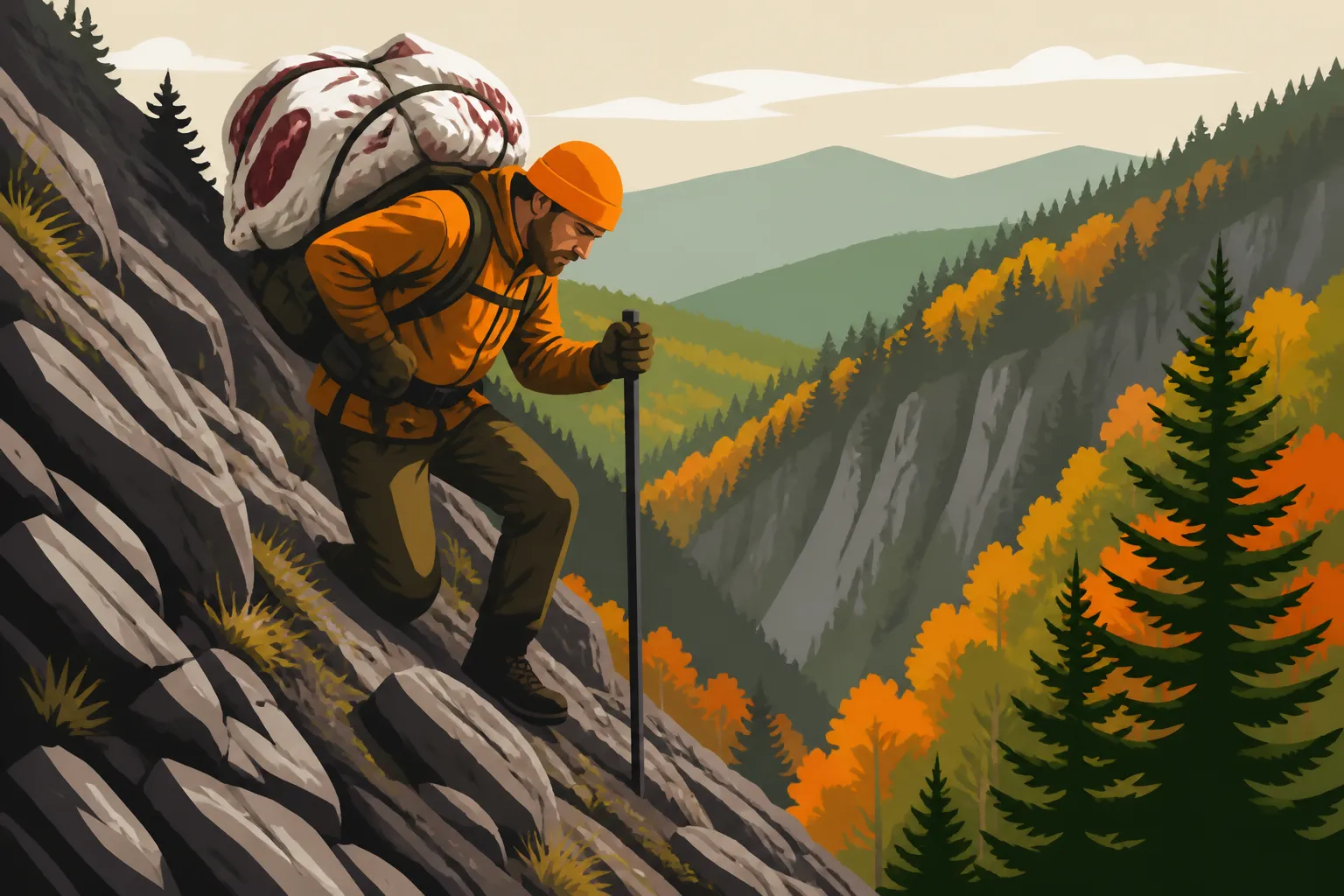
Without a doubt, quartering the animal and packing it out on your back is the most efficient and often the only realistic method for steep ravine recoveries. Trying to drag a whole deer up a steep, muddy, or rocky incline is an exercise in futility, frustration, and potential injury. I've seen it attempted, and it rarely ends well. Instead, once field-dressed and quartered, each piece can be carefully loaded into game bags and then secured to a sturdy frame pack.
| Method | Pros | Cons | Best Use Case |
|---|---|---|---|
| Quartering & Backpack | Lightens individual loads, distributed weight, excellent for steep/rough | Requires more field dressing, multiple trips (often), specialized pack needed | Steep ravines, dense brush, long distances |
| Dragging (Whole Deer) | Simplest field dressing, one trip (potentially) | Incredibly difficult uphill, snagging, meat can get dirty, exhausting, high injury risk | Short distances, gentle slopes, clear undergrowth |
| Boning Out | Lightest possible load, smallest volume | Most intensive field dressing, requires skill, meat can warm faster if not cooled properly | Extreme backcountry, multi-day hauls, very rough terrain |
When packing quarters, arrange the heaviest parts (hindquarters) low and close to your back. This helps with balance and leverage. Using a good Best Backpack Frame for a Quartered Moose can be a great reference, even if you’re just packing a deer, because the principles of weight distribution are the same. Take slow, deliberate steps, using your trekking poles for balance. If you have hunting partners, you can divide the load, making multiple, lighter trips more feasible and less exhausting. This is where having a game plan with your crew before you hit the woods really pays off.
Using Rope and Pulleys
For particularly brutal, short, but extremely steep sections of a ravine, a rope and pulley system can be a lifesaver. This isn't a technique for every recovery, but it's invaluable when you're facing a sheer bank or a section of terrain that's just too dangerous to navigate with a heavy pack on your back. It can turn what feels like an impossible climb into a manageable hoist.
To implement this, you'll need a strong rope (preferably static climbing rope, not dynamic), some carabiners, and at least one good pulley. Secure one end of the rope to a sturdy tree or anchor point at the top of the incline. Attach the pulley to another anchor point or directly to your pack/game bag. You'll then pull the rope, using the mechanical advantage of the pulley to lift the meat. This is definitely a two-person job; one person managing the rope and the other guiding the load to prevent snags. Before attempting this, make sure you understand the basics of knots and safe rigging. A well-executed rope system can be a real game-changer for those incredibly difficult spots, effectively turning a vertical ascent into something you can pull yourself out of.
The Team Effort: Many Hands Make Light Work
While solo hunting has its undeniable appeal, a steep ravine recovery is one situation where having friends truly shines. There's a reason deer camps thrive in Vermont; it’s about camaraderie and shared labor. If you’re lucky enough to be hunting with a partner or a group, coordinate your efforts.
One person can haul a hindquarter, another a front shoulder, and a third can carry the backstraps and gear. This divides the weight, reduces the number of trips, and most importantly, provides a safety net. If someone slips or needs a break, there's immediate support. On a particularly challenging climb, having someone ahead to scout the path and clear small obstacles, and someone behind to offer a push or steady the load, can make all the difference. Deer Drives With Three or Four Hunters often involves similar coordination, where communication and teamwork are key. Plus, the shared satisfaction of overcoming such a physical challenge together makes the story even better around the campfire later. Always plan rendezvous points and have a communication plan, especially if cell service is spotty, which it often is in deep Vermont ravines.
Safety Considerations and What to Avoid
When you're tired, cold, and focused on getting that deer out, it's easy to cut corners. But in a steep, potentially remote Vermont ravine, cutting corners can lead to serious consequences. Prioritizing safety is not just good advice; it's essential.
Navigating Hazardous Conditions
Vermont's weather and terrain can turn on a dime, creating hazardous conditions that make a recovery even more perilous. Rain can turn steep dirt into a slick, muddy slide. Early season snow or ice can make footing treacherous. Darkness can obscure obstacles, making every step a gamble. Always carry a reliable Best Headlamp for a Pre-Dawn Ridge Climb with fresh batteries, even if you don't anticipate being out after dark. Things happen.
Avoid attempting a recovery if conditions are truly unsafe, like during a sudden downpour or approaching thunderstorm. If possible, mark the animal's location with a GPS waypoint, cover it with a tarp to protect the meat from scavengers, and retreat to a safer location to wait out the weather or return with more help. Your venison isn't going anywhere if it's field dressed and cooling, but your personal safety could be compromised in dangerous conditions. Remember, those slippery leaves and rocks that were merely an annoyance on the way down become serious hazards when you're trying to climb out with 50+ pounds on your back.
Preventing Exhaustion and Injury
Packing meat out of a steep ravine is one of the most physically demanding aspects of hunting. Exhaustion can creep up quickly, leading to poor judgment, clumsy movements, and ultimately, injury. This is why pace yourself is more than just a saying here; it's a critical safety strategy. Take frequent breaks, even short ones, to catch your breath, rehydrate, and assess your footing.
Listen to your body. If your muscles are screaming, your legs are shaking, or your mind feels foggy, it's time for a longer break. Having a snack, like a high-energy bar, can provide a quick boost. Stay hydrated, even in cold weather. Many hunters carry a water bladder in their pack, allowing easy sips without stopping. Pay close attention to your footing with every single step. Don't rush. A twisted ankle or a fall with a heavy pack can be debilitating and turn a successful hunt into an emergency. If you're hunting solo in a remote area, consider carrying a Best Satellite Communicator for Northeast Kingdom Land for peace of mind.
It’s also crucial to lift with your legs, not your back, when hoisting quarters into your pack. Keep the weight as close to your body as possible. If you feel a strain, stop and adjust. A pulled muscle or a slipped disc can put you out of commission for the rest of the season, and potentially longer. There’s no shame in taking two trips instead of one if it means getting the meat out safely and avoiding injury.
Disclaimer
This article is for general informational purposes only and does not constitute professional advice. Laws, prices and regulations vary by location and change over time. Consult a qualified professional for guidance on your specific situation.