Best Camo for Vermont Hardwood Timber
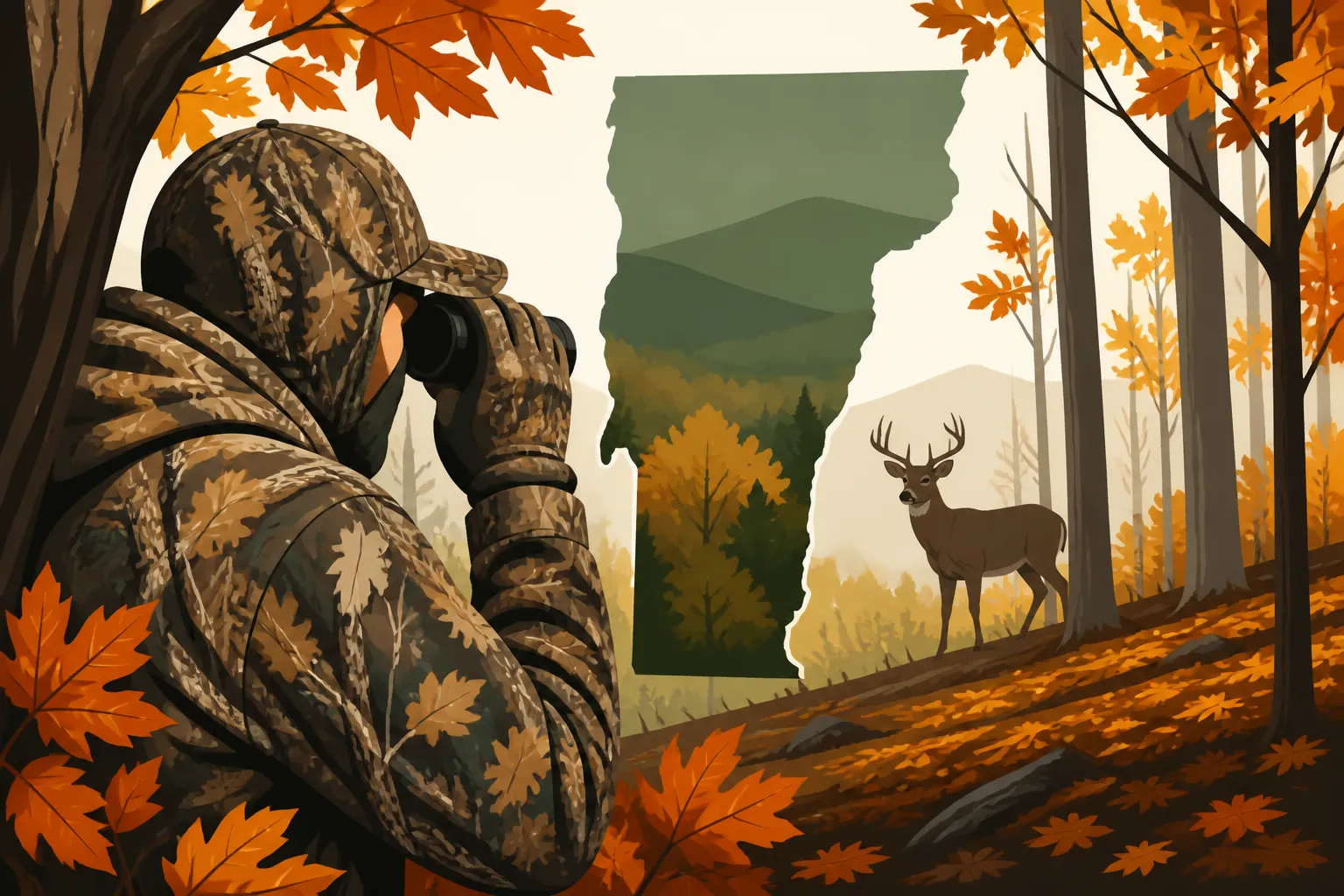
Oh, the age-old question, isn't it? Choosing the right camouflage for deer hunting in Vermont's hardwood timber can feel like trying to solve a riddle wrapped in an enigma. You spend countless hours scouting, preparing your gear, dialing in your bow or rifle, only to step into the woods and suddenly feel like you're sticking out like a neon sign against the muted browns and grays of a November forest. It's a frustrating thought that your well-laid plans could be undone by a deer's keen eyesight picking up on a pattern that just doesn't quite blend. Well, take a deep breath, because this guide is all about cutting through the confusion and helping you understand what truly works in Vermont's unique hardwood environments, so you can blend in like a ghost and increase your chances of success.
Understanding Vermont's Hardwood Habitat and Light Conditions
Vermont's hardwood forests aren't a static backdrop; they're a living, breathing, ever-changing environment that demands a dynamic approach to camouflage. Thinking of them as just "trees" is like saying all food is "edible" – it misses all the crucial details that make the experience what it is. To truly blend, you first have to understand the canvas you're trying to disappear into.
The Dynamic Nature of Vermont Hardwoods
When we talk about Vermont hardwoods, we're primarily talking about sugar maples, red oaks, beech, yellow birch, and sometimes a mix of other deciduous trees. What makes these forests so challenging, and fascinating, from a camouflage perspective is their incredible seasonal transformation. In early September, When Vermont's Expanded Archery Season Opens kicks off, the woods are still lush and vibrant, holding onto greens and yellows. A leafy, open pattern might serve you well then, mimicking the full canopy.
Fast forward to late October and November, which is prime deer season, and those same woods are a completely different animal. The leaves have mostly fallen, creating a mosaic of dry browns, grays, and dull golds on the forest floor and against the bark. The understory, once thick with ferns and saplings, might be largely exposed. A pattern designed for a green, leafy environment will scream "human" against this backdrop. Your camo needs to reflect these nuances, adapting to the spectral shifts in the forest. You’re not just hiding from a deer; you’re trying to become an invisible part of the forest, no matter what stage it’s in.
The Play of Light and Shadow
Beyond the colors of the trees themselves, the way light interacts with the hardwood canopy and forest floor is absolutely critical for effective camouflage. Imagine standing on a ridge line just as the sun peeks over the horizon during Hunting the Rut in Early-to-Mid November. The rays filter through the remaining branches, creating a constantly shifting pattern of dappled light and deep, stark shadows. This isn't uniform lighting; it's a dynamic, high-contrast environment.
Your camo needs to be able to break up your human silhouette against this ever-changing play. A flat, single-tone pattern, even if it's the "right" color, can appear as a solid mass against a complex, broken background of light and shadow. Deer are masters of perceiving outlines and movement. They're wired to pick out anything that looks "out of place." If your pattern doesn't have enough contrast and depth to mimic the natural chaos of the woods – those dark shadows, bright highlights, and everything in between – then you're at a disadvantage. It’s not just about matching the colors, but about mimicking the texture of the light itself.
Key Camouflage Principles for Hardwood Timber
Okay, so we've established that Vermont's hardwoods are a complex, ever-changing beast. Now, let's talk about the core principles that really make a difference when you're trying to disappear into that environment. It's not just about slapping on "camo" – it's about understanding why certain patterns and approaches work better than others in this specific terrain.
Breaking Up the Human Form
This is arguably the most important principle of all. Deer, with their incredible peripheral vision and ability to detect motion, are experts at recognizing the human form. Our shoulders, our heads, our relatively straight lines – these are all unnatural in the woods. The biggest mistake you can make is wearing a pattern that, while perhaps having the "right" colors, doesn't effectively break up your outline. Think of a big, blocky pattern that might look great on a billboard, but in the woods, it just forms a large, continuous shape.
Effective hardwood camouflage needs to disrupt your silhouette. It needs to create the illusion that you're not a solid, upright human being, but rather a collection of broken shapes, just like the surrounding branches, tree trunks, and undergrowth. Patterns with strong vertical and horizontal elements that mimic branches, combined with irregular blobs of darker and lighter shades, are designed precisely for this purpose. They trick the deer's eye, preventing it from "connecting the dots" and recognizing you as a threat. This is especially crucial when you're still-hunting, moving ever so slowly through the timber, where every broken line helps you become part of the natural landscape. Think about how a good pattern makes you look like a jumble of tree limbs and shadows, not a person.
Color Palette Considerations
While breaking up your form is paramount, the colors within that pattern are certainly not to be ignored. Vermont's hardwood timber in the late fall and early winter typically presents a palette of muted browns, grays, and even some hints of dull, desaturated reds or golds from persistent oak leaves or lingering beech foliage. Overly vibrant greens, even if they're "natural," will stick out like a sore thumb once the leaves are down.
Your ideal hardwood camo palette should lean heavily into the earthy tones. Think bark browns, shadow grays, and dull, dead-leaf greens. The key is muted colors – nothing too bright or reflective. Some patterns even incorporate hints of black for deep shadows, which can be very effective in breaking up the outline. When you're scouting Finding Sign in Green Mountain Timber before the season, take note of the dominant colors, especially the bark of the local trees and the color of the forest floor litter. That's your natural palette. The beauty of the GoHunt approach to gear selection often includes a deep dive into environment-specific color considerations, highlighting how various brands tailor their palettes to match distinct regions, which is incredibly helpful for Vermont hunters.
The Importance of Layering and Texture
Camo isn't just a flat image; it's a three-dimensional effect. This is where layering and the texture of your clothing really come into play, especially when you're trying to achieve maximum concealment in the challenging hardwood environment. A slick, shiny rain shell, no matter how good the pattern on it, can reflect light in an unnatural way, immediately drawing a deer's attention.
Consider the fabric itself. Brushed fleece, wool, or other materials with a slightly "fuzzy" or matte finish absorb light rather than reflecting it. This reduces glare and helps to create a softer, more natural appearance. Furthermore, layering your clothing, as we often do for warmth during Vermont's chilly hunting seasons, inherently adds dimension to your outline. A loose-fitting jacket over a vest, for instance, creates subtle shadows and breaks up your form more effectively than a single, tight-fitting garment. This three-dimensional breakup, combined with a well-chosen pattern, enhances the illusion that you're just another part of the forest, not an upright intruder. This attention to fabric and fit is a small detail that can make a big difference in the subtle art of concealment.
Top Camouflage Patterns and Styles for Vermont Hardwoods
With a solid understanding of the hardwood habitat and the principles of effective concealment, let's dive into some specific camouflage patterns and styles that are known to perform well here in Vermont. It's not about finding a magic bullet, but rather patterns that have been thoughtfully designed to mimic the intricate visual chaos of our deciduous forests.
Tried-and-True Traditional Patterns
Sometimes, the classics are classic for a reason. Many traditional camouflage patterns have stood the test of time and continue to be incredibly effective in hardwood environments because they leverage those core principles of breaking up the human form with natural, earthy tones. They might not be the flashiest, but they get the job done.
Take patterns like Mossy Oak Break-Up Country or Realtree Edge. These designs incorporate a mix of realistic branches, leaves, and varying shades of brown, gray, and dull green. They are excellent at creating depth and disrupting your outline, making you look like a random jumble of forest elements rather than a solid human figure. Mossy Oak's Bottomland pattern, while often associated with swampy areas, can also be surprisingly effective in the darker, denser hardwood bottoms of Vermont, especially on overcast days. These patterns work well because they're designed to be versatile across a range of deciduous settings, and they feature large, contrasting elements that make you less recognizable to a deer's eye, particularly when you're perched in a treestand or Hanging a Stand on a Champlain Valley Field Edge. When you're trying to be completely still, as in Still-Hunting Green Mountain National Forest Timber, these classic, macro-patterns truly shine in helping you melt into the background.
Modern and Digital Patterns for Hardwoods
The world of camouflage is constantly evolving, and newer patterns often incorporate advanced digital or micro-pattern technologies to achieve even greater levels of concealment. These aren't just pretty pictures; they're engineered to confuse the eye at different ranges and in varying light conditions.
Brands like Kryptek, particularly their Highlander or Typhon patterns, offer a different take. Instead of realistic branches, they use micro-patterns and sharp geometric lines combined with organic shapes to create a multidirectional breakup. This can be incredibly effective at blurring your outline, making it hard for a deer to focus on a distinct shape. Similarly, some newer patterns emphasize complex layers of detail that appear to shift and change as a deer's perspective changes, mimicking the way light and shadow play across real forest elements. GoHunt, for instance, often features gear with these cutting-edge patterns in their reviews and guides, helping hunters understand the science behind why they work. These patterns excel at creating a sense of depth and distortion, making you practically disappear even when a deer is scrutinizing your location.
Considering the "Solid Color" Approach (with a twist)
Now, this might sound counter-intuitive, right? Solid colors for camo? But hear me out. For hunters who practice extreme stillness and utilize natural cover to their advantage, specific solid earth tones can be incredibly effective, especially when paired with a highly disciplined approach. This isn't about wearing a bright blue jacket; it's about choosing the right muted, non-reflective solids.
Think about a deep, drab olive green, a dark charcoal gray, or a rich, earthy brown. These colors, if chosen carefully to match the dominant tones of the hardwood timber, can work if you blend into the shadows or against a thick tree trunk. The "twist" here is that your movement becomes your primary camouflage. If you are absolutely motionless, perched against a dark backdrop like a mature sugar maple, a solid, dull color can be harder for a deer to pick out than a busy pattern that might have contrasting colors that don't match your immediate surroundings. This strategy is more about being a part of the static environment rather than breaking up your form through complex patterns. Of course, safety during rifle season is paramount, which is why Blaze Orange Requirements for Bowhunting the Overlap are in place, even for bowhunters. Many hunters successfully blend this solid color approach with necessary blaze orange by choosing muted orange options or wearing orange over their solid earth tones, creating a highly visible yet functional combination that respects both safety and concealment principles.
Beyond the Pattern: Other Critical Camo Considerations
It's easy to get hung up on the latest and greatest camo pattern, and don't get me wrong, it's important. But the truth is, the pattern on your clothing is just one piece of the puzzle. There are other factors, often overlooked, that can make or break your concealment, especially when you're deep in Vermont's hardwood timber trying to fool a wary whitetail.
Scent Control: Your Ultimate Camo
Let's be brutally honest: the most expensive, scientifically engineered camouflage pattern in the world means absolutely nothing if a deer smells you coming a mile away. Deer live and die by their noses, and their sense of smell is hundreds, if not thousands, of times more acute than ours. Even a faint whiff of human odor – laundry detergent, deodorant, gasoline from your truck, that delicious breakfast sandwich you just ate – will send them bounding into the next county.
Think of scent control as the ultimate, invisible camouflage. It's a comprehensive strategy that starts long before you even leave the house. This means washing all your hunting clothes in scent-free detergent, storing them in airtight containers or bags, showering with scent-eliminating soap, and using scent-free deodorant. Many hunters take it a step further with ozone generators for their clothing and gear, or by diligently spraying down with scent-eliminating sprays once they're in the woods. Pay attention to the wind, always. No amount of scent control can completely defeat a sustained breeze blowing your scent directly into a deer's path. Being acutely aware of Wind and Thermals in Steep Green Mountain Terrain can literally be the difference between seeing deer and just seeing deer tracks. If you want to increase your odds of seeing that big buck you've been Reading Vermont Mud for Fresh Deer Movement, managing your scent is non-negotiable.
Movement and Background: The Best Camo is Stillness
Even with the perfect camo pattern and meticulous scent control, rapid or jerky movement will blow your cover every single time. Deer are incredibly sensitive to movement, particularly in the low light of dawn and dusk when they are most active. Their eyes are specially adapted to detect even the slightest shift in their environment. The best camouflage pattern in the world is rendered useless by a twitch of a hand or a quick turn of the head.
This is why stillness is your most powerful camouflage. When you're Still-Hunting Green Mountain National Forest Timber, every step must be deliberate, every pause extended, your eyes constantly scanning before you take the next move. When sitting in a treestand, try to blend into the tree itself, using the trunk and branches as natural cover. Use the background to your advantage. If you're wearing a hardwood-specific pattern, position yourself against a similar background – perhaps a cluster of saplings, a thicket of brush, or the dark side of a mature oak. Avoid silhouetting yourself against the sky or an open field. This disciplined approach to movement and background selection, combined with your physical camo, creates a nearly impenetrable veil against a deer's vision.
Face and Hand Camouflage
This is one of those often-overlooked details that can be a huge giveaway. Think about it: you've got this fantastic, multi-layered camo pattern covering your body, making you look like a bush or a tree. Then, there's your face – a relatively uniform, light-colored blob – and your hands, often in the same boat. These exposed areas create a stark contrast against your camo and the natural surroundings, essentially putting a spotlight on you.
Using face paint, a head net, or a balaclava is absolutely essential for breaking up the outline of your head and blending it into your upper body camo. Choose colors that match your overall palette: browns, greens, and blacks. For your hands, gloves are a must. Not only do they keep you warm, but they also provide a camouflaged covering that prevents your hands from becoming a flashing beacon as you reach for your bow, adjust your rifle, or check your rangefinder. Even a momentary flash of uncamouflaged skin can alert a deer. Remember, deer are designed to pick out anomalies. Don't let your face or hands be that anomaly. It's the small details that complete the picture of total concealment and can make all the difference on a cold morning in the Vermont woods.
Here’s a quick overview of some popular camo patterns and how they generally stack up for Vermont’s hardwood timber:
| Camo Pattern/Style | Best For Vermont Hardwoods | Pros | Cons |
|---|---|---|---|
| Mossy Oak Break-Up Country | Early to Late Season (Versatile) | Excellent blend of natural elements, depth, and contrast | Can be busy in very sparse timber |
| Realtree Edge | Early to Late Season (Versatile) | Good illusion of depth, breaks up outline well, natural colors | Some find it too "branchy" for certain situations |
| Kryptek Highlander | Late Season (When leaves are down, rocky terrain) | Digital/geometric breakup, good for varied distances | Can be too gray in rich brown environments |
| Kryptek Typhon | Darker timber, low light, very sparse environments | Excellent deep shadow tones, highly disruptive | Might be too dark for open, brighter hardwood stands |
| Mossy Oak Bottomland | Early to Mid-Season, darker timber bottoms | Great for dense, shadowed areas, excellent contrast | Less effective in open, sunlit hardwoods |
| Solid Earth Tones | Late Season (When absolutely motionless) | Simple, effective when used with natural cover | Requires extreme discipline and minimal movement |
Disclaimer
This article is for general informational purposes only and does not constitute professional advice. Laws, prices and regulations vary by location and change over time. Consult a qualified professional for guidance on your specific situation.