Best Deer Cart for Flat Farmland Terrain
Dragging a deer, especially a large Vermont whitetail, out of a vast cornfield or across a series of muddy hayfields can feel like an Olympic feat after a long day of hunting. The sheer physical exhaustion, coupled with navigating uneven ground, downed fences, and slick footing, can turn a moment of triumph into an agonizing slog. This guide is all about making that field-to-truck journey smoother and less back-breaking by exploring the best deer carts specifically designed for the flat, often challenging, farmland terrain you find across much of the Champlain Valley and other agricultural regions of our state.
Why a Deer Cart is a Game-Changer on Flat Farmland
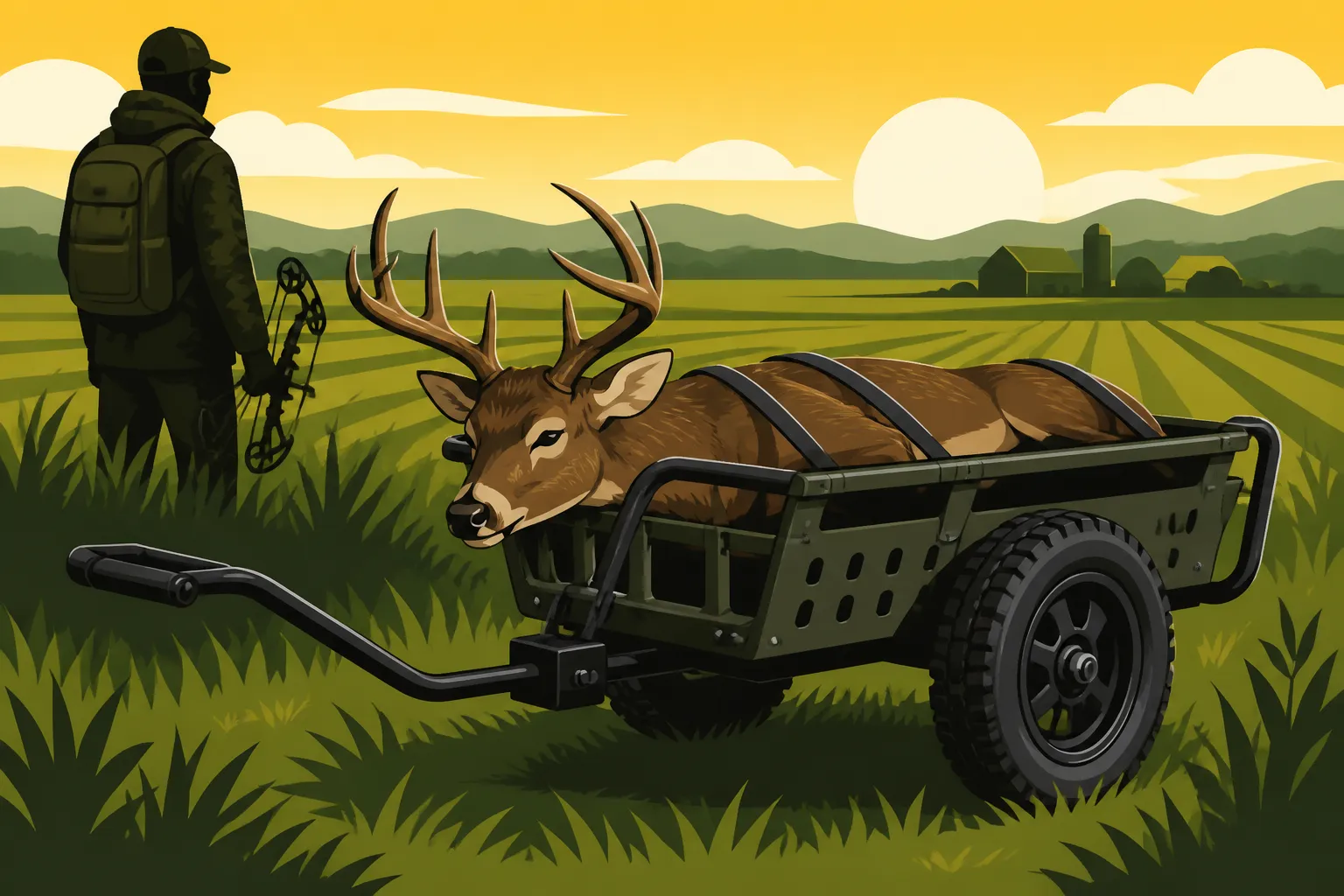
Let's be real: carrying a mature Vermont buck out of a standing cornfield is an endeavor that tests the limits of even the most seasoned hunters. The ground can be soft, the row spacing tight, and every step feels like you're dragging an anchor. While you might think "flat" means easy, the reality of farmland often includes irrigation ditches, deep tractor ruts, downed fences, and, let's not forget, the sheer distance. That's where a deer cart truly shines, transforming a grueling, multi-person job into something far more manageable, sometimes even for a single hunter.
Saving Your Back and Your Energy
The most immediate and obvious benefit of a deer cart is the immense relief it offers your back. We've all been there, hunched over, pulling a deer by its antlers or a rope, feeling every single vertebra compress with each strained step. Not only is this uncomfortable in the moment, but it can lead to serious injuries, especially if you're hunting solo or pushing past your physical limits. A good deer cart distributes the weight, allowing you to push or pull with much less strain, preserving your energy for the hunt itself and for the processing back at camp. Think about those long hauls from the back forty of a Champlain Valley Dairy Farm Edge – a cart can make all the difference between a quick retrieval and hours of grunting work.
Beyond just preventing injury, saving energy is a huge factor. Imagine successfully tracking a deer in fresh green mountain snow or connecting with a buck after a long, cold sit. You're already tired. Adding a two-mile drag across a muddy field can completely wipe you out, making field dressing or butchering back at camp a misery. With a cart, you arrive back with more in the tank, meaning you can focus on proper game care and celebrate your success rather than collapsing in exhaustion. It’s an investment in your physical well-being and your continued enjoyment of the sport.
Navigating Challenging Farmland Terrain
Flat farmland isn't always a smooth, paved path. In Vermont, our agricultural areas are often a mosaic of plowed fields, grassy pastures, muddy tracks, and even rocky sections near old stone walls. A deer cart, particularly one designed with robust wheels, can handle these varied conditions far better than trying to slide a deer across them. The wheels lift the carcass, preventing it from snagging on stubble, digging into soft ground, or getting caked in mud.
Consider a scenario where you've taken a deer down in a low-lying section of a field after a recent rain. The ground is saturated, and attempting to drag it directly would turn into a mud-wrestling match, covering your deer and yourself in grime. A cart with large, wide wheels can float over this softer terrain, keeping the carcass relatively clean and making forward progress possible. It also gives you leverage to navigate around obstacles like fallen branches or the occasional large rock that might litter a field edge, offering a surprising amount of maneuverability compared to a direct drag.
Speed and Efficiency in Game Retrieval
Time is often of the essence, especially when dealing with warmer weather or when you're racing against darkness. A deer cart dramatically speeds up the retrieval process. Instead of taking numerous breaks during a drag, you can maintain a more consistent pace. This efficiency is critical for proper game care, helping to cool the carcass faster and minimize spoilage. Plus, it means you spend less time hauling and more time enjoying other aspects of your hunt or getting home to your family.
Imagine you've punched your tag an hour before sunset, and the truck is a good mile away through an open field. Without a cart, you're looking at a potential blood trailing after dark in Vermont situation or a lengthy, exhausting ordeal in fading light. With a cart, you can often cover that distance in half the time, getting the animal back to your vehicle well before night fully sets in. This not only increases safety but also significantly reduces the stress associated with late-day retrieves.
Key Features to Look for in a Farmland Deer Cart
When you're evaluating deer carts for Vermont's varied farmland, not all models are created equal. The right cart can make your life immeasurably easier, while the wrong one might just add to your frustration. It’s important to think about the specific challenges that flat, agricultural land presents and choose features that directly address them.
Wheel Design and Tire Type
The wheels are arguably the most critical component of a deer cart, especially when tackling farmland. You’re not just rolling across pavement; you’re dealing with soft soil, mud, stubble, and potentially sharp debris.
- Large Diameter Wheels: Generally, the larger the wheel diameter, the easier it is to roll over obstacles like crop stubble, small rocks, and uneven ground. Larger wheels also have a better angle of attack, meaning they don't get "stuck" as easily in ruts or ditches. Look for wheels in the 18-inch to 24-inch range for optimal performance on farmland.
- Wide Tires: This is crucial for soft terrain. Wide tires distribute the cart's weight (and the deer's weight) over a larger surface area, preventing the wheels from sinking into mud or soft soil. Think of it like snowshoes for your cart. Tires that are 3-4 inches wide are ideal.
- Pneumatic (Air-Filled) vs. Solid (No-Flat) Tires: This is a classic debate.
- Pneumatic Tires: Offer excellent cushioning and shock absorption, making for a smoother ride over rough ground. They can be inflated to lower pressures for better flotation on soft mud or higher pressures for easier rolling on harder surfaces. The downside? They can go flat if punctured by thorns or sharp stubble, which is a real possibility in farm fields. You’ll want to carry a small repair kit or sealant if you go this route.
- Solid/No-Flat Tires: These are made of solid rubber or foam-filled material, so they can never go flat. This provides peace of mind, especially on a remote retrieve. However, they are typically much harder and offer less shock absorption, which means a bumpier ride and more effort to push or pull over uneven terrain. For pure farmland use, the risk of a flat from pneumatic tires is often worth the smoother ride and better flotation they provide, just make sure they're robust.
Frame Material and Construction
The frame is the backbone of your cart, dictating its strength, weight, and durability. You need something that can handle the weight of a heavy buck without bending or breaking, and also stand up to the elements and rough handling.
- Aluminum Frames: These are generally lighter, which is a significant advantage when you're already loaded down with gear. While lighter, modern aluminum alloys can be incredibly strong and resistant to corrosion. If you're often hunting solo and need to lift the cart into your truck, the weight savings can be huge.
- Steel Frames: Steel is inherently stronger and more rigid than aluminum, often leading to a more robust and durable cart. However, it's also heavier. Steel frames are usually powder-coated or painted to resist rust, but scratches can expose the metal. If absolute brute strength and longevity are your top priorities, and you don't mind the extra weight, steel is a solid choice.
- Welded vs. Bolted Construction: A fully welded frame typically offers superior strength and rigidity compared to a frame assembled with bolts and screws, which can loosen over time with vibration and heavy loads. A few bolted connections for foldability are fine, but the main structural components should ideally be welded.
Carrying Capacity and Size
Think about the size of the deer you typically pursue in Vermont. While a small doe might fit on a compact cart, a heavy, mature buck requires a cart with ample carrying capacity and a sufficient platform size.
- Weight Capacity: Most quality deer carts will list a weight capacity, usually ranging from 200 lbs to 500 lbs. For Vermont deer, especially if you're targeting those larger Champlain Valley bucks, you'll want something in the 300 lbs+ range to be safe. It's better to have more capacity than you need than to push your cart to its breaking point with a trophy animal.
- Platform Size: The main deck or platform where the deer rests needs to be wide and long enough to comfortably accommodate the animal without excessive overhang. A wider platform offers more stability, while a longer one ensures the deer's entire body is supported, preventing parts from dragging. Look for platforms at least 20-24 inches wide and 45-60 inches long.
- Foldability and Portability: After the hunt, you still need to get the cart home. Many carts are designed to fold flat or break down for easier transport in a truck bed or SUV. This is a huge convenience, especially if you have limited vehicle space or want to store it compactly in your garage during the off-season. Consider how easily it folds and whether any parts are prone to getting lost.
Securing Straps and Accessories
A great cart is only as good as its ability to keep your deer securely in place. You don't want the animal shifting or falling off mid-traverse, especially over rough terrain.
- Integrated Straps: Many carts come with built-in cam buckle straps or bungee cords. These are incredibly convenient. Look for wide, sturdy straps that are easy to adjust and secure. Multiple attachment points on the cart frame are a plus, allowing you to cinch the deer down tightly from various angles.
- Tie-Down Points: Even if your cart has integrated straps, having additional tie-down points (loops, bars) on the frame is invaluable. This allows you to add your own ratchet straps or bungee cords for extra security, which can be critical for large, unwieldy animals or very steep, bumpy sections.
- Optional Accessories: Some carts offer handy add-ons like accessory bags for carrying gear, additional handles for two-person hauling, or even specialized attachments for carrying treestands or other bulky equipment. While not essential for every hunter, these can enhance the versatility of your cart.
Top Considerations for Choosing Your Cart
Picking out the best deer cart isn't just about the features of the cart itself. It's also about understanding your personal hunting style, the specific landscapes you navigate in Vermont, and your practical needs. Ignoring these factors can lead to buying a cart that, while good in theory, doesn't quite fit your reality.
The Specific Farmland Terrain You Hunt
While we're focusing on flat farmland, not all flat farmland is the same. The nuances of the terrain you typically encounter should heavily influence your choice.
- Open Fields with Minimal Obstacles: If your hunting grounds are primarily wide-open hayfields or recently harvested cornfields with relatively smooth ground, you might prioritize a lighter cart with pneumatic tires for speed and a smooth ride. Large diameter wheels will still be beneficial for rolling over stubble.
- Muddy Bottomlands and River Valleys: If you're often Working a Creek Bottom for Late-Season Deer or hunting in flood plains where mud is a common factor, flotation is key. Extra-wide pneumatic tires are a must. A more robust frame will also handle the stickiness of the mud better, as it can put more strain on the frame when pulling.
- Fields Bordering Woodlots with Stone Walls: Many Vermont farms feature historic stone walls or fencerows along their edges. If you frequently need to lift your cart over or through these obstacles, you’ll appreciate a cart that is relatively lightweight and well-balanced. The ability to fold it quickly can also be a boon for navigating tight spots. Think about how you'll manage getting a loaded cart over a low stone wall without damaging the deer or the cart.
Typical Deer Size in Your Hunting Area
Vermont deer can vary quite a bit in size depending on the region. A cart that works perfectly for a 120-pound doe might be woefully inadequate for a 200-pound field-dressed buck.
- Northeast Kingdom vs. Champlain Valley: Deer in the Northeast Kingdom might average a bit smaller, especially if they’re in heavily forested areas. However, in the Champlain Valley, where agricultural resources are abundant, deer tend to grow larger and heavier. If you're hunting those larger Why Champlain Valley Deer Run Bigger, you absolutely need a cart with a higher weight capacity and a more substantial platform.
- Targeting Trophy Bucks: If your goal is to consistently pursue large-bodied bucks, don't skimp on cart quality. The extra investment in a heavy-duty frame and larger, more robust wheels will pay dividends the first time you connect with a truly big animal. It’s better to have a cart that can handle the biggest deer you might shoot, rather than one that struggles with an average-sized buck.
Transport and Storage Limitations
Even the best deer cart is useless if you can’t get it to and from your hunting spot, or if it clutters your garage.
- Vehicle Space: Do you drive a full-size pickup, an SUV, or a smaller vehicle? If you have limited cargo space, a cart that folds down compactly or disassembles easily is essential. Measure your cargo area before buying to ensure a good fit.
- Storage at Home: If garage space is at a premium, a cart that can hang on a wall or tuck away neatly will be a major benefit. Some carts are designed to lean flat against a wall, while others might require more floor space even when folded.
- Getting it into the field: While we're talking about flat farmland, some access roads might be rough. Can your cart handle being bounced around in the back of your truck or on a trailer? Durability in transport is also a consideration.
Your Budget and Investment
Deer carts range significantly in price, from basic models to high-end, feature-packed options. It’s important to find the right balance between cost and quality for your needs.
- Entry-Level Carts: These are typically simpler designs, often with smaller, solid wheels and lighter frames. They can be perfectly adequate for smaller deer, occasional use, or very flat, smooth terrain. If you're just starting out or only hunt farmland a couple of times a year, an entry-level cart might suffice.
- Mid-Range Carts: This is where you'll find a good balance of features, durability, and price. Many mid-range carts offer pneumatic tires, sturdy frames (often steel), and good carrying capacity. For most serious Vermont farmland hunters, this is likely the sweet spot.
- Premium Carts: These carts boast top-tier materials, advanced features like specialized suspension or quick-release wheels, and often come with a higher price tag. If you hunt frequently, often target very large deer, or need a cart that can handle truly extreme conditions, a premium model might be a worthwhile long-term investment. Remember to consider the longevity and potential for repairs versus a cheaper cart that might need replacing sooner.
Local Regulations and Private Land Access
Before you even step foot in the field with a cart, it's crucial to understand any rules or permissions that might apply.
- Public Land Rules: While generally less restrictive on carts, some specific wildlife management areas or parts of the Green Mountain National Forest might have rules regarding wheeled devices, especially if they could damage sensitive habitat or trails. Always check the Vermont Fish and Wildlife Department regulations or specific WMA rules.
- Private Land Permission: If you're hunting private land (which is common in agricultural areas), you absolutely need permission. When knocking on doors in Champlain Valley Farm Country, it's a good idea to mention you'll be using a deer cart. Some landowners might have specific requests about where you can drive it to avoid disturbing crops or damaging property. Being respectful of their land is key to maintaining hunting access. Platforms like GoHunt, with their detailed mapping features, can be invaluable for identifying property lines and planning your routes on these private parcels to ensure you're always within your permitted hunting area.
Practical Tips for Using Your Deer Cart in Vermont Farmland
Having the right deer cart is only half the battle; knowing how to use it effectively and safely on farmland terrain is just as important. From loading your trophy to maintaining your equipment, a few practical tips can make your deer cart an indispensable tool in your Vermont hunting kit.
Loading and Securing Your Deer
Proper loading is crucial for stability and ease of transport. A poorly loaded deer can shift, making the cart difficult to handle or even causing it to tip over.
- Head First or Hindquarters First? Generally, loading the deer head first is often the easiest. The natural curve of the deer's body allows the head and neck to rest lower on the cart, keeping the center of gravity stable. It also typically means the antlers are out of the way for better maneuverability.
- Centering the Weight: Always try to center the deer's heaviest part (the chest cavity) over the axle of the cart. This helps balance the load, making it much easier to push or pull. If the weight is too far forward, the handles will be heavy; too far back, and the front end will lift, reducing control.
- Utilize Straps Effectively: Don't just drape straps over the deer; cinch them down tightly. Use multiple straps if available, crisscrossing them for maximum security. Ensure the deer cannot roll or slide, especially if you anticipate navigating any uneven ground or minor slopes. The goal is to make the deer feel like an integral part of the cart, not a separate, shifting load.
Navigating Farmland Obstacles
Farmland isn't always smooth sailing. You'll encounter fences, ditches, and muddy sections that require strategic handling.
- Fencerows and Stone Walls: These are common in Vermont. For lower fences, you might be able to lift the cart over. For taller fences, or if you're alone with a heavy deer, it might be easier to temporarily remove the deer, pass the empty cart through or over, and then reload it. Always be mindful of the fence itself and any posted signs or landowner wishes. For old Stone Wall Fence Line boundaries, you may need to find a natural break or a low spot to traverse.
- Ditches and Swales: Approach ditches at an angle, rather than straight on, to prevent the cart from bottoming out or getting stuck. If it's a deep ditch, you might need to lift and pivot the cart over one wheel at a time. This is where wide, large-diameter wheels truly earn their keep, allowing the cart to bridge smaller gaps more effectively.
- Muddy Sections: If you encounter a particularly muddy patch, maintain momentum and try to keep moving. If you get stuck, don't just pull harder – assess the situation. Sometimes, taking a slightly different angle or gently rocking the cart can free it. Reducing tire pressure slightly on pneumatic tires can increase flotation, but remember to reinflate them once you’re out of the deep mud for easier rolling.
Maintenance and Cleaning for Longevity
Taking care of your deer cart will ensure it lasts for many seasons of successful retrieves.
- Thorough Cleaning: After each use, especially if it's been muddy or bloody, give your cart a good rinse with a hose. Remove any dried mud, blood, or plant debris. Pay special attention to the wheel axles and moving parts. For deeper cleaning, a brush and some mild soap can work wonders.
- Inspect and Lubricate: Regularly inspect the frame for any signs of damage, loose bolts, or rust. Tighten any fasteners as needed. If your cart has moving parts or axles that can be lubricated, apply a water-resistant grease or lubricant to keep them rolling smoothly. This is particularly important for carts used in wet or muddy conditions.
- Tire Care: If you have pneumatic tires, check their pressure before each hunt. Keep them properly inflated according to the manufacturer's recommendations. For both pneumatic and solid tires, inspect them for cuts, punctures, or excessive wear. Repair or replace as needed to avoid getting stranded in the field.
Planning Your Exit Strategy
This is perhaps the most overlooked tip, but it can save you immense grief. Before you even head out to hunt that Working a Champlain Valley Cornfield Edge, consider how you'd get a deer out.
- Scout Your Routes: Use mapping apps or aerial photos (like those found on GoHunt, which can show you detailed terrain features and access roads) to identify potential exit routes from your stand or hunting area back to your vehicle. Look for paths that avoid major obstacles, deep mud, or areas that require significant lifting. Knowing your escape route beforehand means you won't be scrambling in the dark with a heavy deer. Scouting Vermont Public Land Before Season isn't just for finding deer; it's also for finding your way out with one!
- Mark Key Points: If you're using a GPS or hunting app, mark potential bottlenecks, gates, or easier crossing points along fencerows. This pre-planning can shave valuable time and effort off your retrieve when it matters most.
- Consider a Two-Person Haul: Even with a cart, a very heavy deer on challenging terrain can sometimes benefit from two people. One person can push or pull the cart, while the other can steady the load or lift the front end over obstacles. If you're hunting with a buddy, coordinate your cart strategy beforehand.
Comparing Deer Cart Options
To give you a clearer picture, here's a brief comparison of typical deer cart characteristics you might encounter, keeping in mind that specific models will have their own unique blends of these features.
| Feature | Lightweight Aluminum Cart | Heavy-Duty Steel Cart |
|---|---|---|
| Frame Material | Aluminum alloy | Powder-coated steel |
| Weight | ~15-25 lbs | ~30-50 lbs |
| Weight Capacity | ~250-350 lbs | ~350-500 lbs |
| Wheel Type | Often pneumatic, sometimes solid | Usually large pneumatic |
| Tire Width | Moderate (~2.5-3 inches) | Wide (~3-4 inches) |
| Foldability | Often folds very compactly | May fold, but still bulky/heavy |
| Best For | Lighter deer, moderate mud, easy transport, solo hunters | Heavy bucks, very muddy/rough terrain, ultimate durability, two-person hauls |
| Typical Terrain | Open hayfields, dry cornfields | River bottoms, saturated fields, logging roads |
| Cost | Mid-range | Mid-to-high range |
This table is a general guide. Many manufacturers offer options that bridge these categories, giving you a tailored solution. Always consider your personal hunting habits and the specific challenges of your local Vermont hunting grounds.
Disclaimer
This article is for general informational purposes only and does not constitute professional advice. Laws, prices and regulations vary by location and change over time. Consult a qualified professional for guidance on your specific situation.