Hunting a Drawn Moose Zone in the Northeast Kingdom
The moment that email hits your inbox, confirming you've drawn a Vermont moose permit, a whirlwind of excitement and a touch of panic probably sets in. This isn't just another deer tag; it's a once-in-a-lifetime opportunity for many, especially in the vast, wild stretches of the Northeast Kingdom. This guide is here to walk you through transforming that coveted tag into a successful hunt, from meticulous scouting to strategic field tactics, ensuring you make the absolute most of your incredible drawn moose zone.
Understanding Your Moose Permit and Zone
Drawing a moose permit in Vermont is an achievement in itself, a testament to luck and persistence given the limited number of tags issued each year. But once you have that golden ticket, the real work begins: understanding precisely what your permit allows and the unique characteristics of the zone you're assigned. This isn't like deer hunting where you might have general statewide flexibility; moose permits are hyper-specific, designed by the Vermont Fish & Wildlife Department to manage localized populations effectively.
Decoding Your Specific Wildlife Management Unit
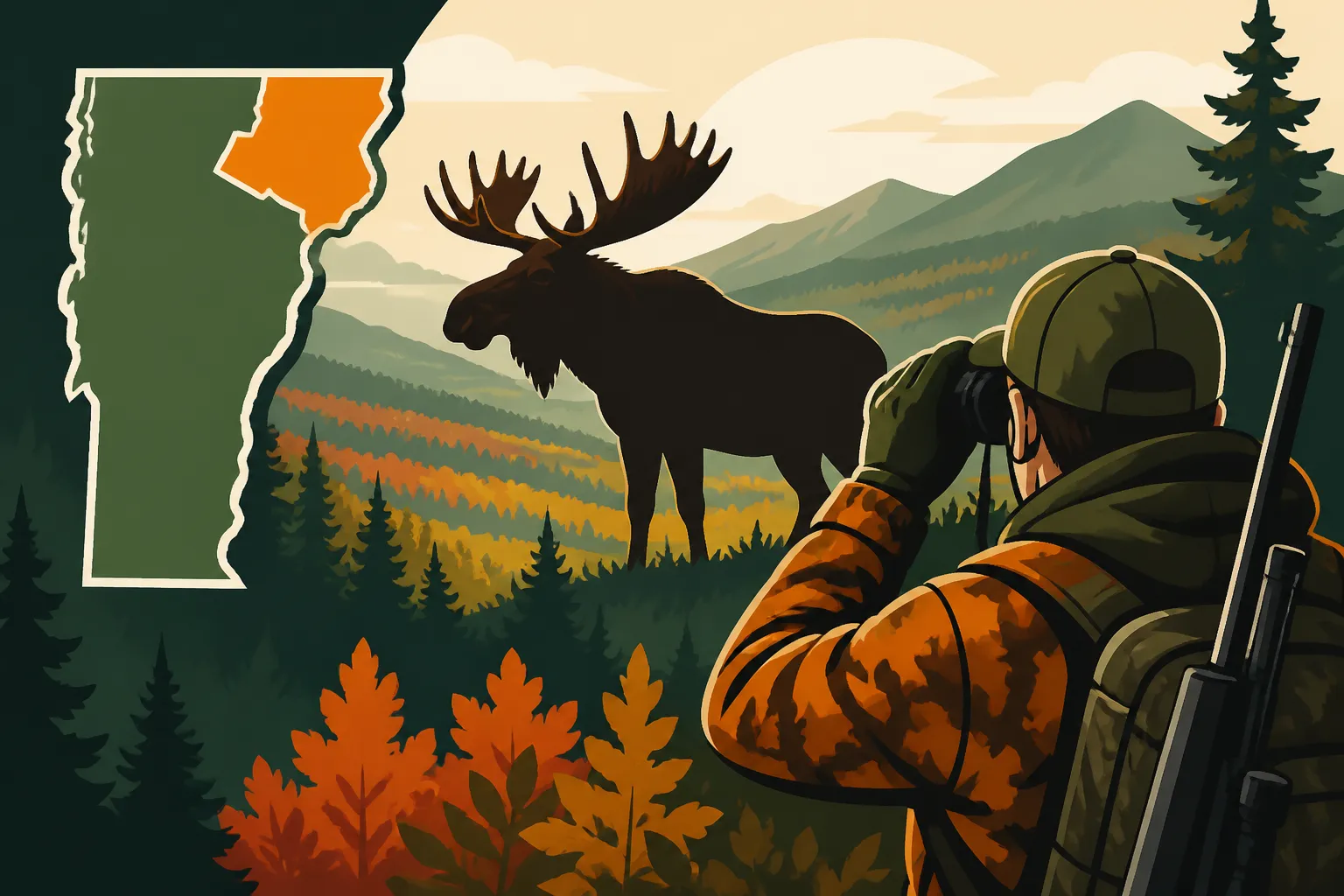
Your moose permit will be tied to a specific Wildlife Management Unit (WMU) within the state, and for most moose hunters, that means heading to the expansive and rugged Northeast Kingdom. WMUs like C1, C2, and D2 are often where permits are allocated due to higher moose densities, though this can shift based on population trends and management goals. It's crucial to locate your WMU on a map and understand its boundaries thoroughly. This isn't just a suggestion; it's a legal requirement. You cannot pursue or harvest a moose outside of your designated WMU, and accidentally crossing a boundary while following a track can lead to serious legal repercussions.
Spend significant time with detailed maps, whether they're paper or digital. Platforms like GoHunt, for instance, can provide excellent overlays of WMU boundaries, public land, and even satellite imagery that reveals terrain features. Knowing whether your WMU is dominated by sprawling timber company lands, dense state forests, or a mix of private parcels will heavily influence your scouting and hunting strategy. Are there major river drainages, expansive bogs, or high-elevation ridges that dictate moose movement? These are the questions you need to answer before you even pack your truck.
Understanding the Permit Allocation Strategy
The allocation of Vermont's moose permits is a carefully calculated effort by the Vermont Fish & Wildlife Department, largely influenced by population estimates and concerns such as the impact of the winter tick. You'll often hear about how Vermont's Eighty-Five 2026 Moose Permits, for example, are strategically placed to help manage herd health in specific areas where populations might be more stressed. This means that while you're focused on your hunt, it's worth understanding that your permit is part of a larger, scientifically-driven effort to maintain a healthy moose population in the face of environmental challenges.
For residents and non-residents alike, the application process for these permits is highly competitive, and understanding the nuances of the Vermont Moose Lottery Application Process is key to even getting to this stage. The permit isn't just a license to hunt; it's an opportunity to contribute to wildlife management efforts while engaging in a truly wild pursuit. This context reinforces the importance of ethical hunting, meticulous preparation, and adherence to all regulations, ensuring that the legacy of moose hunting in Vermont continues for future generations.
Pre-Season Scouting and Preparation
Once you have your permit and understand your zone, the real groundwork begins. A successful moose hunt, particularly in the challenging terrain of the Northeast Kingdom, is rarely a matter of pure luck; it's the culmination of diligent planning and preparation. This phase can be as exciting and rewarding as the hunt itself, allowing you to connect with the landscape long before opening day.
Leveraging Mapping Tools and Aerial Imagery
Modern technology has revolutionized pre-season scouting. Gone are the days of relying solely on topo maps and guesswork. Today, satellite imagery and advanced mapping applications are indispensable. Platforms like GoHunt, Gaia GPS, or OnX Hunt provide incredibly detailed satellite views that can help you identify potential moose habitat without ever stepping foot in the woods. Look for areas with a mix of young regeneration, dense softwood cover for bedding, and proximity to water sources like bogs, swamps, or small ponds.
Pay close attention to changes in elevation, natural funnels created by terrain, and logging roads or clear-cuts that might offer easier access or prime feeding areas. Moose are creatures of habit, and while their range can be vast, certain habitat types consistently draw them in. Mark potential travel corridors, bedding thickets, and feeding zones on your digital map. This initial digital reconnaissance allows you to narrow down vast tracts of land into manageable areas for closer, boots-on-the-ground investigation, saving you precious time and energy during the actual hunt.
Boots-on-the-Ground Reconnaissance
As helpful as digital tools are, there's no substitute for experiencing the terrain firsthand. If at all possible, make at least one pre-season trip to your assigned WMU. This allows you to verify what you've seen on the maps, identify actual moose sign, and understand the nuances of the landscape. Look for tracks, rubs on trees, browse lines, and fresh droppings. Moose are browsers, so identifying areas with preferred forage like willow, aspen, balsam fir, and maple saplings is key.
Focus your efforts on the areas you identified as promising during your map scouting. Walk potential travel routes, assess the density of cover, and find natural ambush points. Pay attention to how wind and thermals will behave in specific valleys and on ridge lines, as this is critical for a successful stalk or calling setup. Don't forget to assess access points – are there old logging roads, hiking trails, or clearings you can use? Also, consider how you might approach a potential kill site for Getting a Moose Out on a Logging Road or other challenging terrain. This physical exploration builds confidence and familiarity that will be invaluable when the pressure is on.
Physical Conditioning and Gear Checks
Hunting a moose in Vermont's Northeast Kingdom is a physically demanding endeavor. This isn't a stroll through a manicured woodlot. You'll likely be navigating dense timber, steep hills, bogs, and potentially deep snow or mud. Start a rigorous physical conditioning program well in advance of your hunt. Focus on cardiovascular endurance, leg strength, and core stability. Practice hiking with a loaded pack, as you'll be carrying not just your rifle and gear, but potentially quarters of a moose for miles.
Equally important is a thorough gear check. For a multi-day backcountry hunt, your equipment needs to be bombproof. Think about everything from your layered clothing system (because Vermont weather can change in an instant) to your rifle, optics, first-aid kit, and communication devices. Consider consulting guides like Packing for a Northeast Kingdom Moose Hunt for a comprehensive checklist. Ensure your rifle is sighted in perfectly and you're comfortable making accurate shots under pressure at various distances. Check all your boots for wear, test your headlamps, and ensure your knife is sharp. A failure in gear far from civilization can turn a dream hunt into a nightmare.
Tactics for Northeast Kingdom Moose
With your scouting complete and your gear ready, it's time to think about how you'll actually find and harvest a moose in the vastness of the Northeast Kingdom. Moose hunting isn't typically about sitting and waiting; it's an active pursuit that often involves covering significant ground and strategic interaction with these majestic animals.
Calling Strategies: Locating and Enticing Bulls
Moose calling can be an incredibly effective tactic, especially during the rut, which often coincides with Vermont's moose season. The key is understanding when and how to call. Early in the season, a good strategy might be to use locator calls – loud cow or bull grunts – to try and elicit a response from a distant bull. Once you get a response, you can begin to move closer and adjust your calling to entice him into range.
The most common calls mimic a cow in estrus, a bull grunt, or the sound of a bull raking branches with its antlers. Raking can simulate a bull marking his territory, often stirring up a territorial response from other bulls. Patience is paramount when calling. Set up in an area with good visibility and cover, call sparingly, and wait for a response. Moose are not as quick to respond as deer, and a bull might take 15-30 minutes, or even longer, to work his way in. Understanding how to execute Calling a Bull Moose Into Range effectively can make all the difference.
Here's a basic guide to moose calling:
| Call Type | Sound | When to Use | Effect on Moose |
|---|---|---|---|
| Cow Call | Long, drawn-out "mooo-ahh" sound | Anytime, especially during the rut; for locating or enticing a bull. | Attracts bulls looking for a mate. Can also attract cows. |
| Bull Grunt | Deep, guttural "err-ugh" or "uh-uh" | For challenging other bulls; to mimic a bull moving through cover. | Can provoke a territorial response from bulls, making them come investigate. |
| Antler Raking | Scraping antlers (or a paddle) on trees | To simulate a bull sparring or marking territory; often paired with grunts. | Can make a bull think another bull is in his area, leading to an investigation. |
| Breaking Brush | Sounds of large animal moving through brush | To mimic a moose moving, can draw curiosity, especially when paired with calls. | Adds realism to your calling sequence, making it more convincing. |
Remember, the Northeast Kingdom's terrain can carry sound for miles, but it can also absorb it quickly in dense timber. Adjust your volume and frequency accordingly.
Still-Hunting and Spot-and-Stalk Approaches
Calling isn't the only way to hunt moose. In areas with good visibility, such as clear-cuts, burn areas, or open bogs, a spot-and-stalk approach can be highly effective. This involves slowly moving through the landscape, pausing frequently to glass for moose, and then carefully stalking within range once one is spotted. Techniques like Glassing a Clear-Cut for a Bull Moose can be incredibly useful here. Use high-quality binoculars or a spotting scope to scan distant timber edges, regenerating clearings, and bog perimeters. Moose are huge animals, but they can disappear surprisingly well in dense cover.
Still-hunting is another classic method, especially in thick timber. This involves moving incredibly slowly and deliberately through the woods, pausing for several minutes after every few steps to listen, look, and scan. You're not looking for the whole moose at once; instead, focus on identifying small details: the horizontal line of a back, the dark curve of an antler, or the flick of an ear. Moose are often found in thick, young growth where they can feed and bed securely. This method requires immense patience and keen observational skills. It's often most productive when you're hunting into the wind, allowing your scent to be carried away from the moose.
Focusing on Prime Habitat and Food Sources
Understanding moose biology and habitat preferences is paramount. Moose in the Northeast Kingdom thrive in areas that offer a mosaic of habitats: dense conifer stands for thermal cover and security, younger hardwood or mixed wood forests for browse, and access to water. They are particularly drawn to areas that have been recently logged, as the regenerating saplings provide an abundant food source. Look for logging cuts from 3-15 years old; these are often moose magnets.
Bogs, swamps, and beaver flowages are also prime locations, providing both food and water. During warmer periods of the season, moose will often be found near water to cool down and feed on aquatic vegetation. As the season progresses and temperatures drop, they might shift to higher ground or denser thermal cover. Identifying Late-Season Food Sources for Vermont Whitetails is a related concept that highlights how critical food can be for deer, and it applies equally to moose. Knowing the preferred diet of a moose and where those food sources are abundant will lead you to the animals.
Field Dressing and Extraction Strategies
Harvesting a moose is only half the battle; the real logistical challenge often begins after the shot. A moose is an enormous animal, weighing anywhere from 600 to 1200 pounds, and preparing it for transport out of the woods requires significant planning and effort. This is where your pre-season scouting pays dividends, especially if you've already considered how to manage a successful harvest.
The Logistics of Field Dressing a Moose
Unlike a deer, which many hunters can drag out whole, a moose almost always requires butchering in the field. This means you need a plan for Field Dressing a Moose in the Northeast Kingdom that prioritizes efficiency and meat care. The sheer size of the animal means you'll need multiple sharp knives, a bone saw, game bags, and perhaps a small tarp or plastic sheeting to keep meat clean as you work. Ideally, you’ll have at least one hunting partner to help with the strenuous process of rolling the animal and quartering it.
The most common approach is to skin the moose and then quarter it, separating the four large leg quarters, backstraps, tenderloins, neck meat, and rib meat. The hide itself is incredibly heavy, and often left in the field, though some choose to take it for tanning. Time is of the essence, especially if temperatures are mild, to prevent spoilage. Ensure you have a system for cooling the meat as quickly as possible, even if it means hanging it in game bags from a tree overnight.
Planning for Meat Extraction
Once the moose is quartered, the next monumental task is getting the meat out of the woods. This is where a game cart, pack frames, or even an ATV (where legal and permissible) become invaluable. If you're deep in the backcountry, carrying out a moose on pack frames will be one of the most physically demanding experiences of your life. Each quarter can weigh 100-200 pounds.
Consider your access routes. Did you scout an old logging road or a snowmobile trail nearby? Could you use a small boat if hunting near a lake or large pond? Even if you've thought about Getting a Moose Out on a Logging Road, the reality can be far more challenging than anticipated. Having friends or family on standby who can assist with packing out is highly recommended. The effort required is immense, but the reward of a freezer full of lean, wild moose meat makes it all worthwhile.
Handling and Transporting the Trophy
If you've harvested a bull, the antlers are a magnificent trophy. Once the head is removed, if desired for taxidermy, ensure it's handled with care. The skull plate is often left attached to one of the quarters for transport out of the woods, or packed separately. Remember that your tag must remain with the meat until it's processed and stored, and often a portion of the tag (or the entire tag) needs to be affixed to the antlers as well for legal transport.
When transporting the meat and trophy, keep it as cool as possible. Large coolers filled with ice are essential for longer drives. Arrange the meat so it can breathe, and avoid stacking it tightly, which can impede cooling. A truck bed with good airflow, covered by a tarp but allowing ventilation, is ideal. Ensure all parts of the moose are properly tagged and visible if you encounter a game warden.
Post-Hunt Responsibilities and Care
The hunt doesn't truly end until all the administrative tasks are complete, and your hard-earned meat is safely in the freezer. There are crucial steps to take after a successful moose hunt, ensuring you remain compliant with regulations and honor the animal.
Reporting Your Harvest
Vermont, like most states, requires hunters to report their harvest. This data is critical for the Fish & Wildlife Department to monitor populations and manage future permit allocations. Typically, you'll need to report your moose within a certain timeframe, often 48 hours, at a designated big game check station or through an online portal or app. This reporting is not just a formality; it's a vital part of the state's wildlife management efforts, feeding into important statistics like Vermont Moose Population Estimate and Vermont Moose Population Decline Since the 1990s.
During the reporting process, officials may collect biological samples, such as teeth for aging the animal or tissue samples for disease monitoring. This contributes to the overall health assessment of the herd, helping to understand threats like Why Winter Ticks Threaten Vermont Moose. Be prepared to provide accurate information about the date, time, and location of your harvest.
Meat Processing and Preservation
After the demanding task of extraction, processing the meat properly is the final step in ensuring you enjoy the bounty of your hunt. You can choose to process the moose yourself or take it to a professional butcher. If processing yourself, ensure you have a clean workspace, sharp tools, and a good understanding of how to cut and package the various parts. Moose meat is incredibly lean and flavorful, making it a prized table fare.
Vacuum sealing is an excellent method for long-term preservation, protecting the meat from freezer burn. Label all packages with the type of cut and the date. Proper care and processing mean you'll be enjoying moose roasts, steaks, and ground meat for a year or more. This dedication to utilizing the animal fully is an important aspect of ethical hunting.
Reflecting on the Experience
Hunting a drawn moose zone in the Northeast Kingdom is an experience that few are lucky enough to have. Take time to reflect on the entire journey, from the anxious wait for the lottery results, through the intense scouting, the challenging hunt, and the physically demanding field dressing and extraction. It’s an adventure that tests your physical and mental fortitude, rewards patience, and deepens your connection to Vermont's wild landscapes.
Whether you're a seasoned hunter or this was your first big game draw, the lessons learned and memories made are invaluable. Share your story, inspire others, and always remember the profound privilege of pursuing such an incredible animal in Vermont's majestic North.
Disclaimer
Hunting is an inherently dangerous activity. This guide provides informational content only and should not replace professional instruction, landowner permission, or strict adherence to all Vermont Fish & Wildlife Department regulations. Always prioritize safety, ethics, and legal compliance when hunting. Laws and regulations can change; it is the hunter's responsibility to stay informed of the most current rules.