How Many Coyotes Vermont Has
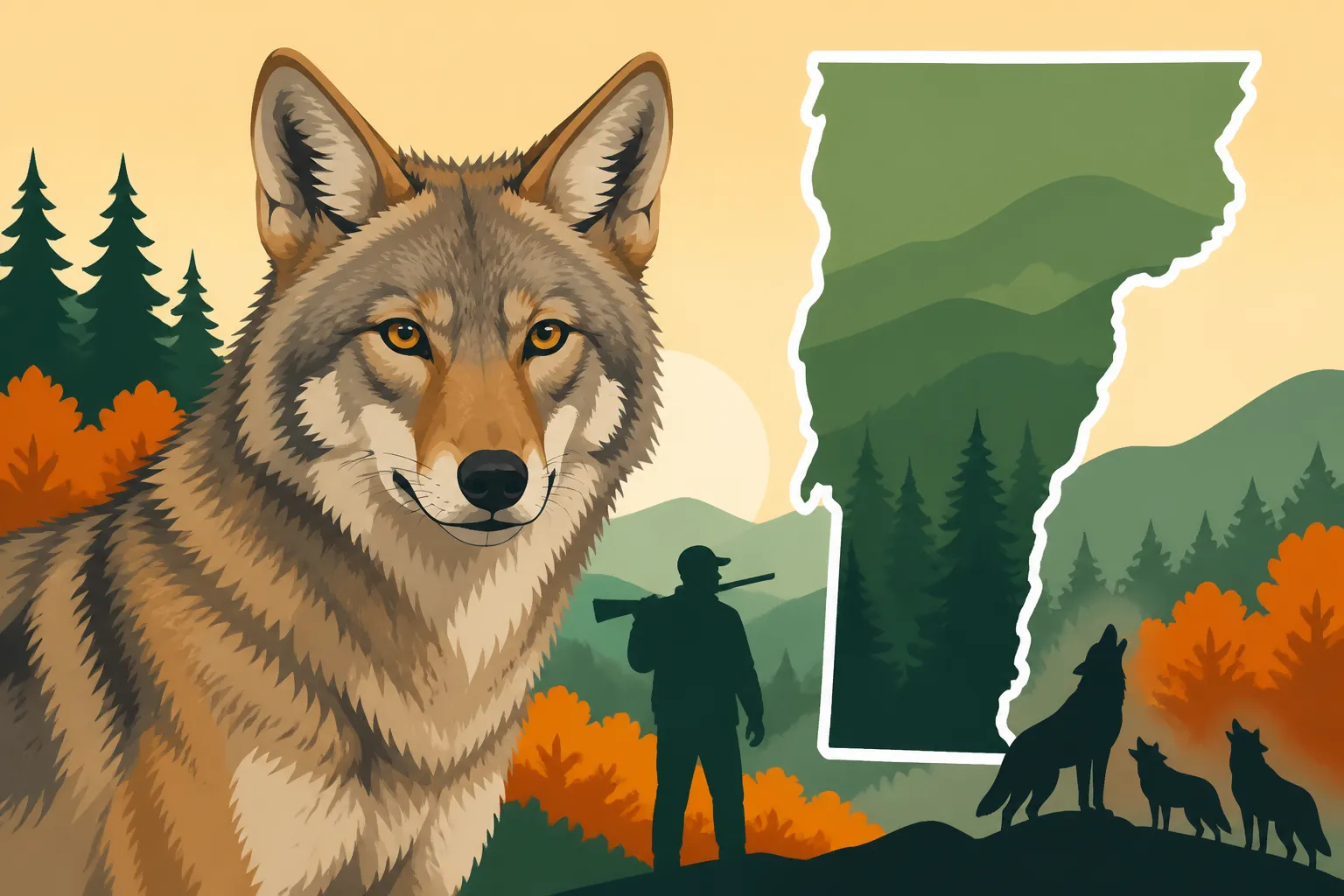
It's a question many of us find ourselves asking when out in the Vermont woods, whether we're seeing tracks, hearing a distant howl, or just wondering about the ecological balance: exactly how many coyotes does Vermont have? It's a tricky number to pin down, and it often leads to a lot of frustration and speculation among hunters and landowners alike. This guide aims to shed some light on the reality of Vermont's coyote population, exploring why precise figures are so elusive, what factors influence their numbers, and what their presence means for our hunting experiences in the Green Mountain State.
Estimating Vermont's Elusive Coyote Population
Trying to get an exact headcount on a wild, wide-ranging, and often nocturnal animal like the coyote in a diverse state like Vermont is, frankly, a Herculean task. Unlike deer or moose, which can be estimated through aerial surveys in certain conditions or harvest data, coyotes don't offer such clear-cut methods. They're incredibly adaptable, incredibly smart, and they don't stick to predictable patterns that make counting easy.
The Challenges of Counting Cryptic Carnivores
One of the biggest hurdles is simply their nature. Coyotes are masters of camouflage and stealth. They're not herd animals that congregate in open fields. Instead, they move through dense cover, along field edges, and across vast wilderness areas, often under the cover of darkness. This makes direct observation nearly impossible on a large scale. Think about how hard it is to spot a single coyote even when you know they're in an area – multiply that by an entire state, and you begin to understand the challenge.
Furthermore, their home ranges can be quite extensive, and they're constantly moving. A coyote might be in one woodlot one day and miles away the next, making it difficult to avoid double-counting or missing individuals entirely. Traditional methods like pellet counts, which work for deer, aren't as effective for coyotes because their scat decomposes quickly and can be mistaken for other canids. Even remote cameras, while helpful for presence/absence data, don't easily provide population density estimates across wide areas.
How Wildlife Agencies Attempt Estimates
Despite these challenges, wildlife biologists aren't just guessing. They employ a combination of indirect methods to understand population trends and make educated estimates. These methods often involve analyzing harvest data from trappers and hunters, which can give an indication of minimum numbers and general distribution. If harvest numbers are consistently high in certain areas, it suggests a healthy, robust population. Conversely, a decline might indicate a localized dip in numbers.
They also look at roadkill data, although this can be skewed by vehicle traffic patterns and isn't a perfect indicator. Public sightings and reports, while anecdotal, can contribute to a broader picture of where coyotes are commonly encountered. More scientifically rigorous methods might include DNA sampling from scat or hair snares, which can identify individual coyotes and help estimate density in smaller, focused study areas. However, scaling these intensive methods up to a statewide estimate for a highly mobile species is incredibly resource-intensive and often cost-prohibitive. So, while we might not have an exact number like "Vermont has precisely 5,237 coyotes," biologists can confidently state whether populations are stable, increasing, or decreasing over time in various regions. This kind of trend data is far more valuable for management purposes than a fleeting, impossible-to-confirm single number. Understanding these trends helps inform decisions, especially when it comes to balancing game species and predator populations, a topic often discussed by hunters and conservationists. You might use a tool like GoHunt to mark areas where you consistently see coyote sign, helping you build your own anecdotal map of their local presence.
Factors Influencing Vermont's Coyote Population Dynamics
Coyotes are incredibly resilient creatures, and their numbers in Vermont, like any wild population, are constantly ebbing and flowing based on a complex web of environmental and biological factors. It’s never static, and what might be true this year could shift next year due to a variety of influences.
Prey Availability and Habitat Diversity
One of the most significant drivers of any predator population is the abundance of its prey. Coyotes are opportunistic feeders, meaning they'll eat just about anything they can get their paws on. In Vermont, their diet often includes white-tailed deer (especially fawns in spring, and winter-weakened adults), snowshoe hares, cottontail rabbits, ruffed grouse, wild turkeys, and a variety of small mammals like voles and mice. When these prey populations are robust, coyotes tend to thrive, leading to higher survival rates for pups and potentially larger litters.
Conversely, a dip in prey animals, perhaps due to a harsh winter for deer or a decline in small game, can put pressure on coyote numbers. They might range more widely in search of food, or their reproductive success could decrease. Habitat diversity also plays a crucial role. Vermont offers a mosaic of forests, agricultural lands, and open fields, creating ideal hunting grounds for coyotes. The edges where these different habitats meet are particularly productive, providing cover for stalking and easy access to multiple food sources. A well-placed game camera, perhaps utilizing advanced features that help identify movement patterns, can quickly reveal the constant traffic of coyotes along these productive edges. Where to Hang a Camera on a Logging Road might give you some ideas.
Climate, Disease, and Human Interaction
Vermont's climate presents both opportunities and challenges for coyotes. Mild winters can lead to higher fawn survival rates for deer, which in turn means more prey for coyotes come spring. However, extremely harsh winters with deep snow can make hunting difficult for coyotes, especially smaller prey, and can increase mortality rates, particularly for younger or weaker individuals. Disease, too, can impact coyote numbers. Canine distemper, parvovirus, and sarcoptic mange are just a few examples of diseases that can spread through coyote populations, especially when densities are high, causing significant localized die-offs.
Perhaps the most direct influence, however, comes from human interaction. Hunting and trapping seasons for coyotes are open in Vermont, and these activities certainly remove individuals from the population. While these efforts rarely "eradicate" coyotes from an area due to their high reproductive potential and ability to quickly fill a void, they can certainly keep local populations in check or prevent them from growing unchecked. Farmers and landowners, frustrated by coyote depredation on livestock or domestic animals, also play a role in managing local populations, often under specific permits. It’s a constant push and pull, and what works for one landowner might not be the right approach for another, given the highly intelligent nature of these animals. Mapping out properties where you have permission to hunt can be made easier with a tool like GoHunt, allowing you to focus on specific areas for coyote management.
Where Coyotes Are Most Prevalent in Vermont
Coyotes are found throughout Vermont, from the bustling suburbs to the most remote wilderness tracts. However, their density and the frequency of encounters can vary significantly depending on the specific region and the type of landscape. Understanding these regional differences can help hunters and outdoor enthusiasts better anticipate their presence.
Champlain Valley, Green Mountains, and Northeast Kingdom
The Champlain Valley, with its mix of agricultural fields, scattered woodlots, and proximity to human settlements, often experiences a healthy coyote population. The abundant deer, turkey, rabbit, and rodent populations in these areas provide a consistent food source. Coyotes here might be more accustomed to human presence, though they remain wary. You'll often find them working field edges, scouting for easy meals. Hunters in this region often talk about the challenge of Hunting a Champlain Valley Dairy Farm Edge or Working a Champlain Valley Cornfield Edge where coyotes are also highly active.
In the Green Mountains, coyotes thrive in the vast forested lands. While prey might be less concentrated than in agricultural areas, the sheer amount of cover and the presence of species like snowshoe hares, ruffed grouse, and a solid deer herd ensure their survival. Here, their behavior might be a bit wilder, and they could be less habituated to human activity. Hunting in this rugged terrain presents unique challenges, and coyotes are an integral part of that ecosystem. Predator Calling Green Mountain Backcountry is a popular tactic here.
The Northeast Kingdom (NEK) is a true wilderness stronghold, and coyotes are a vital part of its wild character. With vast tracts of unbroken forest, remote ponds, and less human density, coyotes here can roam more freely. While their numbers might not be "denser" in terms of per-acre count than in some valley bottoms, the sheer expanse means a robust and widespread population. Their impact on moose calves, in particular, is a topic of ongoing study and concern in the NEK.
Adapting to Suburban and Rural Landscapes
It's not uncommon to hear stories of coyotes sighted closer to towns and even within suburban areas. This isn't necessarily a sign of overpopulation everywhere, but rather a testament to their incredible adaptability. As human development expands, coyotes learn to utilize new food sources (like refuse or small domestic animals, though this is rare) and navigate human-dominated landscapes. They are masters of using greenbelts, riparian corridors, and even powerline cuts as travel routes, often going completely unnoticed.
In more rural settings, especially farm country, coyotes can be a significant presence. They are attracted to livestock (though usually preying on vulnerable or neglected animals rather than healthy adults) and often target young calves or poultry. This leads to a lot of friction with farmers and can sometimes make coyotes a management priority in those localized areas. Understanding their movements, whether through direct observation or by utilizing advanced mapping tools to analyze habitat, is key to successful management. A tool like GoHunt can help you identify optimal travel corridors and potential denning sites, giving you an edge in understanding local coyote movements.
Here's a generalized look at how coyote presence might vary by Vermont region:
| Region | Typical Habitat | Prey Availability | Estimated Coyote Presence | Hunter/Trapper Focus |
|---|---|---|---|---|
| Champlain Valley | Farmland, woodlots, rural-suburb | High (deer, small game, rodents) | Moderate to High | Field edges, livestock protection, general hunting |
| Green Mountains | Dense forest, rugged terrain | Moderate (deer, hare, grouse) | Moderate | Backcountry calling, general hunting, fur trapping |
| Northeast Kingdom | Deep wilderness, remote forests | Moderate (deer, moose calves, hare) | Moderate to High | Wilderness calling, fur trapping, population monitoring |
| Connecticut River V. | River bottoms, mixed forest, agriculture | High (deer, small game, waterfowl) | Moderate to High | River corridors, farmland edges, general hunting |
| Southern Vermont | Rolling hills, mixed forest, small farms | Moderate to High (deer, small game) | Moderate | Mixed habitat hunting, population management |
The Impact of Coyotes on Vermont's Game Species
The presence of coyotes is a topic that often sparks passionate debate among Vermont hunters. Many see them as direct competitors for game animals, particularly deer and turkeys, and there’s valid reasoning behind those concerns. Understanding their ecological role and actual impact is crucial for a balanced perspective.
Predation on Deer and Turkey Populations
It's no secret that coyotes prey on white-tailed deer. Their primary impact on deer populations often comes in the form of fawn predation. During the spring fawning season, coyote mothers with hungry pups are actively seeking easy meals, and newborn fawns, vulnerable and relatively defenseless, can be a significant food source. A healthy deer population can often absorb a certain level of fawn predation, but in areas where deer numbers are already struggling due to harsh winters, habitat loss, or other factors, significant coyote predation on fawns can definitely hinder population recovery. Hunters observing fewer fawns with does in late summer often point to coyotes as a primary culprit, and their concerns are understandable. Vermont Fawn Survival Rates are a key indicator wildlife biologists track.
Coyotes also prey on wild turkeys, particularly poults (young turkeys) and nesting hens. A turkey nest, hidden on the ground, is incredibly vulnerable to a persistent predator. Once the poults hatch, they are small and slow, making them easy targets for a hungry coyote. While turkeys are resilient and have high reproductive rates, continuous predation pressure from coyotes, especially when combined with other predators like foxes and raccoons, can impact local turkey numbers.
It's important to remember that coyotes are just one piece of a much larger predator puzzle. Black bears, bobcats, and even domestic dogs and cats can also contribute to fawn and poult mortality. Nature has its own brutal ways of balancing things, and coyotes simply fill a niche.
Maintaining a Healthy Ecosystem Balance
While the thought of coyotes preying on deer and turkeys can be frustrating for hunters, it's essential to recognize their role in maintaining a healthy, balanced ecosystem. Coyotes are natural predators, and by targeting weaker, older, or sick individuals, they can help keep prey populations robust and genetically strong. They also help control populations of smaller mammals like rodents, which can have ripple effects on forest health and agricultural impacts.
For instance, their predation on deer can sometimes help prevent overbrowsing in areas where deer numbers might otherwise become too high, which can damage forest understory and impact other wildlife. It's a complex system, and removing one component can sometimes have unintended consequences further down the line. Wildlife managers in Vermont generally view coyotes as a natural and important part of the state's fauna, rather than an invasive species to be eradicated. Their management strategies often focus on understanding population dynamics and ensuring a healthy balance, rather than simply reducing coyote numbers across the board. Vermont Coyote Range and Density is something I refer to when considering their broad ecological impact.
Many hunters engage in coyote hunting and trapping, not just for the challenge, but also as a way to potentially mitigate localized impacts on deer or turkey populations. It's a way some hunters feel they can actively participate in wildlife management. Whether you're calling them in for a close shot or running a trapline, it's a demanding pursuit that requires skill and patience. If you're interested in pursuing coyotes, checking out resources like Coyote Calling Vermont Farm Country or Night Hunting Rules for Vermont Coyotes can be a great starting point for understanding the methods and regulations involved. Every time you head out into the Vermont woods, remember that coyotes are out there, a fascinating and challenging part of our wild landscape, influencing everything from deer movement to the silent balance of our forests.
Disclaimer
This article is for general informational purposes only and does not constitute professional advice. Laws, prices and regulations vary by location and change over time. Consult a qualified professional for guidance on your specific situation.