Why Vermont Grouse Numbers Cycle
It's a common frustration for grouse hunters in Vermont: one year the woods are drumming with birds, and the next, they seem to have vanished entirely. These dramatic fluctuations can make it feel like you're playing a guessing game every fall. This guide will dive deep into the fascinating, yet often perplexing, world of ruffed grouse population cycles here in the Green Mountain State, helping you understand why these swings occur and how you can still find success even when numbers are down.
Understanding the Ruffed Grouse Population Cycle
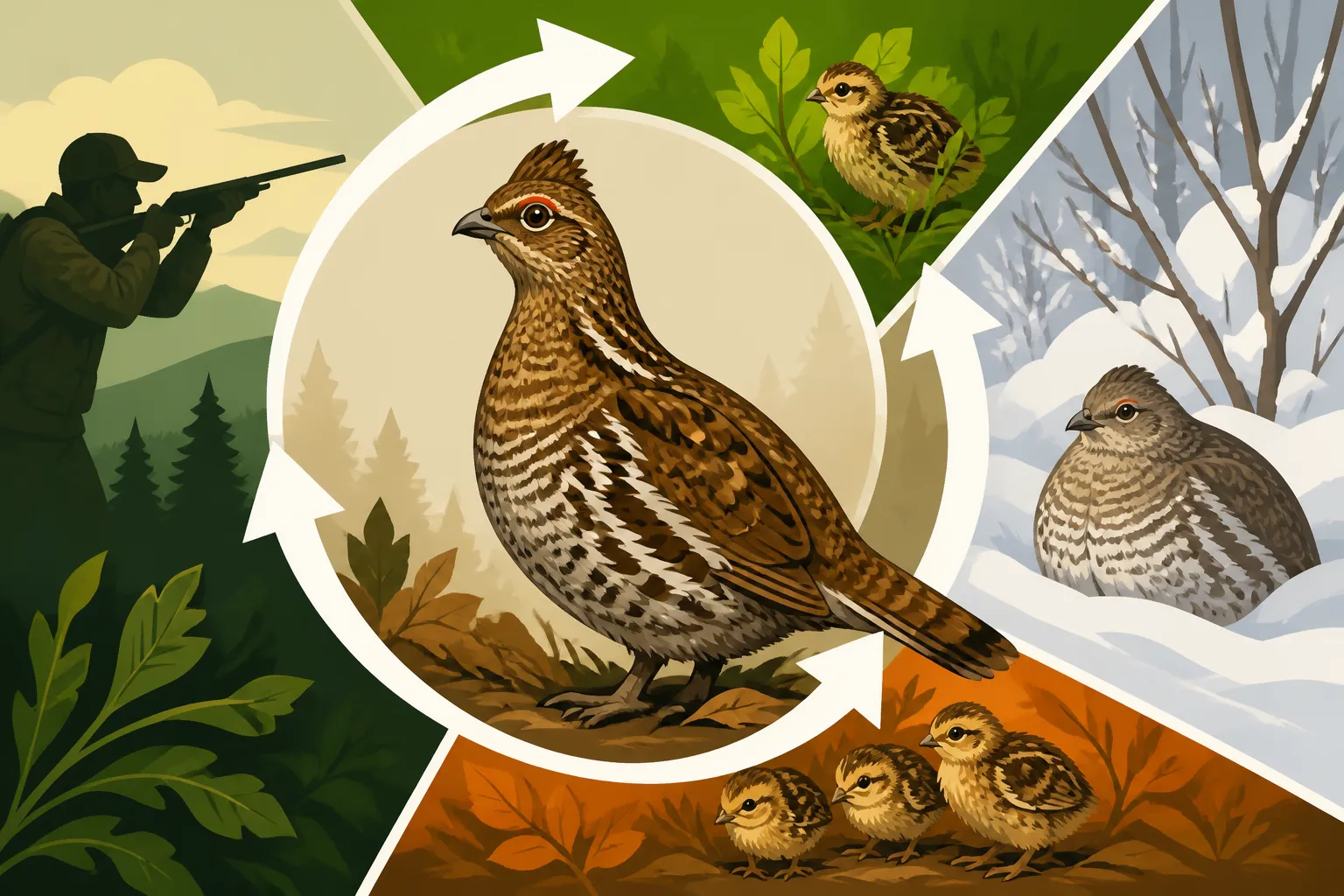
For generations, hunters and wildlife biologists have observed a distinct pattern in ruffed grouse populations across their range, including here in Vermont. These aren't random ups and downs, but rather a somewhat predictable "boom and bust" cycle that often spans roughly 8 to 11 years. One year, your favorite covert might be bursting with flushing birds, and a few years later, it feels eerily quiet. It’s enough to make you scratch your head and wonder if you're just having bad luck, but it’s actually a fundamental part of the grouse's biology.
The Classic Cycle Theory and Its Real-World Impact
The classic understanding of ruffed grouse cycles often points to a complex interplay of factors, not just one isolated cause. For a long time, researchers believed these cycles were largely driven by predator-prey dynamics, where an increase in grouse numbers would eventually lead to an increase in predator numbers, which would then drive grouse numbers back down. This, in turn, would cause predator populations to decline, allowing grouse to rebound. While this is certainly a part of the puzzle, especially with species like snowshoe hare (which often cycle in tandem with grouse), the reality for ruffed grouse is far more nuanced in places like Vermont.
The impact of these cycles on a hunter is palpable. During a high year, walking through prime habitat can be an exhilarating experience, with multiple flushes per hour, offering plenty of shooting opportunities and a full game vest. You feel like a master hunter. But during a low year, those same coverts can feel barren. You might walk for hours, dogs working hard, without a single bird getting up. This isn't necessarily a reflection of your skill or your dog's ability; it's often simply the stage of the cycle your local bird population is in. Recognizing this can help manage expectations and encourage persistence, as well as inform where you might want to focus your efforts.
Moving Beyond Simple Explanations
While predator-prey relationships are a piece of the puzzle, modern wildlife science understands that a multitude of factors contribute to these cycles. It’s not just coyotes eating more grouse, or goshawks having a good year. Everything from the health of the habitat to prevailing weather patterns during critical nesting periods, and even the prevalence of certain diseases, plays a role. These elements interact in complex ways, making it incredibly difficult to pinpoint a single overriding cause for any particular year's grouse numbers.
For Vermont hunters, this means that even if you're seeing a dip in your local grouse population, it doesn't necessarily mean there's been a surge in fox or bobcats. It could be that a series of wet, cold springs dramatically reduced chick survival, or that a large stand of ideal grouse cover has matured past its prime. Understanding this complexity helps us appreciate the resilience of the birds and the intricate balance of the ecosystem, rather than just blaming one thing. It also means that solutions aren't simple, and managing grouse populations requires a holistic approach that considers all these interacting elements.
Key Factors Influencing Vermont's Grouse Numbers
Vermont's rugged landscape, with its mix of rolling hills, dense forests, and varied terrain, provides diverse habitat for ruffed grouse. However, even within this rich environment, grouse populations are highly susceptible to several key factors that drive their cyclical nature. These factors often combine to amplify or mitigate population swings, making some years more productive than others.
Habitat Quality and Availability
The single most crucial element for ruffed grouse is suitable habitat, and its availability and quality are constantly changing due to forest succession and human activity. Ruffed grouse thrive in early successional forests – young, regenerating woodlands with dense understories that offer both food and protection. Think of areas that have been logged within the last 10-20 years, clear-cuts that are growing back thick, or abandoned farm fields reverting to forest. These areas provide the perfect blend of cover to escape predators and a consistent food supply. Aspen, birch, and alder stands, in particular, are favored by grouse for their buds and catkins, which are vital winter food sources.
As forests mature, they lose this critical understory density, becoming less ideal for grouse. This is why active forest management, including selective logging and clear-cutting in certain areas, is actually beneficial for grouse populations in the long run. If large tracts of land are allowed to mature without disturbance, grouse numbers will naturally decline in those areas simply due to habitat loss. Hunters using tools like GoHunt or similar mapping applications can often identify recent timber harvests or dense patches of young growth that might hold birds. Knowing where to look for this specific type of habitat is paramount, especially when birds might be concentrated in smaller pockets during low population years. Reading Aerial Photos for Green Mountain Deer can offer insights into identifying these landscape features.
Predation Pressure
Predators are an undeniable force in the grouse cycle, especially when grouse numbers are already low. While a healthy grouse population can sustain some predation, during the "bust" phase of the cycle, every lost bird has a magnified impact. Common grouse predators in Vermont include goshawks, great horned owls, red foxes, coyotes, bobcats, and even martens. Some of these predators, like foxes and coyotes, also experience their own population cycles, which can align with or exacerbate grouse declines. For instance, a peak in the coyote population could put additional pressure on an already struggling grouse population.
Predation is particularly impactful on nests and young chicks, as well as on adult birds during winter when snow depth can limit their ability to burrow for protection. When snow is shallow, grouse are more exposed to aerial predators. The effectiveness of cover in a given habitat is directly tied to a bird's ability to evade these threats. A thick, regenerating clear-cut offers far more escape options than a mature, open hardwood stand. This is why simply "more predators" isn't the whole story; it's the interaction between predator numbers and the availability of effective cover that often dictates grouse survival.
Weather Extremes
Weather plays a surprisingly significant role, especially during the critical breeding and nesting seasons. Ruffed grouse hens lay their eggs in nests on the ground, making them vulnerable to environmental conditions. A prolonged cold, wet spring can be devastating for chick survival. Young grouse chicks are highly susceptible to hypothermia, and a lack of insects due to poor weather conditions can lead to starvation. A late spring snowstorm, or an extended period of heavy rain and unseasonably cool temperatures, can wipe out entire broods.
Conversely, mild winters and warm, dry springs generally lead to higher survival rates for both adult birds and their offspring, contributing to population increases. While Vermont's winters are often characterized by deep snow, which can actually benefit grouse by providing insulated burrows, extremely harsh winters with prolonged periods of ice or bitter cold can also take a toll. A winter with little insulating snow cover and extreme cold can expose birds to both predators and the elements, reducing their overall health and breeding success in the following spring. It’s a delicate balance, and Mother Nature doesn't always cooperate.
Disease and Parasites
While less commonly discussed than habitat and predation, disease and parasites can also contribute to the cyclical nature of grouse populations. Birds, like any wildlife, are susceptible to various pathogens and parasitic loads. During periods of high population density, diseases can spread more easily, potentially leading to increased mortality. Additionally, a bird weakened by parasites might be more vulnerable to predation or less able to withstand harsh weather conditions.
For example, certain internal parasites can reduce a grouse's overall fitness, impacting its ability to forage efficiently, evade predators, or reproduce successfully. While widespread epidemics specifically linked to grouse crashes are not as well-documented as, say, CWD in deer, chronic health issues can certainly compound the effects of other stressors during a population decline. This is another layer of the complex web that determines Vermont Ruffed Grouse Population Cycles.
Navigating the Ups and Downs as a Hunter
Understanding that grouse populations cycle isn't just academic; it's a vital piece of knowledge that can help you become a more resilient and effective hunter in Vermont. When numbers are high, the hunting can be phenomenal. But when they're low, it can be downright discouraging if you don't adjust your expectations and strategies.
Scouting and Adaptation are Key
The most critical step a grouse hunter can take is to become a diligent scout, and to be willing to adapt. Even in low cycle years, birds exist; they're just more concentrated in the very best habitat. This means foregoing those marginal coverts that might hold a bird or two in a good year, and instead focusing solely on premium, ideal early-successional areas. Look for dense thickets of young aspen, alder runs, or areas with multiflora rose and other dense shrubby growth that provides maximum cover. A good GPS unit or a mapping app like GoHunt can be invaluable for identifying these areas, especially after reviewing recent logging activity on public or permissioned private lands.
Don't be afraid to walk more and cover more ground, but do so with purpose, targeting those specific habitat types. If your usual spots are quiet, explore new ones, perhaps in different elevation bands or facing different aspects, which might have different vegetative growth stages. Pay close attention to food sources. Is it a good year for wild apple, partridgeberry, or hawthorn? Birds will concentrate where food is plentiful and cover is adequate. Scouting Vermont Public Land Before Season becomes even more crucial when grouse numbers are low.
Recognizing Local Trends
How do you know if you're in a high or low year? Beyond anecdotal evidence from fellow hunters, paying attention to the woods itself can give you clues. During the spring, listen for drumming. Male grouse drum to attract mates, and if the woods are relatively quiet during peak drumming season, it's a strong indicator of lower numbers. In the fall, observe how many birds you're flushing per hour in known good cover. Are you seeing broods of young birds, or mostly single adult flushes? A high proportion of young birds suggests a successful breeding season and potentially an upward trend.
It also helps to keep your own records. Note down the dates, locations, and number of flushes you experience each season. Over time, you'll develop a personal understanding of the cycles in your specific hunting areas. Share information responsibly with trusted hunting partners, as collective observations can give a broader picture. Remember, grouse populations can vary even within a single Wildlife Management Unit (WMU) due to microclimates and localized habitat conditions. So, just because one patch is slow doesn't mean the next one over will be. Best Vermont Counties for Grouse can sometimes indicate broader regional trends, but local conditions are often more important.
Gear and Strategy for Success
When grouse numbers are low, every flush counts. This often means adjusting your gear and strategy to maximize your chances. A good pair of comfortable, durable boots that can handle Boots for Vermont's Steep Terrain is essential, as you'll be covering more ground. Layers for Layering for Vermont's Long Hunting Season are also important, as you might be moving more dynamically through varied cover.
Consider slower, more methodical hunting, allowing your dog more time to work scent and pin birds. Focus on working edges, creek bottoms, and dense transition zones where birds might hold tight. If you don't have a dog, be extra vigilant, pausing frequently to listen and scan ahead for movement or signs of birds, such as droppings or disturbed leaf litter. During tough years, even small advantages can make a difference. Sometimes, the goal shifts from harvesting a limit to simply enjoying the dog work and the challenge of finding a few birds. It's about appreciating the journey and the wild places Vermont offers, regardless of the numbers.
Summary of Ruffed Grouse Population Cycle Factors
To help visualize the complex interplay of factors, here's a quick overview:
| Factor | Impact on Grouse Population | When it's Most Critical |
|---|---|---|
| Habitat Quality | Provides food, cover from predators, nesting sites. | Year-round, but crucial for breeding success and winter survival. |
| Forest Succession | Creates (early) or destroys (mature) ideal grouse habitat over time. | Long-term trend affecting overall population capacity. |
| Predation Pressure | Direct mortality, especially on nests, chicks, and vulnerable adults. | Year-round, but heightened during low grouse numbers. |
| Weather (Spring) | Cold, wet conditions devastate chick survival; warm, dry springs boost numbers. | April-June (nesting and brooding season). |
| Weather (Winter) | Deep, insulating snow helps; shallow snow with extreme cold increases exposure. | December-March. |
| Food Availability | Abundant mast crops (berries, buds, catkins) improve health and survival. | Fall and Winter. |
| Disease/Parasites | Weakens birds, increases susceptibility to other stressors. | Can be year-round, more pronounced in high-density populations. |
This table illustrates that it's rarely one thing in isolation, but rather a combination of these elements that dictate whether Vermont's ruffed grouse populations are on an upward or downward trend.
Ultimately, Vermont's ruffed grouse populations are dynamic, ever-changing elements of our wild landscape. While the cyclical nature can be a source of frustration, it's also a testament to the resilience of these birds and the intricate balance of nature. By understanding the forces at play – habitat, predation, weather, and more – hunters can better adapt their strategies, manage their expectations, and continue to find joy in pursuing Vermont Small Game and Furbearers in the Green Mountains. Even in a low cycle, the challenge of finding a wild grouse, the sound of a flushing bird, and the beauty of the fall woods remain powerful draws for those dedicated to this classic pursuit.
Disclaimer
This article is for general informational purposes only and does not constitute professional advice. Laws, prices and regulations vary by location and change over time. Consult a qualified professional for guidance on your specific situation.