Vermont Grouse Drumming Log Surveys
One of the most challenging aspects of hunting ruffed grouse in Vermont is understanding where these elusive birds are thriving from year to year. It often feels like you're chasing ghosts through the woods, with populations seemingly fluctuating wildly. This guide will pull back the curtain on a crucial tool biologists use to track these magnificent birds: the drumming log survey. We'll explore what these surveys entail, why they're so vital, and how you, as a dedicated grouse hunter, can interpret and even leverage their findings to refine your own pursuit of Vermont's king of game birds.
Understanding the Ruffed Grouse Drumming Display
Before we dive into the science of surveys, it's essential to appreciate the natural behavior that makes these surveys possible: the drumming display of the male ruffed grouse. It's one of the most iconic sounds of the Vermont spring woods, a deep, resonant thumping that echoes through the budding forest.
The Biology of the Drum: How and Why Grouse Drum
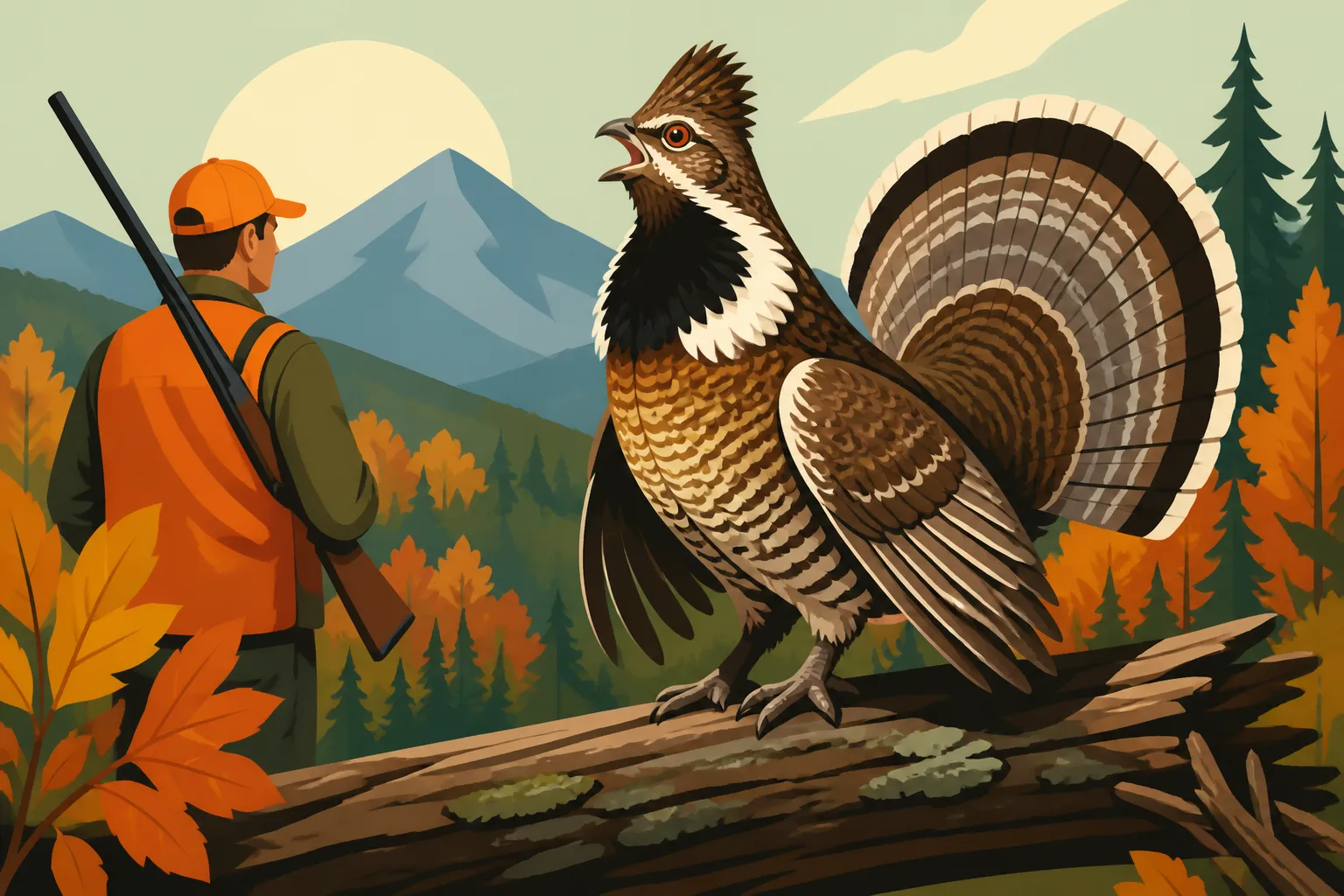
That distinct drumming sound isn't made by the grouse hitting its chest against a log, as some old wives' tales might suggest. Instead, the male ruffed grouse stands proudly on a chosen log, braces himself, and beats his wings rapidly against the air in a forward-and-upward motion. This creates a vacuum, and the sudden displacement of air produces that signature drumming sound. It starts slow, a series of individual thumps, and then quickly accelerates into a blur of sound, culminating in a rapid, machine-gun like crescendo. It's a truly mesmerizing display, especially when you're lucky enough to witness it up close.
The primary purpose of this drumming is to announce the male's presence and territory to other grouse. It's a clear signal to rival males, saying, "This is my turf, stay out!" Simultaneously, it's an advertisement to potential mates, a way of saying, "Hey ladies, I'm here, I'm strong, and I've got prime real estate!" This territorial behavior is most pronounced in the spring, typically from late March through May, which is why surveys are timed around this peak activity. The sound can carry surprisingly far through the quiet spring woods, making it an excellent auditory cue for biologists.
The Significance of the Drumming Log Site
Not just any old log will do for a ruffed grouse's drumming display. These birds are particular! A drumming log is often a fallen tree or a large, moss-covered rock, elevated slightly from the forest floor. Crucially, it must be surrounded by dense cover – usually young, regenerating forest, thick saplings, or a tangle of brush. This dense cover provides concealment from predators like hawks, owls, and coyotes, offering the drumming male a sense of security while he performs his conspicuous display. He'll typically have several escape routes planned, too, allowing him to flush quickly if a predator approaches.
A good drumming log site isn't just a place to stand; it's the heart of a male grouse's territory. He will often use the same log, or a series of preferred logs, year after year, provided the habitat remains suitable. This fidelity to specific sites is a key reason why drumming log surveys are so effective. If a biologist knows where historical drumming sites are, they can revisit them and quickly assess if a male grouse is still holding that territory. The quality and availability of these prime drumming sites are directly linked to the health of the surrounding forest and, by extension, the local grouse population.
The Science Behind Vermont's Drumming Log Surveys
So, how do wildlife biologists actually go about counting these elusive, camouflaged birds using nothing but their ears? It's a systematic and well-established method designed to provide a reliable index of population trends.
Methodology: How Biologists Conduct the Surveys
Drumming log surveys in Vermont, and across much of the ruffed grouse range, involve establishing predetermined routes or transects. These routes are often on quiet dirt roads, old logging trails, or designated forest paths that wind through suitable grouse habitat. Observers, usually wildlife technicians or dedicated volunteers, travel these routes, stopping at regular intervals – typically every mile or so. At each stop, they listen intently for a set period, usually four minutes, recording every distinct drumming sequence they hear. The direction and estimated distance of each drum are noted, helping to triangulate and avoid double-counting individual birds.
The key here is consistency. Surveys are conducted under specific weather conditions – calm winds, no rain, and mild temperatures – to ensure that drumming sounds carry well and aren't obscured by environmental noise. Observers are trained to identify the unique sound of a ruffed grouse drum versus other woodland noises, and they often use GPS devices to ensure they are at the correct listening points along their routes. This meticulous, standardized approach allows biologists to compare data from year to year and across different regions, painting a clearer picture of the Vermont Ruffed Grouse Population Cycles.
The Critical Timing and Environmental Conditions for Surveys
Timing is absolutely paramount for effective drumming log surveys. As mentioned, the drumming activity of male ruffed grouse peaks during the spring breeding season. In Vermont, this generally means surveys are conducted from mid-April through late May, when males are most actively advertising their territories and seeking mates. Biologists aim to hit the sweet spot when most males are drumming, but before foliage becomes too dense, which can muffle sounds and make detection more challenging. Early mornings are preferred, typically starting just before sunrise and continuing for a few hours. This is when drumming activity is highest, and ambient noise from human activity or other wildlife is generally at its lowest.
Environmental conditions also play a huge role. Surveys are typically cancelled or postponed if there are strong winds (which can carry sound away or create rustling that obscures drums), rain (which dampens sound and can reduce grouse activity), or excessive noise. Ideal conditions are clear, calm, and cool mornings. Consistency in these conditions ensures that variations in detection are due to changes in grouse numbers, not just varying survey efficacy. All these careful considerations contribute to the reliability of the data collected, which in turn helps us understand what's happening with Vermont Ruffed Grouse and Woodcock populations.
What Vermont's Drumming Log Survey Data Reveals
The data collected from drumming log surveys isn't just a tally of thumps; it's a vital diagnostic tool, offering insights into the health and trajectory of Vermont's grouse populations. It allows wildlife managers to make informed decisions and helps hunters understand the landscape they pursue these birds in.
Tracking Population Trends and Habitat Health
When biologists analyze the drumming count data year after year, they can identify critical population trends. Are the numbers of drumming males increasing, decreasing, or remaining stable in a particular Wildlife Management Unit (WMU) or across the state? This information is crucial for understanding the overall health of the species. A sustained decline in drumming counts can signal habitat degradation, increased predation pressure, or other environmental stressors. Conversely, rising counts suggest that habitat management efforts are working, or that natural conditions are favorable.
Beyond just raw numbers, the surveys can indirectly tell us about habitat quality. If drumming activity is low in areas that historically held good numbers, it might indicate that the forest has matured past its prime for grouse, becoming too open and lacking the dense, early successional cover these birds depend on. This sort of insight is invaluable for long-term conservation planning. It highlights areas where targeted timber harvests or other habitat manipulation projects might be beneficial, helping to create the patchwork of young, regenerating forest that grouse, snowshoe hare, and many other species absolutely need. It's a complex picture, and these surveys are a key piece.
How Survey Results Inform Management Decisions
The data gleaned from drumming log surveys directly influences how Vermont's Fish and Wildlife Department manages its grouse resource. For instance, if surveys reveal a widespread decline in drumming activity, it might prompt a review of hunting season lengths or bag limits, though changes are rarely made based on a single year's data. More often, the data directs habitat management strategies on public lands. If certain areas consistently show low drumming counts, biologists might prioritize those WMUs for clear-cutting, selective logging, or other silvicultural practices designed to create the ideal young forest habitat. This is especially true for areas within the Green Mountain National Forest or various state forests.
Furthermore, these surveys contribute to a broader understanding of why grouse numbers fluctuate, helping to explain Why Vermont Grouse Numbers Cycle. It's not just about managing hunting pressure; it’s about managing the entire ecosystem that supports grouse. By understanding where grouse are struggling, resources can be allocated more effectively to restore critical habitat, monitor disease, or study predator impacts. The surveys are a cornerstone of an adaptive management approach, allowing the state to respond proactively to the needs of the grouse population, ensuring healthy numbers for future generations of hunters and wildlife enthusiasts alike.
Integrating Survey Insights into Your Vermont Grouse Hunt
As a hunter, you might be wondering how all this scientific data translates to putting more birds in your game bag. While biologists use these surveys for population management, you can absolutely use their publicly available information to give yourself an edge.
Using Public Data to Refine Your Scouting Strategy
Vermont's Fish and Wildlife Department often publishes summaries of its drumming count data, sometimes broken down by region or even specific WMUs. Keep an eye out for these reports! If you know that drumming activity was particularly robust in, say, certain parts of Addison or Rutland counties, it might be a good indicator that those areas hold higher grouse densities heading into the fall. This information can help you narrow down your search for new hunting grounds or decide where to focus your efforts on public lands. Instead of wandering aimlessly, you can prioritize areas that have shown consistent grouse presence.
Moreover, if the reports indicate strong numbers in areas with specific habitat characteristics – perhaps recent timber harvests or areas with high densities of aspen and birch – you can then use mapping tools like GoHunt to pinpoint similar habitat types within those regions. GoHunt's satellite imagery and public land overlays can be incredibly useful for identifying those clear-cuts, young regenerating stands, or dense thickets that grouse love, even if you're Scouting Vermont Public Land Before Season without ever stepping foot on the ground. Combining broad survey data with detailed map scouting can be a game-changer.
Complementary Tactics for Locating Grouse Hotspots
While survey data provides a fantastic starting point, it's just one piece of the puzzle. Once you've identified promising regions based on drumming counts, you'll want to get boots on the ground to confirm your suspicions and find specific hotspots. Look for classic grouse habitat: young, regenerating clear-cuts, stands of aspen and birch, dense conifer thickets for winter cover, and areas with plenty of natural food sources like wild berries, beechnuts, and apple trees. Pay close attention to transition zones where different cover types meet – these edges are often prime locations. For instance, finding a Hunting a Clear-Cut Regrowth Edge where young trees meet mature timber can be a goldmine.
Another excellent tactic is to seek out areas that provide both food and cover in close proximity. Grouse don't typically travel far, so a patch of thick saplings next to a good food source, perhaps a patch of wild grapes or an abandoned apple orchard, will likely hold birds. You should also be looking for physical signs like droppings, dusting bowls, and most importantly, actual drumming logs. While the surveys count the sound of drumming, finding the physical logs in the fall confirms active use. Using the GoHunt app to mark these locations can help you build a personalized map of productive spots, year after year. It's all about combining the big-picture data with diligent, on-the-ground detective work to find the Best Vermont Counties for Grouse.
Here's a quick overview of how drumming log surveys work:
| Aspect | Description | Ideal Conditions | Hunter Takeaway |
|---|---|---|---|
| Purpose | Index population trends, assess habitat quality, inform management. | Calm, cool, clear mornings; no wind/rain. | Indicates regional grouse abundance and habitat health. |
| Methodology | Observers walk or drive established routes, stopping at intervals to listen for drumming males. | Mid-April to late May, starting before sunrise. | Regions with higher drumming counts likely have more birds. |
| Data Interpretation | Tracks increases, decreases, or stability in drumming activity over time. | Consistent methodology over years. | Helps identify productive WMUs or areas with strong habitat. |
| Habitat Focus | Reveals areas with suitable young forest and dense cover. | Early successional forest, dense thickets, varied age classes of timber. | Prioritize scouting areas with these characteristics, especially if surveys are high. |
Remember, while this scientific data is invaluable, the pursuit of grouse is also about spending time in Vermont's beautiful woodlands. Even when the surveys indicate lower numbers, there are always birds to be found by a persistent hunter who knows how to Find Sign in Green Mountain Timber and understands the nuances of grouse habitat.
Disclaimer
This article is for general informational purposes only and does not constitute professional advice. Laws, prices and regulations vary by location and change over time. Consult a qualified professional for guidance on your specific situation.