Vermont Deer Weight Averages by Region
It's an age-old question that sparks countless deer camp debates across the Green Mountain State: "How much did that deer really weigh?" Hunters often grapple with wildly different deer sizes depending on where they punch their tag in Vermont. This guide will delve deep into the factors influencing these variations and provide a realistic look at the average deer weight you can expect to encounter across Vermont's diverse hunting regions, helping you better understand the animals you pursue.
Why Deer Weight Varies So Much in Vermont
Anyone who's hunted across Vermont knows that a buck from the fertile Champlain Valley often looks and feels entirely different from one harvested deep in the rugged Northeast Kingdom. It's not just an illusion; these differences are rooted in a complex interplay of environmental, biological, and management factors that profoundly impact a deer's body weight. Understanding these influences is key to appreciating the variations you encounter.
Habitat and Nutrition
The old adage "you are what you eat" holds especially true for white-tailed deer. The quality and abundance of food sources directly dictate a deer's ability to put on weight, grow antlers, and even survive harsh winters. In Vermont, this means areas with rich agricultural land and diverse forest ecosystems tend to produce heavier deer. Think about the sprawling cornfields and apple orchards of the Champlain Valley or the lush river bottomlands of the Connecticut River. These areas provide a consistent buffet of high-energy foods like agricultural crops, nutrient-rich browse, and plentiful hard mast like acorns.
Conversely, deer inhabiting vast tracts of dense, mature softwood forests or higher elevations in the Green Mountains often have a more challenging time finding prime nutrition. While they might have plenty of cover, the food quality can be lower, and the growing season shorter. Deer in these environments might rely more heavily on native browse, which can fluctuate in palatability and nutritional value throughout the year. The underlying soil quality also plays a role; richer soils generally translate to more nutritious plants, which in turn leads to healthier, heavier deer. It’s a cascading effect, where good soil equals good plants, which equals good deer.
Age Class and Genetics
Beyond what a deer eats, how long it's been eating, and what its ancestors ate, are critical factors. Clearly, an older deer will typically weigh more than a fawn or a yearling. Bucks, especially, will continue to add body mass until they reach their prime, often around 4.5 to 6.5 years of age, before weight might stabilize or even decline slightly in very old age. A 1.5-year-old buck, sometimes referred to as a "fork-horn" or "spike," will simply not carry the same muscle and fat reserves as a mature 4.5-year-old animal, regardless of how good the groceries are. This is why when we talk about "average" weights, it's crucial to consider the age structure of the herd in a given region.
Genetics also play an undeniable role. Just like people, some deer are simply predisposed to be larger than others. While a high-quality food source can help any deer reach its full genetic potential, it won't magically turn a genetically smaller deer into a giant. Over generations, localized deer populations can develop genetic traits that favor certain body sizes, partly influenced by the environmental pressures and conditions of their specific home range. This genetic component, combined with a robust age structure, is what allows some areas to consistently produce heavier deer year after year, even if the absolute largest animals are still relatively rare. Vermont Buck Age Structure delves deeper into how age impacts antler and body size across the state.
Hunting Pressure and Population Density
The density of the deer population and the amount of hunting pressure it experiences can also indirectly affect deer weight. In areas with very high deer densities, there can be increased competition for available food resources. This competition can lead to a lower nutritional plane for all deer, resulting in lighter body weights across the board, even if the habitat appears good. It's a classic case of too many mouths to feed.
Conversely, in areas with lower deer densities, individual deer have access to more resources, which can lead to better health and higher average weights. Hunting pressure often plays a part in managing these densities. Regions with higher antlerless harvest rates, for instance, might see a slight increase in the average weight of the remaining deer as competition is reduced. While Vermont generally has a healthy deer population, understanding how Deer Density by Vermont Region impacts local weights can give you a clearer picture of what to expect when you're out scouting with your GoHunt app. It’s not just about seeing deer; it’s about seeing healthy deer.
Regional Breakdown of Vermont Deer Weights
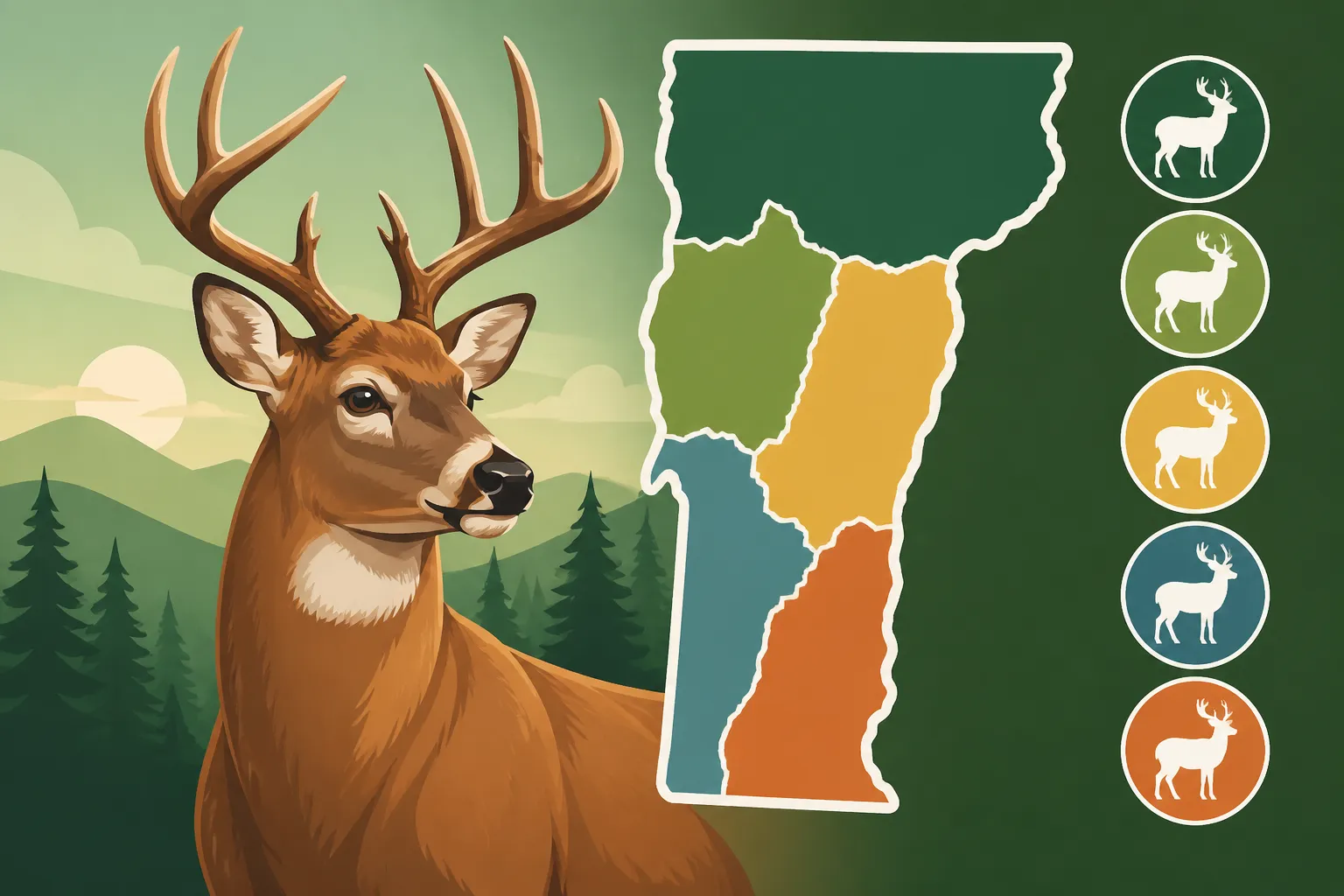
Vermont is a state of incredible topographical diversity, and these variations are mirrored in its white-tailed deer populations. From the rolling farmlands bordering Lake Champlain to the rugged, remote forests of the Northeast Kingdom, deer adapt to their specific environments, and their average body weights reflect these adaptations. Knowing these regional differences can help you set realistic expectations and tailor your hunting strategies.
The Champlain Valley's Heavier Deer
If you're chasing truly impressive body weight in Vermont, the Champlain Valley is often where hunters find it. This region, stretching along the western edge of the state, is characterized by its fertile agricultural lands, mild winters (compared to the mountains), and an abundance of high-energy food sources. Deer here regularly browse on corn, soybeans, alfalfa, and a variety of orchard fruits, supplementing their diet with native browse and hard mast. This rich diet, combined with ample cover in woodlots and hedgerows, allows deer to reach their full potential.
It's not uncommon to hear tales of bucks taken in Addison or Franklin counties that dress out well over 170 pounds, and even 200-pound dressed weights are reported annually, though these are still exceptional animals. Does in these areas also tend to be significantly heavier, often dressing between 110-140 pounds. The consistent nutrition provides the fuel for growth, and while trophy antlers are often the focus, the sheer mass of these animals is truly notable. If you're Hunting a Champlain Valley Dairy Farm Edge, you're likely to encounter deer with impressive body condition.
Northeast Kingdom's Hardy Whitetails
Venturing into Vermont's Northeast Kingdom (Essex, Orleans, and Caledonia counties) presents a stark contrast in deer weight. This region is a land of vast, unbroken forests, higher elevations, and notoriously harsh winters. While beautiful and wild, the primary food sources here are typically native browse, softwood regeneration, and a less consistent hard mast crop compared to the valleys. This more challenging environment means deer here tend to be leaner and often lighter for their age class.
A mature buck in the Northeast Kingdom might typically dress out in the 140-160 pound range, with larger individuals still an accomplishment but less frequent than in the Champlain Valley. Does typically fall into the 90-110 pound range. These deer are incredibly resilient and adapted to their rugged environment. Their survival often depends on efficient energy use and finding critical wintering areas. While the weights might be lower, the challenge and solitude of hunting these remote woods offer a different kind of reward. If you're Hunting a Ridge Above a Northeast Kingdom Bog, you'll learn quickly that these deer are tough.
Green Mountains and Central Vermont
The broad swath of the Green Mountains, running north to south through the heart of Vermont, offers a mixed bag when it comes to deer weights. This region encompasses a diverse range of habitats, from lower elevation mixed hardwoods and pockets of agriculture to steep, high-elevation softwood forests. As you might expect, deer weights here fall somewhere between the extremes of the Champlain Valley and the Northeast Kingdom, with significant local variations.
In areas of central Vermont with good mast crops and mixed forests, particularly where there are agricultural fringes or extensive logging operations that create abundant browse, deer can approach the weights seen in the Champlain Valley. Mature bucks might dress out from 150-170 pounds. However, as you climb into higher elevations and more mature, less diverse forest, weights tend to trend lower, closer to those in the Northeast Kingdom. Does in these mixed habitats might range from 100-130 pounds. Understanding Wind and Thermals in Steep Green Mountain Terrain is crucial here, as deer will use elevation to their advantage for cover and feeding. The key in the Green Mountains is finding those micro-habitats that offer the best nutrition.
Connecticut River Valley's Consistent Deer
Along Vermont's eastern border, the Connecticut River Valley carves out another distinct deer habitat. This region benefits from the fertile soils and river bottomlands, often interspersed with agricultural fields and extensive tracts of mixed hardwoods. The consistent water source and periodic flooding enrich the soil, contributing to healthy vegetation. While not as agriculturally intensive as parts of the Champlain Valley, it provides a stable and diverse food supply.
Deer weights in the Connecticut River Valley are often quite consistent and generally fall into the upper-middle range for the state. Mature bucks might typically dress in the 155-175 pound range, with larger ones pushing higher. Does commonly dress between 105-135 pounds. The blend of cover, water, and food sources makes this a productive area for deer, and hunters can often expect robust animals. This region, particularly in the southern half of the state, consistently produces good numbers of healthy deer, reflecting a balanced ecosystem. Working a Connecticut River Bottomland Funnel can be a highly productive strategy here.
Here's a generalized look at expected dressed weights by region for mature deer:
| Region | Mature Buck (Dressed Weight Range) | Mature Doe (Dressed Weight Range) | Key Nutritional Factors |
|---|---|---|---|
| Champlain Valley | 170 – 200+ lbs | 110 – 140 lbs | Abundant agriculture (corn, beans), orchards, rich soil, milder winters |
| Northeast Kingdom | 140 – 160 lbs | 90 – 110 lbs | Native browse, softwood forests, harsh winters, lower density |
| Green Mountains (Central) | 150 – 170 lbs | 100 – 130 lbs | Mixed hardwoods, some agriculture, varied elevation, mast crops |
| Connecticut River Valley | 155 – 175 lbs | 105 – 135 lbs | River bottomlands, mixed agriculture, consistent water, hardwoods |
Note: These are average dressed weights for mature animals. Individual deer will vary greatly based on age, genetics, and specific local conditions. A true "monster" buck of 200+ pounds dressed is still rare and a significant trophy in any region.
What to Expect When You Tag a Vermont Deer
Alright, you've put in the time, made the shot, and now you're standing over your hard-earned Vermont deer. This is where the rubber meets the road, and understanding what to expect regarding its size and the meat it will provide is crucial for the next steps. It's a moment of truth, and often, what you think the deer weighs and what it actually weighs are two different things.
Estimating Live Weight vs. Dressed Weight
One of the most common points of confusion in deer camp is the difference between live weight and dressed weight. When you see a deer standing in the woods, you're looking at its live weight – every ounce of hide, hair, internal organs, and blood. Once you've field dressed the animal, removing the internal organs (viscera), the weight significantly decreases. Generally, a deer's dressed weight is about 20-30% less than its live weight, depending on how thoroughly it's cleaned and what's removed.
So, if you hear someone talking about a "200-pound buck," they are almost certainly referring to its live weight. That same buck, once dressed, might weigh closer to 150-160 pounds. It’s important to make this distinction when comparing notes with other hunters or when consulting official harvest data, which almost always reports dressed weights for consistency. If you harvest a deer that feels "heavy," congratulations, but always remember the difference between what you drag out of the woods and what you'd see on a scale at a check station.
Field Dressing and Meat Yield
Once you've field dressed your deer, the next thing on most hunters' minds is the amount of venison it will yield. The usable meat yield from a dressed deer typically ranges from 50-70% of its dressed weight, again depending on factors like the deer's condition, how it's butchered, and how much bone and trim you keep or discard. For example, a 150-pound dressed buck from the Champlain Valley might yield anywhere from 75-105 pounds of boneless, freezer-ready meat. This is where the actual value of your harvest comes into play, providing healthy, organic protein for your family.
This process highlights the importance of efficient and thorough field dressing. The quicker and cleaner you get the internal organs out, the faster the carcass can cool, which is vital for meat quality, especially in warmer early-season conditions. Knowing Field Dressing a Deer in Cold Weather versus warmer temperatures can make a big difference in the final product. Every hunter develops their own system, but the goal is always to maximize that meat yield and ensure it's in the best possible condition for the freezer. Remember, a bigger deer generally means more meat, which is often the ultimate goal for many hunters.
Using Data to Plan Your Hunt
Understanding regional deer weight averages isn't just for bragging rights; it can be a valuable tool for planning your hunts. If your primary goal is to harvest a deer with significant body mass for meat, focusing your efforts on regions known for heavier deer, like the Champlain Valley or the richer pockets of the Connecticut River Valley, might increase your odds. Conversely, if you're seeking a challenging backcountry experience in the Northeast Kingdom, you might adjust your expectations for body size while still appreciating the unique qualities of those hardy animals.
This knowledge also helps with logistics. A heavier deer means a more challenging drag out of the woods, potentially requiring more planning for game carts, assistance, or quartering in the field. Knowing what to expect allows you to prepare adequately, whether it's packing extra game bags or lining up a buddy to help. It’s all about being prepared for success, whatever form that success takes. You can find more detail on this in Deer Meat Yield From a Vermont Buck.
Tools and Resources for Tracking Deer Data
In today's interconnected world, hunters have more access than ever to data that can help them understand deer populations, harvest trends, and even average weights. While nothing beats boots on the ground, these resources can provide valuable insights and help you make more informed decisions when planning your next Vermont hunting adventure.
Vermont Fish and Wildlife Annual Reports
The most authoritative source for Vermont deer data comes directly from the Vermont Fish and Wildlife Department. Each year, they compile detailed harvest reports that include not only the number of deer taken in each wildlife management unit (WMU) but often provide insights into age structure, dressed weights, and antler measurements. These reports are a treasure trove of information, showcasing long-term trends and regional differences.
While they might not break down average weights to the exact county or town level, they offer broad regional averages and year-to-year comparisons that are incredibly valuable. Studying these reports can help you identify WMUs that consistently produce older, heavier deer, or areas where the herd might be younger due to higher harvest rates. It's a direct look into the health and dynamics of the statewide deer population. Regularly checking these reports, which are usually available on the department's website, is a smart move for any serious Vermont deer hunter.
Mapping and Scouting Apps
Modern technology has revolutionized how hunters scout and plan. Mapping apps like GoHunt and others offer a wealth of information at your fingertips, combining satellite imagery, topographical maps, property lines, and even habitat layers. While these apps don't directly provide deer weight averages, they allow you to analyze the habitat in potential hunting areas, which, as we've discussed, is a primary driver of deer body size.
You can use these tools to identify areas with optimal food sources, such as proximity to agricultural fields, extensive mast-producing hardwoods, or areas with recent timber cuts that provide abundant browse. By visually scouting these areas from your computer or phone, you can make educated guesses about the nutritional quality available to deer and, by extension, their potential for heavier body weights. Layering this information with knowledge of Reading Aerial Photos for Green Mountain Deer can help you pinpoint high-potential areas before you even set foot in the woods.
Connecting with Local Hunters
While data and technology are invaluable, never underestimate the power of local knowledge. The seasoned hunters who have spent decades in a particular area often possess an intimate understanding of local deer populations, including where the heavier deer tend to roam. This isn't just anecdotal; it's a lifetime of observation and experience boiled down to practical wisdom.
Engaging with local hunting clubs, visiting check stations during the season, or simply striking up conversations with hunters at local general stores can provide invaluable insights. They might share observations about specific farms that consistently produce big-bodied deer, or particular drainages in the mountains where deer seem to carry more weight. This community knowledge, combined with official data and mapping tools, creates a holistic approach to understanding Vermont's diverse deer herd.
Disclaimer
This article is for general informational purposes only and does not constitute professional advice. Laws, prices and regulations vary by location and change over time. Consult a qualified professional for guidance on your specific situation.