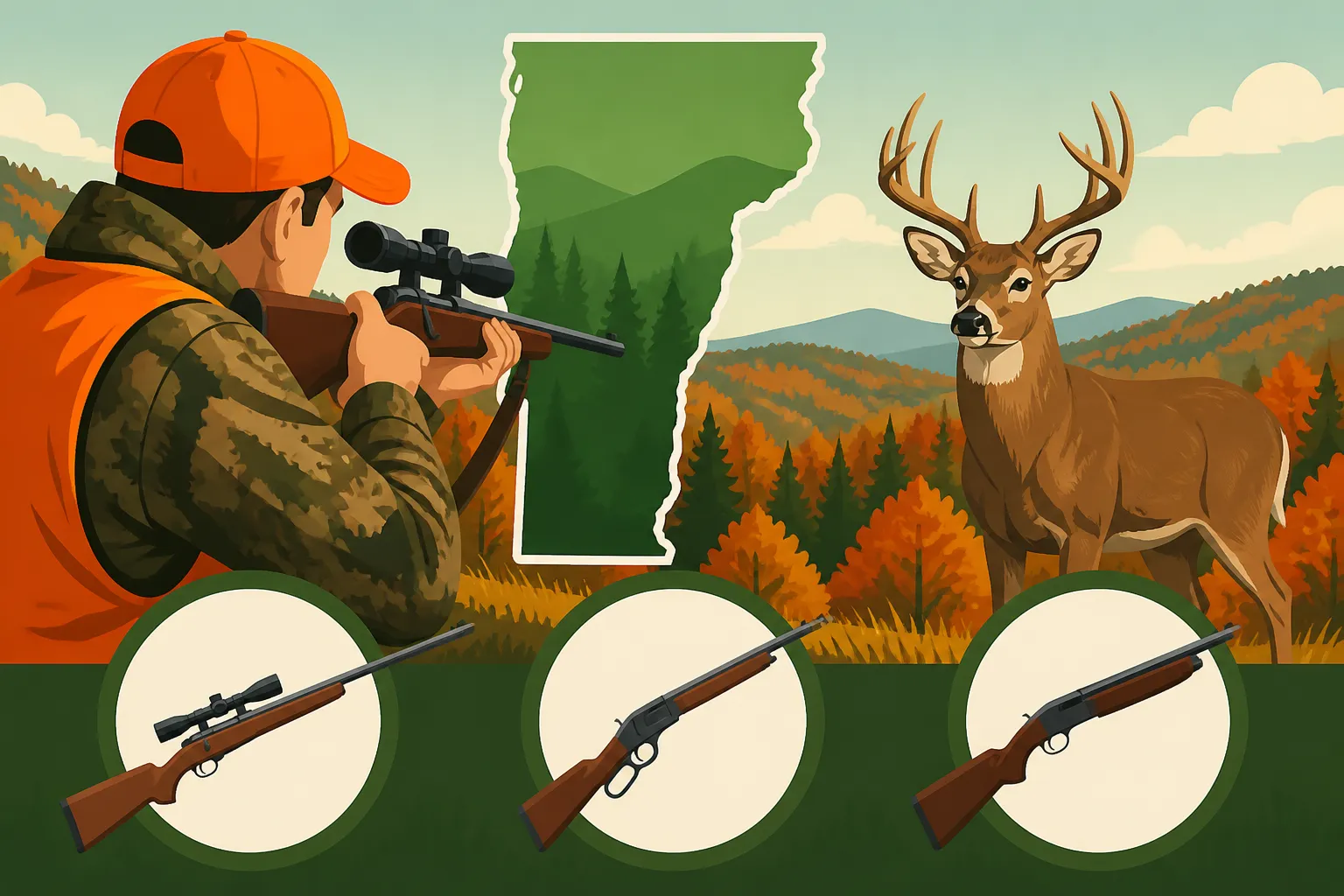
Legal Weapons During Vermont Rifle Season
There's nothing quite like the crisp autumn air in Vermont, the rustle of leaves underfoot, and the anticipation of deer season. But let's be honest, trying to keep up with all the specific regulations, especially when it comes to what kind of weapon you can actually carry during the always-popular rifle season, can feel like trying to hit a moving target in a fog. It's frustrating when you just want to get out there, but you’re worried about breaking a rule you didn't even know existed. This guide is here to cut through that confusion, giving you a clear, comprehensive breakdown of all the legal weapon options for deer during Vermont's rifle season so you can hunt with confidence and peace of mind.
Navigating Vermont's Diverse Hunting Regulations
Hunting in Vermont offers an incredible experience, but it also comes with a responsibility to understand and adhere to the state's regulations. These aren't just arbitrary rules; they're designed to ensure public safety, promote ethical hunting practices, and manage our deer herd sustainably. Getting a handle on what you can and can't carry into the woods during specific seasons is foundational to a successful and legal hunt.
The Importance of Knowing Your Tools
It's easy to assume that "rifle season" means any rifle goes, but that's not quite the case. Vermont has specific legal definitions for what constitutes an appropriate firearm or other weapon for big game. The frustration often comes from the nuance – small details that can mean the difference between a legal harvest and a violation. For instance, the type of ammunition or even the magazine capacity can be regulated, and overlooking these details can lead to unexpected trouble.
Beyond avoiding legal penalties, knowing your tools deeply impacts your hunting strategy. Are you planning on hunting thick cedar swamps where shots are usually close, or are you sitting on the edge of a vast clear-cut where a long-range shot might present itself? The legal weapons available each season cater to different scenarios and hunting styles. Understanding the capabilities and limitations of each legal option allows you to make informed decisions that align with your hunt plan and ethical responsibilities. Ultimately, being fully informed about your weapon choice is a key part of being a responsible and effective hunter in the Green Mountains.
General Principles for Weapon Legality
Vermont's Fish & Wildlife Department approaches weapon regulations with a few core principles in mind. First and foremost is safety, both for hunters and the general public. This often translates to rules about minimum calibers for humane harvesting, prohibitions on certain ammunition types that could be unsafe in populated areas, and clear visibility requirements like blaze orange. Secondly, there's a strong emphasis on fair chase, ensuring that hunting remains challenging and respectful to the game animal. This means rules against things like fully automatic firearms or overly technological advantages.
The season type plays the most significant role in dictating weapon choice. Archery season, muzzleloader season, and rifle season each have their specific legalities, though there are some overlaps. For instance, while we're focusing on rifle season here, archery equipment is also permitted during this time under certain conditions. A critical underlying requirement for all hunting in Vermont is proper hunter education. You can learn more about these foundational prerequisites in our detailed guide on Vermont Hunter Education Requirements. It's through these courses that hunters first learn about legal calibers, ammunition specifics, and ethical hunting practices that inform all weapon choices.
The Core: Legal Firearms for Vermont Rifle Season
Vermont's rifle season, typically held in November, is undoubtedly the most popular deer hunting season. It's when most hunters head to the woods, and for good reason – the ability to use a centerfire rifle offers reach and power unmatched by other legal methods. But even within the realm of firearms, there are important distinctions to understand.
Centerfire Rifles and Their Ammunition
When most folks think of rifle season, they're picturing a good old-fashioned centerfire rifle. These are the classic deer guns, chambered in cartridges like the venerable .30-06 Springfield, the versatile .308 Winchester, or the flat-shooting .270 Winchester. The "centerfire" part refers to the primer location on the cartridge, which is crucial because rimfire cartridges (like .22 LR) are explicitly prohibited for hunting big game in Vermont due to their insufficient power for a humane kill. These rifles provide the range and knockdown power needed for ethical shots on whitetails, especially in some of Vermont’s more open agricultural areas or longer clear-cuts.
Choosing the right caliber is a personal decision, but it needs to align with legal and ethical standards. For deer, popular choices like the .30-06, .270, and .308 are well-regarded for their effectiveness. You can dive deeper into specific choices and their performance in our article, Best Rifle Caliber for Vermont Whitetails. When it comes to ammunition, Vermont requires the use of expanding bullets for big game. This means bullets designed to mushroom upon impact, transferring energy to the animal and creating a larger wound channel for a quicker, more humane kill. Full metal jacket (FMJ) ammunition, which is designed to penetrate without expanding, is strictly prohibited for deer hunting. Furthermore, hunters must be mindful of magazine capacity: loaded rifles for hunting may not contain more than five rounds.
Practicing with your chosen rifle and ammunition is paramount. Knowing how your rifle performs at various distances, understanding its ballistic drop, and being able to place shots accurately under pressure are far more important than the specific caliber itself. Whether you're using a modern bolt-action or a classic lever-action, the ethical responsibility lies in knowing your equipment's capabilities and your own limits to ensure a clean harvest. Shot placement, enabled by practice and familiarity, is always the most critical factor.
Shotguns and Muzzleloaders During Rifle Season
While centerfire rifles might steal the spotlight, shotguns are also perfectly legal for deer hunting during Vermont's rifle season. Many hunters, especially those who hunt in more densely populated areas or properties with smaller safety zones, prefer a shotgun. The common gauges used are 12-gauge and 20-gauge, and for deer, these must be loaded with single projectile slugs. Buckshot, which disperses multiple pellets, is illegal for deer hunting as it does not reliably deliver enough energy for a humane kill at typical hunting ranges. Modern slug guns, especially those with rifled barrels designed for sabot slugs, can achieve impressive accuracy out to 150 yards or even more, turning a traditional bird gun into a capable deer slayer.
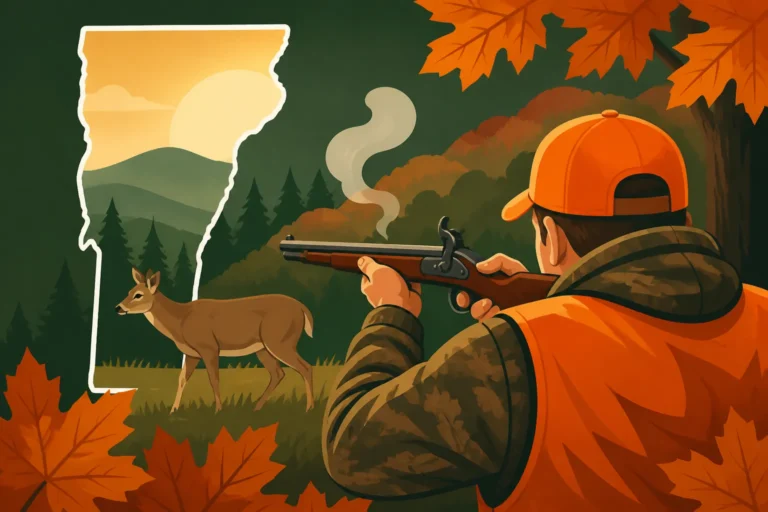
Muzzleloaders, too, are welcome in the woods during rifle season, even though they have their own dedicated seasons, such as Vermont Muzzleloader Season Dates. This offers a unique flexibility for hunters who enjoy the challenge and tradition of these firearms. A legal muzzleloader for deer must be .45 caliber or larger and typically uses black powder or an approved substitute, propelling a single projectile like a patched round ball or a conical bullet. The allure of muzzleloaders often comes from their historical connection to hunting and the distinct challenge they present, requiring precise loading and often offering only a single shot.
Both shotguns and muzzleloaders offer distinct advantages and disadvantages compared to centerfire rifles during the rifle season. Shotguns often provide a quicker follow-up shot than a single-shot muzzleloader, and in very thick cover where shots are almost always under 75 yards, a well-placed slug is incredibly effective. Muzzleloaders, while generally having a shorter effective range than most centerfire rifles, can be a great choice for still-hunting in dense timber or for hunters seeking a more traditional experience. Ultimately, the choice often comes down to personal preference, the specific hunting conditions, and the hunter's comfort and proficiency with their chosen weapon.
Archery Equipment: A Unique Overlap
One of the pleasant surprises for many new hunters in Vermont is discovering the flexibility of weapon choice during the general rifle season. While rifles dominate, archery equipment is also explicitly permitted, provided you adhere to specific safety and equipment requirements.
Bows and Crossbows During Rifle Season
It might seem counterintuitive, but yes, you can legally bowhunt during Vermont's rifle season. This unique overlap is covered in detail in regulations like Vermont's New Archery-During-Rifle Overlap Rule and offers a fantastic extended opportunity for bowhunters. This rule allows hunters who prefer the challenge of archery to continue pursuing deer even when rifle hunters are in the woods. However, this flexibility comes with a critical caveat: any hunter using archery equipment during the November rifle season must still meet the blaze orange requirements, just like their firearm-carrying counterparts. This ensures maximum visibility and safety for everyone in the woods during this busy period.
For traditional and compound bows, Vermont sets a minimum draw weight requirement, usually around 40 pounds, to ensure sufficient power for a clean kill on big game. Your arrows must also meet specific length requirements. For compound bows, which are widely popular, the precise tuning of the bow to the arrow, along with consistent shooting practice, is crucial for accuracy. Traditional archers, using longbows or recurves, embrace a more primal challenge, relying on instinct and form for precision. The beauty of this overlap is that it allows hunters to choose their preferred method within the same season window, adding a layer of personal choice to the hunt.
Crossbows are also legal during Vermont's rifle season, falling under the broader "archery equipment" umbrella, but with their own distinct rules. Vermont has specific draw weight and safety mechanism requirements for crossbows, ensuring they are powerful enough and safe to operate. They offer some advantages, particularly for hunters with physical limitations or those seeking a shorter learning curve than a compound bow. It's important to consult Vermont Crossbow Equipment Rules to ensure your specific crossbow meets all the legal criteria. The decision to hunt with a crossbow or traditional bow during rifle season is often a balance between personal preference, hunting style, and physical capability, but the options are there for a wide range of hunters.
Broadheads and Arrow Specifications
For any archery equipment used in Vermont during big game season, the business end of the arrow is crucial: the broadhead. Vermont regulations specify that broadheads must be of an expanding type and have a minimum cutting diameter, typically around 7/8 of an inch. This ensures that the broadhead creates a sufficient wound channel for a quick and ethical harvest. Both fixed-blade broadheads, known for their durability and penetration, and mechanical (or expandable) broadheads, which deploy on impact to create a wider cutting surface, are popular choices. Regardless of the type, the blades must be razor-sharp to ensure clean penetration and maximum effectiveness.
The arrow itself also plays a vital role. Whether you choose carbon, aluminum, or traditional wood arrows, proper arrow selection is key to accuracy and penetration. This involves matching the arrow's spine (stiffness) to your bow's draw weight and length, as well as choosing the correct arrow weight for optimal flight characteristics. Fletching — the vanes or feathers on the back of the arrow — stabilizes the arrow in flight, ensuring it flies true to the target. An arrow that isn't properly matched to the bow or is poorly fletched will fly erratically, making accurate shots difficult and unethical.
Ethical considerations are paramount when selecting broadheads and arrows. The goal is always a swift, humane kill, and your equipment choices directly impact this outcome. A well-tuned bow, matched with appropriate arrows and sharp, legal broadheads, dramatically increases the chances of a clean shot. Practicing regularly, not just for accuracy but also for shot placement on a deer target, will ensure you're prepared for the moment of truth. Remember, with archery equipment, shot angles and distance are even more critical than with firearms, requiring discipline and restraint to only take high-percentage shots.
Restrictions, Safety, and Other Considerations
Understanding what is legal during Vermont's rifle season is only half the battle; knowing what's not allowed and how to ensure safety completes the picture. Ignoring these crucial details can lead to severe penalties or, worse, dangerous situations in the field.
Prohibited Weapons and Ammunition Types
To ensure fair chase, hunter safety, and ethical harvesting, Vermont explicitly prohibits several weapon and ammunition types for big game hunting. As mentioned earlier, rimfire rifles – those chambered for cartridges like the .22 Long Rifle – are strictly illegal for deer or bear. Their power is simply insufficient for a humane kill on these larger animals. Similarly, full metal jacket (FMJ) bullets, often military surplus, are banned for big game as they typically do not expand and can pass through an animal without imparting sufficient energy for a quick ethical kill. Buckshot, a common load for bird hunting, is also prohibited for deer, requiring single projectile slugs instead.
Automatic firearms, capable of continuous firing with a single trigger pull, are absolutely prohibited for hunting, reflecting the fair chase principle. While suppressors are federally regulated, they are not permitted for hunting in Vermont either. The rationale behind these prohibitions is multifaceted. It's about ensuring humane kills, preventing excessive damage to game, promoting safety in the woods, and upholding the integrity of the hunting tradition. The consequences of using illegal equipment are serious, ranging from significant fines and forfeiture of equipment to license revocation and potential criminal charges.
Being informed means proactively avoiding these pitfalls. A quick double-check of your ammunition box or a review of your firearm's specifications can prevent an honest mistake from becoming a costly one. This vigilance ensures that all hunters are on a level playing field and that the ethical standards of Vermont hunting are maintained.
Blaze Orange and General Safety Guidelines
During Vermont's rifle season, blaze orange isn't just a suggestion; it's a legal requirement and a critical safety measure. All hunters, whether carrying a rifle, shotgun, muzzleloader, or even a bow or crossbow during the overlap period, must wear specific amounts of blaze orange. This includes a minimum of 50% of the head, chest, and back. You can find all the specifics in our guide on How Much Blaze Orange Vermont Requires, but the takeaway is clear: be visible. This vibrant color significantly reduces the risk of accidental shootings by making hunters clearly identifiable to others in the field.
Beyond blaze orange, general firearm safety guidelines are paramount. Always treat every firearm as if it's loaded. Keep the muzzle pointed in a safe direction, keep your finger off the trigger until you are ready to shoot, and be absolutely certain of your target and what lies beyond it. This last point is especially critical in Vermont's diverse landscapes, where a deer could be silhouetted against a ridge with a road or building unseen behind it. Communication with your hunting partners, particularly during group hunts or deer drives, is also vital for safety. Protocols for group hunts, such as those discussed in Deer Drives With Three or Four Hunters, often include strict safety rules regarding shooter positions and lines of fire.
Furthermore, using mapping tools like GoHunt can significantly enhance safety by helping hunters understand property lines, identify potential hazards like roads or dwellings, and plan safe shot zones. Knowing precisely where you are and where others might be helps everyone avoid unsafe situations. Ethical hunting extends beyond just the kill; it encompasses everything from preparation to respecting property and ensuring the safety of all who venture into the woods.
Ethical Considerations and Fair Chase
Vermont's hunting regulations are deeply rooted in the principle of fair chase. This isn't just about legality; it's about the spirit of hunting – a respectful pursuit that acknowledges the animal's natural defenses and abilities. Fair chase means eschewing methods that give hunters an unfair or unsporting advantage, like baiting for deer (which is prohibited in Vermont), using artificial lights at night, or employing sophisticated electronic tracking devices for direct pursuit. It encourages hunters to develop their skills, knowledge of wildlife, and woodsmanship.
Part of this ethical framework involves recognizing your personal limitations and those of your equipment. Just because a rifle can theoretically shoot 300 yards doesn't mean you should take that shot if you haven't practiced consistently at that distance. The concept of an ethical shot distance is crucial: only take a shot when you are confident you can deliver a quick, humane kill. This might mean passing on a marginal shot or waiting for the animal to present a better angle.
Respect for other hunters and landowners is another cornerstone of ethical hunting. This includes obtaining proper permission before accessing private land, cleaning up after yourself, and not interfering with another hunter's pursuit. Maintaining a positive image for hunting in Vermont requires every hunter to act as an ambassador for the sport. Tools like GoHunt can aid in planning respectful hunts by clearly delineating public and private land boundaries, helping hunters avoid inadvertent trespass and fostering good relationships with landowners, which is vital for maintaining access to prime hunting areas.
Planning Your Hunt: Matching Gear to Terrain and Game
The Green Mountain State offers a diverse tapestry of hunting environments, from the dense, rugged peaks of the main range to the open agricultural fields of the Champlain Valley and the expansive timberlands of the Northeast Kingdom. Matching your legal weapon choice to these varied terrains and the specific characteristics of the deer found there can significantly impact your success and enjoyment.
Weapon Selection for Green Mountain Terrain
Hunting in the true Green Mountain high country, or even the steep, timbered foothills, often means navigating incredibly dense cover and broken terrain. Shots in these areas are typically close, rarely exceeding 100 yards, and often much less. Here, the emphasis shifts from long-range accuracy to quick target acquisition and maneuverability. A shorter, handier rifle with a scope set at a lower magnification, or even a good old iron sight, can be a real asset. Calibers like the .30-30 Winchester or a .45-70 Government, while not typically considered long-range cartridges, are absolute brush-busters that excel in delivering heavy-hitting bullets at close range.
The choice of weapon in this environment often comes down to personal comfort and hunting style. Still-hunting through a thick hardwood ridge or pushing through a stand of softwoods requires a rifle that can be brought to bear quickly without snagging on every branch. A shotgun loaded with sabot slugs can be an incredibly effective tool in these situations, offering excellent close-to-medium range performance. Even a muzzleloader, with its more deliberate loading process, can be ideal for stand hunting in a promising funnel or near a deer yard where a single, well-placed shot is the expectation. The key is to assess the specific cover you’ll be hunting and choose a weapon that allows for quick, ethical shots in tight quarters.
Visibility can also be a challenge in dense timber. While a powerful scope can gather light, it can also narrow your field of view, making it harder to pick up a deer darting through the trees. Many experienced Green Mountain hunters opt for scopes with a low minimum magnification (e.g., 1-4x or 2-7x) to allow for wider views at close range. Understanding how wind and thermals play out in steep terrain, as detailed in articles like Wind and Thermals in Steep Green Mountain Terrain, can also guide your stand placement and, by extension, your preferred weapon's effective range.
Choosing for the Champlain Valley or Northeast Kingdom
The landscape changes dramatically as you move towards the Champlain Valley. Here, sprawling dairy farms, vast cornfields, and more open woodlots are common, leading to potentially longer shot opportunities. This is where the inherent advantages of a flat-shooting centerfire rifle really shine. Calibers like the .270 Winchester, .25-06 Remington, or even the 6.5 Creedmoor, which are known for their ballistic efficiency and accuracy at extended ranges, become highly attractive. When a deer steps out at 200 or 300 yards across a cut field, having a rifle capable of precise shot placement at those distances is invaluable.
The Northeast Kingdom presents a different mix: vast tracts of public and private timberland, interspersed with bogs, clear-cuts, and more remote areas. Here, you might encounter a mix of close-range opportunities in thick spruce bogs and longer shots across regenerated clear-cuts. This region demands a versatile approach to weapon selection. Many hunters opt for a rifle that can handle both, perhaps a .30-06 or .308, which are powerful enough for open areas but still manageable in the woods. The ability to switch between stand hunting a logging road and still-hunting through thick sections means your weapon needs to be adaptable.
Ultimately, your weapon choice should complement your hunting style and the specific conditions of the area you’re targeting. Using mapping applications like GoHunt can be incredibly useful in identifying these varied terrains beforehand, allowing you to scout effectively and make informed decisions about what to carry. Whether you're hunting an open field edge, a dense cedar swamp, or a remote ridge, understanding the capabilities of your legal weapons and matching them to the specific habitat will always put you in a better position for a successful hunt.
Here’s a quick overview of legal weapon types during Vermont’s rifle season for deer:
| Weapon Type | Specifics | Ammunition/Projectile | Magazine Limit | Notes |
|---|---|---|---|---|
| Centerfire Rifle | Any centerfire rifle | Expanding bullet (no FMJ) | 5 rounds | Popular choices: .30-06, .270, .308. Must be practiced with for ethical shots. |
| Shotgun | 10, 12, 16, 20 gauge | Single projectile slug (no buckshot) | 5 rounds | Rifled barrels for sabot slugs enhance accuracy. Effective at shorter ranges. |
| Muzzleloader | .45 caliber or larger | Single projectile (round ball or conical) with black powder or equivalent | N/A | Legal year-round for deer, including rifle season. Offers a traditional challenge. |
| Bows | Traditional, compound (40lb min. draw weight) | Broadhead (min. 7/8" cutting diameter) | N/A | Allowed during rifle season if blaze orange requirements are met. |
| Crossbows | Specific draw weight/length rules apply | Broadhead (min. 7/8" cutting diameter) | N/A | Allowed during rifle season if blaze orange requirements are met. Check Vermont Crossbow Equipment Rules for details. |
Disclaimer
Please remember that hunting regulations can change. While this guide provides comprehensive information, it is always your responsibility to consult the most current Vermont Fish & Wildlife hunting guide or their official website before heading into the field. This article is for informational purposes only and should not be considered a substitute for official regulations.