Vermont Lynx Sightings in the Northeast Kingdom
There’s something truly captivating about the wilder corners of Vermont, especially our magnificent Northeast Kingdom. It’s a place where rumors of the truly wild still echo through the vast timberlands and forgotten valleys. One of the most intriguing and, frankly, often debated sightings involves the Canada lynx. Many of us have heard stories, or maybe even seen something ourselves, that makes us wonder if these ghost-like felines still roam our state. It's a real challenge to confirm such a rare and elusive creature, leading to both excitement and skepticism among the hunting and wildlife enthusiast community. This guide is here to shed some light on what we know about lynx in Vermont, especially in the Northeast Kingdom, and how to interpret these incredibly rare, yet profoundly important, encounters.
The Elusive Nature of the Canada Lynx in Vermont
There’s a certain magic to knowing that animals like the Canada lynx might still grace our Vermont landscape, especially in the wilder parts of the state. For many of us who spend countless hours in the woods, the thought of encountering such a creature is both thrilling and a stark reminder of the wildness that still exists, even in our relatively small state. But let's be realistic: a confirmed lynx sighting is about as rare as hitting the lottery.
Historical Presence and Modern Rarity
Historically, the Canada lynx was certainly part of Vermont’s natural fauna. These magnificent cats roamed across much of the northern United States, including our Green Mountains, following the ebb and flow of their primary prey: the snowshoe hare. As logging practices changed, settlements expanded, and their prime habitat diminished, lynx populations dwindled and were eventually extirpated from Vermont. It's a sad chapter in our wildlife history, a story of how even the toughest creatures can disappear when their world shrinks too much.
For decades, the idea of a lynx in Vermont was mostly relegated to old tales and wishful thinking. However, in recent times, there have been a handful of verified sightings, primarily in the most remote sections of the Northeast Kingdom, giving us a glimmer of hope. These aren't breeding populations, mind you, but more likely transient individuals dispersing from larger populations in Quebec or Maine, exploring new territories. It means we're on the edge of a potential natural return, a slow creep back into their historic range, but it's a long, uphill climb.
Why the Northeast Kingdom is Prime (But Still Unlikely) Habitat
When we talk about potential lynx habitat in Vermont, the conversation almost always turns to the Northeast Kingdom. Why? Because this region still holds vast tracts of unbroken forest, particularly the dense, young softwood stands that snowshoe hares absolutely thrive in. Think about those thick, almost impenetrable spruce and fir forests, often mixed with regenerating clear-cuts – that's snowshoe hare heaven, and thus, potential lynx country.
The sheer remoteness and low human population density in areas like Essex County also make it more appealing for a creature as shy and wide-ranging as a lynx. It's not just about the trees; it's about the undisturbed quiet, the lack of roads and development, and the interconnectedness of large natural areas that allow these animals to move without constant human disturbance. While it might have the potential, it's critical to understand that even in the most promising parts of the Northeast Kingdom, lynx are still incredibly rare. Their presence is a delicate dance with the availability of hares and the vastness of the unbroken forest. If you spend time Hunting the Northeast Kingdom, you know just how wild it can feel.
Distinguishing a Lynx from Other Feline Species
Here’s where a lot of the confusion and misidentification comes into play. Vermont is home to another native wild cat, the bobcat, and of course, plenty of domestic house cats that can sometimes wander into the woods. Telling them apart, especially in a fleeting glimpse, can be tough. But if you know what to look for, the differences are quite distinct.
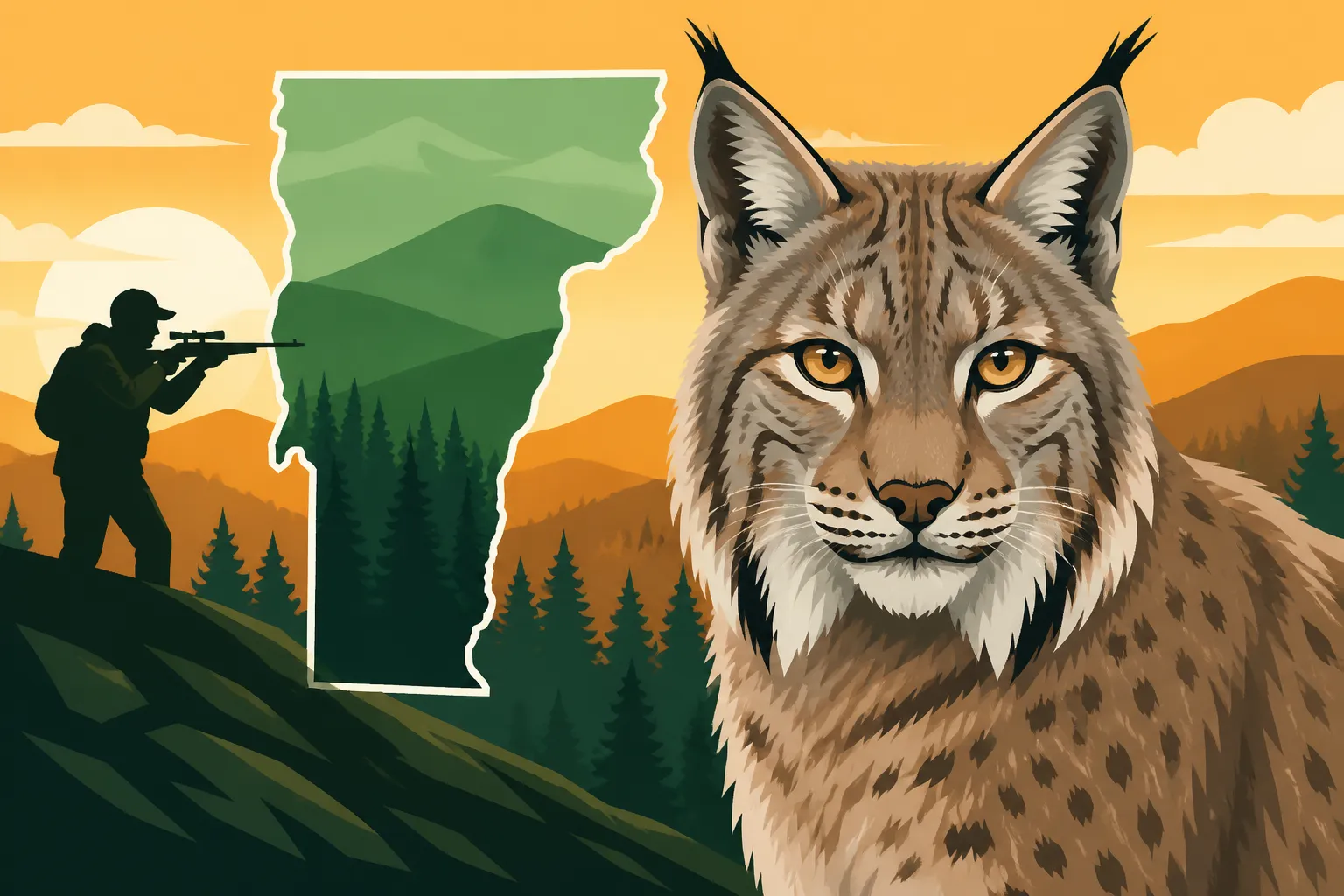
A Canada lynx is typically larger than a bobcat, with noticeably longer legs and massive, snowshoe-like paws, which are perfectly adapted for walking on deep snow. Their most defining features are the long, prominent tufts of black hair on their ears and a short, black-tipped tail that looks almost like it was dipped in ink. Bobcat ears have shorter tufts, if any, and their tails are banded with black, usually with a white underside. Lynx also have a more uniform grayish-tan coat, often without the distinct spots or bars you see on many bobcats. Even their facial ruffs are more pronounced, giving them a wider, almost owl-like appearance. When you're out Hunting the Regular Archery Opener in October or any other season, a keen eye can really pay off.
| Feature | Canada Lynx | Bobcat | Domestic Cat (Large Feral) |
|---|---|---|---|
| Size | Larger, longer legs | Smaller, more compact | Varies, generally smaller |
| Paws | Very large, "snowshoe-like" | Moderately sized | Small to medium |
| Ear Tufts | Long, prominent black tufts | Short or absent | Absent |
| Tail | Short, all-black tip | Short, black bands, white underside | Long, often banded, no distinct tip |
| Coat Color | Uniform grayish-tan, often unspotted | Varied, tawny to reddish, often spotted | Highly varied |
| Facial Ruff | Prominent, broad facial disc | Less pronounced | Typically none |
Verifying and Documenting Potential Lynx Sightings
The excitement of a potential lynx sighting is undeniable, but it's equally important to approach such an event with a clear head and a focus on documentation. Wildlife agencies rely on solid evidence to understand rare species movements, and an unverified report, while interesting, doesn't carry the same weight as something backed by proof.
The Importance of Detail and Evidence
If you believe you’ve seen a lynx, the first thing to do is try to remember as many details as possible. Was it daylight or twilight? How far away was it? What was the animal doing? What color was its fur? Did you notice the ear tufts, tail length, or paw size? These descriptive elements, while subjective, can be incredibly helpful in filtering out misidentifications. Beyond just memory, any tangible evidence you can gather is gold. This is where modern technology can be a real asset. A quick photo, even a blurry one from a phone, can often capture enough detail to help experts identify the species. If you happen to be running a Trail Camera Placement on Public Land, you might even catch an image without being there.
Footprints in snow or mud, clear scat, or even a tuft of fur caught on a branch can provide irrefutable proof. But remember, handling such evidence can be tricky and potentially compromise it. If you find tracks, take a photo with a ruler or common object (like a coin or knife) next to them for scale. Note the stride and pattern. If you think you've found scat, photograph it, note its location, and avoid direct contact. The goal isn't just to see it, but to prove what you saw.
What to Look For: Tracks, Scat, and Physical Characteristics
When you’re out in the woods, especially in the remote parts of the Northeast Kingdom, keeping an eye out for sign can be a fascinating endeavor. For lynx, their tracks are perhaps the most distinctive tell-tale sign. Their large, furry paws leave a nearly round track, much larger than a bobcat's or even many medium-sized dogs, especially in snow. The pads often don't register clearly because of the heavy fur between them, giving the track a somewhat "fuzzy" appearance. Pay attention to the lack of claw marks, as feline claws are typically retracted.
Scat, while less glamorous, can also provide clues. Lynx scat will often contain hair and bone fragments from their prey, predominantly snowshoe hare. It's usually segmented and tubular, similar to other felines. As for the physical characteristics, always look for those tell-tale ear tufts, the short, black-tipped tail, and the overall impression of a long-legged, large-footed cat. If you're comparing it to a bobcat, remember the lynx's less spotted, more uniform coat. It's these subtle, yet crucial, differences that help distinguish a truly rare visitor from a more common resident. Understanding different animal movements and habits, perhaps with mapping tools like what GoHunt provides, can certainly help in discerning prime areas for any large predator, making you more attuned to what you might encounter.
Reporting a Sighting Responsibly
If you're convinced you've seen a lynx or found compelling evidence, the responsible thing to do is report it to the Vermont Fish and Wildlife Department. They are the experts who monitor rare and endangered species and can help verify your findings. Don't broadcast it widely on social media before talking to the professionals; premature announcements can sometimes lead to misinformation or unwanted attention to sensitive areas.
When you make your report, be prepared to share all the details you’ve gathered, including dates, times, specific locations (GPS coordinates if you have them), and any photos or videos. The department will likely have biologists or wardens follow up to investigate. This careful, evidence-based approach is crucial for accurate wildlife management and conservation efforts. Your report could contribute to a better understanding of potential lynx movements in Vermont, even if it turns out to be a misidentification. It’s all part of the process of keeping tabs on our wild neighbors. Knowing How Fish and Wildlife Counts the Deer Herd gives you a sense of the rigorous scientific methods they apply to all species.
Understanding Lynx Ecology and Habitat Needs
To truly appreciate the rarity and potential presence of the Canada lynx in Vermont, it helps to understand their ecological niche. These animals are highly specialized, and their survival hinges on a very specific set of environmental conditions. It’s a delicate balance that highlights the interconnectedness of our wild landscapes.
Snowshoe Hares: The Lynchpin of Lynx Survival
You can’t talk about Canada lynx without talking about snowshoe hares. These medium-sized rabbits are the absolute foundation of a lynx's diet, accounting for a staggering 70-90% of their food intake. Lynx populations literally rise and fall with the cyclical boom and bust of snowshoe hare numbers. When hare populations crash, lynx face intense pressure, often leading to dispersal events where they travel vast distances in search of food. This is likely why we see occasional transients in Vermont.
Snowshoe hares thrive in dense, young softwood stands – think about those thickets of spruce, fir, and regenerating conifer forests that are almost impossible for us humans to walk through. This type of cover provides them refuge from predators like coyotes, bobcats, and raptors, and it's where they find their preferred browse. If Vermont is ever to see a sustained lynx presence, it absolutely requires healthy, robust Vermont Snowshoe Hare Population Trends and the habitat that supports them. Without the hares, there are no lynx.
The Role of Dense Softwood Cover
Beyond just the presence of hares, lynx themselves are specialists in navigating and utilizing dense softwood cover. These forests, often characterized by spruce and fir, provide critical hunting grounds, protection from severe weather, and secure denning sites for raising kits. The interconnectedness of these dense patches allows lynx to travel and hunt effectively while remaining largely unseen. This is a primary reason why the Northeast Kingdom, with its expansive working forests and remote tracts, offers the best hope for lynx dispersal.
The structure of these forests is also important – not just mature timber, but a mosaic of different age classes, including those dense, regenerating stands that offer optimum hare habitat. Logging practices, when done with wildlife in mind, can actually create some of this critical early-successional habitat. However, fragmentation of these large blocks of softwood by roads or development can severely impact a lynx’s ability to find adequate territory and food, showcasing the importance of conserving large, unfragmented landscapes.
Landscape Connectivity for Wide-Ranging Predators
Lynx are not animals that stick to a small home range. They are wide-ranging predators, especially when prey is scarce or they are dispersing from a core population. This means that for lynx to truly recolonize Vermont, there needs to be viable landscape connectivity with source populations in Canada or Maine. They need continuous corridors of suitable habitat that allow them to move safely without encountering significant barriers.
Think of it like a network of trails for wildlife. If those trails are constantly broken by highways, sprawling development, or vast open agricultural fields, it becomes incredibly difficult for animals like lynx to travel. This is why conservation efforts often focus not just on protecting specific parcels of land, but on ensuring that large natural areas remain connected. It's a huge undertaking, but it's essential for the health of all our wildlife, from deer that need to Read a Green Mountain Deer Yard to the most elusive predators.
The Future of Lynx in Vermont and Conservation Efforts
The idea of lynx making a comeback in Vermont is a powerful one for many of us who cherish our state's wild heritage. It speaks to a larger hope for ecological restoration and the resilience of nature. However, it's also a complex issue with significant challenges.
Conservation Status and Monitoring
The Canada lynx is listed as an endangered species in Vermont, reflecting its extreme rarity and the fragile nature of any potential presence. This designation triggers a whole host of protections and monitoring efforts by the Vermont Fish and Wildlife Department. Every verified sighting, every track, every piece of evidence is carefully documented and analyzed to track their movements and assess their health.
The department works closely with neighboring states and Canadian provinces to understand regional lynx populations and dispersal patterns. This collaborative approach is vital because lynx don't recognize state or national borders. Their recovery or continued presence in Vermont is intrinsically linked to the health of populations outside our immediate jurisdiction. This includes ongoing research into Vermont Snowshoe Hare Population Trends and other prey species that are fundamental to their survival.
The Challenges of a Recovering Population
While the occasional lynx sighting gives us hope, establishing a truly recovering, breeding population in Vermont faces immense challenges. First and foremost is the dependence on snowshoe hares and the vast, undisturbed softwood habitat they require. While the Northeast Kingdom offers some of this, there's always pressure from development, unsustainable logging practices, and climate change affecting snow depths and forest composition.
Another significant challenge is competition with other predators, particularly bobcats and coyotes. While bobcats occupy a similar niche, they are more generalist hunters and can thrive in a wider range of habitats. Coyotes are also a formidable predator of hares. Ensuring a robust prey base for all these species, while still allowing for lynx recolonization, requires careful management. It’s a delicate ecological balancing act. Hunters play a crucial role by supporting ethical hunting practices and conservation funding, indirectly helping to manage prey populations and maintain habitat.
Your Role as a Hunter and Wildlife Enthusiast
As hunters and outdoor enthusiasts, we are often the eyes and ears of the wilderness. We spend countless hours deep in the woods, often in places where others rarely venture. This puts us in a unique position to observe and, potentially, contribute to the understanding of rare species like the lynx. If you're traversing a remote corner of the Northeast Kingdom, scouting for deer or bear, or simply enjoying the quiet of the woods, keep a watchful eye.
Your responsible reporting of any potential lynx sign, backed by as much detail and evidence as possible, is invaluable to wildlife biologists. Remember, these are not game animals; they are protected species. Respect their space and contribute to their monitoring. By understanding the habitat needs of animals like the lynx and their prey, we can also be advocates for responsible land management and conservation, helping to ensure that Vermont remains wild enough for these magnificent cats to, perhaps one day, truly call it home again. Every time you lace up your boots to go Scouting Vermont Public Land Before Season, you become a potential steward of all our wildlife.
Disclaimer
This article is for general informational purposes only and does not constitute professional advice. Laws, prices and regulations vary by location and change over time. Consult a qualified professional for guidance on your specific situation.