Vermont’s Statewide Versus Limited Fall Turkey WMUs
Navigating Vermont's fall turkey seasons can feel like deciphering a secret code, especially when you're trying to figure out which Weapon Management Units (WMUs) allow what. It’s a common frustration, jumping between different regulations for archery and shotgun, and trying to understand why some areas seem to have completely different rules than others. This guide is here to untangle that web, breaking down the specifics of Vermont's statewide archery season and the more limited shotgun/archery WMUs for fall turkey hunting, helping you plan your hunt with confidence and clarity.
Understanding Vermont's Fall Turkey Seasons
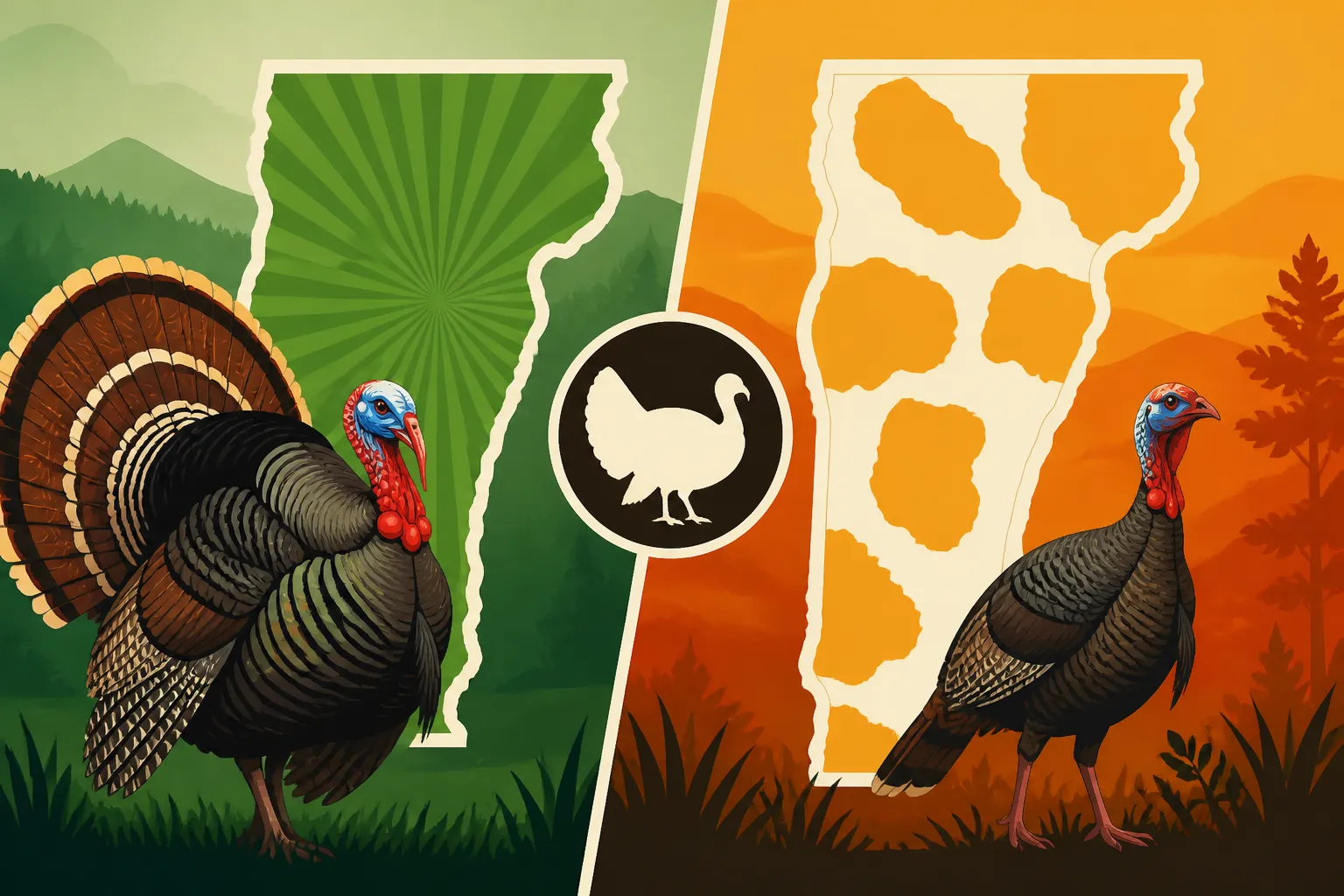
Vermont's approach to fall turkey hunting is designed to balance hunting opportunity with sustainable population management, and that means a two-tiered system. It’s not always intuitive, but once you understand the logic behind it, it makes a lot more sense. This dual system offers distinct opportunities and challenges depending on your preferred hunting method and the specific region you intend to explore.
The Statewide Archery Opportunity
For those who love the challenge of bowhunting, Vermont offers a generous statewide archery season for fall turkeys. This means that no matter where you are in the state, from the northern reaches of the Northeast Kingdom down to the southern foothills, you can pursue wild turkeys with a bow and arrow during this designated period. This broad accessibility is a huge draw for many archers, as it opens up vast tracts of public and private land without the added complexity of WMU-specific restrictions that apply to firearms. The season typically runs for several weeks, providing ample time to scout, pattern birds, and execute a well-planned hunt. It's a fantastic chance to experience the thrill of working a fall flock with a bow, often during some of the most beautiful times of the year as the foliage turns.
This statewide availability means hunters don't need to pore over detailed maps to see if their specific hunting grounds are open for archery. If you're carrying a valid archery license and a turkey permit, you're generally good to go across the entire state. This simplicity is a refreshing change from many other hunting seasons that require meticulous cross-referencing of zones and dates. It also allows for greater flexibility; if your initial scouting in one area isn't panning out, you have the freedom to shift to another part of the state without worrying about different archery regulations. Just remember, while the method is statewide, understanding the local turkey behavior and habitat in different regions is still key to success, as explored in articles like Hunting the Statewide Fall Archery Turkey Season.
The Limited Shotgun/Archery WMU Season
In contrast to the expansive archery season, Vermont also has a more restricted, shorter fall turkey season that allows both shotguns and archery equipment. This season is confined to specific WMUs, primarily in areas where turkey populations are robust enough to withstand additional hunting pressure from firearms without detriment. This distinction is crucial for hunters who prefer shotguns or who want the option to use either a bow or a shotgun during their fall pursuits. Missing this detail can lead to a frustrating situation where you're geared up for a shotgun hunt only to find your chosen WMU isn't open for it. It emphasizes the importance of checking the latest regulations from the Vermont Fish and Wildlife Department.
The WMUs designated for shotgun hunting in the fall are carefully selected based on population data and management objectives. These areas often represent some of the prime turkey habitat in the state, with healthy populations that can sustain a limited firearm harvest. The season itself is much shorter than the statewide archery window, often lasting only a few days or a week, making timing and preparation absolutely critical. Hunters must meticulously verify that their chosen hunting location falls within one of these specific WMUs before heading out with a shotgun. For a detailed look at which areas are open, you'll definitely want to consult current regulations, which often specify Which WMUs Allow Fall Shotgun Turkey Hunting.
Why Vermont Has Different Fall Turkey Rules
It can seem a bit convoluted with different rules for different areas, but there's solid wildlife management science behind Vermont's varying fall turkey regulations. The Vermont Fish and Wildlife Department doesn't just draw lines on a map arbitrarily; their decisions are rooted in extensive research and monitoring of wild turkey populations across the state. Understanding this rationale helps hunters appreciate the effort to maintain healthy, huntable turkey numbers for generations to come.
Managing Regional Turkey Populations
The primary reason for varied fall turkey rules is to effectively manage regional turkey populations. Vermont isn't a monolithic landscape; turkey numbers and densities can vary significantly from one corner of the state to another. In areas where turkey populations are thriving and recruitment (the number of young birds surviving to join the breeding population) is strong, the department can afford to allow a more liberal hunting season, including the use of shotguns. This helps to keep populations in check, preventing overpopulation which can lead to increased disease transmission, habitat degradation, and even conflicts with agricultural interests.
Conversely, in WMUs where turkey numbers might be lower, or where there are specific concerns about localized declines, stricter regulations are put in place. This often means limiting the season to archery only, or closing it entirely, to reduce pressure and allow the population to grow or stabilize. This targeted management ensures that hunting remains sustainable everywhere. It's a dynamic process; as turkey populations shift over time due to factors like mast crops, severe winters, or disease, the regulations are adjusted accordingly. Keeping an eye on Vermont Turkey Population Trends can give you a better idea of these fluctuations and the department's adaptive strategies.
Habitat Differences Across the State
Another significant factor influencing Vermont's fall turkey regulations is the variation in habitat across the state. Turkeys thrive in a mosaic of forest and field, needing mature timber for roosting, open areas for bugging and foraging, and dense cover for nesting and escape. However, the prevalence and quality of these habitat components are not uniform across Vermont. The fertile Champlain Valley, for instance, with its mix of agricultural fields and woodlots, often supports higher turkey densities than some of the more rugged, densely forested, high-elevation areas of the Green Mountains.
These habitat differences directly impact turkey survival, breeding success, and overall population size. WMUs with extensive, high-quality habitat can sustain greater hunting pressure, hence the allowance for shotgun seasons. Areas with less optimal habitat or more fragmented landscapes might see slower turkey recovery rates, necessitating more conservative hunting methods like archery-only seasons. The presence of abundant hard mast, like acorns and beechnuts, or agricultural fields providing waste grain, can concentrate turkeys and make them more resilient, influencing management decisions. Conversely, areas that lack consistent food sources or suffer from harsh winter conditions might be managed more conservatively.
Navigating the Statewide Archery Season
The statewide archery season for fall turkeys in Vermont is a fantastic opportunity, offering flexibility and a lengthy season. However, "statewide" doesn't mean "easy." It still requires strategic planning, the right gear, and a solid understanding of turkey behavior to be successful. Bowhunting these wary birds in the fall presents unique challenges that differentiate it from the spring gobbler hunt.
Equipment and Permit Considerations
Before you even step foot in the woods during Vermont's fall archery turkey season, you need to ensure you're properly equipped and licensed. First and foremost, you'll need a valid Vermont hunting license with an archery endorsement, along with a Vermont Fall Turkey Permit. The beauty of this permit is that it's good for the entire statewide archery window, making things straightforward. You can usually pick these up at local agents or through the Vermont Fish and Wildlife Department's online portal. Double-check the exact dates for Vermont Fall Turkey Permit Rules to make sure you're always in compliance.
As for equipment, a reliable bow, whether compound or recurve, is essential. Your arrow setup should include sharp, fixed-blade broadheads or mechanical broadheads that are designed for quick, humane kills on game birds. While many archery deer setups translate well, consider that a turkey's vital area is smaller and often protected by dense feathers and bone. A rangefinder is invaluable for accurately judging distances, especially in varied terrain, and a good pair of binoculars will help you spot birds from a distance without spooking them. Don't forget proper camouflage – turkeys have exceptional eyesight – and a comfortable ground blind or seat, as fall turkey hunting often involves long periods of sitting and waiting.
Tactics for Archery Fall Turkeys
Fall turkey hunting with a bow is a different beast than spring gobbler hunting. Forget the aggressive calling and strutting displays of spring; fall turkeys are typically in flocks, often led by a dominant hen. The most effective fall archery tactic is often the "flock break" and "re-call." This involves scattering a flock, often by running into them, then setting up quietly and waiting for them to regroup, using hen yelps and kee-kees to draw them back in. This can be an incredibly effective, albeit physically demanding, method. Patience is paramount, as it can take hours for scattered birds to start communicating again.
Another tactic is still-hunting or spot-and-stalk, particularly effective in areas with known feeding sign, like oak flats or recently harvested cornfields. Moving slowly and deliberately, using terrain and cover to your advantage, can get you within bow range of foraging birds. Using a ground blind, whether a pop-up or one brushed in, can be a game-changer, especially on field edges or near known travel corridors. Being able to move and draw your bow undetected is critical when dealing with a turkey's keen eyesight. For more detailed strategies on breaking up and calling in fall birds, you might find valuable insights in Working a Fall Flock Apart Statewide With a Bow. Remember, safety is always first, so make sure you have a clear shot and are positive of your target.
Targeting the Limited Shotgun/Archery WMUs
When it comes to pursuing fall turkeys with a shotgun in Vermont, you're looking at a more specialized hunt within designated WMUs. This means careful planning, understanding boundaries, and adapting your strategy to a shorter, often more competitive, season. It's a rewarding experience, but one that demands attention to detail.
Identifying Eligible WMUs
The first and most crucial step for a shotgun fall turkey hunt is to identify the specific Weapon Management Units that are open for this season. The Vermont Fish and Wildlife Department publishes maps and lists each year detailing which WMUs permit shotgun hunting for fall turkeys. These are not statewide, so blindly heading out with a scattergun is a recipe for a violation. Common WMUs that often allow shotgun hunting include those in areas with high turkey densities and suitable habitat, such as parts of the Champlain Valley or southern Vermont. However, these can change, so always consult the most current regulations.
Tools like the official Vermont Fish and Wildlife app or third-party mapping applications such as GoHunt are invaluable for this. You can overlay WMU boundaries onto satellite imagery, allowing you to pinpoint exactly where you are and whether you're in an eligible zone. This precision is critical, especially when hunting near WMU lines. Familiarizing yourself with these maps long before opening day will save you a lot of headache and ensure you're hunting legally and ethically. Understanding these boundaries is as important as understanding the season dates themselves when planning your Hunting Vermont's Fall Shotgun Turkey WMUs experience.
Planning Your Hunt in a Shotgun Zone
Once you've identified your target WMU, the next phase is rigorous scouting and strategic planning. The shotgun season is typically much shorter than the archery season, often just a few days or a week, meaning you have a narrower window of opportunity. This compressed timeframe requires efficiency. Fall turkeys in shotgun zones behave similarly to those in archery zones, but the greater range and stopping power of a shotgun means your engagement distance can be slightly longer, though you still want to get them in close for a clean shot.
Tactics like flock breaking and re-calling remain highly effective. However, given the potential for more hunters in these shotgun-accessible WMUs, finding less pressured birds can be a challenge. Early morning reconnaissance to locate roosting birds, or late-day observation of feeding areas, can give you a significant advantage. Setting up a ground blind along a field edge or in a key travel corridor can be particularly effective, allowing you to patiently wait for birds to move into range. Consider areas with good mast crops or active agricultural fields. Being prepared with a good scattergun, appropriate turkey loads, and a comfortable setup for an extended sit will increase your odds of success. When scouting, pay attention to fresh tracks, droppings, and dusting bowls to pinpoint active areas, a practice detailed further in Scouting Vermont Public Land Before Season.
Key Differences and Strategic Planning for Fall Turkey Hunters
Understanding the different fall turkey seasons in Vermont isn't just about legality; it's about optimizing your hunting strategy. The choice between the statewide archery season and the limited shotgun/archery WMUs profoundly impacts everything from your gear selection to your approach in the field. Let's delve into these critical distinctions and how to make the most of either opportunity.
Weapon Restrictions and Hunter Density
The most obvious difference lies in the allowed weaponry. The statewide season is strictly archery, demanding the skill and patience inherent in bowhunting. This typically means closer shot opportunities and a greater emphasis on concealment and silent movement. While some might view archery as more challenging, the longer season often compensates by providing more days afield. The hunter density during the statewide archery season can also be lower in some areas compared to the shotgun season, simply because not everyone is an archer, or they prefer the shotgun for its perceived ease.
On the flip side, the limited WMU season allows shotguns (and archery), offering hunters the option of a firearm, which provides a greater effective range and less stringent demands on shot placement compared to a broadhead. However, this convenience comes with its own set of trade-offs. The shotgun season is significantly shorter, often leading to a more concentrated influx of hunters into the open WMUs. This increased hunter density can make birds warier and more challenging to locate, as they're more likely to have been pressured. Hunters using platforms like GoHunt can often see public land boundaries and access points, which can help in identifying areas that might see less pressure, or at least help plan an entry strategy to avoid other hunters.
| Feature | Statewide Archery Season | Limited Shotgun/Archery WMU Season |
|---|---|---|
| Weapon Allowed | Archery only (bows, crossbows) | Shotgun (20 ga. or larger) and Archery |
| Geographic Scope | All WMUs statewide | Specific, designated WMUs only |
| Season Length | Typically several weeks | Usually a much shorter period (e.g., a few days to a week) |
| Hunter Density | Generally lower, more spread out | Can be higher and more concentrated |
| Primary Challenge | Close range, precise shot placement, stealth | Locating unpressured birds, shorter window |
| Permit Required | Vermont Fall Turkey Permit (with Archery End.) | Vermont Fall Turkey Permit (with Firearm End.) |
| Bag Limit | Subject to Vermont Fall Turkey Bag Limit | Subject to Vermont Fall Turkey Bag Limit |
Maximizing Your Chances in Either Zone
Regardless of which season or WMU you choose, maximizing your chances hinges on thorough preparation and adaptability. For both seasons, understanding turkey behavior in the fall is paramount. Turkeys are often in larger flocks, constantly moving and feeding. Scouting prior to the season is non-negotiable. Look for fresh tracks, droppings, scratchings in leaves, and dusting areas. Identify roost trees, often mature, tall timber near water or open areas. Utilizing mapping apps like GoHunt can help you identify potential food sources like oak ridges or agricultural fields, as well as crucial travel corridors and pinch points.
During the statewide archery season, focus on breaking up flocks and calling them back. Consider using a ground blind, whether a pop-up or one you meticulously brush in, to provide critical concealment for drawing your bow on wary birds. Brushing In a Blind on a Field Edge can make all the difference when those birds start to eye your setup. For the limited shotgun WMUs, timing your hunt for the weekdays, if possible, might help you avoid some of the weekend crowds. Being mobile and willing to move if you're not finding birds, or if an area is too pressured, is key. Decoys can be incredibly effective in both scenarios, helping to draw birds into a specific kill zone and diverting their attention from your position. Always stay vigilant, respect private land boundaries, and adhere to the Vermont Fall Turkey Permit Rules for a successful and legal hunt.
Vermont's fall turkey hunting landscape offers diverse opportunities, but it truly rewards those who do their homework. Whether you prefer the silent challenge of archery or the definitive power of a shotgun, understanding the nuances of the statewide archery season versus the limited shotgun/archery WMUs is your first step towards a successful hunt. By knowing the rules, scouting diligently, and adapting your tactics, you can enjoy the thrill of pursuing these intelligent birds amidst the stunning autumn backdrop of the Green Mountain State.
Disclaimer
Please note: Hunting regulations and seasons can change. Always consult the most current Vermont Fish and Wildlife Department regulations prior to any hunting activity. This article is for informational purposes only and does not supersede official state regulations. It is the hunter's responsibility to know and follow all applicable laws.