Why Firearms Discharge Is Restricted Near Trails
It can be incredibly frustrating to feel like hunting regulations are just a bunch of arbitrary rules put in place to make our lives harder. You scout for weeks, find the perfect sign, only to realize the prime spot is too close to a hiking trail or an old logging path. This guide is here to shed some light on why firearms discharge is restricted near trails in Vermont, helping you understand the crucial safety principles behind these rules and how to navigate them effectively so you can still enjoy your hunt.
The Core Principle: Safety First for Everyone
When we talk about hunting, our minds naturally go to the thrill of the chase, the quiet solitude of the woods, and the deep connection to nature. But Vermont's public lands are vast and diverse, and they serve many purposes for a wide array of users. It's not just hunters out there. These regulations aren't designed to penalize us; they're fundamentally about ensuring everyone's safety on shared land, whether they're carrying a rifle or a water bottle.
Protecting Non-Hunters on Shared Lands
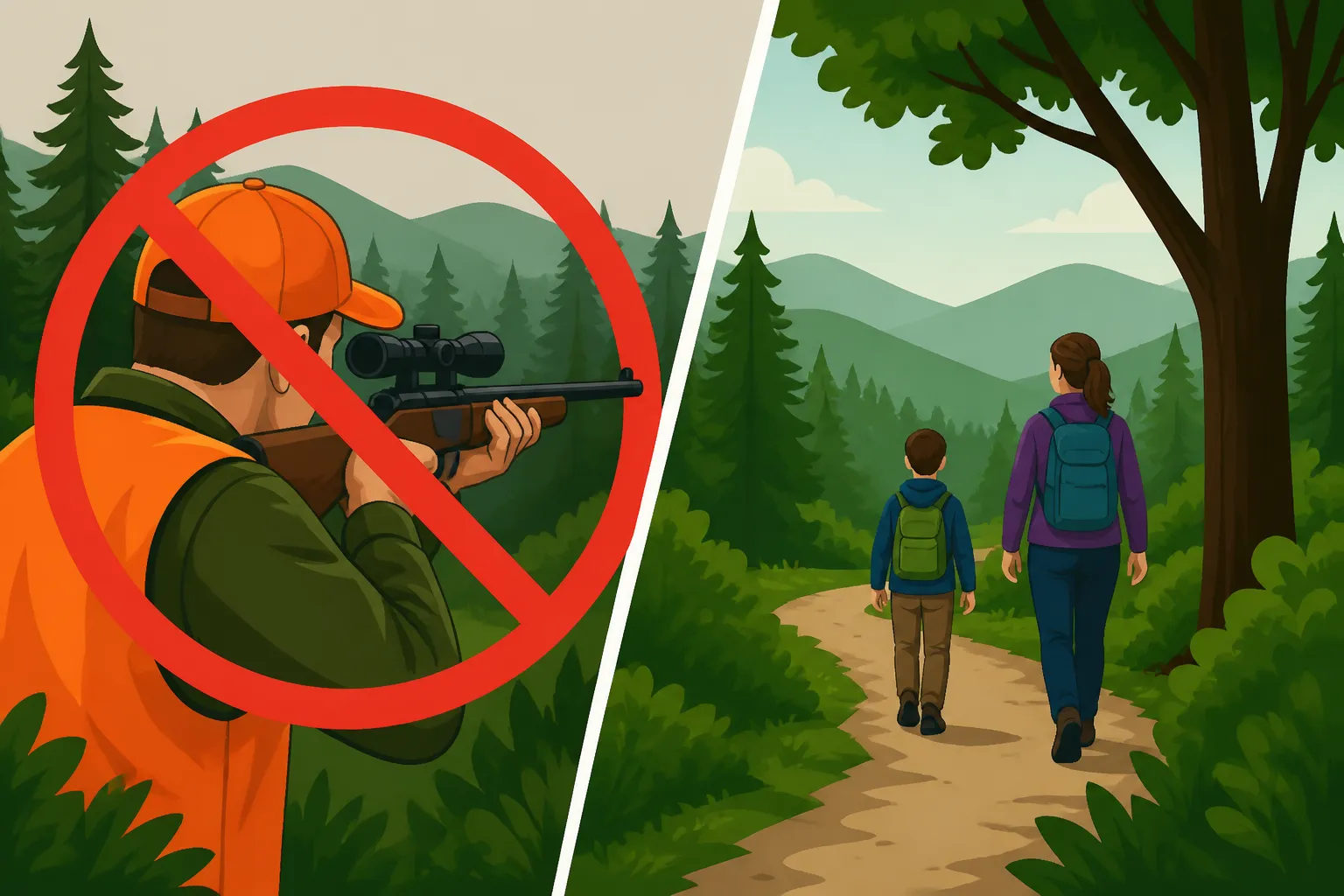
Imagine taking your family for a quiet hike on a beautiful autumn afternoon. You're enjoying the crisp air, the rustling leaves, maybe pointing out some tracks on the path, when suddenly, a firearm discharges nearby. Even if it's perfectly safe, that sudden, loud noise can be startling, frightening, and immediately create a sense of unease or even danger for those not expecting it. Vermont's public lands are truly multi-use. You'll find hikers soaking in the views, dog walkers enjoying a stroll, birdwatchers with their binoculars, and mountain bikers tearing down a path. These individuals might not always be wearing blaze orange or even be aware that hunting season is open. The state has a responsibility to ensure the safety and peace of mind for all its citizens and visitors, regardless of their chosen outdoor activity. A hunter discharging a firearm too close to a trail, even if aiming away from it, introduces an element of perceived and actual risk that can ruin someone's day at best, and lead to serious injury at worst. It's about respecting the fact that the woods are big enough for all of us, but we all need to play by rules that prevent conflict and ensure a positive experience for everyone.
Reducing the Risk of Accidental Shots
Let's be realistic: accidents can happen, even to the most experienced and safety-conscious hunters. A bullet doesn't just stop at its target; it can travel for a considerable distance, and ricochet off rocks, trees, or even frozen ground. Trails, by their very nature, often act as funnels or corridors, concentrating foot traffic in predictable ways. While you might have a clear line of sight to your deer, you might not have a clear understanding of what's beyond your target or just around that bend in the trail. Visibility can be tricky, especially in thick timber or rolling terrain found throughout Vermont. A slight miscalculation, an unexpected movement, or even just bad luck can send a projectile in an unintended direction. The setback distances for discharging firearms near trails are a buffer, a safety margin designed to mitigate this inherent risk. They acknowledge that a hunter's field of vision is limited, and that a bullet's trajectory is far-reaching. By keeping a safe distance, we dramatically reduce the chance of a stray round or a ricochet endangering a non-hunter who might be just out of sight, enjoying the same beautiful Vermont landscape. It's a pragmatic approach to a potentially serious problem, ensuring that everyone can return home safely.
Understanding the Specific Regulations in Vermont
Navigating hunting regulations can sometimes feel like trying to read ancient hieroglyphs, especially when it comes to specifics like "near a trail." What does "near" even mean? Does an old logging road count? It's easy to get frustrated by the lack of crystal-clear, universal definitions, but understanding the intent helps a lot. Vermont's regulations are designed to be practical, focusing on the spirit of safety, while acknowledging that specific situations can vary.
Defining "Near a Trail" and "Discharge"
When the Vermont Fish and Wildlife Department talks about restricting firearms discharge "near a trail," they're generally referring to any established path that sees regular public use. This could be a designated hiking trail, a snowmobile trail that doubles as a walking path in the fall, or even a well-worn logging road. The key is public access and potential foot traffic. While there isn't always a one-size-fits-all numerical distance universally applied to all trails across all land types in Vermont, the underlying principle is consistent: maintain a safe and reasonable distance to avoid endangering other users. For example, shooting from a public road is often strictly prohibited, and trails are often treated with a similar level of caution.
"Discharge" is pretty straightforward: it means firing a gun. This isn't just about taking a shot at a deer. It also includes target practice, sighting in your rifle, or any other activity that involves sending a projectile from a firearm. The danger isn't just to the deer; it's to anyone in the vicinity. Always assume that if you're pulling the trigger, the restriction applies. It's crucial to check the specific regulations for the particular piece of public land you're hunting, as some Wildlife Management Areas (WMAs) or state parks might have more explicit rules or distances than others. Vermont Wildlife Management Areas will often have signage or specific rules about firearms use. Using tools like the Vermont Fish and Wildlife App, even without cell service, can sometimes provide geolocated information that clarifies these boundaries on the ground. Using the Fish and Wildlife App Without Cell Service can be a lifesaver for this.
How Different Land Types Apply These Rules
Vermont is blessed with a patchwork of public lands, each managed by different entities and sometimes with slightly different nuances in their regulations. What might be a hard-and-fast rule in one area could be interpreted with a bit more discretion in another, though the core safety principle always remains.
For instance, the Green Mountain National Forest, covering vast tracts of land in central and southern Vermont, has its own set of rules, often emphasizing safe hunting practices within multi-use areas. While explicit setback distances from every trail might not be posted every mile, the expectation is always to exercise extreme caution and maintain significant distances from any areas where non-hunters might be present. Hunting Green Mountain National Forest involves understanding these broader principles.
State forests and parks, managed by the Department of Forests, Parks and Recreation, also have regulations that prioritize public safety. Some state parks might even have specific no-hunting zones or require special permits for hunting, especially near developed recreation sites or high-traffic trails. Wildlife Management Areas, managed by Vermont Fish and Wildlife, are primarily intended for wildlife and hunting, but even here, popular walking paths or access roads will have safety considerations. Then there are local town forests, which can have their own ordinances, sometimes stricter than state or federal rules. It's a lot to keep track of, I know! But the bottom line is to always err on the side of caution. If you're near a path that looks like it gets regular foot traffic, move deeper into the woods or find another spot.
Here’s a general overview of how these principles apply:
| Type of Restricted Area | Primary Reason for Restriction | How Trails Compare | Hunter's Best Practice |
|---|---|---|---|
| Occupied Dwelling | Direct danger to people inside/around home | Shared use, often residential adjacent | Maintain significant distance, ensure clear backdrop |
| Public Roadways | Danger to vehicles & pedestrians | Shared use, often high traffic | Avoid shooting towards/across, ensure clear backdrop |
| Designated Trails | Danger to non-hunting recreationists | Shared use, concentrated foot traffic | Scout for remote areas, prioritize deep woods |
| Developed Recreation Sites | High density of non-hunters | Very high non-hunter density | Avoid hunting entirely or with extreme caution |
Remember, this table outlines general principles. Always consult the specific regulations for the land you intend to hunt.
Practical Strategies for Hunting Around Trails
Understanding why the rules exist is the first step, but the next is knowing how to still have a successful and enjoyable hunt without running afoul of them. It requires a bit more planning and a shift in perspective, but it's entirely doable. Vermont's woods are vast, and there's plenty of ground to cover away from the beaten path.
Scouting and Planning to Avoid Conflict Zones
This is where your pre-season homework really pays off. Before you even set foot in the woods with your bow or rifle, spend some serious time with maps. Digital mapping tools like onX Hunt have revolutionized this for us. You can overlay public land boundaries, identify trails, and even see property lines. Use these tools to identify access points that are less likely to lead directly to a well-used trail. Look for deeper pockets of woods, areas with challenging terrain that deter casual walkers, or sections of land that are simply further removed from designated paths. Scouting Vermont Public Land Before Season is absolutely essential here.
For example, if you see a large WMA with a popular loop trail clearly marked, you'll want to plan your entry and stand placement well away from that loop. Instead, look for an old logging skidder trail that isn't regularly maintained, or better yet, plan to hike off-trail from the start. That often means a bit more effort on your part – a tougher hike in, maybe more difficult navigation – but it dramatically reduces the chance of encountering non-hunters and ensures you're well within the safety parameters for firearms discharge. Remember, the goal isn't just to be legal, but to be safe and respectful. If you put in the time to scout, you'll be amazed at how much less-pressured ground you can find, even in areas that might initially appear busy. Finding Ground Others Walk Past is often a direct result of being willing to walk a little further or climb a little higher.
Ethical Considerations and Hunter Responsibility
Beyond the letter of the law, there's the spirit of the hunter. We have a profound ethical responsibility to uphold the positive image of hunting and ensure the safety of all outdoor enthusiasts. Every negative encounter between a hunter and a non-hunter, even if no rules are broken, can chip away at public support for hunting. These trail restrictions are a way for us to demonstrate that responsibility. By proactively avoiding conflict zones and maintaining safe distances, we show that hunters are considerate, safe, and respectful users of shared public resources.
This also means being constantly aware of your surroundings, not just your immediate target. Before you even raise your firearm, scan beyond your intended target. Is there a ridge line? Is there a valley that might conceal a trail? Is there a structure or a road that could be in the line of fire? Always have a safe backdrop. Another good practice, especially in multi-use areas, is to wear blaze orange, even during seasons or in situations where it might not be strictly legally required. Vermont Blaze Orange Requirements are in place for a good reason, and erring on the side of caution with visibility is always a smart move when you're in areas that might have other users, even if you're not on a specific trail. It’s about building a positive reputation for hunters, ensuring that the legacy of ethical hunting continues for generations to come.
The Impact of Non-Compliance and Future Access
Ignoring these regulations, whether intentionally or through negligence, has repercussions that stretch far beyond a single hunting season or a single individual. It jeopardizes our access to public lands and tarnishes the reputation of hunting as a whole, making it harder for future generations to experience what we cherish.
Potential Legal Consequences of Violations
Let's be blunt: violating firearms discharge laws in Vermont can lead to serious consequences. These aren't just minor infractions. Depending on the severity of the incident and specific local ordinances, penalties can range from substantial fines and mandatory hunter education courses to the revocation of hunting licenses, potential property damage charges, and even criminal charges if serious injury or fatality occurs. The Vermont Fish and Wildlife Department, along with local law enforcement, takes these safety regulations very seriously.
Beyond the immediate legal fallout, there's the broader impact. Every time an incident occurs – a close call, a reported discharge near a trail, or worse – it draws negative attention to hunting. These incidents can fuel public outcry, leading to calls for stricter regulations, reduced hunting seasons, or even outright bans on hunting in certain public areas. It creates a narrative that hunters are unsafe or irresponsible, which is a narrative we absolutely need to counter with our actions. Following these rules isn't just about avoiding a ticket; it's about safeguarding the future of our sport. Vermont Wildlife Violation Penalties are in place for good reason.
Preserving Hunting Opportunities for Generations
Ultimately, the reason these rules exist, and why it's so important for us to adhere to them, is for the long-term health and continuation of hunting in Vermont. Public land access isn't a guaranteed right; it's a privilege that requires responsible stewardship from all users. When hunters consistently demonstrate respect for these safety zones and other users, we build goodwill and solidify the public's acceptance of hunting.
As Vermont's population grows and more people discover the joys of hiking, biking, and exploring our public lands, the pressure on these shared spaces will only increase. Hunting Pressure on Vermont Public Land is a real and growing concern. If we, as hunters, don't proactively manage our impact and ensure safety, we risk losing access to the very places we love. By being diligent in our scouting, by using tools like onX Hunt to identify clear zones, or by looking at resources like GoHunt to find less-traveled areas, we are actively participating in the preservation of our hunting heritage. It's about setting a positive example, educating new hunters, and demonstrating that responsible hunting and shared public land use can coexist harmoniously. Our actions today directly impact the hunting opportunities available to our children and grandchildren tomorrow.
Disclaimer
This article is for general informational purposes only and does not constitute professional advice. Laws, prices and regulations vary by location and change over time. Consult a qualified professional for guidance on your specific situation.