Timber Cuts and Where Deer Move After
Finding a beloved hunting spot completely transformed by a timber cut can be incredibly frustrating. One season you're walking through familiar woods, and the next, it's a raw, open landscape of stumps and slash. This sudden change can make you feel like your knowledge of deer movement is useless, but don't give up! This comprehensive guide will help you understand how deer react to logging operations, both immediately after and years down the line, so you can adapt your hunting strategies and even find new hotspots in these evolving environments.
The Initial Shock and Scatter: Deer's Immediate Reaction
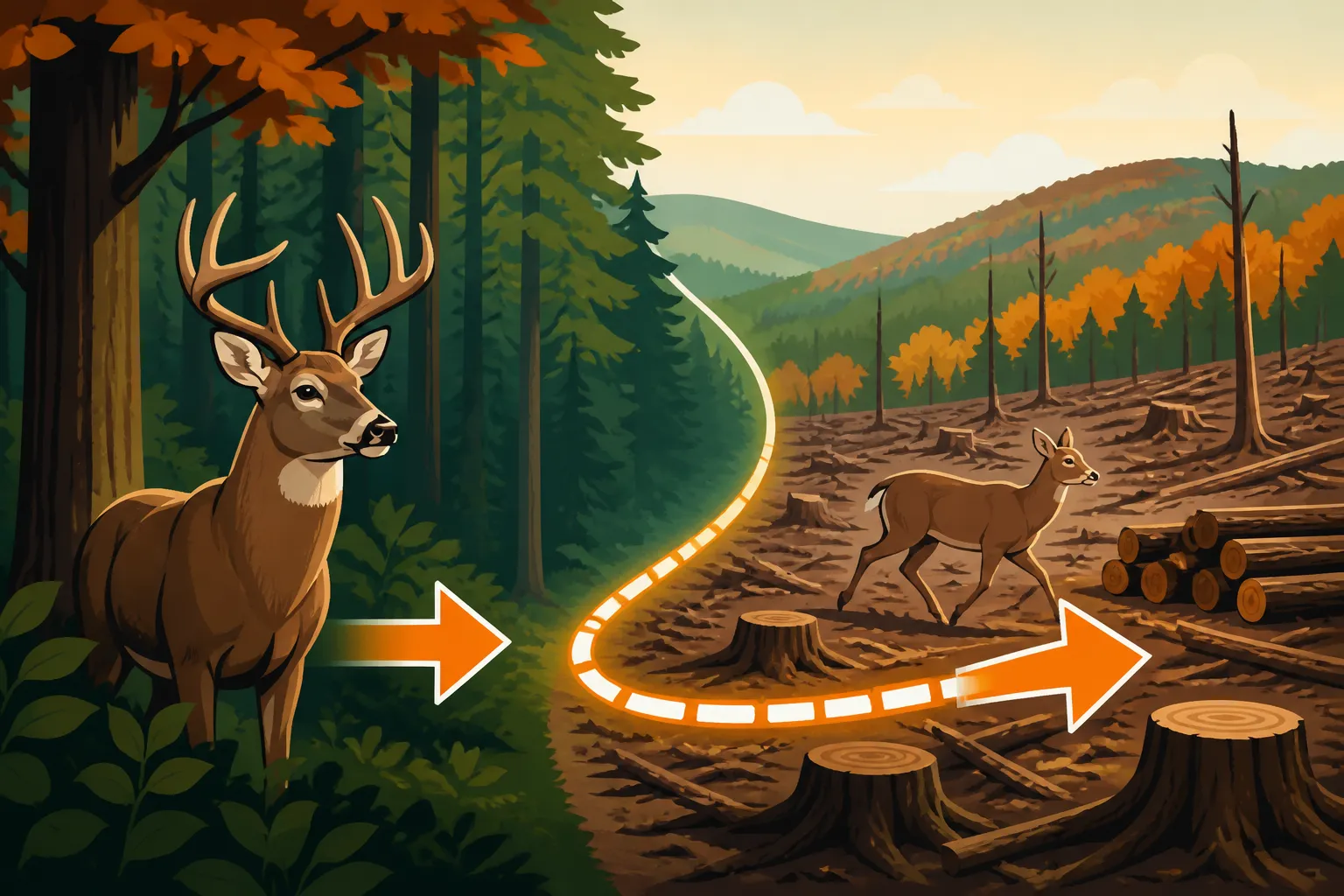
Imagine your living room suddenly ripped apart, walls gone, furniture scattered. That's a bit like what a timber cut does to a deer's home range. The immediate aftermath of a logging operation is a period of intense disruption, and deer, being creatures of habit and security, react strongly. Their primary instinct is survival, and that means fleeing from danger and seeking immediate cover.
Why Deer React Dramatically at First
The reasons for a deer's dramatic initial reaction are numerous and deeply ingrained in their survival instincts. First and foremost, there's the sheer noise and activity of the logging process itself. Heavy machinery like feller bunchers, skidders, and log trucks create an incredible racket that will send deer scattering. This isn't just a brief disturbance; these operations can go on for days or even weeks, pushing deer out of the immediate vicinity.
Beyond the noise, there's the sudden loss of crucial cover. A dense stand of pines or a thick deciduous woodlot offers security, thermal protection, and a sense of concealment. When that cover is removed, deer feel exposed. They are suddenly vulnerable to predators, including human hunters, and their instinct is to find new, safe havens. Furthermore, the ground disturbance can temporarily eliminate browse and acorns, forcing them to find alternative food sources. A once-familiar bedding area or travel corridor might now be a barren wasteland, completely altering their routines.
Short-Term Movement Patterns and Security
In the immediate wake of a timber cut, deer will typically relocate to the nearest available secure cover. This might be an adjacent unlogged patch of woods, a dense conifer stand, a thick swamp, or even a deep ravine that offers some sense of concealment. They don't usually travel far unless pressure is extreme; their instinct is to simply put a buffer of thick vegetation between themselves and the disturbed area.
You'll often see deer "staging" in these perimeter areas. They'll use the undisturbed edges as travel corridors, moving cautiously and perhaps only venturing into the periphery of the cut during low-light hours. During this initial phase, fresh tracks will concentrate around the remaining cover. They might skirt the new opening, especially if it's a clear-cut, before diving back into the safety of the trees. This creates fantastic opportunities for hunters who can identify these immediate escape routes and adjacent bedding areas. Understanding Where Vermont Bucks Bed in Thick Cover becomes especially critical here, as those thickets adjacent to a fresh cut will be prime security zones.
The Regrowth Resurgence: Long-Term Habitat Appeal
While the initial phase of a timber cut can be chaotic for deer and frustrating for hunters, don't write off these areas for good. Over time, timber cuts transform into some of the most productive deer habitat in Vermont. It’s a classic example of "one door closes, another opens," but on nature's timetable. Within a few years, a cut block that once looked like a disaster zone will start to resemble a deer buffet and sanctuary.
Food, Cover, and Thermal Benefits of Young Growth
The magic of a timber cut truly begins when the forest floor springs back to life. Sunlight, suddenly able to reach the ground, awakens dormant seeds and encourages rapid growth of pioneer species. Think about young aspen, birch, maple saplings, and a host of shrubs like viburnum, dogwood, and blackberry bushes. These plants are incredibly palatable to deer, offering abundant browse that is rich in nutrients. This dense, low-growing vegetation creates a literal smorgasbord of food sources, far more diverse and accessible than what was available in the mature, shaded forest that stood before. This is especially true after a poor acorn year when natural mast crops are scarce.
Beyond food, this burgeoning young forest provides invaluable cover. The dense tangle of saplings and shrubs offers excellent visual screening, allowing deer to move and bed with a heightened sense of security. This thick, "dog-hair" regeneration provides thermal benefits too, buffering against harsh winter winds and offering shade in the summer. A small fawn is far safer from predators when hidden in a dense thicket of blackberry and maple shoots than it ever would be in open timber. This new growth effectively creates a Reading a Green Mountain Deer Yard of sorts, offering critical resources.
Establishing New Travel Corridors and Bedding Areas
As the regrowth matures over several years, deer don't just visit these areas to feed; they begin to live in them. They'll establish new travel corridors through the regenerating timber, often following subtle changes in topography or denser pockets of cover. These might be old skidder trails that have grown in, or paths they've beaten down themselves through the thick brush. These natural funnels can be absolute goldmines for hunters.
New bedding areas will also emerge within the heart of these cuts. Bucks, especially, will seek out dense pockets for daytime bedding, where they can chew their cud feeling secure. Does with fawns will also gravitate to these areas, valuing the dense cover for protection. Over time, deer will adjust their entire home range to incorporate these rich new habitats. It's a prime example of how forest management, even if initially disruptive, can lead to a boom in wildlife populations.
Scouting Strategies for Post-Cut Hunting
Successfully hunting timber cuts requires a shift in your scouting approach. You can't just rely on old knowledge; you have to actively seek out how deer are adapting to the new landscape. The good news is that modern tools and old-fashioned legwork can make this process incredibly efficient and rewarding.
Utilizing Mapping Apps for Cut Identification
The first step in scouting timber cuts often begins long before you set foot in the woods. Modern mapping applications are indispensable for identifying and understanding these areas. Services like onX Hunt and GoHunt provide satellite imagery that can be updated periodically, allowing you to see recent logging operations. You can often see clear-cuts, selective thinning, or even newer growth areas that were cut years ago.
Start by zooming in on your public land parcels or private land you have permission to hunt. Look for distinct edges, abrupt changes in canopy, or areas of disturbed ground. Many forestry operations will leave tell-tale signs on satellite imagery for years. By comparing historical imagery (if available in your app), you can even pinpoint when a cut occurred, giving you a better idea of the stage of regrowth. Mark these areas on your app. Note any adjacent thick cover, water sources, or topographical features that might influence deer movement around the cut. Reading Aerial Photos for Green Mountain Deer can highlight not just cuts, but also the natural funnels and pinch points deer will use in relation to them.
| Feature Type | Immediate Post-Cut Reaction | 2-5 Years Post-Cut Attraction |
|---|---|---|
| Deer Presence | Low, deer displaced | High, primary habitat |
| Primary Need | Security from disturbance | Food & security cover |
| Movement | Skirting edges, seeking escape cover | Moving through dense browse, establishing new trails |
| Bedding | Adjacent thickets, unlogged pockets | Within dense regeneration |
| Food Source | Adjacent untouched browse, acorns | Abundant new browse (saplings, shrubs) |
| Hunting Strategy | Ambush escape routes, adjacent funnels | Still-hunt interiors, stand on new trails, edges |
Boots-on-the-Ground Reconnaissance
While mapping apps are fantastic for initial planning, nothing replaces physical boots-on-the-ground reconnaissance. Once you've identified potential timber cuts on your map, it's time to get out there and see what the deer are actually doing. This is where you verify your armchair scouting. Walk the perimeter of the cut, looking for fresh tracks entering and exiting. Pay close attention to any remaining cover bordering the cut – a thick stand of pines or a dense hemlock grove will likely be holding deer displaced by recent activity.
Move into the cut itself, particularly if it's a few years old and has significant regrowth. Look for well-worn deer trails snaking through the new saplings and brush. These are the new highways deer are using. Identify potential bedding areas within the densest cover. Look for rub lines and scrapes, especially along the edges or where two types of cover meet. Scouting year-round, not just pre-season, will give you an invaluable understanding of how deer use these areas in different conditions. This type of detailed scouting is essential for Finding Sign in Green Mountain Timber.
Interpreting Deer Sign in Cut Blocks
Deer sign in timber cuts can tell a unique story. In a fresh cut, look for fresh tracks and droppings quickly leaving the area, likely heading for the nearest escape cover. The initial sign might be sparse within the cut itself, but heavy on the fringes.
In a cut that's a few years old and regenerating, you'll be looking for signs of heavy browsing. Nibbled saplings, stripped bark on young trees, and the distinctive "clipped" look of browsed shrubs indicate a rich food source. Look for well-worn trails, often much narrower and more tunnel-like than trails in mature woods, due to the dense vegetation. Rubs and scrapes, especially during the rut, will appear on the larger remaining trees or the sturdier saplings within the cut, or along the prominent edges. When you're Hunting the Rut in Early-to-Mid November, these regenerated cuts can be phenomenal because they offer both cover and food for cruising bucks. Pay attention to how deer move through the thick stuff, as this will inform your stand placement or still-hunting routes.
Hunting Tactics Tailored for Timber Cuts
Once you've done your homework and understand how deer are using a particular timber cut, it's time to put those insights into action. Hunting these areas often requires different tactics than hunting mature, open woods, but the rewards can be significant.
Stand Placement for Early Success
For fresh timber cuts, your best bet for stand placement is often on the edges of the cut, particularly where it meets mature, undisturbed cover. Deer will likely use these edges as travel corridors, especially during low light, as they cautiously move between their secure bedding areas and any remaining or new food sources. Look for pinch points or funnels created by the remaining topography or thickets that force deer movement into predictable paths. A stand overlooking one of these "escape routes" or staging areas can be deadly. If you're bowhunting during the rifle season, special attention to Bowhunting During Vermont's Rifle Season means extra awareness of how deer are being pushed by other hunters and might use the adjacent thick cover even more.
For cuts that are a few years old and showing good regeneration, consider placing stands directly within the cut, along well-used deer trails or overlooking dense pockets that might serve as bedding areas. Focus on openings within the thick regrowth, or where the regenerating timber transitions to another habitat type, like a mature hardwood ridge or an old field. A Hanging a Stand on a Champlain Valley Field Edge strategy, if applicable to a cut that borders an agricultural field, can also be very effective as deer move from thick cover to feed.
Still-Hunting the Edges and Interior
Still-hunting is a fantastic tactic for regenerated timber cuts, especially those with dense undergrowth. The thick cover that provides security for deer also provides concealment for you. Move slowly, taking one or two steps, then stopping to scan and listen. The dense vegetation limits visibility, so you'll need to be hyper-aware of your surroundings. Focus on movement, small flashes of color, or the sound of rustling leaves that betray a deer's presence.
When still-hunting, work into the wind, always, and pay attention to thermals, particularly in the Wind and Thermals in Steep Green Mountain Terrain found throughout much of Vermont. In the morning, thermals often rise, carrying your scent upward. In the evening, they typically fall, carrying your scent down into valleys. Use these to your advantage, or at least be aware of how your scent is traveling. Don't be afraid to penetrate the densest parts of the cut; that's often where the deer feel safest and will be bedding. Patience is absolutely key here; it's not about covering ground quickly, but about moving deliberately and observing intently.
Understanding Pressure and Adjacent Cover
Deer quickly learn about hunting pressure. A timber cut that provides fantastic cover can become even more attractive to deer once hunting season starts, as they seek refuge from heavily hunted areas. This means that even if a cut wasn't a primary bedding area before the season, it might become one due to hunter activity on surrounding properties. Always consider the larger landscape and how other hunters might be influencing deer movement.
Adjacent cover is critical. Even a heavily cut area will have perimeter zones of undisturbed forest. These areas will serve as initial escape routes and staging grounds. Pay attention to these unlogged islands or thick edges, as deer will often utilize them as safe havens before venturing back into the regenerating cut. A deep ravine or a secluded swamp that was untouched by logging will become a magnet for deer, especially if it's close to the new food source provided by the cut. Understanding how deer use Hunting a Funnel Between Two Woodlots or other similar features in relation to a timber cut can give you a significant advantage. The more you understand how pressure shapes deer behavior, the better you can predict their movements in these dynamic environments.
Navigating timber cuts in Vermont can be a challenge, but with the right mindset and strategies, they can become some of your most productive hunting grounds. By understanding the immediate scatter and the long-term regrowth attraction, and by utilizing modern scouting tools combined with patient woodsman skills, you'll be well on your way to punching more tags in these evolving landscapes.
Disclaimer
This article is for general informational purposes only and does not constitute professional advice. Laws, prices and regulations vary by location and change over time. Consult a qualified professional for guidance on your specific situation.