Hunting a Hillside Pasture Edge
One of the most frustrating things about hunting in Vermont, especially for deer, is trying to predict where those elusive animals will be. You might spend hours scouting deep woods, only to find the freshest sign right on the edge of a property you passed a hundred times. This guide is all about honing in on one of those often-overlooked, yet incredibly productive, spots: the hillside pasture edge. We’ll dive deep into understanding these unique habitats and give you actionable strategies to turn that frustration into a successful hunt.
Understanding the Dynamics of a Hillside Pasture Edge
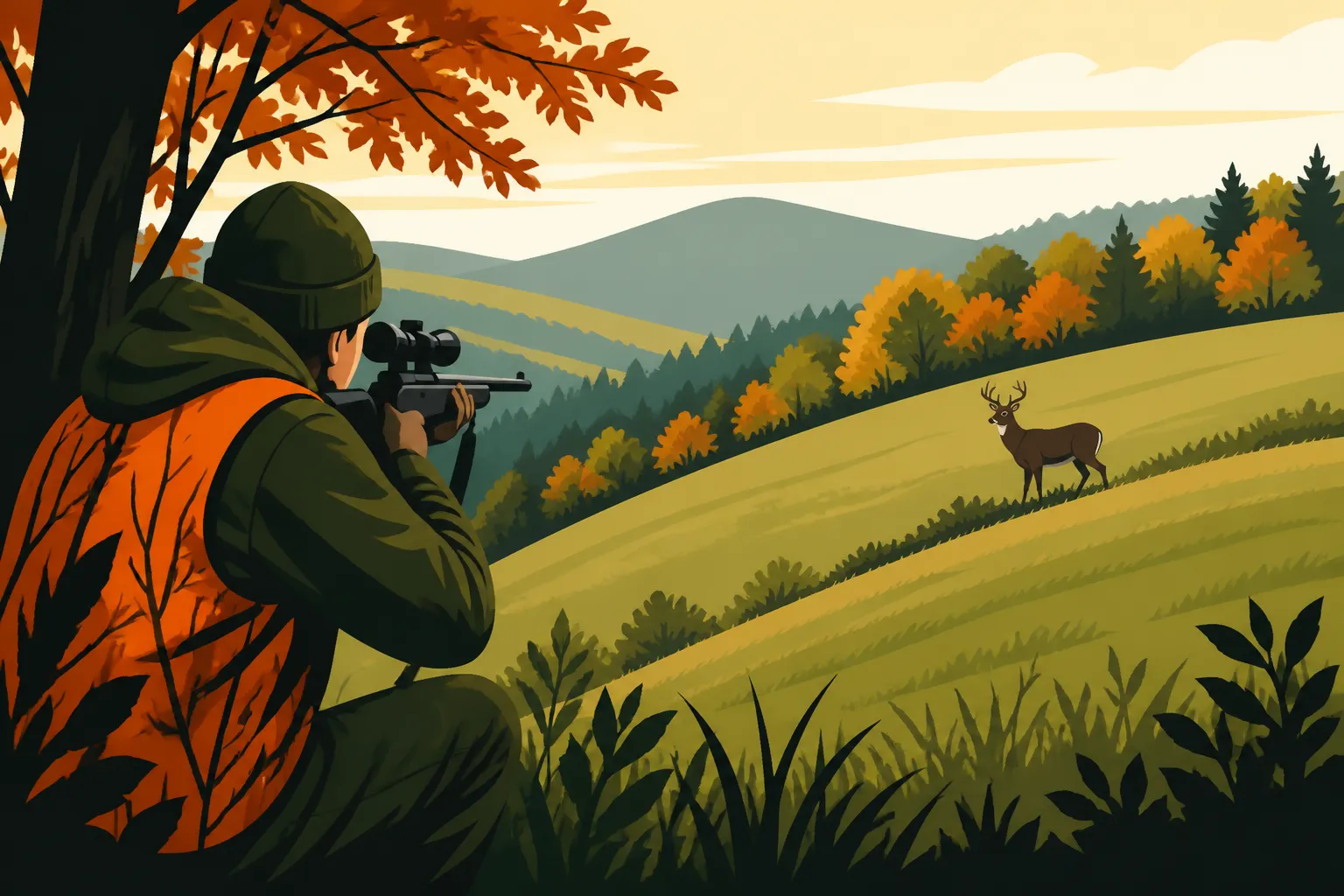
There's something inherently appealing about a hillside pasture edge for a Vermont whitetail. It's not just a random line in the landscape; it's a dynamic transition zone that offers a perfect blend of resources and security, making it a hotspot for deer activity. Understanding why deer choose these spots is the first step to effectively hunting them.
Why Deer Gravitate Towards These Edges
Think about what a deer needs: food, water, cover, and safety. A hillside pasture edge often provides all of these in a neat, accessible package. The pasture itself, whether it's actively grazed or simply overgrown, provides diverse forage. Young, tender grasses and clover can be incredibly attractive, especially in the early season or during a mild winter when other food sources are scarce. As the season progresses, deer might nip at residual green-up or browse on brush encroaching from the timber side. This constant buffet of available food acts like a magnet, drawing deer out of the thicker woods.
Beyond just food, these edges offer a fantastic travel corridor. Deer are creatures of efficiency, and a well-defined edge, particularly one that offers a bit of elevation for a vantage point, becomes a natural highway. They can skirt the open pasture, staying just inside the tree line for cover, moving from bedding areas higher on the ridge to feeding grounds in the valley, or vice-versa. This means you often find well-used trails worn deep into the earth, indicating consistent movement. These travel lanes aren't just for daily routines; they become prime cruising routes for bucks during the rut, looking for does that might be venturing out into the open for a quick graze.
Another critical factor is thermal regulation and security. In Vermont, hillsides often create distinct thermal currents. In the morning, cool air sinks, and in the evening, warmer air rises. Deer instinctively use these thermals to their advantage, especially when trying to scent-check for predators. An edge allows them to quickly duck into dense cover if danger appears, while still keeping an eye on the more open pasture. Furthermore, the topography itself provides a sense of security. A deer standing on a hillside can see quite a distance, giving them an advantage over anything approaching from below. They feel less exposed than they would in the middle of a wide-open field, yet they still benefit from the abundant forage.
Reading the Landscape for Key Features
Not all hillside pasture edges are created equal. To be truly successful, you need to become a master at reading the subtle nuances of the land. Deer, being creatures of habit and efficiency, will always choose the path of least resistance or the most secure route. Your job is to find where those paths intersect with the edge.
Look for natural pinch points along the edge. This could be where the timber pushes out further into the field, or where a small ditch, creek, or even a rock outcropping creates a bottleneck. These are prime areas where deer traffic will be concentrated. Even if the main edge seems wide open, a subtle bend or narrowing will force deer into a tighter travel lane, making them easier to intercept. These natural funnels are deer magnets, particularly during periods of high activity like the rut. You might even find where deer prefer to cross a specific fence line, creating a "jump-down" point that’s used repeatedly.
Additionally, pay close attention to draws or small drainage ditches that run down the hillside and intersect the pasture edge. These natural depressions offer concealed travel routes, allowing deer to move up and down the hill without being exposed. They also tend to hold moisture, which can support different types of browse that deer might favor. A buck traveling along the edge might dip into a draw to cross a low point or to get a quick drink from a seasonal seep. These areas are also excellent spots for rubbing posts and scrape lines, as bucks use them to mark their territory along these natural travel corridors. Remember, deer are often lazy, so anything that makes their journey easier or safer will be utilized.
Scouting Strategies for a Productive Edge
You can stare at maps all winter, but nothing beats putting boots on the ground. However, combining modern technology with traditional scouting can give you a powerful advantage when hunting a hillside pasture edge. It’s all about building a comprehensive picture of deer movement before you ever step foot in your stand with a bow or rifle.
Pre-Season Reconnaissance: Boots on the Ground
There’s no substitute for walking the ground you intend to hunt, especially around a hillside pasture edge. This isn't just a casual stroll; it's a focused mission to find and interpret deer sign. Start your reconnaissance well before the season, ideally in late summer or early fall. This allows you to see the terrain without dense foliage and to observe early season sign. Walk the entire length of the pasture edge, both inside the timber line and along the field's periphery. You're looking for worn trails, which are a dead giveaway of consistent deer movement. Don't just look for major highways; sometimes the fainter, less obvious trails lead to hidden feeding spots or secure bedding areas just inside the timber.
As you walk, be on the lookout for fresh rubs and scrapes. Rubs tell you where bucks are marking territory and how they're moving. Scrapes, particularly large, active ones, indicate a buck's presence and his readiness to breed. Pay attention to their orientation – are they on the field side or deeper in the timber? This can tell you about daylight versus nighttime movement. Droppings, or scat, are also incredibly useful. Fresh droppings indicate recent activity. The type of droppings can even give you a clue about their diet. If you find a large accumulation of droppings, it might signify a preferred feeding spot just inside the timber, or a secondary bedding area. Don't forget to look for bedding areas themselves – flattened grass or leaves, often just a few yards inside the timber where deer can watch the field. Understanding Finding Sign in Green Mountain Timber is crucial here, as deer often duck in and out of the woods.
Lastly, and this is critical for hillside hunting, pay attention to elevation changes and prevailing wind patterns. Even subtle dips and rises can create micro-thermals that affect how deer approach or depart the edge. Note where the steepest parts of the hill are, and where it flattens out slightly. Deer will often favor the less strenuous path. Think about where the wind typically blows from in your area. This information will be vital for choosing your stand locations, ensuring your scent doesn't blow directly into a deer's travel path. Over time, you'll develop an intuition for how deer use these edges, but it all starts with meticulous scouting.
Leveraging Technology for Remote Scouting
While boots on the ground are essential, modern mapping applications like onX Hunt and GoHunt have revolutionized how we approach scouting. These tools allow you to do an immense amount of pre-scouting from your couch, saving time and energy, and helping you formulate a more effective ground-scouting plan. They are particularly powerful for dissecting complex terrain like hillside pasture edges.
Start by pulling up the satellite imagery of your chosen area. The sheer detail can be astounding. Look for changes in vegetation along the edge—thicker pockets of cover, areas with more mature trees, or even small hedgerows that might not be obvious from the ground. These dense spots can be ideal bedding areas or staging points where deer gather before entering the open pasture. You can often spot distinct game trails showing up as lighter lines against darker foliage, especially if they’re heavily used. Look for variations in the pasture itself; sometimes there are areas of taller grass or brush that offer a little more cover for deer venturing out. This visual reconnaissance helps identify potential pinch points, draws, and funneling features that you can then specifically target during your physical scouting trip. It's like having a bird's-eye view of deer movement patterns. Understanding Reading Aerial Photos for Green Mountain Deer can really elevate your game.
Next, switch to the topographic (topo) map view. This is where you unlock the secrets of elevation, which is paramount for hillside hunting. Topo lines reveal the steepness of the terrain, helping you pinpoint natural benches, saddles, and subtle rises that deer might use as travel corridors or resting spots. Deer often prefer to travel just below a ridgeline, out of sight, or on a bench where the climbing is less strenuous. The topo map also gives you a crucial understanding of how thermals might behave. As discussed, thermals are heavily influenced by topography, and knowing the contours allows you to anticipate where rising or falling air currents will carry your scent. You can also use these apps to mark potential stand locations, track property lines (critical for avoiding trespass), and even monitor recent harvest data or land ownership changes. These digital tools aren't just for planning; they're essential for execution, helping you refine your strategy based on real-time and historical data.
Hunting Techniques for Success on the Edge
Once you’ve put in the scouting work, it’s time to transition into the actual hunt. Hunting a hillside pasture edge requires careful consideration of stand placement, understanding the ever-changing wind, and knowing when deer are most likely to be on the move. Every decision you make, from where you hang your stand to what time you arrive, impacts your chances of success.
Stand Placement and Wind Considerations
Choosing the right stand location on a hillside pasture edge is paramount, and it’s a decision heavily influenced by the wind and terrain. First, decide between a treestand or a ground blind. A treestand, positioned just inside the timber line, offers an elevated vantage point, which can be invaluable for spotting deer early as they approach the edge, especially in a slightly more open timber setting. It also helps to get your scent up and away from deer traveling on the ground. When placing a treestand, look for a tree that provides good cover (e.g., a cluster of pines, a dense maple) but still allows for clear shooting lanes into both the pasture and along the timber edge. Consider a setup for Hanging a Stand on a Champlain Valley Field Edge, even if you’re not on Lake Champlain, as the principles are similar.
Ground blinds, on the other hand, can be incredibly effective in areas where suitable trees are scarce or where you need to adapt quickly to changing conditions. They provide excellent concealment and scent control, especially if brushed in properly. If you choose a ground blind, ensure it's positioned to use natural contours or existing brush for added stealth. The most crucial factor for either choice is the wind. On a hillside, prevailing winds are often complicated by thermals. In the morning, cooler air sinks down the slope, carrying your scent downhill. In the evening, warm air rises, carrying your scent uphill. You must position your stand so that your scent blows away from where you expect deer to approach or pass. This often means setting up on the downwind side of a likely travel route or entry point. If the wind is shifty or unpredictable, having a secondary stand location or a mobile setup is wise. Understanding Wind and Thermals in Steep Green Mountain Terrain is not just helpful; it’s absolutely essential for these setups. Neglecting wind direction will blow your hunt before it even begins.
Timing Your Hunt: Morning, Evening, and Rut Movement
The time of day you choose to hunt a hillside pasture edge can drastically impact your success, as deer utilize these areas differently throughout a 24-hour cycle. Understanding these patterns allows you to optimize your sit. Mornings, especially at first light, are fantastic for catching deer that have been feeding in the open pasture overnight and are now retreating to their bedding areas in the adjacent timber. They’ll often linger along the edge, taking a few more bites or just cautiously observing before melting back into the woods. Setting up well before dawn, and patiently waiting for that transition, can be highly effective. This is when they are most likely to be moving from feed to bed.
Conversely, evenings are often even more productive. As dusk approaches, deer will begin to stir from their bedding areas higher on the hillside or deeper in the timber, slowly making their way towards the accessible forage of the pasture. They'll often stage just inside the timber edge for a while, perhaps browsing on brush, waiting for confidence and light to fade before stepping out into the open. Being in your stand or blind at least an hour or two before sunset, positioned to intercept them during this cautious approach, can pay off big. They are moving from bed to feed, and the edge provides that perfect transitional space.
Then there’s the magic of the rut. During the breeding season, particularly in early-to-mid November when Hunting the Rut in Early-to-Mid November is in full swing, deer movement patterns become more erratic but also more intense. Bucks are constantly on the move, scent-checking, chasing, and looking for does. A hillside pasture edge becomes a natural cruising lane for these bucks, as does often utilize these edges for feeding and travel. A buck might follow the contour of the edge for a mile, scent-checking every dip and rise for a hot doe. This means you could encounter a buck at any time of day, not just during the traditional dawn and dusk windows. Being patient and staying vigilant during the rut, especially on those edges, can lead to unexpected encounters with mature deer.
Advanced Tactics and Considerations
Hunting a hillside pasture edge is more than just picking a spot and waiting. It involves a nuanced understanding of deer behavior, terrain, and how external factors like hunting pressure can influence your strategy. By employing some advanced tactics and thinking critically about the environment, you can significantly increase your chances of success.
Utilizing Natural and Man-Made Funnels
Deer are incredibly efficient and will almost always choose the path of least resistance or the route that offers the most security. This is where identifying and utilizing funnels along a hillside pasture edge becomes a game-changer. Natural funnels can be subtle but incredibly effective. A narrow strip of timber that juts into the pasture, a small creek bed that runs down the slope, or even a low point in a stone wall can all concentrate deer movement. For example, if a small, overgrown gully cuts through the pasture and leads directly into the timber edge, deer will almost certainly use it for concealed entry and exit. Similarly, an old logging road that parallels the pasture edge, or a faint cattle path, can become a highway for deer, especially if it offers slightly easier walking. You might find yourself Hunting a Funnel Between Two Woodlots that happens to cross this pasture edge.
Man-made funnels, while less common on wilder pasture edges, can also exist. An old, forgotten fence line that has fallen into disrepair but still guides movement, or even the boundary between a hayfield and a section of row crops, can create distinct travel corridors. The key is to observe where deer are forced into a smaller space or where they naturally gravitate due to topography or cover. Setting up a stand or blind overlooking one of these specific funnels, rather than just a general section of the edge, can dramatically increase your shot opportunities. Pay close attention to these areas during scouting; they often reveal heavier concentrations of tracks, droppings, and rubs. Deer will use these spots year after year, so finding them early is a huge advantage.
Dealing with Hunting Pressure and Adjacent Properties
Hunting a hillside pasture edge, especially one bordering public land or near other hunting properties, often means dealing with hunting pressure. Deer are highly adaptive, and increased human activity will quickly alter their patterns. If the surrounding woods are heavily hunted, deer will often seek refuge in areas that offer perceived safety, even if it means altering their daytime movement. This is where a hillside pasture edge can become a sanctuary. Deer might hold tight in the dense cover just inside the timber line, only venturing out into the pasture during low-light conditions or even after dark. During daylight hours, they might choose to travel just within the tree line, using the cover to avoid detection. Understanding Hunting Pressure on Vermont Public Land means recognizing how deer react and adapting your strategy.
To counter this, consider adjusting your hunting times or tactics. If pressured deer are only moving at dawn and dusk, those are your prime windows. You might also consider setting up deeper into the timber, but still within view of the edge, to catch deer that are skirting the open. If the adjacent land is private and less pressured, deer might use the pasture edge as a refuge from the busy public land, crossing property lines with surprising frequency. This can create unique opportunities, but always be mindful of Vermont Trespass and Permission Law and know your property boundaries, perhaps by using your onX Hunt app to prevent any issues. You might even find opportunities by Hunting Small Private Tracts in Vermont that offer a little more elbow room away from the crowds, often utilizing these exact same hillside edges. The key is to be flexible, observe how deer react to pressure in your specific area, and be willing to move your setup if your initial spots aren't producing. Deer will always adjust, and so must you.
Comparison: Treestand vs. Ground Blind on Hillside Pasture Edges
When hunting a hillside pasture edge, choosing between a treestand and a ground blind often comes down to specific terrain, available cover, and your hunting style. Here's a quick comparison to help you decide:
| Feature | Treestand (Elevated) | Ground Blind (Concealed) |
|---|---|---|
| Visibility | Excellent, wide field of view over pasture and timber. | Limited, often restricted to specific shooting lanes. |
| Scent Control | Elevated, helps dissipate scent above deer's nose. | Excellent, if properly brushed in and sealed. |
| Concealment | Requires good tree cover; silhouette can be visible. | Excellent, blends into natural environment. |
| Mobility | Less mobile once set up; requires suitable trees. | Highly mobile; can be quickly moved and re-setup. |
| Security | Offers a sense of safety from ground-level animals. | Ground level, less safe from curious animals. |
| Shot Angle | Downward angle, ideal for vitals. | Horizontal shot, requires careful shot placement. |
| Comfort | Can be less comfortable for long sits; exposed to elements. | Often more comfortable, enclosed, protected from elements. |
| Ideal Terrain | Areas with mature trees directly on the edge. | Open areas, sparse trees, thick brush lines. |
Remember, the "best" option depends entirely on the specific spot you're hunting and the conditions of the day. Sometimes a combination of both, allowing you to adapt to changing winds or deer movement, is the most effective approach.
Disclaimer
This article is for general informational purposes only and does not constitute professional advice. Laws, prices and regulations vary by location and change over time. Consult a qualified professional for guidance on your specific situation.