Grunt Calls in Mature Vermont Hardwoods
It’s a familiar scenario for many of us who hunt the Green Mountain State: you’re deep in the mature hardwoods, the autumn leaves crunching underfoot, and the woods feel utterly silent. You know deer are around, but actually seeing one in that dense timber, let alone getting it to come to you, can feel like an impossible task. This guide is all about cutting through that frustration, focusing specifically on how a grunt call can become one of your most effective tools when you're working those big, old Vermont hardwood ridges and valleys.
Understanding Deer Communication with Grunt Calls in Hardwoods
Hunting mature hardwoods in Vermont presents a unique set of challenges. The expansive, often uniform canopy can make it tough to pinpoint deer, and their natural wariness in such open, yet dense, environments is legendary. This is precisely where understanding and utilizing a grunt call becomes invaluable. Deer are social animals, and their vocalizations play a critical role in their daily lives, especially during the breeding season.
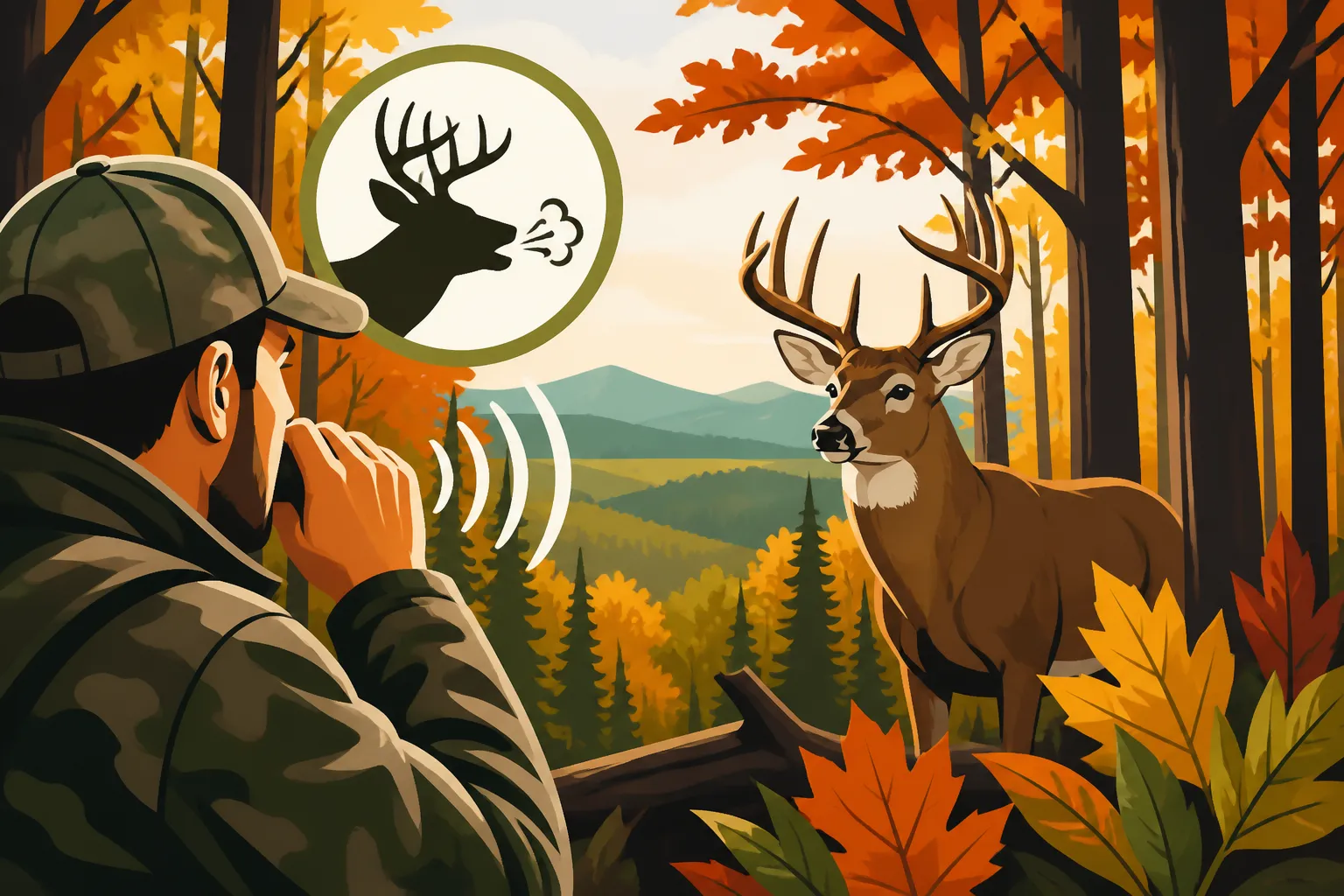
A grunt call mimics the sound a whitetail buck makes, and sometimes does too. These aren't just random noises; they're specific messages meant to communicate everything from "I'm here, where are you?" to "Stay away from my doe!" When you're sitting in a stand overlooking a vast oak flat or still-hunting through a maple bench, a well-timed grunt can cut through the silence and tell a deer exactly what it needs to hear. The key is to understand the different types of grunts and what they signify in the deer world, so you can choose the right message for the situation.
Think about it from a buck's perspective. He's constantly monitoring his surroundings, listening for cues. A sudden, unexpected grunt can pique his curiosity or challenge his dominance, depending on the tone and cadence. In the quiet solitude of Vermont's hardwood forests, where visual encounters might be limited by thick undergrowth or terrain, auditory cues become even more critical for deer to locate each other. This is especially true during periods when deer are actively seeking out partners. Getting the timing and the type of grunt right is paramount to eliciting a positive response from a wary buck.
The Nuances of Different Grunt Types
Not all grunts are created equal, and mature Vermont bucks, especially those that have survived a few hunting seasons, are adept at deciphering these subtle differences. The primary grunt you'll be mimicking is typically a buck grunt, which can vary significantly.
There’s the contact grunt, a softer, often drawn-out sound that bucks use to communicate their presence to other deer or to find does. It’s a bit like saying, "Hey, I'm over here, just cruising." This is often effective for blind calling or when you suspect a deer is nearby but out of sight. Then there's the more aggressive tending grunt, which is typically shorter, sharper, and often repeated rapidly. This sound indicates a buck is actively pursuing a receptive doe, often pushing her or attempting to keep her close. Hearing this can ignite a dominant buck's territorial instincts, making him eager to investigate and potentially challenge the perceived intruder. Finally, a dominant grunt is a deep, guttural sound often accompanied by a snort-wheeze, signaling a buck's intention to confront or intimidate another male. While powerful, this can be risky if overused, as it might deter smaller bucks or even make larger, smarter bucks wary if they don't feel like a fight. Understanding these distinctions is crucial for tailoring your call to the specific phase of the season and the behavior you're trying to elicit.
Strategic Application: When and Where to Use Grunts in Vermont's Timber
Knowing what grunt to make is only half the battle; knowing when and where to use it effectively in Vermont's diverse hardwood terrain is what truly separates successful callers from those who leave their grunt tube in their pack. The Green Mountain National Forest, for instance, offers vast tracts of public hunting land with varying hardwood compositions, from towering maples and beeches to productive oak ridges, and each requires a slightly different approach.
Timing is absolutely everything when it comes to grunt calling. While a contact grunt might work earlier in the season to simply locate deer, the true power of a grunt call shines during the rut. As you're Hunting the Rut in Early-to-Mid November, bucks are more vocal, more active, and more willing to investigate sounds that suggest competition or the presence of a hot doe. Outside of the rut, say during early archery season, an aggressive tending grunt might seem out of place and actually spook deer. During the peak of the rut, however, mimicking a tending grunt might bring a curious or jealous buck right into your shooting lane, eager to see who's encroaching on his territory. Pay attention to local rut activity; sometimes it comes earlier or later depending on factors like weather and herd dynamics.
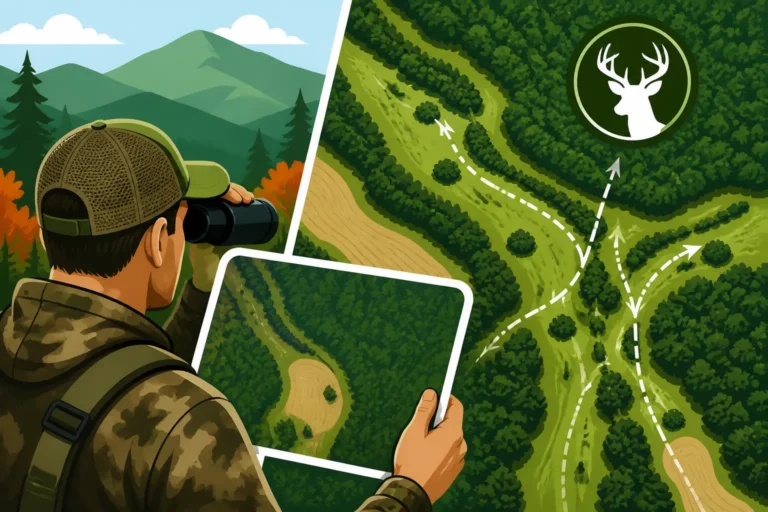
Geographically, mature Vermont hardwoods offer specific hotspots for grunt calling. Ridge tops and saddles are classic ambush points where deer naturally travel, especially bucks cruising for does. A grunt call placed strategically in these travel corridors can stop a passing buck in his tracks or draw him in from a distance. Similarly, creek bottoms and drainages often serve as natural funnels, providing excellent spots for calling, particularly if there’s a consistent wind or thermal current. Oak flats, when mast crops are heavy, can also be phenomenal. Deer will concentrate in these areas to feed, and a grunt call can pull a buck away from his meal to investigate. Use your scouting tools, like the GoHunt app, to identify these natural funnels and food sources on satellite imagery before you even step foot in the woods. This allows you to plan your calling strategy around actual deer movement patterns rather than just guessing.
Considerations for Terrain and Wind
Vermont's terrain is notoriously steep and broken, and this dramatically impacts how sound travels and how deer react. In the Green Mountains, where you might be Wind and Thermals in Steep Green Mountain Terrain, sound can carry surprisingly far or be muffled quickly depending on the wind direction and thermal currents. Always try to call when the wind is in your favor, blowing your scent away from where you expect a deer to approach. If a buck hears your grunt but then smells you, the game is over.
When calling in thick hardwood cover, adjust your volume. A soft, subtle grunt might be all it takes to grab the attention of a buck just out of sight, whereas a loud, aggressive call in dense timber could overwhelm him or make him suspicious. If you’re hunting a more open maple stand, you can project your calls further. Conversely, if you're in a dense conifer thicket bordering hardwoods, a quieter, more convincing call will be necessary to lure deer into a shooting lane without overdoing it. Remember, deer are experts at identifying the source of sounds, and any unnatural element, like an overly loud call in close quarters, will immediately raise red flags.
Mastering Grunt Call Techniques for Vermont Whitetails
Effective grunt calling isn't just about blowing into a tube; it's about nuance, timing, and making your call sound as natural as possible. Many hunters get frustrated because they blast calls indiscriminately, expecting magic. The reality is, like any hunting skill, it takes practice and a keen understanding of deer behavior.
First, let's talk about the cadence and volume. Most grunts are relatively short, lasting only a second or two. A contact grunt is often single or repeated every 15-30 seconds if you're blind calling. A tending grunt is usually a series of 3-5 shorter, sharper grunts, often followed by a pause. Experiment with your call to find the right pitch; often, a deeper, guttural tone sounds more mature and authoritative, which is what you want to emulate for a dominant buck. You also need to think about volume. In quiet, still conditions, especially in thick timber, a soft, almost whispered grunt can be incredibly effective. On a windy day, or if you're trying to reach deer across a larger clearing or down a valley, you'll need to increase the volume. The goal is to sound like a deer in the woods, not a human with a call. Practice at home to get comfortable with the various sounds your call can make, and don't be afraid to experiment with hand positioning over the end of the call to change pitch and tone.
When you're actively hunting, there are two primary scenarios for using a grunt call: blind calling and calling to visible deer. Blind calling is when you grunt into an area where you believe deer are present but can't see them. This is often done when Still-Hunting Green Mountain National Forest Timber or sitting in a stand in a promising area like a natural funnel or a scrape line along a logging road. Start with softer contact grunts. Give it 10-15 minutes, scanning continuously. If nothing responds, try a slightly louder series of contact grunts. If it's the rut, you might eventually escalate to a tending grunt or even a short burst of rattling to try and draw in a curious buck, but always gauge the situation. For calling to visible deer, your approach changes. If you spot a buck moving out of range or heading in the wrong direction, a single, sharp grunt can often stop him, giving you a shot opportunity. If he's already seen you or is wary, a more assertive grunt might still turn him, but it's a higher risk. The key is to make the grunt sound like another deer, not an alarm.
Combining Grunts with Other Deer Vocalizations and Scents
Grunt calls often work best when used in conjunction with other deer vocalizations and even strategic scent use. If you're really looking to attract a mature buck, combining grunts with rattling can be a powerful tactic, especially during the pre-rut and rut. A sequence of light rattling, mimicking two bucks sparring, followed by a few aggressive tending grunts, can sound incredibly realistic. Many experienced hunters find success when Rattling and Grunting Vermont Bucks, especially when bucks are actively seeking out competition. The combination paints a fuller picture for any nearby buck – not just a vocalization, but an actual physical interaction.
Additionally, while Vermont has specific regulations regarding deer lures, using synthetic scent wicks or non-urine-based attractants can complement your calling efforts. Positioning a doe estrus scent wick near your stand might add another layer of realism to your tending grunts, making a buck believe a hot doe is indeed in the area. Always ensure you're compliant with Vermont's current regulations on lures and attractants. Some hunters also experiment with doe bleats in combination with grunts, especially if they believe there's a buck actively seeking a doe in the vicinity. The goal is to create a realistic scenario that appeals to a buck's primal instincts, whether that's curiosity, dominance, or the urge to breed.
Reading Deer Response and Adjusting Your Strategy
You’ve made the call, now what? This is arguably the most critical part of using a grunt call: observing and interpreting how deer react, and then adjusting your strategy accordingly. Many hunters get caught up in the calling itself and forget that the real communication happens after the sound leaves the tube.
When you make a grunt, pay close attention to any changes in a deer's body language or behavior. Does it stop and stare in your direction? Does it flick its ears? Does it turn its head or even start walking toward you? These are all positive signs. If a buck holds its tail high and snorts, it's probably spooked, and more calling might just confirm its suspicions. Sometimes, a buck might circle downwind, trying to catch your scent. This is a common tactic for wary, mature deer, and if you anticipate it, you can position yourself to intercept them. If you see a deer circling, stop calling and be ready to shoot as it tries to get downwind. This is where understanding wind direction and thermals, especially when Hunting a Ridge-Top Saddle for Rutting Bucks, really pays off.
It's also important to understand that not every deer will respond to every call. Factors like their current mood, the presence of a hot doe, hunting pressure, and their individual personality all play a role. If a buck doesn't respond immediately, don't panic or over-call. Give it time, usually 5-10 minutes, before trying another, possibly different, series of grunts. If you continue to call and get no response, it's often best to change your strategy entirely. Sometimes, silence is golden. For instance, if you’re using a dominant grunt and a young buck approaches tentatively, it might be better to switch to softer contact grunts or even stop calling to keep him from getting spooked. Conversely, if a large, confident buck is heading your way but seems to be losing interest, a short, sharp tending grunt might be enough to seal the deal.
| Grunt Type | Primary Purpose | When to Use | Expected Response |
|---|---|---|---|
| Contact Grunt | Announce presence, locate other deer | Blind calling, early season, locating wary deer | Curiosity, head turn, slow approach, other grunts in response |
| Tending Grunt | Buck actively pursuing a doe, keeping her close | Peak rut, when you see a buck with a doe, challenging a rival | Aggressive approach, head high, direct movement towards the sound, challenging grunts |
| Dominant Grunt | Assert dominance, challenge another buck | Peak rut, when trying to pull in a large, aggressive buck | Direct approach (if dominant), circling downwind (if wary), avoidance by smaller bucks |
| Bleat/Estrus | Attract bucks by mimicking a receptive doe | Pre-rut to peak rut, when bucks are seeking does | Curiosity, slow approach, head searching, sometimes a grunt in response |
Ultimately, grunt calling is a learned art, not a precise science. There will be days when the deer ignore your best efforts, and days when they charge in like a freight train. The key is to be patient, observe, and learn from every interaction. Pay attention to the subtle cues, like a twitch of an ear or a change in a buck's gait, and use that information to refine your technique. Don't be afraid to experiment with different calls, volumes, and cadences. With enough practice and an understanding of deer behavior in Vermont's majestic hardwoods, your grunt call will become an indispensable part of your hunting arsenal, helping you to connect with those elusive Green Mountain whitetails.
Disclaimer
Hunting is an inherently dangerous activity. Always prioritize safety, follow all local, state, and federal hunting regulations, and be aware of your surroundings. The information provided in this guide is for educational purposes only and should not replace proper hunter education or professional guidance. Always respect wildlife and the environment.