Hunting Into the December Muzzleloader Close
That crisp December air, the kind that bites at your exposed skin and makes your breath plume like a smokestack, often signals the closing act of Vermont's deer hunting season: the muzzleloader hunt. Many hunters, weary from the earlier rifle season or facing the daunting prospect of freezing temperatures, might hang up their gear. But for those dedicated few, this late-season window offers a unique, challenging, and incredibly rewarding opportunity, often presenting a completely different deer hunting experience than the frenzy of November. This guide will walk you through the specifics of hunting the December muzzleloader close, offering strategies and gear insights to help you navigate these frigid, often snowy, Green Mountain woods.
Understanding Vermont's December Muzzleloader Season
Hunting in December can feel like stepping into a different world compared to the early fall. The woods are quieter, the leaves are long gone, and the landscape often wears a fresh blanket of snow. This stark beauty, however, comes with its own set of challenges and opportunities that are deeply tied to the specific regulations and deer behavior of this late season.
Key Dates and Regulations
Vermont's December muzzleloader season is a relatively short, but impactful, window. Typically, it runs for about nine days in mid-December, usually starting the second Saturday of the month. This year, it's particularly important to double-check the exact dates, which are always published by the Vermont Fish & Wildlife Department. For residents, it's often an opportunity to fill an antlerless tag, which can be critical for herd management and putting venison in the freezer. Non-residents also have their shot, provided they have the correct permits.
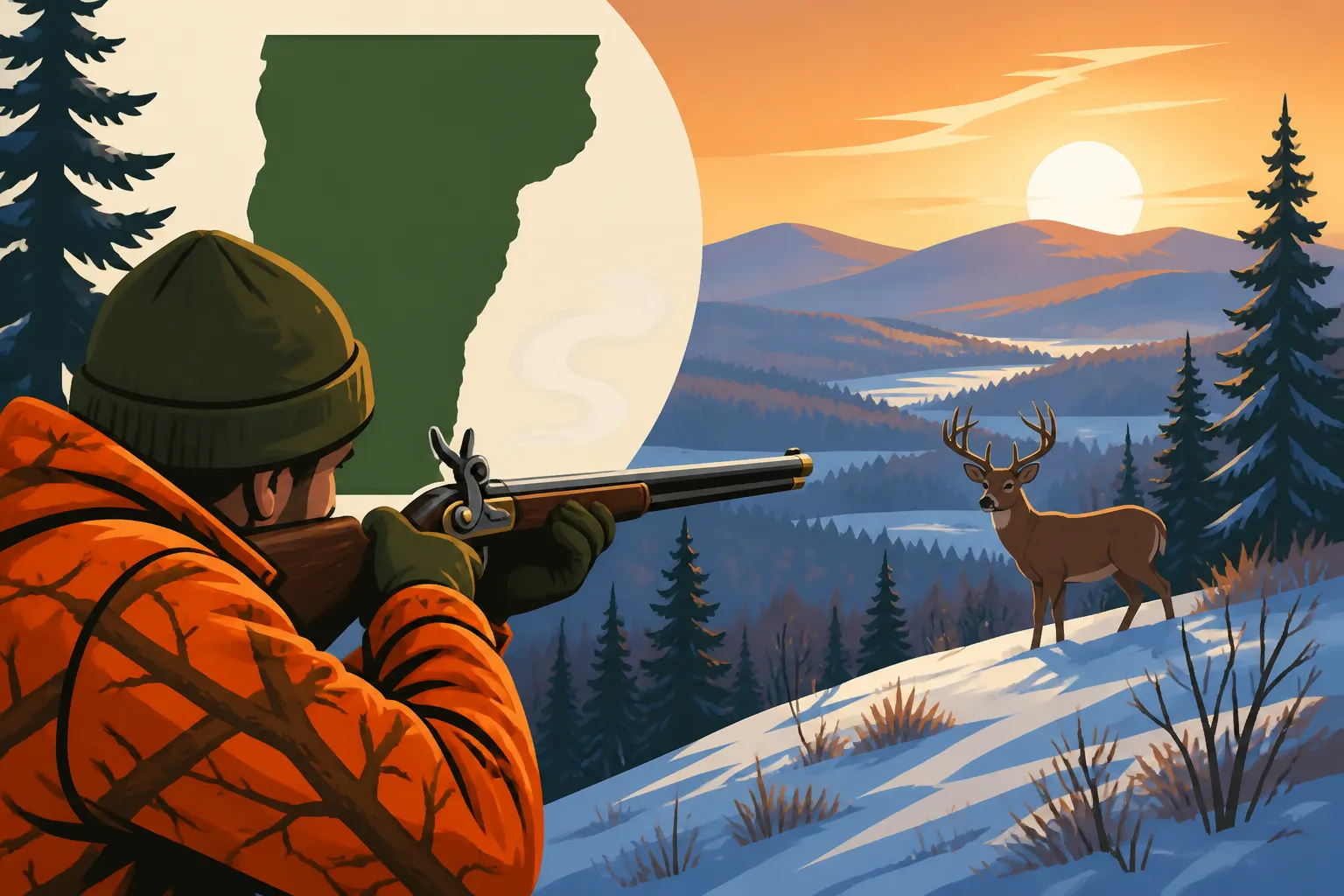
When it comes to legal firearms, a muzzleloader in Vermont refers specifically to a firearm that is loaded from the muzzle and uses black powder or an approved synthetic substitute. You'll typically be using a single projectile, like a sabot or a patched round ball. The state is quite clear on what constitutes a legal muzzleloader, so ensure your setup complies. While the technology has come a long way from the flintlock and cap-and-ball days, the spirit of the hunt remains rooted in these traditional methods. Don't forget, blaze orange requirements remain in effect during this season, so make sure you're highly visible to other hunters. For a deeper dive into the broader muzzleloader regulations, check out Vermont Muzzleloader Season Dates, which provides a comprehensive overview of the specific periods and rules governing this unique hunting method. You can also find granular details about this particular season in Vermont December Muzzleloader Season Dates.
The Post-Rifle Season Landscape
By the time December rolls around, the deer herd has been through the wringer. They've endured archery season, the intense rut and pressure of rifle season, and possibly the October muzzleloader antlerless window. This means deer are often incredibly wary, highly pressured, and have adapted their routines. The boisterous movement of the rut is a distant memory, replaced by a focus on survival: finding food, conserving energy, and staying hidden in the thickest cover they can find.
Many hunters pack it in after rifle season, leaving the woods feeling much more desolate and peaceful. This can be a huge advantage for those willing to brave the cold. With fewer boots on the ground, deer might start to relax a bit, particularly if they can find areas that offer sanctuary from human intrusion. However, they're still likely to be more nocturnal than in earlier seasons, making early mornings and late afternoons even more critical for catching them on the move between bedding and feeding areas. Understanding this shift in behavior is paramount. It's no longer about rattling aggressively or cruising open woods; it's about patience, stealth, and a deep understanding of winter deer habits. For hunters looking to successfully fill a tag during this specific period, understanding how to adjust their tactics is key, and our article on Hunting a Muzzleloader Tag After Rifle Season Closes offers excellent further reading on this very topic.
Strategic Approaches for Late-Season Muzzleloading
Successfully hunting in December requires a significant shift in strategy from earlier seasons. The deer's priorities have changed, and so must yours. Forget about rut-crazed bucks; now, it's all about survival and efficiency.
Focusing on Food Sources
In December, a deer's life revolves almost entirely around food and shelter. Energy conservation is critical as temperatures drop and snow cover can make foraging more difficult. This makes remaining food sources absolute magnets for deer. Forget about acorns and soft mast; those are long gone. What you're looking for now are high-energy foods that can withstand cold and snow. Standing cornfields are king, especially if they're near thick cover. A farmer who leaves corn standing for silage often creates an irresistible buffet for deer, as well as pheasants and other small game. Fields of brassicas (like turnips or radishes), if planted by landowners or land managers, are also prime late-season forage. Deer will often dig through light snow to get to these.
Scouting becomes paramount during this time. You're not looking for scrapes and rubs; you're looking for tracks in the snow leading to and from these food plots, fresh browse lines on saplings, and disturbed ground where deer have been digging. A good pair of binoculars and a reliable mapping app, like GoHunt or onX Hunt, can help you identify potential feeding areas from a distance, saving you valuable energy in the cold. Focus your hunting efforts on the fringes of these food sources, especially where they meet dense thermal cover. Deer will often stage in the protective cover, waiting for the last bit of daylight before venturing into the open to feed. If you want to know more about what deer are eating this time of year, our guide on Late-Season Food Sources for Vermont Whitetails is an invaluable resource.
Targeting Thermal Cover and Deer Yards
As the temperatures plummet and snowfall accumulates, thermal cover becomes as important as food. Deer seek out dense stands of conifers – hemlock, spruce, and balsam fir – which provide a canopy that intercepts snow and blocks chilling winds. These areas, often referred to as "deer yards" or "wintering areas," are critical for survival when the mercury drops below freezing for extended periods. In the Green Mountain National Forest or other large tracts of timber, identifying these conifer stands can be a game-changer. They will concentrate deer, offering a tactical advantage.
Still-hunting through the edges of these yards, or setting up a stand or ground blind on a well-used travel corridor leading into or out of them, can be incredibly effective. Deer will move within these yards, browsing on available vegetation, and often bed down on south-facing slopes to catch what little sun there is. Be incredibly slow and deliberate in these areas; the deer are already on high alert, and a snapped twig can send them scattering. Pay close attention to subtle shifts in wind and thermals, especially in the steep terrain of the Green Mountains, as these can carry your scent directly into a bedding area. Understanding Reading a Green Mountain Deer Yard can provide you with crucial insights into interpreting these critical winter habitats. For those venturing into the colder, more remote regions, our article on Cold-Weather Sitting Strategy in the Northeast Kingdom offers tailored advice on enduring long, frigid waits.
Capitalizing on Weather Patterns
The weather in December can be brutal, but it also dictates deer movement more than almost any other factor. Smart hunters learn to leverage these patterns. Deer often feed heavily just before a major cold front or snowstorm rolls in, instinctively trying to fuel up for the coming hardship. Conversely, after a period of intense cold or deep snow, when temperatures moderate slightly, or the sun makes an appearance, deer will often emerge from their thermal cover to feed. These windows of opportunity, often brief, are when you need to be in the woods.
Light snow can be your best friend. Not only does it quiet your footsteps, making still-hunting incredibly effective, but it also provides a fresh canvas for deer tracks. You can instantly tell how recently deer have moved through an area, which is invaluable for making real-time decisions. Fresh tracks leading to a standing cornfield on a calm, sunny afternoon after a bitter cold spell? That's a strong sign. Pay attention to forecasts and plan your hunts around these natural triggers. Don't be afraid of the cold; embrace it, and you might just find success when others are huddled indoors. Learning more about how deer react to different weather can be found in our comprehensive guide, Hunting Deer After a Cold Front.
Essential Gear and Preparation for December Hunts
Hunting in December is not for the faint of heart, or for the unprepared. The cold is a serious factor, and your gear choices can be the difference between a successful, comfortable hunt and an early retreat to the warmth of home.
Muzzleloader and Ammunition Choices
Your muzzleloader is your primary tool, and reliability in cold, damp conditions is paramount. While traditional side-lock rifles are beautiful, many late-season hunters opt for modern in-line muzzleloaders. Brands like CVA, Traditions, and Thompson/Center offer models that are designed for better all-weather performance, with sealed breech plugs and corrosion-resistant finishes. These are often easier to load and clean in challenging conditions.
When it comes to ammunition, moisture management is key. Use waterproof primers, and consider pelletized powder charges which are less susceptible to moisture than loose powder. For projectiles, sabots loaded with modern bullets (like Hornady SSTs or Barnes MZ Expanders) offer excellent accuracy and terminal performance, even on tough late-season deer. Make sure you practice extensively with your chosen load. A muzzleloader shot is a single-shot opportunity, and you need to be confident in its accuracy and your ability to reload efficiently under pressure, especially when your hands are cold. Our article on Best Muzzleloader for the December Season provides an in-depth look at optimal choices for the Vermont hunter, and for specific projectile advice, you might find Sabot Choices for an Antlerless-Only Hunt incredibly useful.
Layered Clothing and Cold Weather Comfort
Staying warm and dry is the single most important factor for success and safety in December. Proper layering is non-negotiable. Start with a moisture-wicking base layer (merino wool or synthetic, never cotton) to pull sweat away from your skin. Next, add insulating mid-layers – fleece, down, or synthetic puffies. Finally, an outer layer that is windproof, waterproof, and breathable will protect you from the elements. Look for gear from companies known for serious cold-weather performance.
Don't forget the extremities: a good insulated hat (like a merino wool beanie or a fleece-lined cap) is crucial, as much of your body heat escapes through your head. Insulated, waterproof boots are essential, paired with heavy wool socks. Consider bringing foot warmers and hand warmers; these small items can make a huge difference during a long sit. And for static hunting, a thick, insulated seat pad can prevent the cold ground from sapping your body heat. Layers allow you to adjust to changing activity levels and conditions, ensuring you stay comfortable whether you're still-hunting or sitting patiently. Dive deeper into appropriate apparel in our guide to Insulated Layers for a December Muzzleloader Hunt.
Scouting and Digital Tools
Effective late-season hunting often boils down to superior scouting. The woods are open, making sign much more visible. However, you still need to cover ground efficiently. This is where modern digital tools truly shine. Mapping apps like GoHunt or onX Hunt are invaluable for identifying thermal cover (dense conifer stands), potential late-season food sources (standing agricultural fields), and likely travel corridors between them. You can mark potential stand locations, access routes, and areas of fresh sign. Using the aerial imagery and topo maps, you can virtually scout for pinch points, saddles, and benches that deer might use to navigate the terrain.
Before heading out, spend time analyzing these maps. Look for where the dark green (conifers) meets agricultural fields or hardwood stands with remaining mast. Identify south-facing slopes that might offer warmer bedding areas. Once on the ground, confirm these observations with fresh tracks, droppings, and browse. Even in December, the Vermont Fish and Wildlife Department app can be useful for checking regulations or finding public land boundaries in a flash. Always download your maps for offline use, as cell service can be spotty in the Green Mountain backcountry. Our guide, Scouting With the Vermont Fish and Wildlife App, can give you an edge, as can understanding onX Layers for Vermont Land Status to fully utilize these digital tools.
Here’s a quick overview of how different December conditions might influence your strategy:
| Condition | Deer Behavior | Strategic Approach | Key Gear Considerations |
|---|---|---|---|
| Light Snow (1-3 inches) | Moves more freely; tracks easily visible; seeks food. | Still-hunt slowly along food-to-bedding corridors; track fresh sign. | Quiet outer layers; waterproof boots; insulated hat; hand warmers. |
| Deep Snow (4+ inches) | Concentrates in thermal cover/deer yards; limited movement. | Hunt edges of conifer thickets; target known yards; focus on sunniest spots. | Snowshoes or gaiters; extra insulation; reliable, sealed muzzleloader. |
| Bitter Cold (0°F to 15°F) | Seeks shelter; moves minimally, usually only to feed quickly. | Sit patiently near high-calorie food sources or deep thermal cover. | Maximum insulation; chemical foot/hand warmers; insulated seat pad. |
| Mild December Day (25°F-35°F) | More active, especially during midday; may revisit less secure areas. | Still-hunt slowly through dense cover; investigate secondary food sources. | Breathable layers to prevent sweating; waterproof outer shell; lighter pack. |
| Pre-Storm/Cold Front | Feeds heavily to fuel up for impending weather. | Hunt primary food sources (standing corn, brassicas) aggressively. | Focus on visibility; comfortable layers for moderate movement. |
| Post-Storm/Cold Front | Emerges to feed after severe weather passes. | Target primary food sources as deer emerge from cover. | Warm, dry clothing; good optics to scan for emerging deer. |
Disclaimer
Please remember that hunting regulations and conditions can change rapidly. Always consult the official Vermont Fish & Wildlife Department website for the most current rules, season dates, and safety guidelines before heading into the field. This guide is for informational purposes only and does not supersede official regulations.