Setting Up Against a Big Sugar Maple
You’ve walked into the woods, perhaps later than you intended, or maybe you’re just trying to hunt a new area without dragging in a heavy stand or committing to a lengthy ground blind setup. The challenge is real: how do you get concealed quickly, effectively, and naturally, especially in the thick, unforgiving timber of Vermont? This guide is all about mastering the art of the spontaneous, yet highly effective, setup against one of Vermont's most abundant and useful natural assets: the big sugar maple.
The Unsung Hero: Why a Big Sugar Maple is Your Best Friend
When it comes to picking a spot for an impromptu sit, especially if you're still-hunting or just looking for a quick ambush point, a large sugar maple often gets overlooked. Yet, these majestic trees offer incredible advantages, providing natural concealment and strategic positioning without any heavy lifting or extensive preparation.
Natural Concealment and Back Cover
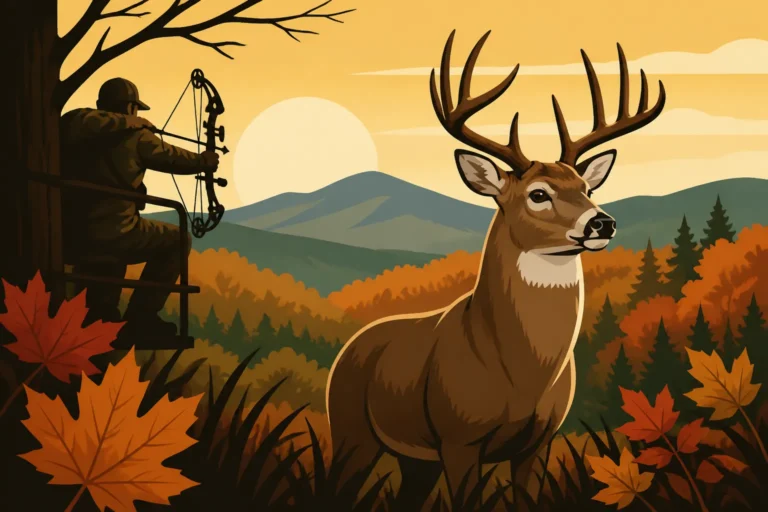
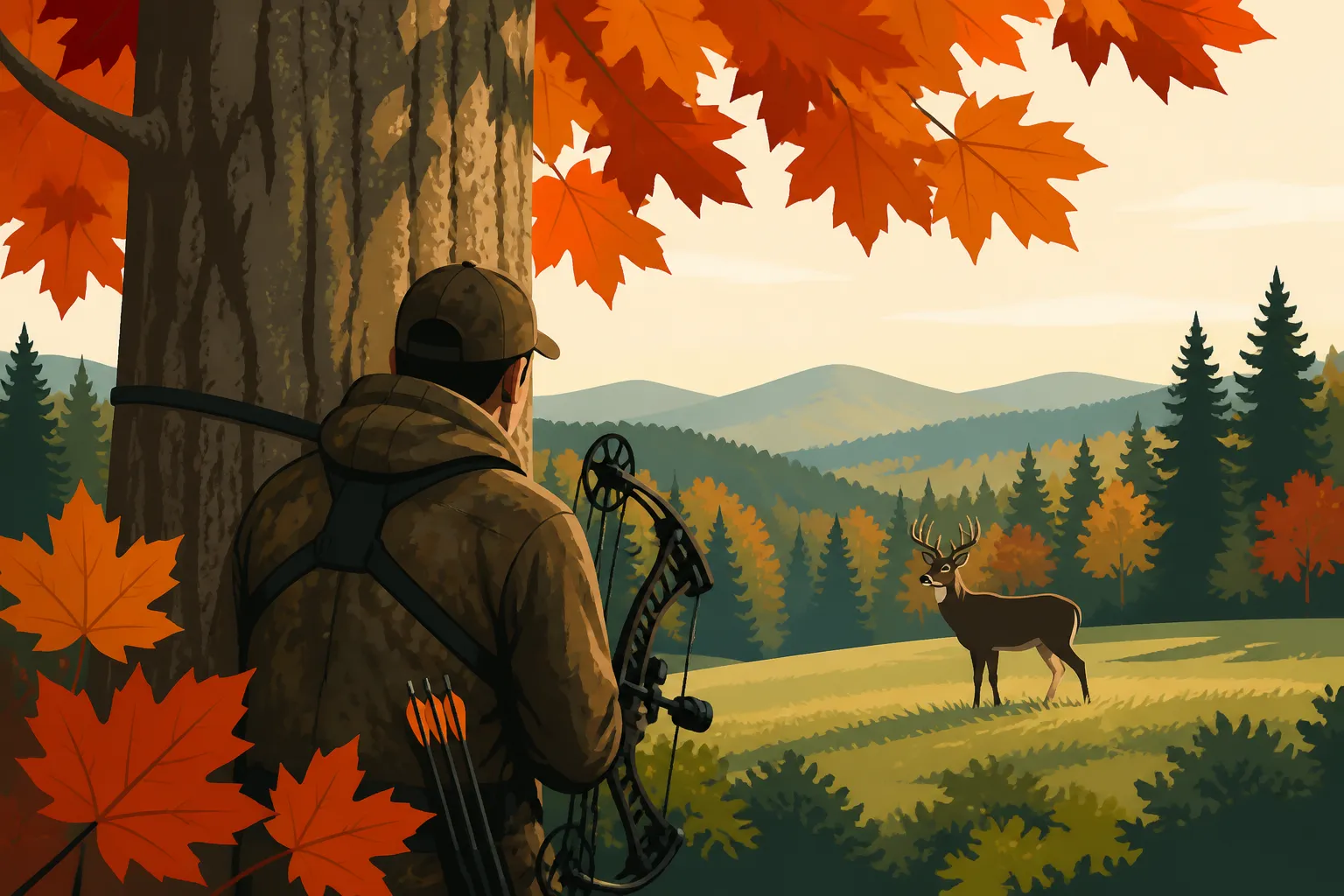
Think about the silhouette we create as hunters. Even in full camo, standing or sitting out in the open makes us stick out like a sore thumb against the backdrop of the woods. A big sugar maple, with its often gnarly, thick trunk, deeply furrowed bark, and robust lower branches, provides an almost perfect natural hide. The sheer size of the trunk breaks up your outline, while the texture of the bark blends seamlessly with most camo patterns, especially in the grays and browns of late fall or early winter.
What’s more, a mature sugar maple typically has a canopy that starts a bit higher off the ground, but its lower limbs and the density of the surrounding saplings and brush it often fosters create a fantastic natural screen. You can position yourself directly against the trunk, using its width as your primary back cover, effectively becoming part of the tree itself. This makes you incredibly difficult for deer to pick out, even if they're looking in your general direction. It’s a far more natural hide than a pop-up blind in many scenarios, and it offers 360-degree protection from behind, letting you focus your attention forward.
Strategic Positioning in Vermont's Diverse Terrain
Big sugar maples aren't just great for hiding; they also often grow in places where deer naturally travel. You'll find them holding their own on hardwood ridges, nestled in fertile creek bottoms, on benches overlooking valleys, and along the edges of agricultural fields or old logging roads. Their presence often indicates good soil, which in turn means good mast crops like acorns or beech nuts, attracting deer.
Consider the classic Vermont landscape: rolling hills, steep ravines, and countless natural funnels. A mature sugar maple, often a sentinel among younger trees, frequently marks a strategic point. It could be on a subtle bench where deer pause as they travel a ridge, or perhaps at the intersection of several game trails leading to a prime food source. These trees are often found in areas where deer create wintering grounds, or deer yards, which can be crucial for late-season success. If you're looking for prime travel corridors, often defined by subtle changes in topography or cover, a prominent maple can be your signpost. Learning how to identify these natural choke points is key to Reading a Green Mountain Deer Yard. Furthermore, these trees can be found lining the edges of transition zones, such as a field edge or between different timber types, making them ideal for intercepting deer moving from bedding to feeding.
Scouting for the Perfect Maple Setup
Finding just any big sugar maple isn't enough; you need to find the right one. This involves a combination of boots-on-the-ground scouting and smart use of technology to identify key features and maximize your chances of success.
Identifying Key Features for a Productive Setup
When you're out in the woods, or even just driving around the back roads, keep an eye out for sugar maples that stand apart. You’re looking for trees that are:
- Large and Mature: The bigger the trunk, the more concealment it offers. A really old, gnarly maple will have more character and broken bark, further aiding your disguise.
- Located Near Deer Sign: This is paramount. Look for fresh rubs, active scrape lines, heavily used game trails, and recent droppings. If the maple itself has rub marks, even better—it means a buck has acknowledged its presence. Pay close attention to trails that appear to skirt around the maple, indicating it's already part of the deer's established travel patterns.
- Offering Clear Shooting Lanes: While you want concealment, you also need to be able to get a shot off. Ensure that from your potential sitting position, you have clear lines of sight and shooting lanes in the most likely directions deer will approach. Sometimes, a little pruning of small saplings or low branches with hand pruners might be necessary, but keep it minimal to avoid alerting deer. You're not building a blind, just enhancing a natural spot. Consider the sun's position throughout the day; you don't want to be staring directly into it at prime hunting hours, nor do you want your shadow cast directly into a travel lane.
- Adjacent to Food or Water Sources: Maples often grow in rich soil, and if they're near a food source like an oak flat, a beech ridge, or even a forgotten Hunting a Standing Apple Orchard, that's a huge bonus. Water sources like small springs or creeks will also draw deer, and a maple nearby offers a perfect ambush point. In late season, deer are constantly seeking food, so a setup near a maple that still has some browse or is close to a standing cornfield will be highly effective for Late-Season Food Sources for Vermont Whitetails.
Leveraging Technology for Pre-Scouting and Analysis
Before you even step foot in the woods, consult your mapping app, whether it's GoHunt or another preferred platform, to identify promising areas. Look for concentrations of large hardwoods on aerial maps, especially in areas with varied topography. Ridges, saddles, and benches are natural travel corridors, and maples often anchor these spots.
GoHunt allows you to scout from the comfort of your home, identifying potential hotspots that you might otherwise miss. You can pinpoint historical deer activity, trail networks, and even property lines, making your pre-season scouting with GoHunt incredibly efficient. Look for areas with changes in elevation, which create funnels, or where different cover types meet. A large maple standing prominently in one of these transition zones is worth investigating further. You can even use GoHunt to check prevailing wind directions for a given period to ensure your chosen spot will be huntable without scenting deer. This kind of detailed analysis saves you countless hours of unproductive walking and ensures you're scouting with purpose. This is a critical step in Scouting Vermont Public Land Before Season.
Mastering the Setup Against Your Chosen Maple
Once you’ve identified your perfect sugar maple, the next step is to set up in a way that maximizes your concealment and shot opportunity while minimizing your disturbance. This isn't just about sitting down; it's about becoming part of the environment.
Optimizing Your Vantage Point and Concealment
Your exact position against the maple is critical. You want to merge with the tree, not just sit beside it.
- Directly Against the Trunk: Sit with your back firmly against the trunk. This provides the best concealment and helps you stay still. Use a small, comfortable cushion if you have one, but avoid anything bulky that will make you sit out too far. The goal is to feel like an extension of the tree.
- Elevate Slightly (If Possible): If the terrain allows, try to find a spot where you can be slightly elevated, perhaps on a small rise or using a downed log behind you. This can improve your line of sight, especially through thicker underbrush, without necessarily needing a treestand. However, be mindful of creating a visible silhouette against the sky; an elevated position without proper back cover is worse than being on level ground.
- Utilize Low Branches and Brush: Don't just sit against the trunk; use any low-hanging branches or surrounding brush to your advantage. A few well-placed branches can break up your upper body outline, which is often the most noticeable part. You might even use a small, natural ground blind material you find nearby, like fallen branches or ferns, to enhance your hide, but again, keep it minimal and natural.
- Mind the Wind and Thermals: Vermont's varied topography means wind and thermals are constant considerations. Always, always hunt with the wind in your favor. If you're on a ridge or hillside, remember that thermals will typically pull your scent uphill in the morning as the air warms, and downhill in the evening as it cools. Position your maple setup so that your scent isn't blowing directly into the area you expect deer to approach from. Ignoring this fundamental rule is a recipe for being busted. Understanding Wind and Thermals in Steep Green Mountain Terrain is crucial for any successful hunt in the Green Mountains. Before settling in, throw some milkweed seeds or a powder bottle into the air to truly gauge the subtle air currents.
Minimizing Your Footprint and Scent
Deer have an incredible sense of smell, so every step you take to your maple stand needs to be calculated.
- Strategic Access Routes: Plan your approach route to your chosen maple carefully. Try to use natural terrain features, thick cover, or existing game trails that lead away from where you expect deer to be. Avoid walking directly through known bedding areas or across open fields at dawn or dusk. The less disturbance you create, the better. Consider a circuitous route if it keeps you downwind and out of sight.
- Scent Control is Paramount: Shower with scent-free soap, use scent-free laundry detergent for your hunting clothes, and store them in airtight containers. Use scent elimination sprays on your boots and outer layers. While no system is 100% foolproof, every little bit helps. When you arrive at your maple, minimize movement and avoid touching unnecessary surfaces to reduce scent transfer.
- Minimal Gear: The beauty of a maple setup is its simplicity. You don't need a lot of gear. A comfortable cushion, your weapon, a small backpack with essentials, and maybe a grunt tube or calls for Grunt Calls in Mature Vermont Hardwoods are often all you need. The less you carry, the less noise you make, and the less scent you spread on your way in and out. This minimalist approach aligns well with hunting a ridge-top saddle, where you want to be agile and quick.
Executing Your Hunt from a Maple
Once you’re nestled against your sugar maple, the real work begins. Hunting effectively from this natural hide requires patience, keen observation, and the readiness to capitalize on opportunities.
Patience and Observation: Becoming Part of the Woods
Sitting still is arguably the hardest part of hunting, but it’s the most critical for success when you’re relying on natural concealment.
- Scan, Don't Stare: Instead of staring intently at one spot, which causes eye fatigue and makes you miss peripheral movement, scan the area slowly and deliberately. Use your binoculars regularly to pick apart cover and identify subtle movements. Look for flicking ears, a horizontal line in a vertical world (the back of a deer), or a patch of contrasting color.
- Listen Actively: Vermont's woods are full of sounds. Learn to differentiate between squirrels rustling leaves, birds chirping, and the distinct sound of deer approaching. The snap of a twig, the soft rustle of leaves, or the sound of a deer blowing can all provide valuable clues. Silence can be just as informative – if the woods suddenly go quiet, something might be approaching.
- Be Ready for Anything: Deer can appear out of nowhere. Have your bow or rifle in a ready position, allowing for minimal movement when a shot opportunity arises. Practice drawing your bow or shouldering your rifle silently while sitting. The less movement you make, the less likely you are to be detected. This is especially true if you are Hunting the Rut in Early-to-Mid November, when bucks might be cruising at any moment.
Shot Selection and Ethical Recovery
When a deer finally steps into your shooting lane, your preparation culminates in this moment.
- Wait for the Right Shot: Patience extends to your shot selection. Don't rush a questionable shot. Wait for the deer to present a clear, ethical broadside or quartering-away shot. Know your effective range with your weapon, and stick to it. A big maple allows you to sit for extended periods, increasing your chances of a perfect shot presentation.
- Know Your Anatomy: Understand deer anatomy intimately so you can place your shot precisely for a quick, humane kill. Aim for the vital triangle behind the shoulder.
- Tracking and Recovery: Once you’ve taken a shot, carefully mark the spot where the deer was standing and where you last saw it. Wait a minimum of 30 minutes, or even an hour if the shot seemed marginal, before beginning your track. If you’ve made a good shot, the deer likely won’t go far. If snow is on the ground, a big maple setup gives you a static point from which to begin Tracking a Deer in Fresh Green Mountain Snow. Don't push a wounded deer, especially in thick cover. Give it time to lie down and stiffen up. If you're using a modern mapping system like GoHunt, you can mark your shot location and last seen point, making the grid search much more efficient.
The big sugar maple, an iconic symbol of Vermont, isn't just for syrup. It's a prime piece of natural hunting real estate, offering unparalleled concealment and strategic positioning for the observant hunter. Next time you're in the woods, looking for that perfect spot, remember to give these giants the respect and consideration they deserve.
| Feature | Advantages of a Big Sugar Maple Setup | Considerations & Best Practices |
|---|---|---|
| Concealment | Natural camouflage, breaks silhouette | Position directly against trunk, utilize low branches |
| Positioning | Often in key travel corridors, good soil | Scout for deer sign, near food/water, use topo maps |
| Flexibility | No heavy gear, quick setup/relocation | Minimal gear, light footprint, adaptable to conditions |
| Scent Control | Less disturbance than a blind setup | Strict scent hygiene, planned access routes, wind check |
| Shot Opportunity | Stable back support for steady aim | Clear shooting lanes, wait for ethical shots |
Disclaimer
Hunting is an inherently dangerous activity. Always prioritize safety, understand and follow all Vermont hunting regulations, and ensure you have proper training and licensing before heading into the field. This guide is for informational purposes only and does not supersede official Vermont Fish & Wildlife Department guidelines or local ordinances.