Vermont Squirrel and Rabbit Populations
For many hunters in Vermont, the focus often gravitates towards the big ticket species: the whitetail deer, the elusive black bear, or that once-in-a-lifetime moose permit. But I've heard countless folks express a bit of frustration when the big game seasons close, feeling like their hunting year is over. They yearn for more time in the woods, or perhaps a way to hone their skills without the immense pressure of a trophy hunt. What's often overlooked are the incredible opportunities that Vermont's squirrel and rabbit populations offer, providing accessible, engaging, and delicious hunting throughout much of the year. This guide is going to take a deep dive into these fantastic small game animals, helping you understand their habits, habitats, and how to successfully pursue them across our beautiful Green Mountain State.
Understanding Vermont's Squirrel Populations
When we talk about squirrels in Vermont, we're really looking at a couple of key players who offer distinct hunting experiences. Both are abundant in the right habitats and can provide a ton of fun, whether you're a seasoned hunter or just starting out.
Gray Squirrels: The Ubiquitous Bushy-Tails
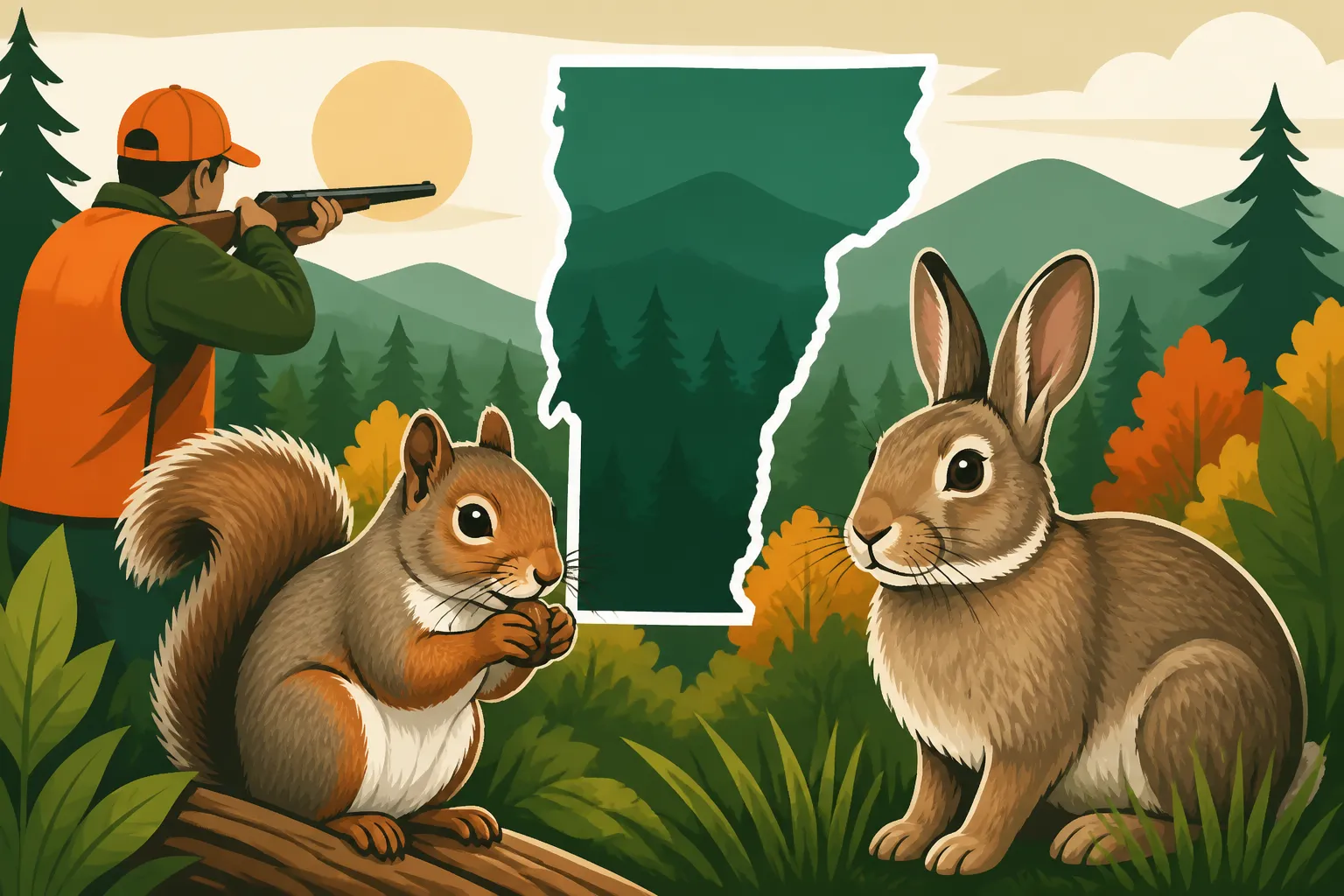
The gray squirrel (often just called a "bushy-tail" by old-timers) is likely the most common squirrel you'll encounter in Vermont, especially in our extensive hardwood forests. These are the squirrels you see scampering through the yard, burying acorns, and generally acting like they own the place – which, in many ways, they do. They thrive in mature deciduous forests, particularly those dominated by oak, hickory, beech, and maple trees. These trees provide the critical mast crops they depend on for food and the dense canopy cover for protection and nesting.
Hunting gray squirrels is a fantastic way to sharpen your woodsmanship skills. You'll learn to move quietly through the woods, identify subtle sounds, and read the timber for movement. Imagine a crisp autumn morning, the leaves still clinging to the branches, and you're slowly still-hunting a ridge. You might hear the distinct "bark" of a squirrel alerting its buddies to your presence, or the subtle rustle of leaves as one buries a nut. They're incredibly wary, and their ability to flatten themselves against a tree trunk or disappear into a tangle of grapevines is legendary. Taking a moment to appreciate the challenge and skill involved in Squirrel Hunting Vermont Hardwoods really makes these hunts rewarding.
Red Squirrels: The Tiny, Territorial Forest Dwellers
While not typically pursued with the same fervor as their gray cousins, the red squirrel is another common resident of Vermont's forests, especially in areas with more coniferous growth. These smaller, feistier squirrels are easily identifiable by their reddish-brown fur, white belly, and a distinctive chattering call that often sounds like a scolding. Unlike gray squirrels who are often seen foraging on the ground, red squirrels spend a considerable amount of time in the tree canopy, particularly in stands of spruce, fir, and pine.
Red squirrels are intensely territorial, constantly defending their stashes of pinecones, seeds, and nuts. You'll often find their middens – large piles of discarded cone scales – at the base of favorite trees, indicating a consistent food source and active squirrel presence. While smaller, they are still fair game and can provide excellent sport, especially if you're looking for a slightly different challenge. They're fast, agile, and their incessant chattering can actually be a useful tool; if you hear one carrying on, it often means it's spotted a predator (or you!), giving you a chance to pinpoint its location.
Preferred Habitats and Food Sources
Understanding where squirrels live and what they eat is paramount to finding them. Both species are largely creatures of the forest, but their preferences diverge slightly, creating unique hunting opportunities.
Gray squirrels are absolute connoisseurs of hard mast. Acorns, beechnuts, and hickory nuts are their bread and butter. This means you'll find them in high concentrations in mature hardwood stands, particularly those with a diverse mix of mast-producing trees. Look for oak flats, mixed hardwood ridges, and even old apple orchards that butt up against the woods. These areas provide not only food but also den trees for shelter and raising young. After a poor acorn year, their movement patterns can shift dramatically as they search for alternative food sources, making scouting even more crucial. You can learn a lot by Hunting After a Poor Acorn Year.
Red squirrels, on the other hand, are more fond of softwoods. Conifer stands—pine, spruce, hemlock—are their favored domains, as they feast on the seeds from cones. However, they're not exclusive to conifers and will happily exploit hardwood mast when available, especially if it's close to their preferred softwood cover. Areas where hardwoods transition into softwoods, or where a mixed forest features scattered conifers, are excellent places to find red squirrels. They also frequently raid bird feeders and garden patches, showcasing their opportunistic nature. When you're scouting, keep an eye out for tell-tale signs like chewed nuts and scattered cone scales.
Exploring Vermont's Rabbit Populations
Rabbits and hares bring another dynamic layer to Vermont's small game hunting scene. They offer fast-paced action and are a traditional quarry for many, often hunted with beagles, but equally satisfying when still-hunting.
Eastern Cottontails: The Farmland Favorites
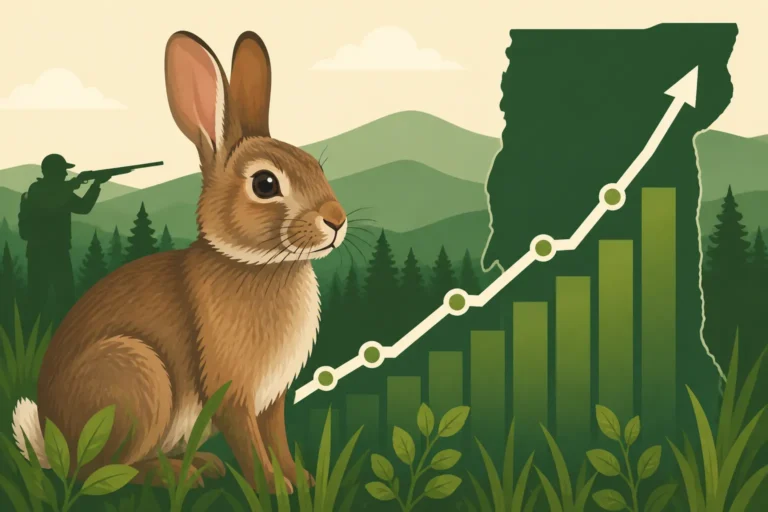
The Eastern cottontail is arguably Vermont's most popular rabbit species, especially in the central and southern parts of the state. These are the rabbits you see darting across fields, popping out of brush piles, and generally sticking to the edges of human habitation. They thrive in what we call "edge habitat" – where open fields meet brushy cover, abandoned farmsteads, overgrown pastures, and the tangled edges of woodlots. Think fencerows, briar patches, old apple orchards, and even suburban gardens.
Cottontails are masters of concealment, relying on their camouflage and their ability to freeze to avoid detection. When flushed, they'll make a break for the nearest dense cover, often running in circles if pursued by dogs, which is why Running Beagles on a Vermont Snowshoe Hare is such a popular tradition. These rabbits are prolific breeders, meaning their populations can bounce back quickly, providing consistent hunting opportunities year after year. They are most active during dawn and dusk, but on overcast days or during cooler weather, they can be out and about throughout the day. Their meat is lean and delicious, making them a highly sought-after game animal for the table.
Snowshoe Hares: Masters of the Northern Woods
Move further north in Vermont, or up into the higher elevations of the Green Mountains, and you'll encounter the snowshoe hare. These magnificent creatures are perfectly adapted to the deep snows of winter, thanks to their large, fur-covered feet that act like natural snowshoes. Their coat also changes with the seasons, from a brownish-gray in summer to a pure white in winter, providing superb camouflage against the snowy landscape. Their habitat preference is quite distinct from cottontails, favoring dense, regenerating spruce-fir thickets, cedar swamps, and heavy conifer cover. Think about the kind of cover where you'd expect to find a deer yard – that's snowshoe hare country.
Hunting snowshoe hares is a true winter pursuit, often best done after a fresh snowfall when tracks are easy to read and the hares' white coats make them a bit more visible against anything other than pure white snow. They rely heavily on dense cover for protection from predators like coyotes and bobcats. They're incredibly athletic, capable of bursting through thick brush at impressive speeds. Finding Where Vermont Hare Populations Hold Up Best often means venturing into more remote, dense woodlands, making it a great excuse to get out and explore some of Vermont's wilder corners. The experience of chasing a snowshoe hare through a snow-covered cedar swamp is truly exhilarating and a unique aspect of Vermont hunting.
Seasonal Movements and Cover Needs
Both cottontails and snowshoe hares exhibit seasonal shifts in their behavior and where you'll find them, largely driven by food availability and the need for protective cover.
Cottontails tend to be more spread out during the warmer months when lush vegetation offers abundant food and concealment. As fall progresses and cover begins to thin, they concentrate in denser pockets: briar patches, multiflora rose thickets, overgrown fencerows, and the tangled fringes of old fields. During winter, their reliance on thick cover becomes even more pronounced, as it provides both shelter from the elements and protection from predators. A south-facing slope with a dense juniper patch, for example, can be a magnet for cottontails on a cold winter day, soaking up what little sun is available.
Snowshoe hares are even more tied to dense cover year-round, but their movements can become more predictable with snow. In summer, they might range a bit more, but they are always close to their preferred thickets. In winter, they are almost exclusively found within or very near dense conifer stands, which offer thermal cover and protection from aerial predators. A network of hare trails will often crisscross these thickets, providing clues to their travel routes and feeding areas. When the snow gets deep, they create "forms" – depressions in the snow under thick cover – where they rest during the day. Understanding these patterns is key to successful Running Beagles on a Vermont Snowshoe Hare or even a quiet still-hunt.
Here's a quick comparison of our main small game species:
| Species | Primary Habitat | Key Food Sources | Best Hunting Season | Typical Size | Hunting Style |
|---|---|---|---|---|---|
| Gray Squirrel | Mature Hardwood Forests | Acorns, beechnuts, hickory nuts | Fall | Medium | Still-hunt, sit-and-wait |
| Red Squirrel | Conifer/Mixed Forests | Pine/spruce seeds, nuts | Fall/Winter | Small | Still-hunt, locate by call |
| Eastern Cottontail | Brushy Fields, Farm Edges, Hedgerows | Grasses, forbs, bark, twigs | Fall/Winter | Medium | Beagles, jump-shooting |
| Snowshoe Hare | Dense Conifer Thickets, Swamps | Twigs, bark, evergreen shoots | Winter (with snow) | Large | Beagles, still-hunt |
Factors Influencing Small Game Numbers
Just like with our larger game animals, the populations of squirrels and rabbits in Vermont aren't static. They fluctuate based on a variety of ecological factors, and understanding these can help you anticipate good years and choose productive hunting spots.
Mast Crops and Habitat Health
For squirrels, especially gray squirrels, the abundance of mast crops is directly linked to their population health and reproductive success. A banner year for acorns and beechnuts means a robust food supply going into winter, allowing more squirrels to survive and reproduce in the spring. Conversely, a poor mast crop can lead to increased competition, lower survival rates, and subsequent dips in population numbers. This is why you'll often hear veteran hunters talking about the "nut crop" when discussing squirrel prospects for the fall. Checking for evidence of mast – fallen acorns, beech nuts, or hickory shells – is a critical scouting step that tells you where the squirrels will be concentrated. This is part of how you read a Green Mountain Deer Yard, and it's just as important for squirrels.
Rabbit populations, particularly cottontails, are highly dependent on early successional habitat. This means areas that are disturbed, like old fields reverting to forest, logging clearcuts, or land around human development, tend to be prime cottontail habitat. The availability of dense brush for cover and a variety of grasses and forbs for food are crucial. As forests mature, they become less suitable for cottontails. Snowshoe hares, on the other hand, need dense conifer regeneration. Timber harvesting practices, which create regenerating clearcuts or dense young stands, can significantly impact both species' populations, often creating ideal habitat for several years before it grows too tall or dense.
Predation and Environmental Pressures
Small game animals are a crucial food source for a wide array of predators in Vermont. Coyotes, bobcats, foxes, owls, and hawks all rely on squirrels and rabbits for sustenance. The predator-prey relationship is a delicate balance; a healthy predator population can keep small game numbers in check, while a booming small game population can, in turn, support more predators.
Severe weather events can also hit small game populations hard. Harsh winters with prolonged periods of deep snow and extreme cold can lead to higher mortality rates, especially for cottontails who may struggle to find food and cover. Late spring frosts can damage budding trees, impacting mast crops, or even kill young squirrels and rabbits if they are born too early in the season. Disease can also play a role, though less dramatically impacting these species compared to, say, chronic wasting disease in deer. Vermont has worked hard to keep its deer herd CWD-free, and while that's a different concern, healthy ecosystems benefit all species.
Harvest Trends and Management
Vermont's Fish & Wildlife Department closely monitors game populations, including squirrels and rabbits, though they don't typically conduct species-specific population counts with the same intensity as deer or moose. Instead, they rely on harvest data reported by hunters and general ecological indicators. Vermont Squirrel Harvest Numbers and Vermont Snowshoe Hare Harvest Numbers provide insights into population trends and hunter success.
Because of their high reproductive rates, squirrel and rabbit populations are generally quite resilient to hunting pressure, especially when habitat is abundant. Hunting serves as a form of natural predation, helping to manage populations and often removing individuals that might otherwise succumb to disease or starvation. Management efforts typically focus on habitat preservation and enhancement rather than strict bag limits or season closures, which are rarely necessary for these prolific species. This means that year after year, if you find good habitat, you're likely to find small game.
Strategies for Hunting Squirrels and Rabbits in Vermont
Hunting small game in Vermont can be incredibly diverse, ranging from quiet solo endeavors to lively group hunts with dogs. The beauty is that there's a style for everyone.
Still-Hunting and Stalking Tactics
For many, the most rewarding way to hunt squirrels and rabbits is through still-hunting. This involves moving slowly and deliberately through the woods, pausing frequently to scan the trees and ground for movement. It's an exercise in patience and observation. For squirrels, particularly gray squirrels, focus on mast-producing areas in the early morning or late afternoon. Find a good oak ridge or a section of woods with abundant beech trees, and move at a snail's pace, stopping every few steps for a minute or two to listen and look. Often, squirrels will reveal themselves by their movements or the sound of falling nuts. Binoculars are incredibly useful for spotting squirrels high in the canopy or tucked against a tree trunk.
When hunting cottontails this way, key in on dense cover: briar patches, brush piles, or tangled fencerows. Walk slowly along the edges, kicking brush piles or pausing at likely hiding spots. A .22 rifle or a small-gauge shotgun (like a .410 or 20 gauge) are excellent choices. For snowshoe hares, still-hunting through dense conifer thickets can be challenging but effective, especially after a fresh snow, when their tracks are visible. Look for thick patches of spruce and fir, and move quietly, scanning for their white forms against the darker undergrowth. Understanding How Early Season Squirrels Give Themselves Away can greatly improve your success.
Using Dogs for Upland Small Game
Hunting with dogs is a time-honored tradition for both squirrels and rabbits and significantly increases your success rates while adding an exciting dimension to the hunt. For rabbits (both cottontails and snowshoe hares), beagles are the quintessential companion. Their keen noses and tireless drive to follow a rabbit's scent trail through thick cover is remarkable. The sound of a beagle pack in full cry, working a rabbit, is music to many a hunter's ears. The dogs will push the rabbit, often in a large circle, giving hunters positioned along known travel routes a chance for a shot.
For squirrels, specialized squirrel dogs—often curs or terriers—are used. These dogs will locate a squirrel by scent or sight, chase it up a tree, and then "tree" it, barking furiously at its base. This allows the hunter to approach and locate the treed squirrel. This method is highly effective for covering ground and finding squirrels that might otherwise be overlooked. If you're serious about finding some action on public land, remember to reference resources for Scouting Vermont Public Land Before Season, which can also help you find suitable areas for dog hunting.
Gear and Locating Hotspots
Choosing the right gear is simple for small game hunting. A .22 caliber rifle is perfect for squirrels, offering accuracy and quiet operation. For rabbits, a .22 rifle can work in open areas, but a shotgun (20 gauge or .410) with small shot sizes (like #6 or #7.5) is often preferred for their quick, erratic movements. Always wear blaze orange, even for small game, to ensure visibility, especially during overlapping seasons.
Locating hotspots often comes down to effective scouting. Beyond looking for mast crops and thick cover on the ground, utilizing mapping tools is a game-changer. Applications like GoHunt provide invaluable aerial photos and topographic maps that can help you identify prime habitat from home. Look for mature hardwood ridges for gray squirrels, dense conifer stands or cedar swamps for snowshoe hares, and brushy field edges for cottontails. You can layer public land boundaries over these habitat types to find accessible areas. These tools make it easier to pinpoint things like Hunting a Funnel Between Two Woodlots, which can be productive for small game movement, or to identify prime areas within Vermont Wildlife Management Areas that are specifically managed for diverse wildlife. Don't overlook old logging roads or clearcuts; these often create the ideal conditions for both food and cover.
The Overlooked Value of Small Game Hunting
While they might not boast the antlers of a deer or the sheer size of a moose, squirrels and rabbits offer an incredible amount of value to the Vermont hunter, far beyond just putting meat in the freezer.
Skill Building and Off-Season Practice
Small game hunting is arguably one of the best ways to hone essential hunting skills that translate directly to larger game. The need for stealthy movement, keen observation, patience, and accurate shooting are all paramount when pursuing squirrels and rabbits. If you can consistently hit a fast-moving rabbit with a shotgun or drop a squirrel from a treetop with a .22, you're building proficiency that will serve you well when deer season rolls around. It's a low-pressure environment for new hunters to learn gun safety, tracking, and field dressing without the intensity of a big game animal.
For archery hunters, squirrel hunting with a small game blunt or judo point on your arrows is fantastic practice. It forces you to get close, draw silently, and make precise shots in real hunting scenarios. This kind of consistent practice, far more engaging than target shooting, can make all the difference when that big buck walks into range. It’s also a perfect way to stay connected to the woods throughout much of the year, preventing that long "off-season" slump.
Sustainable Harvest and Table Fare
One of the great joys of small game hunting is the sustainable, delicious protein it provides. Both squirrels and rabbits are abundant, reproduce quickly, and offer lean, flavorful meat. Squirrel meat, often compared to chicken, is excellent stewed, fried, or in a pot pie. Rabbit meat is incredibly versatile, lending itself to everything from pan-frying to slow braising, and is a staple in many traditional country kitchens.
Compared to big game, the processing of small game is less daunting, making it an excellent entry point for hunters who want to learn how to field dress and butcher their own animals. The satisfaction of harvesting your own meal, from the forest to the table, is a profound experience, and small game allows you to do this frequently and with relative ease. It connects you directly to the land and the cycle of nature, fostering a deeper appreciation for the wild bounty Vermont offers.
Introducing New Hunters to the Outdoors
Perhaps one of the most significant values of small game hunting is its role as an entry point for new hunters, especially youth and novices. The less intimidating nature of pursuing smaller animals, combined with generally lower costs for licenses and gear compared to big game, makes it an accessible option. The action can be more consistent, keeping young minds engaged, and the lessons learned are foundational.
Taking a young person out for a squirrel or rabbit hunt teaches them invaluable lessons about wildlife identification, habitat, ethical shooting, and the patience required in hunting, all within a less pressured environment. It's a wonderful way to instill a love for the outdoors and the hunting tradition, creating memories that will last a lifetime. Think about how many seasoned hunters today started their journey chasing bushy-tails or bunnies with their father or grandfather – it's a rite of passage for a reason. Vermont Youth and Novice Weekend Dates provide specific opportunities to do just this.
Disclaimer
This article is for general informational purposes only and does not constitute professional advice. Laws, prices and regulations vary by location and change over time. Consult a qualified professional for guidance on your specific situation.