Vermont Osprey Nesting Platforms
Vermont osprey nesting platforms provide safe elevated sites for these fish hawks, supporting their recovery from past pesticide declines.
Know what you’re after.
Big game, small game, upland birds, and waterfowl — identification, behavior, rut and migration timing, and how each species moves through the season.
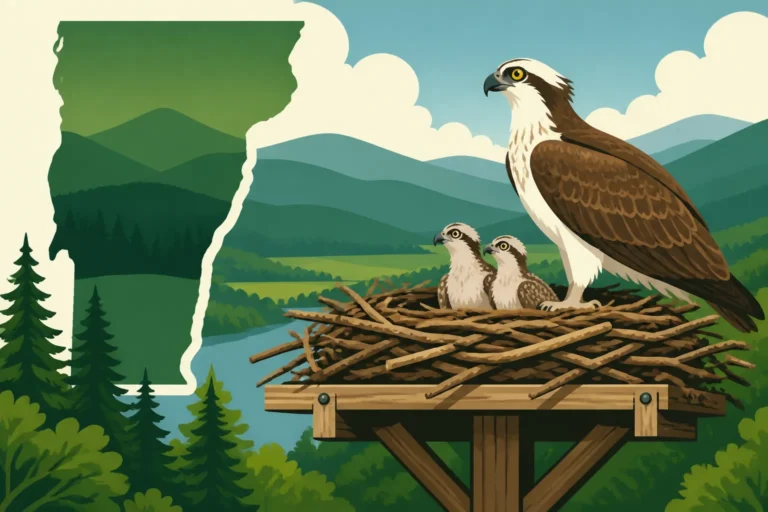
Vermont osprey nesting platforms provide safe elevated sites for these fish hawks, supporting their recovery from past pesticide declines.
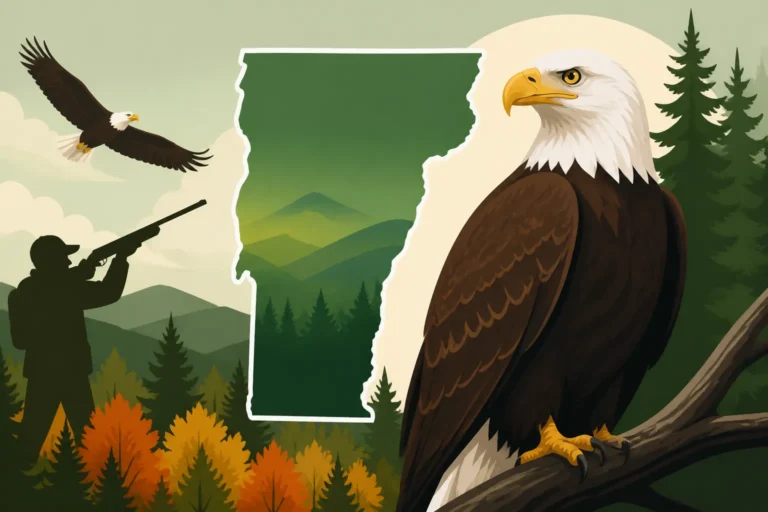
Vermont bald eagle recovery details the historical decline, the DDT pesticide impact, and the successful return of breeding birds.
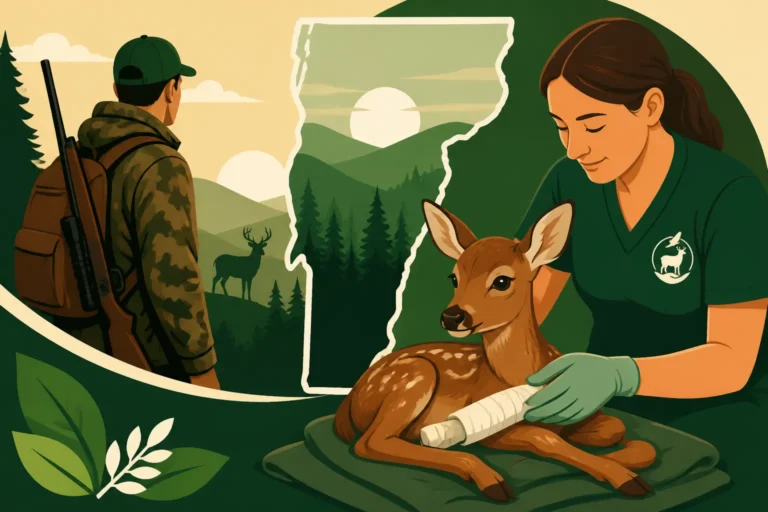
Vermont wildlife rehabilitation provides proper, safe, and legal steps for handling injured or seemingly orphaned game in Vermont.
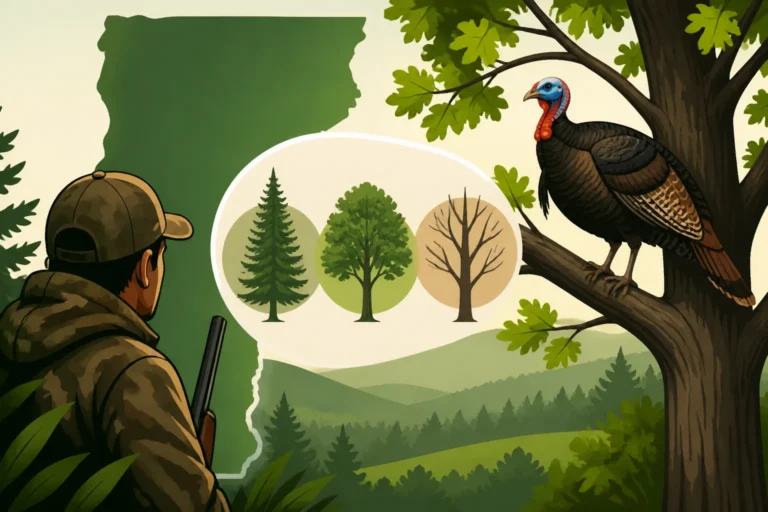
Vermont wild turkeys select tall white pines, hemlocks, and mature trees for predator safety and harsh winter weather protection.
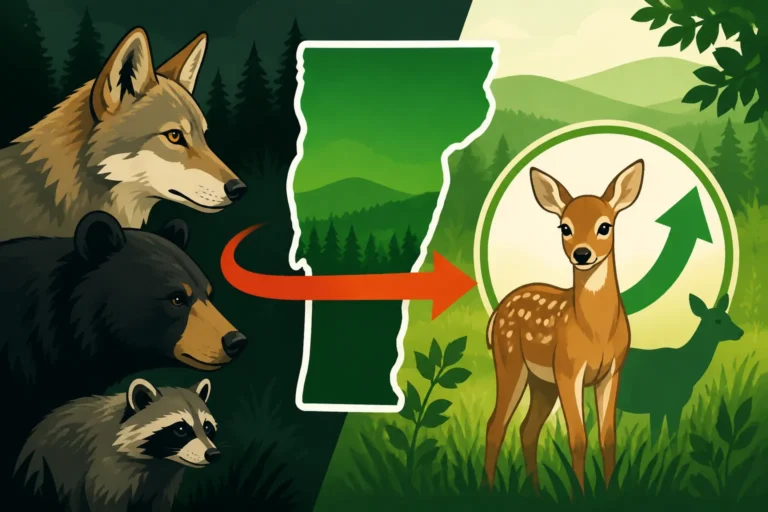
Vermont predator impact on fawn recruitment affects white-tailed deer populations, shaping future hunting opportunities and herd health.
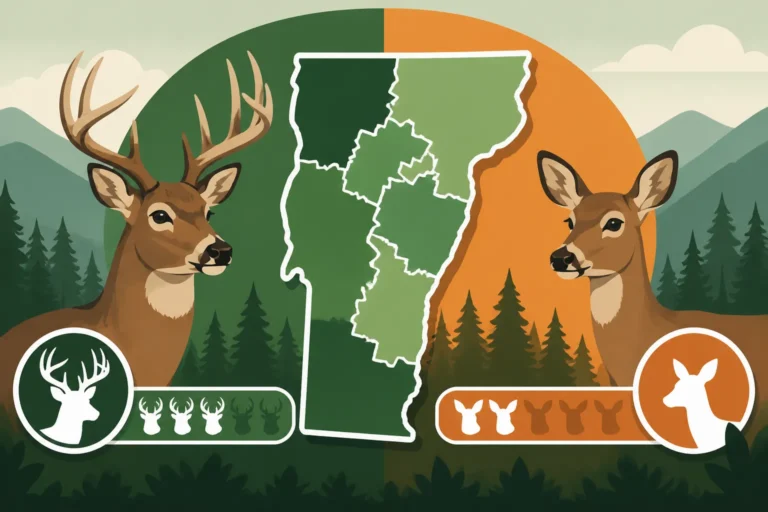
Vermont deer buck-to-doe ratios vary across regions, impacting the rut, buck age structures, and herd health for hunters.
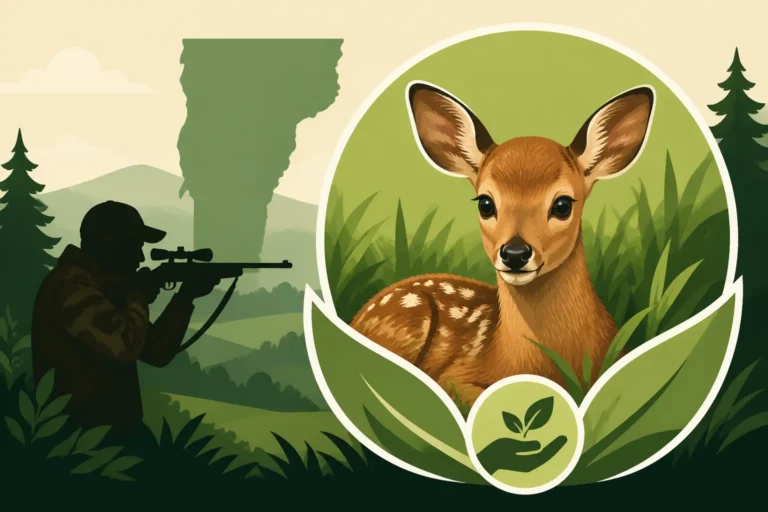
Vermont fawn survival rates depend on predators like coyotes, harsh spring weather, and the crucial nutrition provided by nursing does.
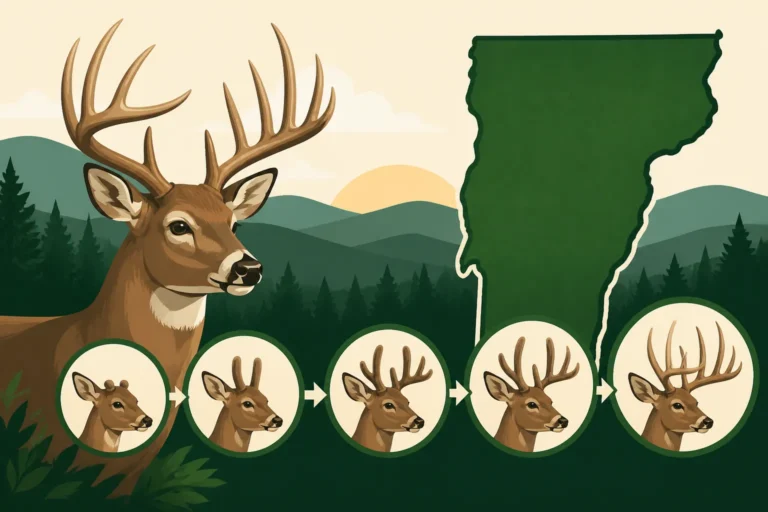
Vermont deer antler growth involves an annual cycle of spring velvet development, summer mineral hardening, and fall shedding.
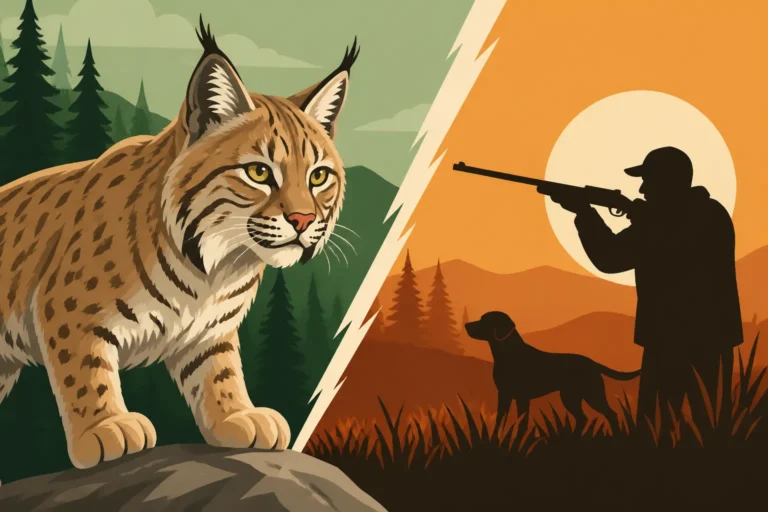
Vermont catamount history details when eastern cougars inhabited the Green Mountains and why the apex predators vanished.
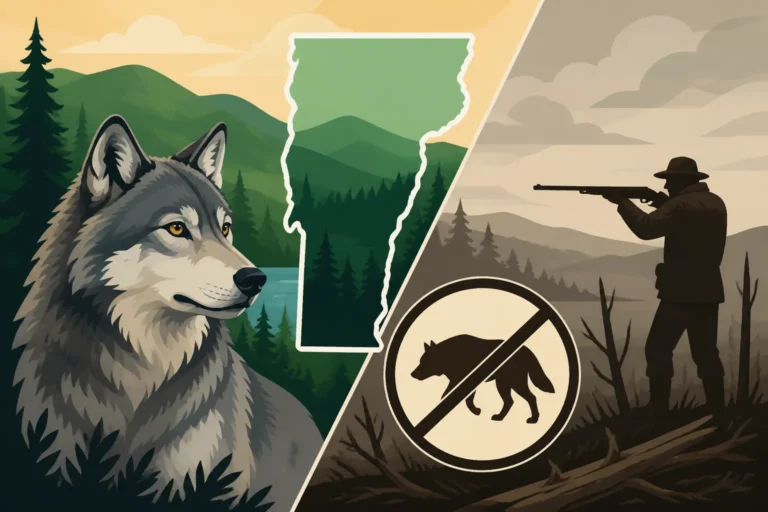
Eastern wolves once roamed Vermont’s Green Mountains until European settlers eliminated them through a systematic bounty system in the 1700s.