Why Moose Calves Die From Winter Ticks
Tens of thousands of winter ticks drain blood, cause severe hair loss, and lead to fatal hypothermia in Vermont moose calves.
Know what you’re after.
Big game, small game, upland birds, and waterfowl — identification, behavior, rut and migration timing, and how each species moves through the season.
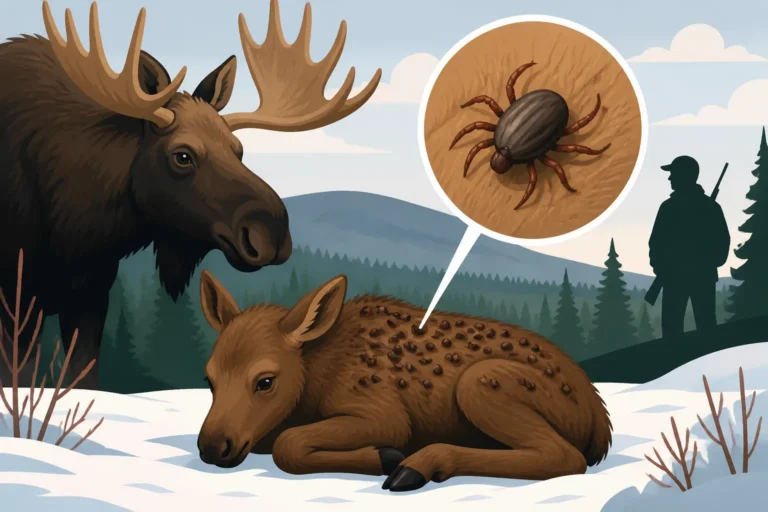
Tens of thousands of winter ticks drain blood, cause severe hair loss, and lead to fatal hypothermia in Vermont moose calves.
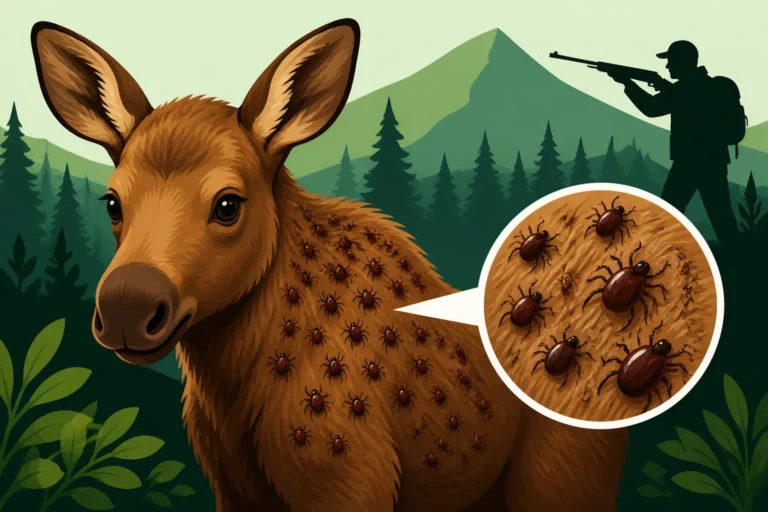
Winter tick infestations on Vermont moose calves cause severe blood loss, emaciation and population decline since the 1990s.
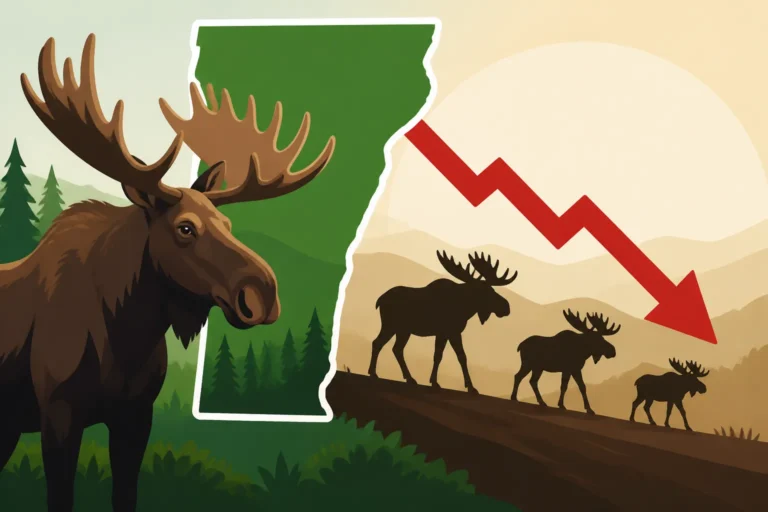
Vermont moose population decline since the 1990s peak, driven by winter ticks reducing calf survival and herd health to five thousand animals.
Vermont moose population numbers, winter tick impacts, and habitat changes across the Green Mountains are explained here.
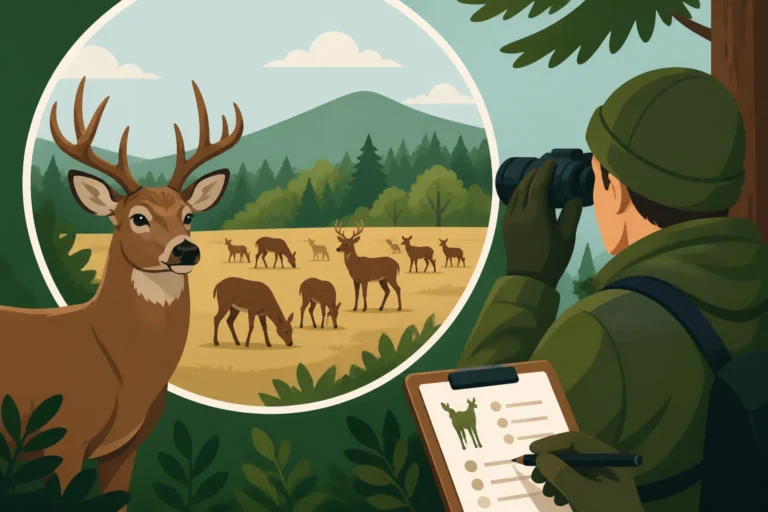
Vermont deer population data and mandatory hunter harvest reports help biologists set sustainable hunting seasons and regulations.
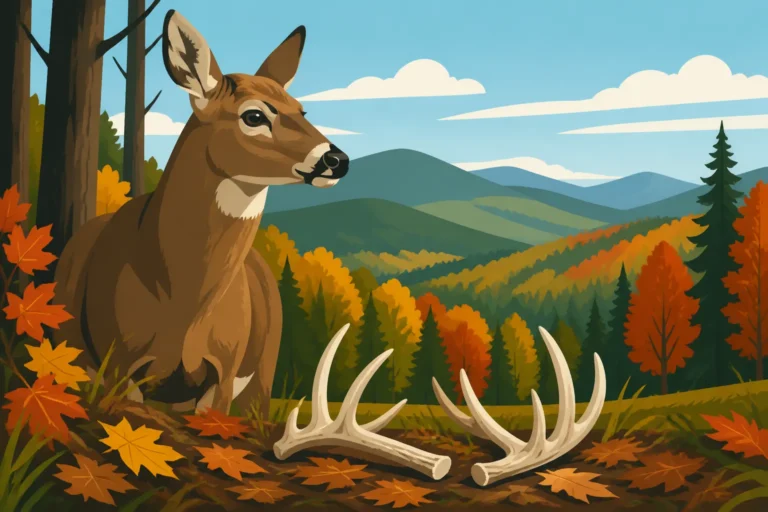
Vermont buck antler shedding timing, driven by dropping testosterone levels after the late November rut and buck health.
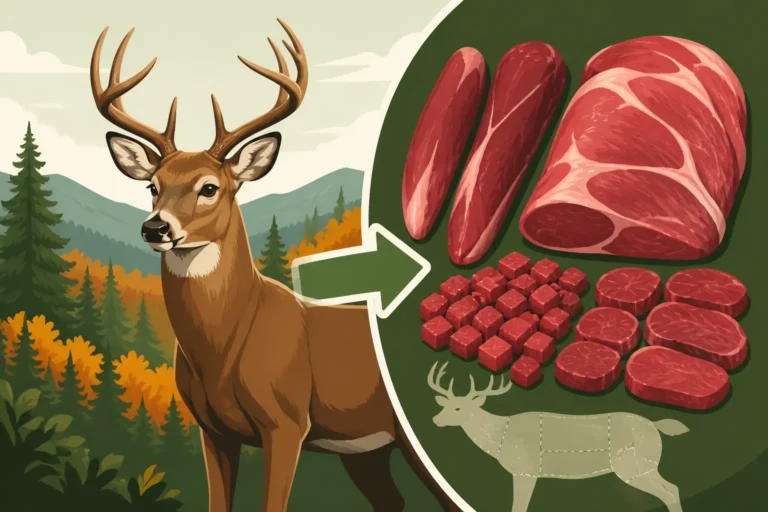
Vermont buck venison yield depends on field dressed weight, shot placement, age, and health, removing internal organs to preserve meat quality.
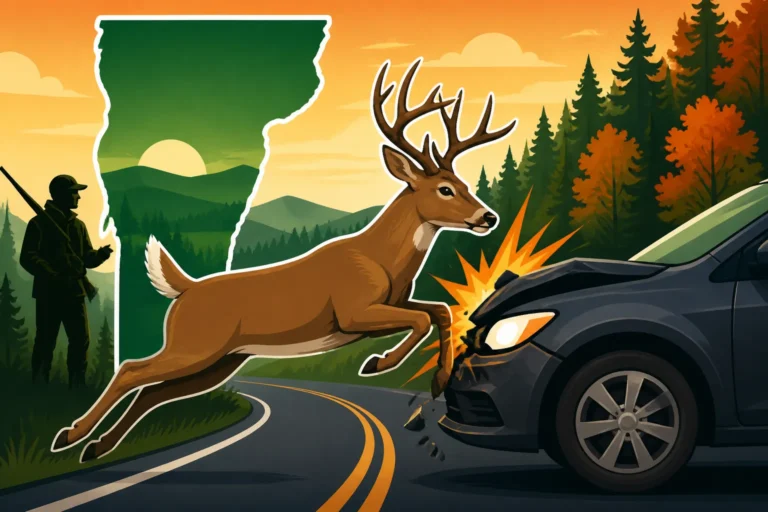
Vermont deer vehicle collisions occur due to habitat fragmentation, farming patterns, and seasonal migration routes across state roads.
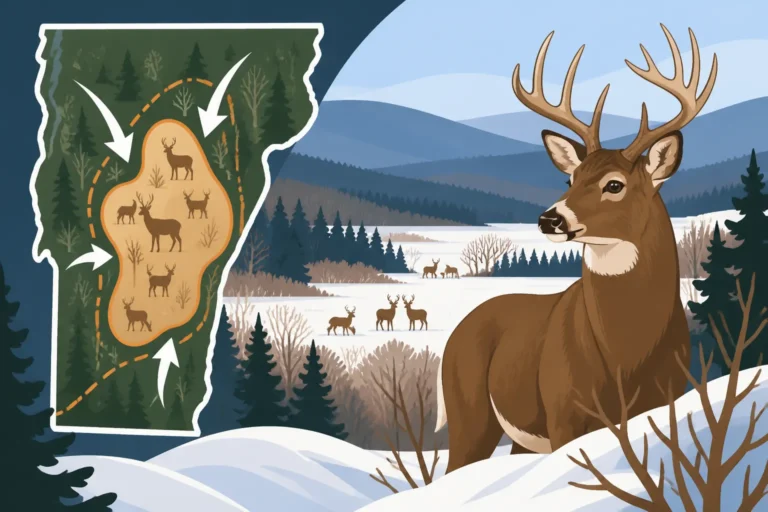
Vermont deer wintering yards are natural shelters that provide white-tailed deer with vital survival zones during cold weather.
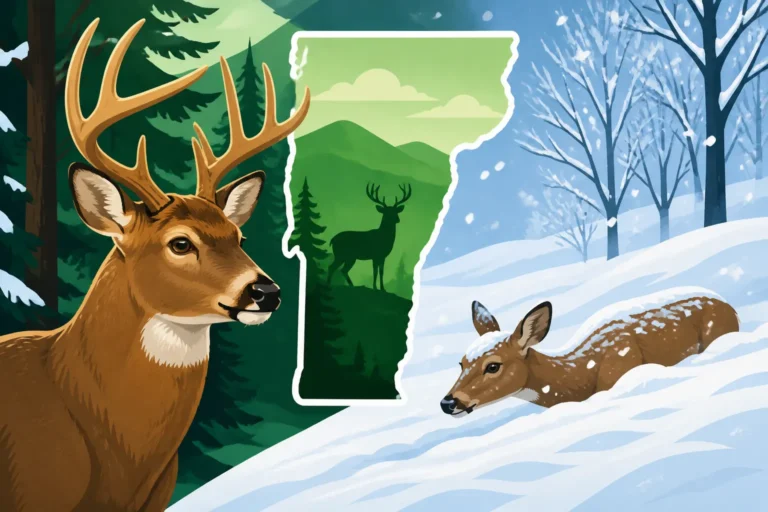
Deep snow forces Vermont deer to burn precious calories and move to dense conifer stands called deer wintering areas to survive.