Hunting a Maple Sugarbush Edge
Hunting a maple sugarbush edge might sound like a niche tactic, but if you've ever felt frustrated by overlooking potential hotspots, you're not alone. Many hunters drive past these seemingly quiet areas, missing out on prime opportunities for whitetails that regularly utilize these unique transition zones. This guide will walk you through exactly why these edges are so attractive to deer and how you can effectively hunt them here in Vermont.
Why Maple Sugarbush Edges are Hidden Deer Magnets
A maple sugarbush, while primarily managed for sap production, creates a micro-habitat that deer absolutely adore. It's not just a patch of woods; it's a dynamic environment that offers a unique combination of food, cover, and travel corridors, making it a surprisingly consistent place to find whitetails throughout the season. Hunters who overlook these spots often do so because they don't immediately recognize the subtle benefits these areas provide.
The Sweet Appeal of Maple Sap and Buds
One of the most direct draws for deer to a sugarbush is, believe it or not, the maple trees themselves. While we're tapping them for syrup, deer are often browsing on the buds and tender new growth, especially in late winter and early spring when other food sources are scarce. They'll also sometimes chew on fallen branches or even lick sap that has dripped from taps or wounds on the trees. It’s a bit like a natural mineral lick or a highly localized browse buffet.
Beyond the immediate sap and buds, the overall health of a sugarbush often means a diverse understory that provides additional browse. Many sugarbushes are kept relatively clear of thick brush to make tubing and collecting easier, but this also means sunlight can reach the forest floor, promoting the growth of palatable forbs and young woody plants that deer love to nibble on. Think of it as a well-maintained, slightly open forest with consistent food value, which is a rare treat for a deer looking to conserve energy.
Ideal Cover and Thermal Regulation
Sugarbushes often provide an interesting mix of cover. While the canopy can be relatively open in mature sugarbushes, the sheer density of trees, combined with topography, creates excellent thermal cover, especially during colder months. Deer can bed down in these areas, sheltered from biting winds and heavy snow, benefiting from the slight temperature moderation that a dense stand of timber provides. They might not be the impenetrable thickets you usually think of for bedding, but they offer a quieter, more sheltered reprieve.
Consider a rolling hillside sugarbush. The deer can bed on a south-facing slope to catch the sun's warmth on a cold day, or they might tuck into a low depression to escape a stiff breeze. The regular pattern of trees also provides visual cover, allowing deer to move through the area with a sense of security, often parallel to the edges where they can quickly slip into thicker woods if disturbed. This makes the edge of a sugarbush particularly important, as it offers the best of both worlds: access to the food within and quick escape to denser cover nearby.
Natural Funnels and Travel Corridors
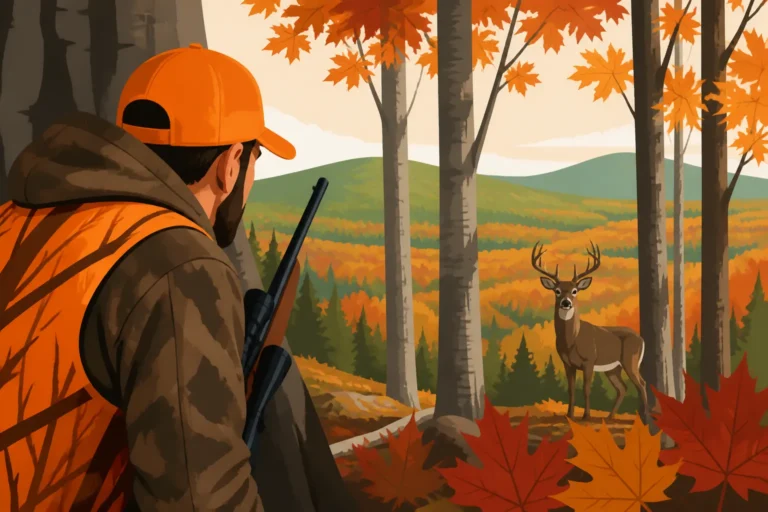
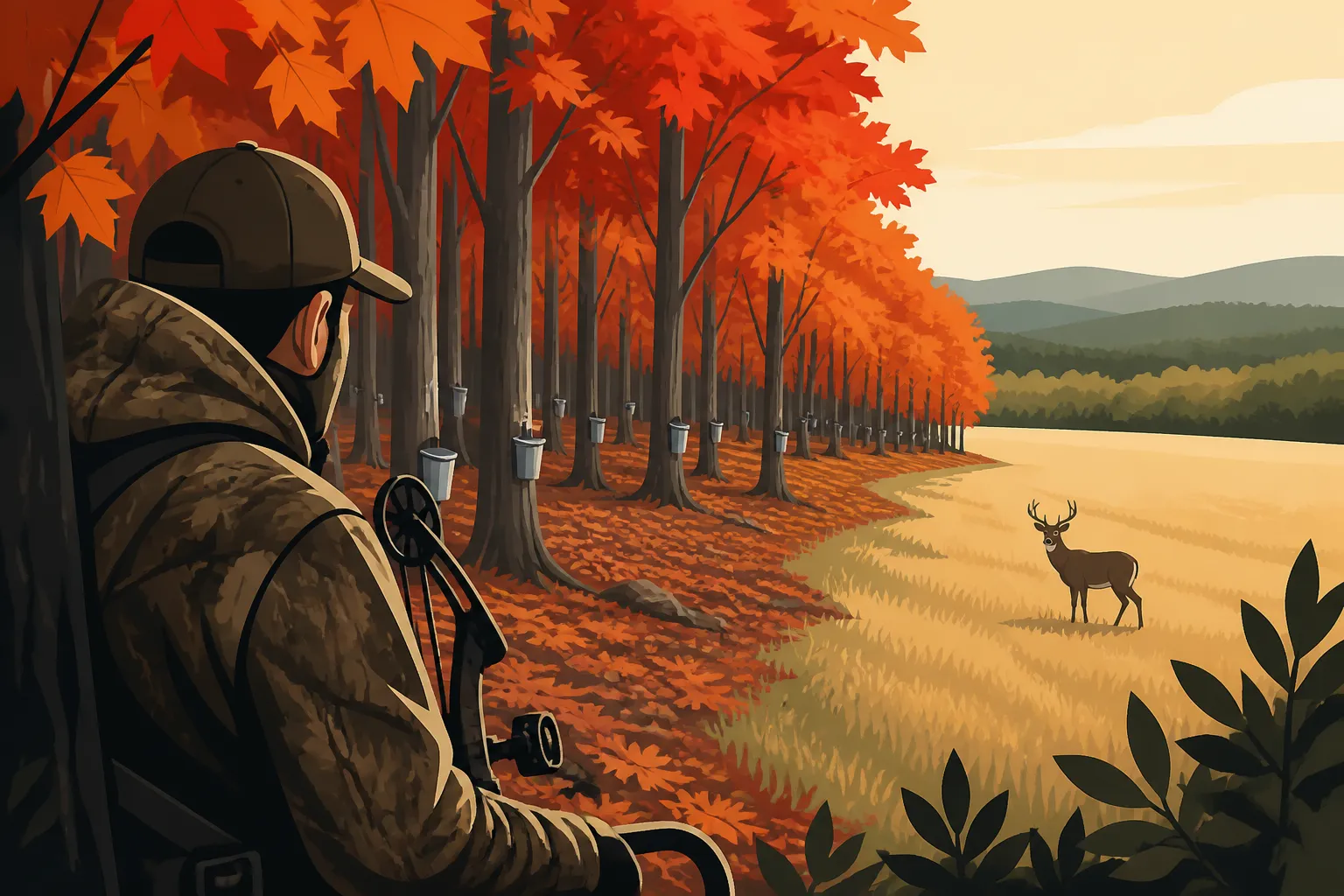
Perhaps the most valuable aspect of a sugarbush edge for hunters is its function as a natural travel corridor. Imagine a sugarbush bordering an open hayfield on one side and a dense spruce thicket on the other. Deer moving from the bedding cover in the spruce to feed in the hayfield will almost invariably use the treeline of the sugarbush as their preferred path. It provides concealment, a sense of security, and often a slightly easier route than fighting through dense undergrowth or exposing themselves in the open field.
These edges act as perfect funnels, concentrating deer movement into predictable lanes. If the sugarbush sits on a ridge, deer might use its contours to travel between drainages. If it’s in a valley, it could be a crossing point between two larger blocks of timber. Hunting a Funnel Between Two Woodlots shares similar principles, as deer inherently seek out paths of least resistance that still offer adequate cover. You'll find scrapes, rubs, and well-worn trails along these edges, especially where they connect to other habitat types like dense swamps, clear-cuts, or old apple orchards.
Reading the Sign on a Maple Sugarbush Edge
Successfully hunting a sugarbush edge hinges on your ability to interpret the subtle, and sometimes not-so-subtle, clues that deer leave behind. It’s not just about seeing a track; it's about understanding what that track, rub, or scrape tells you about deer behavior and movement patterns in this specific environment. Learning to "read the ground" is crucial, and a sugarbush edge often provides a clear narrative if you know what to look for.
Identifying Rubs, Scrapes, and Trails
When scouting a sugarbush edge, pay close attention to the trees themselves, particularly maples, as they are often preferred for rubs. Look for fresh rubs on small saplings and larger trees, indicating bucks are working the area. These rubs can tell you the direction of travel, and if you find a cluster, it suggests a core area a buck is frequenting. Similarly, look for scrapes – areas where bucks paw away leaves and urinate, often under an overhanging branch. These are communication hubs, especially during the rut, and seeing them along a sugarbush edge is a strong indicator of active deer movement.
Follow these signs. Do they lead into the sugarbush interior, or do they parallel the edge? Are they heavier on one side of the sugarbush, suggesting a dominant travel route? Use an app like onX Hunt to mark these observations. Not only does it help you visualize patterns over time, but it ensures you can revisit these precise spots, especially when you're Scouting Vermont Public Land Before Season or even a permissioned private parcel. Finding several fresh scrapes and rubs concentrated along a specific section of the edge can point you directly to a prime stand location.
Deciphering Browsing and Feeding Patterns
Deer don't just walk through a sugarbush; they feed in it. Look for evidence of browsing on young maple saplings, understory plants, and fallen branches. Freshly nipped twigs with a ragged edge (as opposed to a clean cut from a rabbit or rodent) are clear signs. In winter, deer will often stand on their hind legs to reach higher branches, creating a browse line. If you see saplings with multiple stems browsed, it's a sign that deer are regularly feeding there.
The type of browse can also tell you about the quality of the habitat and what the deer are prioritizing. Are they hitting specific woody browse or are they more interested in leftover mast if there's any? In areas where logging or thinning has occurred to benefit the sugar maples, new growth often sprouts, creating a temporary buffet for deer. Understanding these feeding patterns helps you determine when deer are most likely to be in the area – perhaps feeding early in the morning before heading to bed, or grazing through the evening before moving to an open field.
Interpreting Bedding and Resting Areas
While deer might not bed within the deepest parts of a dense sugarbush if thicker cover is nearby, they certainly use its edges and slightly denser pockets for resting and loafing. Look for flattened areas in the leaves or snow, often tucked against a fallen log, beneath a low-hanging evergreen branch, or in a slight depression on a hillside. These beds will often have deer pellets nearby.
Pay attention to how these bedding areas relate to the wind and sun. On a cold, sunny day, deer often choose south-facing slopes to soak up the warmth. On windy days, they'll find depressions or the lee side of a ridge for shelter. The presence of fresh beds confirms consistent deer presence. If you find beds close to heavy trails and feeding areas along the sugarbush edge, you've likely pinpointed a critical transition zone where deer feel safe enough to linger. Remember, these are often quick-access beds, not necessarily deep, all-day security bedding, but they're still important for understanding movement.
Best Strategies for Hunting a Maple Sugarbush Edge
Now that you know why deer love sugarbush edges and what to look for, it's time to talk about how to actually hunt them effectively. This isn't just about setting up a stand; it's about understanding deer movement, wind, and how to minimize your impact. A well-executed plan can turn a seemingly ordinary sugarbush edge into a highly productive hunting spot.
Optimal Stand Placement and Access Routes
Choosing the right stand location on a sugarbush edge is paramount. You want a spot that offers a clear shot at the main travel corridor while minimizing your scent dispersal and visual impact. Look for a tree that provides good cover (e.g., a multi-trunked maple or one with dense lower branches) and overlooks the most active trails, rubs, and scrapes you've identified. Often, setting up 20-30 yards inside the sugarbush, facing out towards the field or thicker cover, gives you an advantage. This puts you out of the deer's direct line of sight if they are hugging the treeline.
Your access and exit routes are just as critical. Plan a route that avoids walking through known bedding or feeding areas, especially your main hunting zone. Use existing terrain features like ditches, low spots, or even the sugarbush roads (if they are not actively used by deer) to sneak in and out quietly, particularly if you are hunting a private farm where you might be Knocking on Doors in Champlain Valley Farm Country. On an evening hunt, your exit might push deer, but a smart entry will ensure you don't spook them before the prime movement period begins. Consider using a mapping tool like GoHunt to plot these routes well in advance, taking note of contours and cover.
Playing the Wind and Thermals
Wind is always a hunter's greatest adversary and ally, and it's especially critical when hunting an edge. Deer will almost always try to use the wind to their advantage, typically walking into it or having it quartering across their nose to detect danger ahead. When setting up on a sugarbush edge, you need to anticipate this. If deer are moving from a field to a bedding area, they'll often approach with the wind in their face, trying to scent check the bedding area.
Therefore, your stand needs to be positioned downwind of where you expect deer to approach. If the edge is on a hillside, remember that thermals can play a significant role. In the morning, cool air typically drains downhill, while in the evening, warm air rises. This means your scent will travel downhill in the morning and uphill in the evening. Understanding Wind and Thermals in Steep Green Mountain Terrain is crucial here. Always check the wind direction before heading out and have a backup plan or a different stand location if the wind isn't favorable for your primary spot.
Timing Your Hunts
The timing of your hunt in a sugarbush edge can make all the difference. Early season, deer are often using these edges to access fresh browse or soft mast if there are any apples or acorns nearby. During the rut, bucks will cruise these edges searching for does, checking scrapes and rubs frequently. Later in the season, when temperatures drop and natural food sources diminish, deer will often seek out the more sheltered cover and potential browse offered within the sugarbush. Late-Season Food Sources for Vermont Whitetails might include leftover browse, or even specific pockets of vegetation that remain palatable.
Table: Seasonal Deer Activity Near a Sugarbush Edge
| Season | Primary Deer Activity | Hunting Strategy Focus |
|---|---|---|
| Early Archery | Browsing on new growth, accessing nearby fields. | Mornings & evenings on feeding patterns. |
| Pre-Rut / Early Nov | Bucks making rubs/scrapes, cruising for does. | All day sits, focusing on travel corridors. |
| Peak Rut | Bucks actively chasing does, covering ground. | Key on funnel points and communication hubs (scrapes). |
| Late Season | Seeking thermal cover, focusing on remaining browse. | Mid-day hunting for deer moving to sheltered bedding. |
Consider the time of day, too. Deer may use the edge for feeding at dawn and dusk, but during the rut, bucks might be cruising it throughout the day. In the late season, deer are often less active during the coldest parts of the day, moving more mid-morning or mid-afternoon to feed or change bedding areas.
Overcoming Challenges and Common Mistakes
Hunting a maple sugarbush edge isn't without its challenges. Like any hunting scenario, there are specific hurdles to navigate and common mistakes to avoid. Being aware of these potential pitfalls can significantly increase your success rate and make your time in the woods more productive.
Managing Scent and Noise
Deer are incredibly sensitive to both scent and noise, and an edge hunt can exacerbate these challenges. Because a sugarbush edge is often a high-traffic area, deer are constantly scent-checking it. Your scent, even from a well-placed stand, can easily drift and alert deer before they ever come into view. This is why strict scent control is non-negotiable. Use scent-eliminating sprays, wash your clothes in scent-free detergent, and store them in sealed bags. Minimize the amount of exposed skin, and avoid strong-smelling foods or drinks.
Noise is another major factor. The relatively open nature of some sugarbushes, compared to dense cedar swamps, means sound can carry further. Be mindful of your footsteps, especially on crunchy leaves or frozen ground. Avoid talking loudly, and if you use a climbing stand or hang-on, practice setting it up quietly well before the season. Even the rustle of your clothes as you draw a bow or raise a rifle can spook a wary whitetail. If you're setting up a ground blind, ensure it's brushed in thoroughly and quietly weeks in advance, so deer get accustomed to it, as you might do when Brushing In a Blind on a Field Edge.
Dealing with Hunting Pressure
Sugarbushes, especially those on public land or accessible private land, can sometimes experience higher hunting pressure. Other hunters might also recognize the value of these edges, or simply stumble upon them. Increased pressure can make deer more nocturnal or push them into thicker, harder-to-reach cover. If you notice signs of other hunters (boot tracks, old stand setups, discarded garbage), you'll need to adjust your strategy.
One way to combat pressure is to hunt areas that others overlook. This might mean walking a bit further than most, or finding a less obvious approach. While everyone might be focused on the obvious trails, try to find secondary, fainter trails that deer might use when pressured. Sometimes, simply hunting during midday when most hunters are taking a break can yield results, as deer may feel safer moving during those hours. Using an app like onX Hunt can help you identify remote pockets of public land or less-trafficked sections of a large private property.
Adapting to Changing Conditions
Vermont weather is notoriously unpredictable, and conditions can change rapidly. A warm, wet front can make deer more active, while a sudden cold snap might push them into dense thermal cover. A heavy snow can alter travel patterns, forcing deer to use paths of least resistance. You need to be adaptable. If the wind shifts unexpectedly, be prepared to get down and move to a different stand, or change your strategy entirely.
Don't be afraid to try different tactics. If sitting in a stand isn't working, consider still-hunting along the edge, moving slowly and deliberately, pausing frequently to observe. Still-Hunting Green Mountain National Forest Timber techniques can be very effective here. Pay attention to how the deer are using the sugarbush on any given day, and be willing to adjust your plan based on their behavior, rather than sticking rigidly to a preconceived notion. The more you observe and adapt, the better your chances of success on these productive maple sugarbush edges.
Disclaimer
This article is for general informational purposes only and does not constitute professional advice. Laws, prices and regulations vary by location and change over time. Consult a qualified professional for guidance on your specific situation.